
Seven thousand days without Madeleine McCann: The disappearance that shook the world
Nineteen years later, police from several countries are still investigating what happened to the British child who vanished while sleeping in a tourist apartment in the Algarve region of Portugal
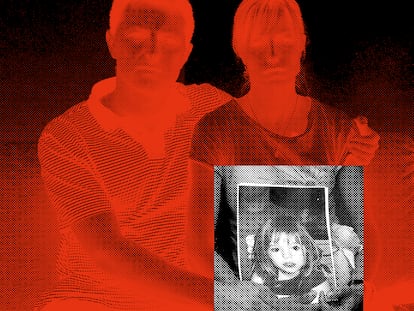

One spring night, the McCanns went to dinner with seven friends at a restaurant inside a residential estate in Portugal’s Algarve region, and by the time dessert was served they had become the parents of the most famous missing girl in the world. It has been 7,042 days and no one has been able to explain what happened to little Madeleine in apartment 5A of the Ocean Club in Praia da Luz on Thursday, May 3, 2007. It was her mother, Kate McCann, who cried out “They’ve taken Maddie!” after finding the bed empty and the window open when she went to check that everything was in order.
Those who might have witnessed the events because they shared the room were Sean and Amelie McCann, but they were 18 months old and in such a deep sleep that they did not even wake up when pandemonium broke out around them. Maddie had vanished, and that is the only proven fact to date. Everything that followed — the endless theories, the false sightings and erratic investigations — has produced several books, TV series, lawsuits and identity‑fraud attempts, but not a solution to the mystery.
Approaching two decades since the disappearance, police investigations remain open in the United Kingdom, Germany and Portugal to try to clarify what happened. Conclusive evidence has not yet been found against the latest suspect, Christian Brückner, a German national with a criminal record for sexual offenses in the Algarve. The parents have not given up either and continue to run the Find Madeleine Foundation set up to search for their daughter.
Maddie had everything it took to become an icon of universal grief: three years old and an expression somewhere between innocent and mischievous that instantly inspired affection. The world recoiled at the tragedy. Until the disappearance of Malaysia Airlines Flight 370 in March 2014, while flying with 239 passengers from Kuala Lumpur to Beijing, it was regarded as the greatest mystery of the 21st century.
After Kate McCann’s cries, the group searched the apartment for traces. It was a desperate and perhaps confused effort (the Portuguese media reported that 14 bottles of wine had been consumed at that dinner) that helped contaminate the scene and spoil crucial evidence. Yet even so, several months later three specialized tracking dogs sent from London detected signs pointing to the child’s death: the smell of a corpse, blood and bodily fluids in the apartment and in the car the McCanns had rented. That led the Portuguese Judiciary Police to direct suspicion at the parents. In September they were questioned and formally accused. The Portuguese detectives, led by Gonçalo Amaral, suspected the child had died accidentally from an overdose of sleeping pills and that her body had been concealed.
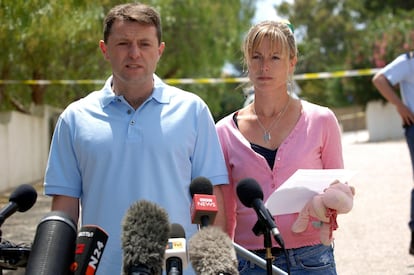
Kate and Gerry McCann went from experiencing waves of solidarity to waves of hatred. From attending Mass in Praia da Luz clutching their daughter’s stuffed toy and receiving their neighbors’ support, to retreating into their red‑brick home in Leicestershire. Two days after being officially named suspects by the Judiciary Police, they flew back to the United Kingdom. A month later Gonçalo Amaral was removed from the inquiry. The inspector eventually left the force and published two books about the case in which he points to parental negligence as the main hypothesis. The first one was challenged in court by the McCanns but was cleared at every legal instance. The final endorsement came in 2022 from the European Court of Human Rights in Strasbourg. Nonetheless, both Gerry and Kate McCann were ultimately cleared of all suspicion by the Portuguese detectives.
Despite the international media noise around the case, much of what happened was handled behind the scenes. Maddie’s disappearance was never only a police matter. From the earliest hours it became a political and diplomatic chess game between two countries, Portugal and the United Kingdom, which boasted the world’s oldest alliance (signed in the 14th century), strained under ravenous media scrutiny. Newspapers from half the world descended on the Algarve and helped create false suspects such as the UK national Robert Murat, the first person charged in the disappearance, who lived near the development and aroused suspicion because of his friendliness and constant offers to help. Murat’s garden was combed, every conversation scrutinized and he was subjected to interrogations as if he were Jack the Ripper, although his innocence later became clear. After the trauma of those days, Murat sold his Algarve house and returned to his country.
In these 19 years there have been four people formally charged. The most recent suspect has been the German national Christian Brückner, who has a notable criminal record. Some evidence was gathered against him, such as his presence in the area on the day of the disappearance and statements from some petty‑crime associates who claim Brückner told them he knew what had happened to Maddie. His record also weighed against him, but so far the German public prosecutor has not found definitive proof and had to allow his release from prison in 2025 after he served a sentence for raping a 72‑year‑old woman in the Algarve. For Gonçalo Amaral, he is merely a scapegoat.
The British press, however, has recently reported that Scotland Yard is analyzing digital files that could contain relevant information about Brückner’s role. In addition, Operation Grange, launched by the Metropolitan Police 15 years ago, remains open, as does the inquiry by Portugal’s Judiciary Police.
Among the most painful consequences for the family have been the impersonations. The most extreme case was tried in 2025 in Leicester. The Polish national Julia Wandelt, who had spent two years claiming she was Madeleine, was sentenced to six months in prison for harassing the McCanns. Among other things, she sent letters to Kate addressing her as “mum.”
Sign up for our weekly newsletter to get more English-language news coverage from EL PAÍS USA Edition









































