
What happens when a trans person decides to stop hormone therapy?
In a world where changing the gender on your ID card does not require medical documentation, some argue that — far from regretting it — it is possible to be trans without treatment
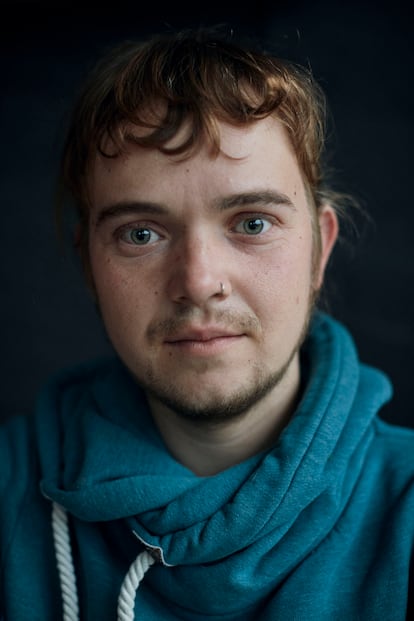

Eder Iturralde, 25, stopped taking testosterone three years ago, after four years of treatment. Today, he has very blond hair, light eyes and a beard — the facial hair being among the effects he retains from his previous hormone therapy. He lives with his family in the Baiolei Hotel, a rural inn that his mother manages in Azpeitia, a town in Spain’s Basque Country.
During his adolescence, two things sparked his interest in trans issues. The first was seeing a pregnant man on television. The second came through a YouTube search: he stumbled upon a 22-year-old man from Andalusia with an experience very similar to his own. At that point, at the age of 17, he thought: “This is it.”
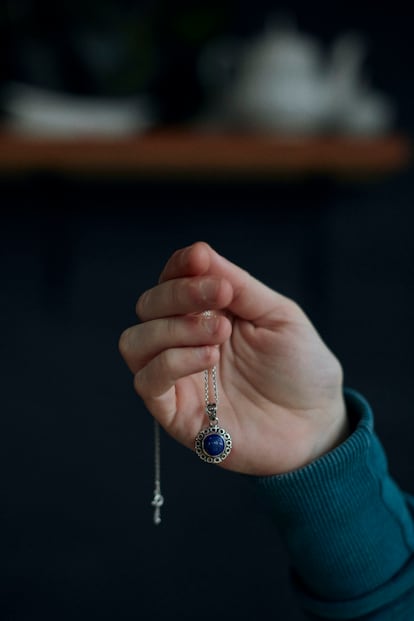
He places the beginning of his transition on the day he told his sister. He asked to be called Eder and to be addressed with male pronouns. At 18, he froze his eggs, started taking testosterone, changed his ID, and had breast augmentation surgery. He tried different forms of hormone therapy, from a daily gel to Reandron, an injectable medication containing testosterone that’s administered every three months. When he was finally recognized as a man, he began to question what had been effective and sufficient for him over the years: “If it’s already had the desired effect — if I already have a beard and a deeper voice — why am I still taking testosterone?”
There are many ways to be trans. For most, it involves surgery and treatments. Having a beard or breasts. The physical expression of an identity. But this isn’t the only path. Although there are few of them, some trans people decide to stop the hormone treatment that allows them to develop traits that are typically associated with men or women. Not out of regret, not out of renunciation of their queer identity, but out of the conviction that this identity can be explored beyond the medical realm and beyond the established norms. They neither attack nor invalidate these norms: their experience is their own. And it enriches our understanding of transsexuality.
Studies estimate that up to 5% of the trans community discontinues hormone therapy. Some continue to identify with their chosen gender and maintain their names, pronouns, and/or appearance. In the field of medicine, the first process — when the chosen identity is abandoned — is called “primary detransition.” The second — when the trans identity is maintained, but without hormones — is called “secondary detransition.”
Because the word “detransition” has become a transphobic fetish and a tool to delegitimize the community, some interviewees are reluctant to use it. In confidence, however, they end up using it with its true meaning.
Eder and three other trans people tell EL PAÍS about their journey to abandoning hormone therapy. They did it alone, without medical support, with some only sharing the process with a tiny inner circle. They give several reasons for this: the side effects, bureaucratic barriers, the fact that transitioning isn’t about appearance, or that they took hormones only because the law required it.
Eder hasn’t experienced the side effects he feared, such as baldness, cartilage damage, or gum recession. He has resumed menstruating and feels comfortable in his body. “We’ve finally understood that you can be a boy while having a vagina and menstruating,” he reflects.
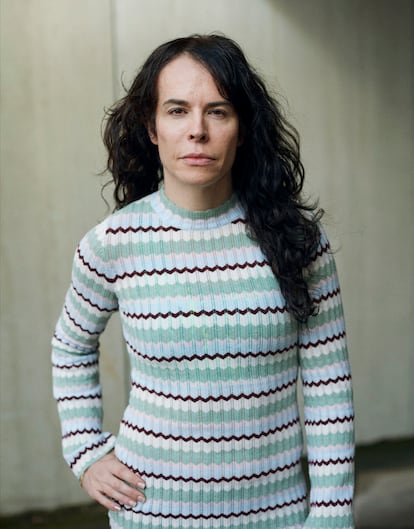
Aitzole Araneta, 43, works in Vitoria — the capital of the Basque Country — as a technician for the local government. She commutes there every day from the city of San Sebastián. She identifies as a woman; wearing a light blue dress, she has long, loose hair. She hasn’t had surgery and hasn’t taken estrogen or antiandrogens for eight months. “In my case, it was obvious,” she explains.
As a teenager, she didn’t know anyone who had started hormone therapy. Back then, her sex life was nonexistent. At school, they called her “faggot.” They insulted her and hit her. When she thought about transitioning, she was fearful of ending up on drugs or working as a prostitute (paths that were statistically likely). However, she ultimately overcame her fears with an obsession for education. She earned a degree in Business Administration and Management and completed two master’s degrees. At 21, she began hormone therapy with estrogen and antiandrogens.
When asked if she has any happy memories from that time, Aitzole replies: “When I slept with someone for the first time, at 24, and he didn’t address me with male pronouns. If you’re sleeping with someone and he treats you like a woman… well, that’s enough.”
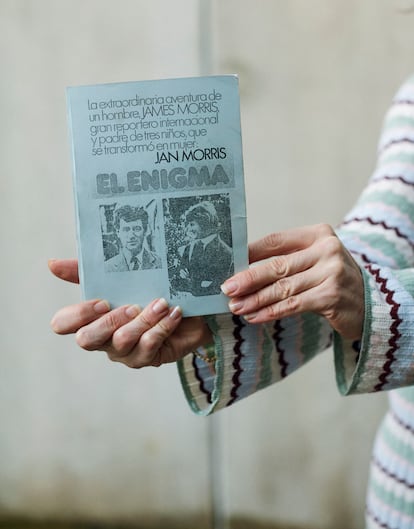
At 31, she began a different treatment: she decided to freeze her sperm. But beforehand, she had to stop taking antiandrogens and estrogens, which were inhibiting her fertility. Within six months, she experienced facial hair growth, oily skin, a greater urge to masturbate, as well as fewer emotional ups and downs. But she liked having more energy. In October of 2025, she underwent a second fertility treatment, and this time, she didn’t return to the hormones. “I don’t spend so much time questioning who I am anymore.” She says that, since last year, she’s grown some facial hair. “Just like I’m a woman with small breasts or a penis, I’m also a hairy woman. The day I don’t want this hair anymore, I’ll bleach it or shave it. And that’s it.”
Aitzole is cisgender: she’s socially perceived as a woman. “Cis-passing is very important, because it guarantees acceptance and social integration. But, at the same time, it’s a condemnation, because it shows — in its full glory — the binary social order: that women must be feminine, while men must be masculine,” she reflects.
If Aitzole were ever to have a child, would she consider producing breast milk with medical treatment? She laughs and looks down, as if embarrassed. “I’ve never considered it… but yes, I would try.”
In that regard, endocrinologist Patricia Cabrera, head of the Gonads, Identity and Sexual Differentiation working group of the Spanish Society of Endocrinology and Nutrition, explains that milk production in trans women is a low or nonexistent demand, although lactation stimulation protocols exist. There are few documented cases of this, but when they occur, additional sources of nutrition are provided to infants.
In Spain, before the amendment to Law 3/2007, changing one’s sex on a national identity card (DNI) required being of legal age, having a psychiatric diagnosis of gender dysphoria (this term originated in old manuals on mental disorders) and taking hormones for two years, with medical supervision. Since 2023, however, these requirements have been eliminated: self-identification is now sufficient.
The change also means that the appearance of trans people isn’t determined by law: they’re not obligated to adopt a certain appearance through hormones. This conception aligns with the definition put forward by McKenzie Wark, an essayist, LGBTQ+ activist, and one of the most relevant voices in cultural studies. She spoke with EL PAÍS by phone, answering the question: “What makes someone trans?”
She replies simply: “Saying ‘I am trans.’”
This assertion — like the aforementioned legislation — alludes to the fact that gender doesn’t have a material correlation but rather stems from affirmation. This is based on Judith Butler’s gender performativity theory from the 1990s.
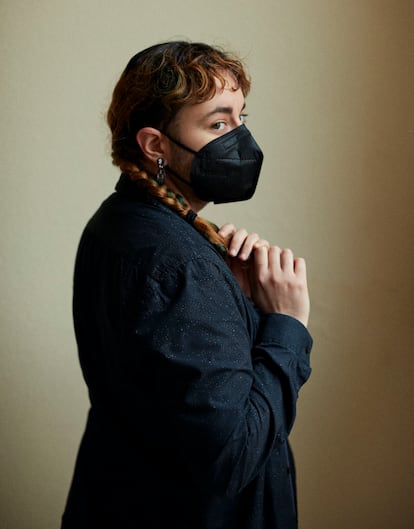
While hormones and surgery work for most trans people, there are also those who don’t want a categorically masculine or feminine appearance. Wark argues that the only authorities who should speak on the subject are trans people themselves — not endocrinologists, who approach it from a narrower perspective. They’re not prepared to understand the social experience of gender. For her, the idea of “detransitioning” that’s used in endocrinology is confusing, because it’s based on a notion of regret and failure, which represents a very small percentage of experiences within the trans community (something that isn’t addressed in this report).
It’s impossible to think about the detransition process without talking about transphobia: “Although transphobes use these rare cases of detransitioning as a weapon against us, they’re actually the ones who push people to detransition, while also causing a lot of unhappiness.”
For Wark, stopping hormones can be part of a process of learning and change. As a conceptual alternative, she proposes speaking about the decision to “retransition.” “There are people who transition again and reconfigure themselves, just like how the bodies of cis people also change. It doesn’t happen on a regular basis, but in my community, I see people who evolve. They may change their name, stop hormones, or change the combination of hormones they take. Most of the trans people I know have made adjustments to their hormone treatments.”
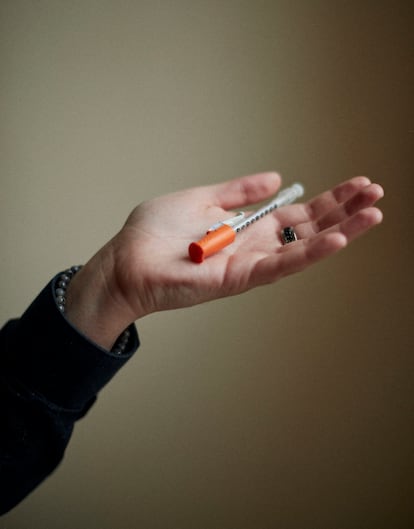
Davie Rey, a history student, identified as a trans man for four years. During that period of time, she used masculine or neutral pronouns. She wears a long orange braid with some green streaks, loose clothing, and earrings. On the inside of her right wrist, she has a tattoo of a sad emoji.
“I was very anxious about getting my documents changed before taking the university entrance exams, because they call you out by your name. For me, it was a complete nightmare to be called by my necronym (the name she had before her transition).”
To avoid this, Davie took hormones for two years to comply with the old law. And, shortly after starting hormone therapy, she had a mastectomy. At university, she began to move towards physical (“and moral,” she adds) androgyny. She grew a beard, let her hair grow long, and defined herself as a non-binary trans man.
The main reason she stopped taking hormones was related to her sexuality. For years, Davie felt asexual. She had had emotional and erotic experiences with women and non-binary people, but realized that she wasn’t attracted to men. And isn’t a man who is attracted to women heterosexual? Thus, David began to question her identity as a trans man. “At that point, I rediscovered myself as a lesbian. For me, it was incompatible with being a man.”
Today, as a self-identified “butch” (a lesbian woman with a masculine appearance), Davie feels that she rushed her medical transition: “In my case, if anyone is to blame — besides myself — it’s a system that didn’t allow me to correct my records or express myself socially the way I wanted to, without going through this.”

In Catalonia, Domènech Martín, 23, had a similar experience. A florist, school monitor, theater producer, and lighting designer, his birth name was Martina. Later, between the ages of 16 and 18, he transitioned, becoming a trans man. He never underwent surgery. Today, he defines himself as queer — someone who doesn’t identify with the binary, the traditional categories of gender and sexuality. He stopped taking testosterone six months ago.
In his apartment in the town of Vilafranca del Penedès, he explains: “The queer experience is the next step after being trans. Transitioning to a man or a woman has become very normalized… but if people were educated without such hardcore parameters and limitations, we wouldn’t need to transition.” It took him years to process this idea.
EL PAÍS asks Domènech if, before transitioning, he ever experienced what some doctors call “gender dysphoria.” “No,” he replies. “I did it because it seemed like the right thing to do; I’m realizing that now. I was tall and had broad shoulders. My body greatly facilitated my transition.”
Flexibility came with time. Some days, he wore makeup and dressed in more feminine clothes. The hormones bothered him: “I came to the conclusion that what bothers me are the hairy breasts. It took a lot of work to understand that this is just how it is.” In the end, what made him take the step towards queerness — that less-defined area closer to a non-binary identity — was being with L.
A little over a year ago, L. began her transition to womanhood. They started dating when L. was still a gay man. “Gay guys intimidated me. I saw her as a very flamboyant guy, someone who defied binary stereotypes.”
Domènech initially feared having to take on the role of a super-strong and super-brave man. But those fears are now behind him. Today, men aren’t expected to act “like a man,” and women aren’t expected to act “like a woman.” “At that moment, I understood that I was in a queer relationship.”
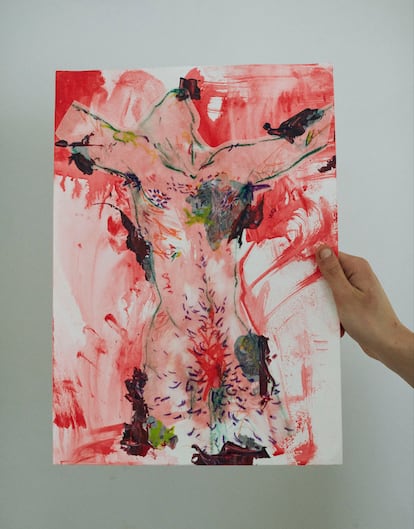
L. has finished freezing her sperm. The next step is up to Domènech, who says: “Gestation seems like the most ethical thing to me. I’d forgotten that I’m in a gestational body.” If they want to have children, they can. Since he has eggs and she has sperm, they wouldn’t have to resort to surrogacy. The novel Detransition, Baby (2021), by Torrey Peters, illustrates this reality through one of its protagonists, who, after abandoning her transition due to social difficulties, realizes that her new partner is pregnant. Still, despite everything, she knows that the trans experience isn’t something one can just run away from. Domènech feels the same.
At some point in their lives, the four subjects of this report asked themselves how to move forward. None of them believe that there’s a way back. They represent an alternative way of life, with a different language and ethical code, with their own allies and adversaries. To move forward, they have relied on their ability to imagine a new way of existing.









































