
Cereals just ‘for real men’? Food becomes the new battleground of the manosphere
The most misogynistic corner of the internet has found a niche in selling everyday products — soaps, cereals, creams — rebranded through a polarized, toxic vision of masculinity
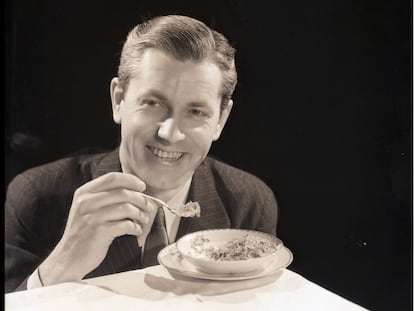

“Cereal Finally Manned Up.” That’s the slogan of Man Cereal, a cereal brand that not only contains creatine and extra protein—a gym bro’s dream — but also stands out for its packaging design that appeals to hypermasculinity by eschewing the colorful boxes that characterize most cereals on the market.
“As toxic masculinity continues to percolate throughout our society, branded products like Man Cereal exist to cater to the men who only want to interact with things that are undoubtedly masculine and non-threatening to their ego,” says journalist Austin Ashburn on the Instagram account of Impact, a media outlet that analyzes consumption and popular culture among young people.
Ashburn argues that toxic masculinity has forced men to feel embarrassed about buying or using products with brightly colored packaging or those marketed as good for the skin. That dynamic has created a niche for “very manly” products — items that turn polarization into a marketing strategy and promote an outdated, toxic idea of masculinity.
One example is Bloody Knuckles, a hand cream whose name suggests the user has been in a fistfight. According to this narrative, the only plausible reason for a man to take care of his hands is if he’s injured them in a fight. There’s also Dr. Squatch, a brand of gels and soaps whose packaging features a bloodied U.S. flag and men smoking pipes.
Man Cereal follows the same logic: it’s not just the understated design, but the story built around it. The salted‑caramel flavor is labelled “dominant”; cinnamon is “self‑assured”; fruit is “legendary”; and bacon is “sigma” — a reference to the trope of the powerful, but independent and free man.
“We realized that most men had given up on cereal; they were left with only sugary children’s boxes or bland, unhealthy versions that didn’t live up to expectations,” say the creators of Man Cereal. “After months of testing, adjustments, and tastings, we created a natural, high-protein, low-sugar cereal, enriched with creatine. With irresistible flavors and a brand that truly connects with men.”
Journalist Paul Kita asked several nutritionists what they thought of Man Cereal’s ingredients and claims for an article in the U.S. edition of Men’s Health, and they all agreed that it was a “ridiculous” product. Kita made a point of mentioning its taste.
“Whatever coats the spherical pebbles (man balls?) of Man Cereal, ensures that the flavor doesn’t transfer into the milk. Which means Man Cereal robbed me of the greatest joy of eating chocolatey cereal in the first place: getting to drink the chocolate milk left in the bowl,” Kita writes. “With each flavor more horrible than the last, I was afraid. Maybe that’s failing my journalistic duty, but you know what a man has to have? Standards.”
“Tell me what you eat, and I will tell you who you are,” wrote Jean Anthelme Brillat-Savarin in Physiologie du Goût (The Physiology of Taste). The problem is that in a culture obsessed with labels, food has become much more than a basic need: it has turned into a declaration of identitynon-existent. What we put on our plates signals belonging, status, aesthetic sensibility, and even our values. Diets intersect with questions of class, race, and ideas of social sophistication. And as sexual orientation came to be understood as an expression of identity, eating habits within queer communities also began to carve out their own space in the cultural conversation.
Fox News host Jesse Watters criticized Joe Biden for “licking ice cream in public,” claiming it wasn’t “manly.” As Derek Davison, an analyst specializing in international affairs and US foreign policy, said at the time: “There are many valid reasons to criticize Joe Biden right now. Which makes it incredibly hilarious that the right-wing establishment has become so pathological that its main talking point today is ‘eating ice cream is gay.’”
Real Men Don’t Eat Quiche was Bruce Feirstein’s satirical guide to the masculinity of its era. It claimed, for instance, that quiche was not something a “real” man would ever eat. Once again, that “real” man was implicitly heterosexual, of course. Early in the book, a character mocks those “cowardly” and “effeminate” men who would turn down steak and eggs.
“Foods awful and eating sucks,” Andrew Tate, the misogynistic influencer and poster‑boy of toxic masculinity online, posted on X. “I eat the bare minimum and as fast as possible. I hate eating. I hate feeling full. Men who think cooking makes them manly are cucks afraid of the cage, desperate to validate a non-existent masculinity. Imagine how stupid you have to be to find food entertaining. Literally embarrassing.”
Tate promotes the so‑called lion diet, which consists almost exclusively of meat, salt, and water. Like Feirstein’s book, it would be easy to dismiss it as a parody if it weren’t for the alarming number of men who take it seriously.
In fact, if anything defines Man Cereal’s packaging, it is its refusal to make food fun. “Creatine. High protein. Keto. Low sugar” — alongside a single lone cereal piece — is all that appears on the box.
“Visually, Man Cereals project a clear message of Spartan virility: no frills, no decoration, none of the frippery traditionally associated with femininity and, by extension, being gay,” explains Mikel Iturriaga, director of the EL PAÍS food supplement El Comidista. “With its black‑and‑white packaging, it’s the macho mirror image of the many light or diet foods marketed to women, which tend to be pink and covered in curvy doodles. One set tries to seduce you by promising you’ll be thinner; the other, that you’ll be stronger. But in the end, both exploit the same thing: the insecurities of consumers bombarded on all fronts with the idea that the only path to happiness is having a normative body.”
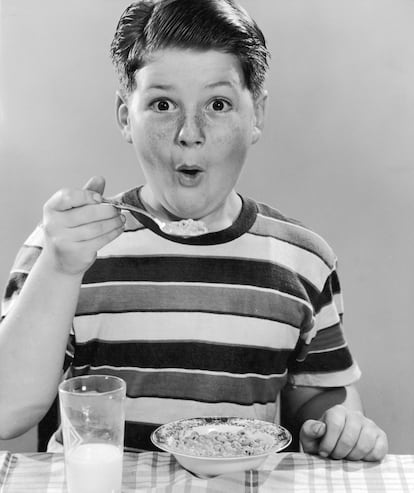
A professor named Jacob Ryan Carlew recently shared on TikTok a student presentation titled Cereals and Their Sexualities. The student argued that it was obvious: Fruit Loops (brightly coloured Kellogg’s rings) are gay; Crunch Berries (with a moustachioed captain on the box) experiment with bisexuality; and Lucky Charms (featuring a leprechaun holding a rainbow) are pansexual.
On the Bad Friends podcast, Bobby Lee and Andrew Santino debated which cereals are the “gayest” and “straightest.” “I would say regular Cheerios, no honey nut [...] Or oatmeal, that’s a straight breakfast — no maple, no raisins, nothing. And black coffee,” they joked, adding that “Fruit Loops, jam and tea” constituted a “gay breakfast.”
According to Iturriaga, Man Cereal “does not withstand even the slightest nutritional analysis: it is a breakfast cereal as ultra-processed as a Phosk, enriched with proteins that you don’t actually need for anything and that will not improve your health or your appearance, and supplemented with a substance whose real effectiveness is limited to very specific cases: creatine.”
He continues: “Its only redeeming quality is that it doesn’t contain added sugar, but beyond that, it’s just the umpteenth attempt by the food industry to sell you absurd and unnecessary ‘functional junk’ with supposed scientific justifications.”
“In any case, all of that is pretty much irrelevant to the vast majority of their potential consumers, who either don’t know or don’t want to see that reality,” adds Iturriaga. “The promise that eating this garbage for breakfast will make you more attractive (and sexually active) is what matters. The pressure many men feel to be more toned and muscular is enormous, and the false belief that gorging on protein will give you vigor and power is already implanted in the brains of most of the population, so any other consideration becomes secondary.”
Sign up for our weekly newsletter to get more English-language news coverage from EL PAÍS USA Edition









































