How housing became the key to winning elections in the West
Progressive political forces are increasingly taking the message away from the far right, posting recent victories in New York, the Netherlands and Ireland

Zohran Mamdani has just become mayor of New York City with a powerful central message: facilitating access to affordable housing, a pipe dream these days. His main promise is to freeze the rent in in rent-stabilized apartments, in a city where $2,000-a-month leases (€1,800) have been a thing of the past for years—today they average around $3,000—and where the high cost of living affects even families with salaries that would be eye-watering in virtually any other part of the West.
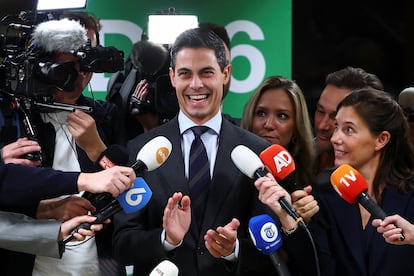
Less than a week before the left’s victory in the cradle of capitalism, a progressive but much more moderate political party, D66, won elections in the Netherlands with the same promise: to alleviate the housing bottleneck. “Every pig in this country has a roof over their head, but a student or a young person can’t even find an affordable broom closet,” the future Dutch prime minister, Rob Jetten, graphically stated during the campaign. Everything seems to indicate that Geert Wilders and his incendiary xenophobic rhetoric will be left out of the government: the housing crisis, in short, matters more to voters than immigration.
The housing issue has also recently been championed by Ireland’s newly elected president, Catherine Connolly, whose success was even more resounding: she garnered 63% of the votes, more than half a million ahead of her closest rival, and with a particularly high voter turnout among younger generations, weary of wages that are insufficient—especially in Dublin—and to whom the new head of state has consistently appealed.
“Housing is the most powerful political and social issue today, both in Europe and throughout the West,” Balakrishnan Rajagopal, the United Nations Special Rapporteur on the Right to adequate housing, told EL PAÍS. “It is an extreme affordability crisis, especially for the working population, who perceive an extreme inequality of wealth and class: the wealthiest classes seem unaffected, and at the same time, their own governments fail to address the issue to help those in need.”
“We are talking about a broad cost-of-living crisis, in which housing may be the most significant component,” explains Ben Ansell, Professor of Comparative Democratic Institutions at the University of Oxford. The result: “Millions of people are unable to afford the standard of living their parents enjoyed at their age, even though they may have earned significantly less.”
The figures speak for themselves. Since 2010, the average sale price of homes has skyrocketed by 55% in the EU, while rent has increased by 27%. In Germany, almost one in three tenants fears they will be unable to pay their rent.
There’s more, also in the realm of perceptions, which are just as important, if not more so, than reality in shaping political opinions. The shortage of affordable housing is the main concern for Europeans living in cities: 51% consider it an immediate and urgent problem, according to the latest Eurobarometer survey. This is almost 20 points higher than those who place employment at the top of their list of concerns, or even those who complain about the quality of public services. One population group is particularly affected: young people, especially in the southern countries, where wages are lower.
Until now, the housing crisis had fueled—and greatly benefited—far-right populism, which draws a direct line between the lack of affordable housing and immigration. This is evident in France, where Marine Le Pen is leading in the polls; in Germany, where the AfD threatens to overtake the traditional parties; in Italy, where Giorgia Meloni swept the elections and the housing crisis persists with no solution in sight; and in Spain, where Vox has also made this a central issue with proposals such as deregulation, tax cuts, and prioritizing nationals over foreigners.
Social message
Judging by the latest elections, however, something seems to be changing. Mamdani has won the mayoral race in the most populous city in the United States (and the third most populous in the Western world after São Paulo and Mexico City) with an unequivocally social message, focusing on housing and beyond: free public buses for all and free childcare up to age five.
“The far right has managed to turn frustration over the housing crisis into an electoral advantage. Now, however, some progressive parties—like D66—and left-wing parties are beginning to address these challenges more directly and focus more on basic issues that affect everyday life,” outlines Jacob Nyrup, a professor at the University of Oslo specializing in inequality.
Along the same lines, Ansell sees “opportunities” for progressive parties and the traditional left to gain support on the issue of high rent. “The problem is that this only seems to work for a subset of young people in or near major cities: Sinn Féin in Dublin or Mamdani in New York. Moreover, many of these young people also aspire to be property owners, and when they achieve this, their attitudes often shift towards protecting housing prices. So it’s a difficult coalition to keep together.”
The far right links it to immigration
“The latest election campaigns clearly show that people in many Western countries and cities are waking up to the false propaganda of far-right parties,” Rajagopal affirms. They are also waking up to the “apocalyptic scenarios” painted around the phenomenon of migration, even though the arrival figures do not differ much from the historical average. Linking the high cost of housing to the arrival of people from abroad, the UN Special Rapporteur warns, “is very dangerous and can only harm these societies without addressing the real challenge: the housing crisis, which is a consequence of misguided neoliberal policies implemented over the last three decades (or more), and the increase in social inequality.” Ansell, who has studied the British case in detail, has also found no evidence to support this supposed link between immigration and high housing prices.
“Internal migration [to larger cities, in particular] and the growing preference for living in city centers are much more significant,” argues Martin Vinaes Larsen, a political scientist at Aarhus University in Denmark. “As cities become less affordable, a greater proportion of people feel excluded. And in countries with one or two dominant economic centers, being left out represents a real disadvantage that increasingly affects the middle class.” The solution? “Increase the supply [of housing].” Build more.
The Netherlands laboratory
The case of the Netherlands deserves special attention: Wilders won in 2023 with a campaign that directly linked housing and migration, and two years later voters have turned their backs on him. “We are witnessing the beginnings of a new way of doing politics, a new recognition of the reality of housing affordability and other rights as a central issue for a new political reconfiguration based on human rights,” predicts the UN Special Rapporteur. Something that, he says, “we are also seeing in New York.”
That Jetten’s party was the first moderate, pro-European force to defeat the far right with housing policies at the heart of its political platform is far from accidental. Besides being one of the nations hardest hit by soaring housing prices, the Netherlands, along with Austria, is one of Europe’s leading laboratories for housing policy. While Vienna is known for its vast stock of public housing, Amsterdam, the largest Dutch city, has even gone so far as to prohibit the purchase of apartments for speculative purposes.
“D66 has correctly identified the cost of housing as one of the defining issues [of the election], as is the case in many other European countries,” Jeremy Cliffe of the ECFR think tank noted in an email. He particularly values their proposal to build a dozen new cities with enough housing to accommodate their population. The largest of these, IJstad, located halfway between Amsterdam and the province of Flevoland (north-center), plans to have up to 60,000 homes that—if ultimately built—will house 126,000 people. If it goes ahead, it will be connected by train to the country’s main economic and business centers.
Sign up for our weekly newsletter to get more English-language news coverage from EL PAÍS USA Edition