
Al Green: The sex symbol who became a reverend after a tragedy
The controversial 1970s soul legend became a pastor after an accident. He has just released an EP of covers featuring young talents like Raye, a British pop singer
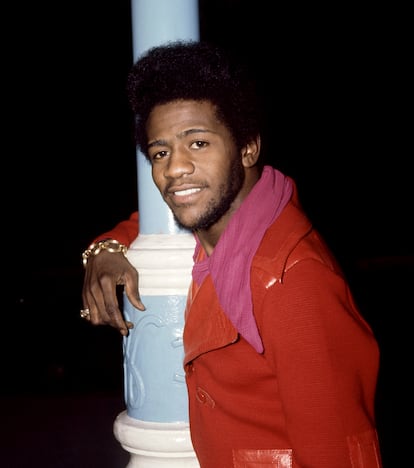
Al Green sensed that something bad was going to happen on the night of October 18, 1974, when he arrived at his Memphis mansion with his partner, Mary Woodson, whom he was picking up from jail for smoking marijuana.
During the car ride, Woodson looked at Green in the rearview mirror with a serious and fearful expression on her face. In the passenger seat, there was an old friend of Green’s named Carlotta Williams. She was a flight attendant who had showed up unannounced at the singer’s studio that same day. Green invited them both to spend the night at his house, making it clear that the three of them would sleep in separate rooms. Upon arriving at the house, Williams quickly retired to her room, while Green and Woodson briefly crossed paths in the kitchen. Woodson had put water on to boil and took advantage of a spontaneous moment of intimacy with Al to propose marriage.
Green was surprised by the suddenness of the proposal (theirs was a casual relationship). And so, he decided to postpone the conversation until the following morning, when they were both rested. He then went to run a shower. While brushing his teeth in his underwear, he heard a bang: Woodson appeared behind him with a “steaming pot” in her hand. In it, Woodson had prepared boiling grits, which she violently threw onto Green’s bare back, plunging him into excruciating pain. Carlotta, frightened, ran from her room. Green managed to reach the shower, desperately throwing himself under icy water to soothe the burns, which soon developed blisters “the size of eggs.”
Just as he was about to faint, Green suddenly heard a loud bang — a gunshot — and then another. After the second shot, he heard “something heavy hit the floor.” It was Woodson’s body; she had shot herself in the temple and died instantly.
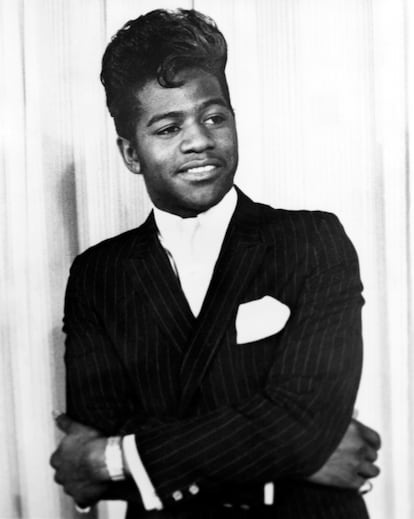
At the time of this tragic event, Al Green was at the peak of his popularity in the United States. The Arkansas-born singer had sold eight million singles, including Let’s Stay Together (1972) and Tired of Being Alone (1971). After the incident, however, he would never be the same.
Green spent two months hospitalized, receiving treatment for second-degree burns that required skin grafts. After the incident, he discovered that Woodson had left behind a husband and three children in order to begin a relationship with him. Woodson — who had been a teenage mother — was 29-years-old when she killed herself.
Green already knew part of Woodson’s past: he was aware that this wasn’t her first suicide attempt. Woodson had tried to take her own life during her youth, according to a 2004 report published in Vibe magazine. Those close to her recalled that, during a well-known incident, Mary shot a boyfriend in the foot because he had been unfaithful. Afterward, they got back together.
In that award-winning article, Woodson’s siblings and friends shared surprising, previously unpublished accounts of her. They described an emotionally unpredictable woman who was aware of her attractiveness: she enjoyed trying to seduce music stars. And while they didn’t understand why she had taken her own life, the story fit her character perfectly: “That was her. She was the biggest, hottest frying pan you’ve ever seen,” one of her sisters declared.
The journalist was surprised that the people in Memphis she interviewed for the story knew about the attack on Green, but were unaware of Mary Woodson’s suicide. For some reason, her death was erased from the popular narrative: for decades, only her assault on Green was remembered, while the person who actually died that night was forgotten. Perhaps a serious, non-judgmental conversation about teenage motherhood and mental health (Woodson was a psychiatric patient) was too difficult back then.
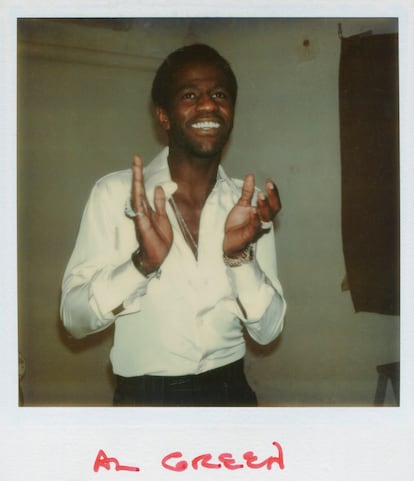
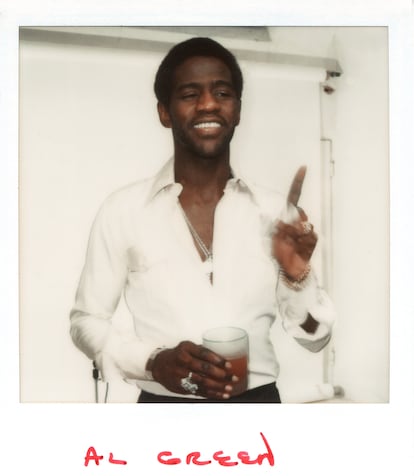
The first encounter between Al Green and Mary Woodson, according to the official version, took place in a New York jail: Green was singing to the inmates and Woodson was visiting a friend. They felt an immediate attraction. However, Green recalled that Woodson sometimes expressed ideas that he found disconcerting. For example, the prediction that Al Green would one day become a preacher, something he had never considered. In the end, though, she turned out to be right.
The sex symbol who became a reverend
Albert Greene, born in 1946, grew up with nine siblings in abject poverty, in a family of sharecroppers in Arkansas. At 18, his father — a devout Catholic — kicked him out of the house after catching him listening to Jackie Wilson’s soul music. And so, the young man decided to go live with an older sex worker, with whom he had formed a close relationship.
During this time, Greene experimented with partying and drugs. But soon, music came calling. Removing the “e” from his last name and shortening his first, Al Green started a career in music almost by chance, after opening for Willie Mitchell at a concert in Texas in 1968. The two would form a creative partnership that would lead Al Green to commercial glory in the early-1970s, thanks to albums like Let’s Stay Together.
Al Green left his mark because his shy, gentle style set him apart from the strident vocalists of the time. His voice captivated listeners, but in his lyrics, it was he who yearned for affection and love. It was he who was deeply in love with the other person.
At the time, no one could have imagined that Al Green would eventually become a pastor, although the first signs were beginning to emerge. In 1973, a year before his girlfriend’s suicide, Green had already experienced a spiritual awakening during a visit to Disneyland, in California. When Woodson took her own life, Green decided he had to radically change his existence. An accident during a concert in Cincinnati, in 1979 — which he interpreted as a divine message — reaffirmed his conviction. From then on, Al Green embraced gospel music, founded a church and became a pastor… just as Woodson had predicted. He went from being a sex symbol who thrilled his female fans — revealing his hairy chest through a shirt that was unbuttoned to his navel — to calling himself a reverend: Reverend Al Green.
A history of violence
This conflict between the secular and the sacred has always accompanied the iconic Al Green. In 2026, he looks back at his nearly 80 years of life after an extraordinarily peculiar existence, marked by several notorious episodes of violence that contrast sharply with the sexy, smooth-talking macho image promoted by his record label.
In that grits incident, Green literally experienced that violence firsthand. But his life was also marked by the violence that he himself inflicted on others — mainly women — in an era when domestic violence was sadly normalized.
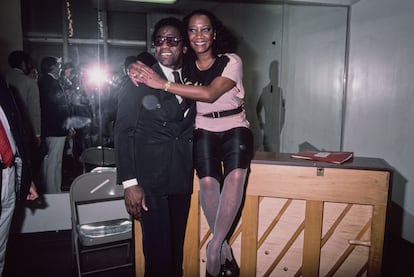
His first wife, Shirley Green — a former chorus girl — sued the musician in 1978 for repeated abuse (he countersued for “cruel and inhuman treatment”). In one incident, Shirley alleged that Green hit her on the head with a boot after she refused to have sex with him. Although Green initially denied the assault, he later admitted to it under oath. In 1983, the divorce was finalized.
That same year, Green had released the fourth of his numerous gospel albums, which would eventually form the bulk of his discography. I’ll Rise Again (1983) was followed by a holiday album, White Christmas (1983).
By 1974, Al Green’s public image had already begun to unravel. That year, he smiled on the cover of his iconic album, Al Green Explores Your Mind, which included the single Take Me to the River (famous for the 1977 Talking Heads cover). Around the time of the album’s release, Green was sued by his former secretary, Linda Wills, for assault and battery. Wills alleged that the singer had attacked her after she confronted him about a series of unpaid debts. Although the lawsuit was dismissed due to “conflicting testimony,” an out-of-court settlement of $100,000 was reached. “Perhaps she doesn’t have that much love and happiness,” a news report at the time quipped, referring ironically to the singer’s 1973 hit.
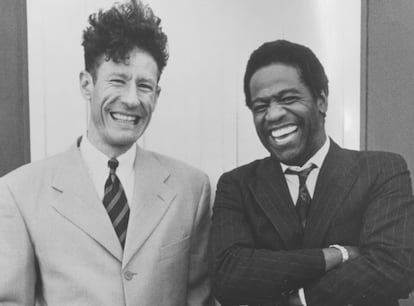
Faced with such a string of traumatic events, Al Green sought refuge in religion. In 1976, he bought the Full Gospel Tabernacle Church in Memphis and became the pastor of his own congregation, beginning a spiritual journey that continues to this day. While albums like The Belle Album (1977) already included religious messages, in the early-1980s, his discography shifted toward gospel. Works like The Lord Will Make a Way (1980) and Trust in God (1984) dominate his catalog. One of those albums — Soul Survivor (1987) – lends its title to a biography on Green that was published in 2017. And he also reused Take Me to the River as the title for his autobiography, which was published in 2000. However, the text — according to a journalist from The Guardian — omitted any reference to his first marriage.
Al Green restored his image thanks to religion, but also through the prestige he acquired in music history. In the final scene of the 1988 film Scrooged, the song Put a Little Love in Your Heart — performed by Annie Lennox and Al Green — plays at the film’s climactic moment. His first secular album in 15 years — Your Heart’s in Good Hands (1995) – was well-received by critics. And, in 2008, the updated sound of the album Lay It Down earned him two Grammy Awards, adding to his total of 11.
The fond memory of this romantic singer — who defined the popular music of the 1970s — remains alive today. Although his discography hasn’t experienced a revival like Kate Bush’s (thanks to the series Stranger Things), Al Green has had his own brief viral moment. In late-2025, his version of How Can You Mend a Broken Heart (1972) — originally by the Bee Gees — went viral on social media 53 years after its release, for purely musical reasons (without any associated choreography or social media challenges). And, in the first days of 2026, Al Green is back in the spotlight, after releasing an EP of covers of songs by the Bee Gees, Lou Reed, Velvet Underground and R.E.M.
For Perfect Day — his adaptation of the famous Lou Reed song — he’s collaborating with Raye, a leading figure in contemporary British pop. Al Green has thus firmly established himself in the 21st century, in the same year that he celebrates eight decades of a life marked by an identity in constant conflict.
Sign up for our weekly newsletter to get more English-language news coverage from EL PAÍS USA Edition









































