
Tom Morello: This guitar shuts fascists up
The Rage Against the Machine guitarist, who instigated the anti-ICE Minneapolis concert in which Bruce Springsteen participated, has become rock’s greatest vigilante
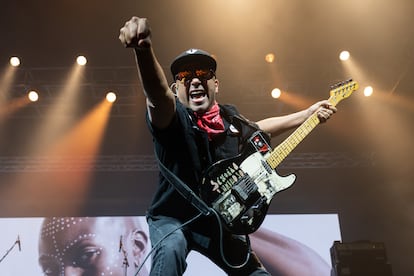

In July 1993, Tom Morello and his Rage Against the Machine bandmates stormed onto the Lollapalooza stage naked. Their debut album had been released a few months earlier, and this was perhaps their most important concert yet. They didn’t care. They placed their instruments on the floor to create a screeching feedback effect and stood in the center of the stage. All four covered their mouths with electrical tape. Each had one of the letters of the PMRC (Parents Music Resource Center) painted on their chest — a committee led by the wives of American politicians that advocated censoring song lyrics because they believed rock music “supported and glorified violence, drug use, and suicide.” The musicians remained impassive and as naked as the day they were born for 15 minutes. The audience initially applauded, but then booed, eager as they were to hear the explosive songs of Rage Against the Machine.
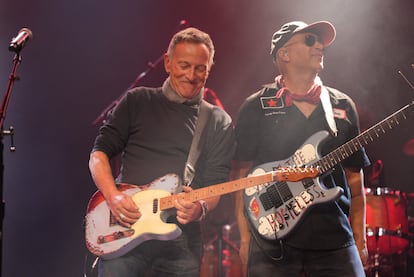
On January 30, Morello organized a concert at First Avenue, a Minneapolis rock venue, to raise money for the families of Alex Pretti and Renee Good, who were shot and killed by federal agents from ICE, the controversial Immigration and Customs Enforcement agency. Bruce Springsteen joined the concert, though he wasn’t on the bill. This time, everyone was fully clothed. Springsteen performed his recent anti-ICE anthem, Streets of Minneapolis, and then a band joined Morello and The Boss for a furious rendition of Springsteen’s The Ghost of Tom Joad. They finished with a heartfelt performance of John Lennon’s Power to the People, with Morello, Springsteen, Al Di Meola, and other musicians giving it their all. Power to the people: that was the message they wanted to convey.
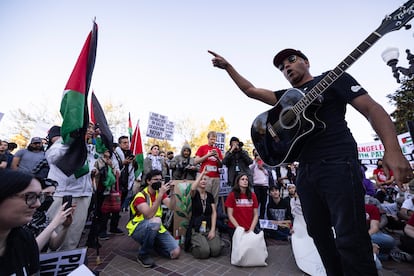
Thirty-three years have passed since that Lollapalooza, and Morello, 61, hasn’t stopped fighting against social injustices and for human rights. He, his cap, and his guitar have protested on behalf of everyone who cried out for help, always from a left-wing perspective: from leading Occupy Wall Street and Black Lives Matter demonstrations, to supporting local protests in Nairobi’s slums or in migrant camps around the world; also in street clashes when the G8 summit takes place, when he and many other supportive protesters have had to escape batons and tear gas. If anyone can be considered the current heir to that message Woody Guthrie wrote on his guitar, “This machine kills fascists,” it’s Tom Morello.
Morello has always looked this unjust world in the eye. That’s what his parents taught him. His Kenyan father fought for the independence of his country, and his mother was always active in labor unions, as well as a vocal opponent of the PMRC as the founder of Parents for Rock & Rap. They met in Nairobi, Kenya, moved to Harlem, New York, and there Morello was born, an only child. When he was just 18 months old, his parents separated, and he lived with his mother from then on. The two moved to Libertyville, about 30 miles from Chicago, where young Tom grew up as the only Black child in school.
“My mom was a history teacher at the Libertyville public high school, and she was a radical teacher in a conservative town. I experienced racism on the playground and also feelings of injustice,” the musician told Spin magazine. One day he came home with sadness etched on his face. When his mother asked him what was wrong, he said, “A kid insulted me for being Black.” His mother replied, “Look, this is what you’re going to do tomorrow.” “She took my brown hand, closed it into a small fist, and shook it in the air as if she were going to throw a punch. And she repeated, ‘This is what you’re going to do tomorrow.’” Morello was only six years old. She also explained who Malcolm X was. But it wasn’t going to be that simple. When he was 13, he received a message from the white kids in the neighborhood: they placed a noose in the garage of the house where he lived with his mother.
His first attempt at playing guitar was frustrating. He signed up for lessons at 13, and the teacher started talking to him about tuning and scales. But all he wanted to play was Black Dog by Led Zeppelin and Detroit Rock City by Kiss. He put the guitar away until, at 17, he discovered Never Mind the Bollocks, the Sex Pistols’ debut album. The urgency of punk and its emphasis on intuition and energy over academic rigor proved fundamental in his decision to dedicate five or six hours a day to playing guitar from then on. Jimi Hendrix, Eddie Van Halen, and Randy Rhoads served as inspirations for him. But he was also passionate about the political message behind The Clash. Morello was already clear that music wasn’t just about enjoyment for him: it also served as a political and moral weapon.
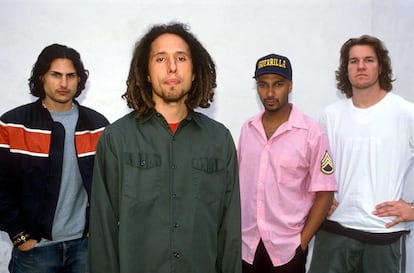
Morello enrolled at Harvard to study political science. “I was the only leftist in my class,” he said; he was also the only student at the university living in a squat and participating in picket lines, whether to defend domestic workers or in demonstrations against conservative government policies. After graduating, the first bands emerged: first Lock Up, a group influenced by the Red Hot Chili Peppers’ sound, and soon Rage Against the Machine (RATM) was formed, a group that defined the sound of the 1990s and complemented Nirvana’s grunge to offer youthful rebellion and a message. RATM’s message was much more powerful, with songs containing strong political content, such as Killing in the Name, a critique of certain particularly violent police actions, equating these officers with members of the Ku Klux Klan; or Bulls on Parade, a critique of the arms industry. Rage Against The Machine stood out for its originality: a Mexican-American singer with dreadlocks giving his all on every song, an almost funky rhythm section, and a guitarist (Morello) with a novel style that he explained like this: “We were fusing hard rock, punk, and hip-hop, and I was the DJ, but with the guitar. It allowed me to emulate many of the sounds I heard on Dr. Dre and Public Enemy records.”
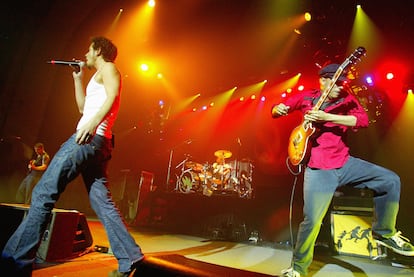
In 1996, RATM performed two unforgettable concerts at the Festimad festival in Madrid. One was in Móstoles, the festival’s venue, before a frenzied crowd, and the other the day before at the small Revólver club, in front of about 1,000 people, with the aim of raising funds for the Zapatista Army of National Liberation in Mexico. RATM released only three albums (plus one of covers), perhaps because their original musical structure felt somewhat rigid. It was also due to singer Zack de la Rocha’s intention to launch his solo career. The other three members of RATM then formed Audioslave with one of the great grunge vocalists, Chris Cornell of Soundgarden.
The political edge of Audioslave lessened compared to RATM, but Morello compensated with socially conscious projects like Prophets of Rage, alongside members of Public Enemy and Cypress Hill, and The Nightwatchman, his folk protest singer-songwriter persona paying homage to idols like Woody Guthrie, Pete Seeger, Bob Dylan, and Billy Bragg. Morello has collaborated on albums and tours with Bruce Springsteen, in addition to pursuing solo music like The Atlas Underground, an album based on electronic experiments, demonstrating an artistic curiosity that extends beyond rock.
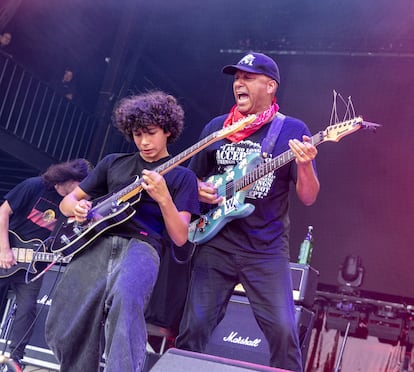
Morello defines himself as a “non-sectarian socialist,” a union member, and a detractor of U.S. imperialism. He believes that the two-party system in his country is an evil that prevents other political options from gaining power. The musician always considers his schedule clear when he receives a call from any group that feels oppressed by the authorities. Then, he picks up his acoustic guitar and sings his revolutionary compositions, regardless of the consequences.
One of his latest songs is called Soldier In The Army Of Love, featuring the youngest of his two sons, Roman, 14, (“I’ve become his rhythm guitarist,” he jokes about the family partnership), on which they sing: “Border patrol’ll never catch this riff / Gotta turn your illness to a weapon, son / Who needs a weapon when you were born one?” The Morello family together, with the mission of achieving a fairer world.
Sign up for our weekly newsletter to get more English-language news coverage from EL PAÍS USA Edition









































