
Rising food prices frustrate families in Puerto Rico: ‘I limit myself to the bare minimum’
Food insecurity hits hardest those already living with limited resources and confronts the island with its structural weaknesses
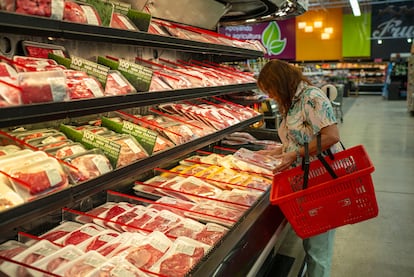
Every trip to the supermarket has become frustrating for Maritza Ortega, who lives in Puerto Rico. Cutting back on her purchases is no longer a choice. As she fills her cart, she ends up removing items while checking prices to ensure she only gets the essentials. This practice has become routine. “When I go to the supermarket, I limit myself to the bare minimum. It’s frustrating to walk through the aisles, see what I need, and then have to take things out of the cart,” she says. “Sometimes I think: I can’t afford this right now.”
Ortega, 53, has been adjusting her budget since the Covid pandemic. With a recent cancer diagnosis, she needs to follow a specific diet that includes snacks and fruit that she can’t always afford. She has had to choose cheaper, lower-quality foods.
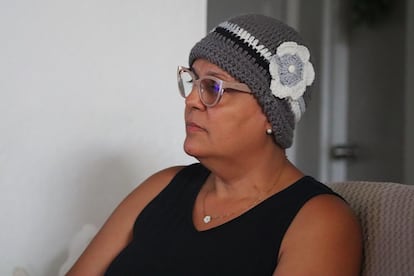
Maritza’s experience is common in many Puerto Rican homes: families who stop buying certain foods or rely on low-quality products. Since 2020, the cost of living has steadily increased. In June alone, food prices rose 3.4% compared to the previous year. This translates into hardship for those already living with limited resources. A recent study by the grassroots feminist organization Taller Salud warns that more than half of the adults on the island consume only two meals a day.
The influence of historical policies and the colonial context on Puerto Rico’s food structure has favored imports, which today represent approximately 85% of local consumption. This dependence represents a significant vulnerability, leaving the island exposed to supply chain disruptions and climate change.
The origin of imports, inflation, and natural disasters motivated Taller Salud to conduct the study “Food and Dignity: A Community Analysis of Food Insecurity in Puerto Rico,” based on concrete experiences of hunger. This hunger stems not only from major disasters like Hurricane Maria, but also from rains, power outages, and storms that disrupt daily life.
“Everything disproportionately affects children, young people, and the elderly,” says Tania Rosario, executive director of the organization. “Before, there was no political awareness of hunger as a public health issue; it emerged after Hurricane Maria and the period of austerity we experienced.”
The organization, with over four decades of experience, collected data through surveys in Loíza and listening sessions in San Germán and Salinas, in the west and south, respectively. Although the results are not representative of all of Puerto Rico, they highlight a particularly vulnerable group: older Afro-descendant women who are heads of household.
During the investigation, one thing became clear: there was a lack of language to talk about hunger. “Most people associate it with extreme malnutrition and don’t recognize it in their daily lives,” says Rosario. “There’s a taboo, a feeling of shame.” According to economist José Caraballo-Cueto, the Taller Salud study points to a key issue: agricultural self-sufficiency can help the island in times of global crisis.
Following the pandemic, a bottleneck economy emerged, marked by delays in global production. “This was compounded by the war in Ukraine, a major exporter of agricultural commodities,” he explains. “All of this reduced global supply and drove prices up.”
That price increase has been tough for José Cátala, 53, a resident of Bayamón. “When the price of eggs went up, I stopped buying them,” he recalls. “Before, I would buy two packages of meat; now I only buy one. I’ve also cut back on juices and desserts so I can prioritize the essentials.”
In emergencies, he has turned to Klarna, an online financing service, to buy food and pay for it later in installments. His experience aligns with a NielsenIQ analysis that revealed consumer prices rose by 1.9%, forcing Puerto Rican families to change their consumption habits due to inflation and import tariffs.
But, according to labor lawyer Rosa Seguí, the urban reality is not comparable to the rural one. “Many people commute from their villages to the metropolitan area for work, and deal with a lack of public transportation and urban planning,” she warns. “You can’t talk about food insecurity without talking about economic inequality and energy instability. People survive by buying whatever they can, often of lower quality.”
Collective work as a response to hunger
Faced with this need, initiatives are emerging from and for the local community. One of them is SuperSolidario, a community supermarket that opens once a month in Caguas, a town in the east-central part of the island. The project, led by activist Giovanni Roberto, focuses on local production and distribution. “We supplement food supplies. We get groceries from supermarkets and from people in the community who donate them to give to those who need them most,” he explains.
One challenge for the project, besides inflation, is the inability to process payments with the Nutritional Assistance Program (PAN) card, which they consider an obstacle they hope to overcome. “It’s a simple model, but it requires a lot of hands and human investment,” he adds.
Platforms like AgroRecursos have also emerged, connecting local farmers with food buyers and suppliers directly and fairly. Their food security analyst, Crystal Díaz, explains that the lack of coordination between producers and consumers leads to waste and missed opportunities. “AgroRecursos allows for agreements to be made without intermediaries. It’s a collaborative space where information on availability, prices, and market needs is shared,” she says.
Both projects agree on one point: the lack of coordination and support from the government. The Taller Salud study recommends updating official data on hunger—the latest data dates back to 2013—and controlling the prices of basic goods. “It’s irresponsible to legislate with such outdated data,” Rosario warns.
At Super Solidario, community surveys reveal that people seek quality products, and the project works to maintain affordable prices. Next year, they plan to publish a book documenting their model so it can be replicated in other towns.
At AgroRecursos, the goal is to strengthen the local value chain, a critical aspect in the face of global inflation and dependence on imports. “We have capable farmers, fertile land, and interested consumers. What we lack is coordination, infrastructure, and the will to invest,” Díaz emphasizes.
Meanwhile, Maritza continues to adjust her purchases to the power outages that spoil food. “I bought a small freezer and cooking gas. It was either that or keep throwing food away every time the power went out,” she says. “It’s not about living comfortably here, but about adjusting every expense so that it stretches.”
In collaboration with CAF, the Latin American and Caribbean Development Bank.
Sign up for our weekly newsletter to get more English-language news coverage from EL PAÍS USA Edition









































