
Bad Bunny, a multimillion-dollar charm for Puerto Rico’s economy
The boost from his 30-show residency cements the island as a global hub for urban music and transcends the political tensions the artist explores
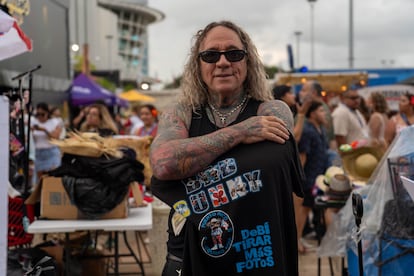

—Are you guys celebrating that bunny?
—No, we’re celebrating Puerto Rican culture.
The exchange — between a worker at a wholesale club and a customer — happened because the female employees had adorned their hair with flowers and the male employees were wearing pavas.
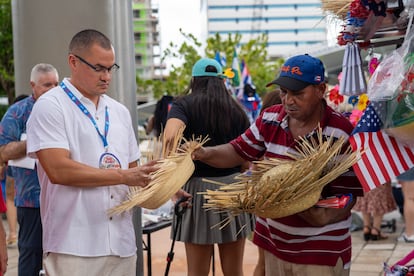
Bad Bunny’s 30-concert residency in Puerto Rico had just begun, and in many businesses, the pava — the traditional straw hat of the Puerto Rican jíbaro that the artist has introduced to the world — became impossible to miss. Bad Bunny has turned it into a pop symbol that goes beyond its rural roots, representing the hard life of the Puerto Rican countryside.
Not a single display case was spared. Even bottles of expensive perfume were topped with miniature pavas. It was just one of the many creative touches that brought Puerto Rican cultural symbols to everyday items across the island.
This summer, the Bad Bunny fever spread rapidly across the island and turned the event into a powerful economic engine and a turning point in the entertainment industry. If, as many say, Puerto Rico’s greatest resource is its music and culture, then this summer the Coliseo de Puerto Rico has proven to be a true cultural and economic goldmine.
Bad Bunny did not schedule any shows in the United States for his global tour, which begins after the San Juan residency. Initially, it was speculated that the decision was meant to economically support the island. But last week, he confirmed that the choice was driven by fear of potential immigration raids at some of his concerts.
Even if that wasn’t his motivation — and despite the tensions over the political, cultural, and social content in his album Debí Tirar Más Fotos and the singer’s opposition to the current New Progressive Party government, which advocates full U.S. statehood for Puerto Rico — the effects of his San Juan residency have been felt across every sector.
“We have about 50 tables that used to fill up around 10 times a day; now they fill about 40 times a day. We’ve extended the hours and expanded the space. The line wraps around the street,” says Jesús Pérez, one of the owners of La Casita Blanca, an iconic restaurant with 47 years of history in the heart of San Juan’s Santurce neighborhood, known as a birthplace of one branch of the bomba tradition, and for its deep Afro-descendant roots. The streets there also witnessed the rise of musical legends like Ismael Rivera and Pellín Rodríguez, among many others.
“Here, we serve food the way my grandmother made it,” says Pérez, who, along with his brother Leonardo and his mother, Mildred de León, keeps the family tradition alive. “We make the sofrito [a flavorful base used to season dishes], following the tradition implemented by my father, Jesús Pérez. It is the flavor of the neighborhood, the food our ancestors ate. We serve bacalaítos [crispy cod fritters] and plantain soup from our own garden; we serve pig’s feet with chickpeas, beef steak with onions, stewed meat, and chicken fricassee. At the end, we give customers a chichaíto [a distilled shot of rum and anise] with three coffee beans that symbolize love, money, and health."
At their restaurant, customers also buy cigars, coffee, the grandfather’s hot sauce, and small cups for drinks. Members of the Puerto Rican diaspora often cry when they taste the food, connecting memory and palate, while tourists leave discovering the true flavor of the island.
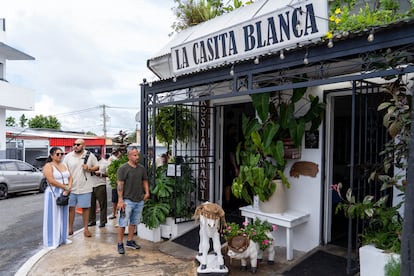
The restaurant has a long history. But once Benito, as he’s known on the island, visited the place, interest skyrocketed. Similar effects have been seen in many other businesses. Just as a rabbit’s foot is a lucky charm, Bad Bunny’s presence has had a comparable impact on Puerto Rico’s economy.
Tourism boost
A report commissioned by the Municipality of San Juan estimated that the first 15 shows of the residency generated an economic impact of around $165 million. For the final 15 shows, which were opened to non-residents of Puerto Rico, an additional $214 million is expected. Both estimates are considered conservative, as roughly 500,000 people are projected to have visited the island during the three-month residency, with total attendance reaching 450,000.
The boost to tourism has been even greater, given that the residency took place during the low season, coinciding with hurricane season. The value of international media exposure alone was estimated at $17 million. On social media, by the midpoint of the residency, around 205 million users had interacted with content related to the shows. Even Moody’s Analytics raised its forecast for Puerto Rico’s economy from 0.3% to 0.4%, largely due to the residency.
“Puerto Rico has the capacity for a significant portion of its gross domestic product to come from musical arts, and we are seeing that potential realized concretely,” explains Ricardo Cortés Chico, Vice President of Industrial Affairs at Discover Puerto Rico. He added that, as an intermediary organization, they worked with the tourism industry to create promotional packages. Through this effort, they sold 48,255 hotel nights across 34 hotels and estimated an economic stimulus of $196.5 million.
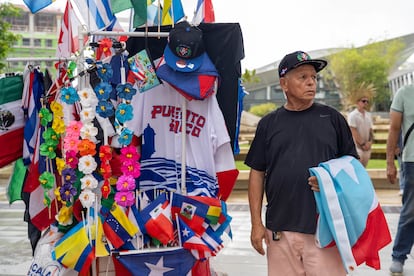
These figures do not include people staying in short-term rentals, with friends or family, or those who booked hotels independently. Nor do they account for local residents spending on entertainment in San Juan for the concert. They also exclude waitstaff earning around $300 in tips each weekend, Uber drivers, street vendors outside the Coliseum, or even the San Benito candles seen around the city. In fact, the residency began on St. Benito’s Day itself, adding another layer of symbolic and cultural significance.
“Of course, we’ll have a headache next year in the same quarter, figuring out how to maintain or match this momentum,” admits Cortés. “The destination has thrived because we stopped trying to present ourselves like other competitors and focused on who we are. There’s no other destination that can offer an authentic Puerto Rican experience.”
Davelyn Tardí, Communications Manager at Discover Puerto Rico, believes the residency has given the island a boost that “allows us to catapult the momentum.” “Once October begins, our high season starts, and we’re already seeing that the pace of bookings through the end of this year is positive compared to last year,” she adds.
What comes next?
The challenge now is to ensure that this economic boom has a lasting impact, which raises questions about how the government has engaged with the event. On one hand, business owners and those tied to the production acknowledge that San Juan’s municipal government did everything possible to cooperate. On the other hand, while the Puerto Rican government met the basic requirements for an event of this magnitude, it has shown little concrete interest or presented a broader plan to fully capitalize on the opportunity.
“The government should be promoting what is happening naturally with this artist, who already has global fame, but that isn’t necessarily the case for others,” explains economist Indira Luciano Montalván, from the University of Puerto Rico at Río Piedras. “Certain agencies did their part, did mediation work, but I don’t see an integrated plan. From the government’s perspective, there hasn’t been a strategy to encourage investment in the infrastructure needed for the future, to take this kind of activity beyond urban centers. We don’t know if that has to do with the strong political element.”
In April, Montalván and her students released an early study estimating the possible economic impact of the residency — figures that once seemed striking, but now, at the show’s close, appear much lower than reality.
“We need to look at what the future holds, and how we can encourage activities like this to achieve sustained growth. They were bold and took big risks, but they had an artist who is a product in and of himself. If everything succeeds and their strategies prove effective, others will dare to do the same,” she notes.
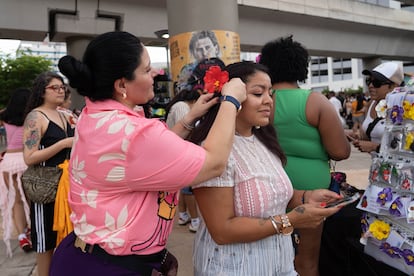
At the end of the 27th show last Sunday, fans poured out of the Coliseo de Puerto Rico after belting out “yo soy de P-fkn-R [I’m from f—ing Puerto Rico]” at the top of their lungs. Many wore pavas with the residency’s logo, flowers in their hair, guayaberas (a kind of linen shirt), colorful skirts, and other touches of what might be called folkloric-ballet aesthetics mixed with perreo — or a neo-jíbaro look that, instead of picks and shovels, channels the swagger of urban maleanteo (gangster rap).
That’s the visible layer, which the market has known how to capitalize on. Beneath it, however, runs a deeper, universal sentiment that resonates with everyone: the defense of identity.
Sign up for our weekly newsletter to get more English-language news coverage from EL PAÍS USA Edition









































