
The planet-friendly diet that would prevent 15 million premature deaths a year
An international commission of scientists proposes changes to combat environmental degradation and disease. The key: less animal protein and more plants
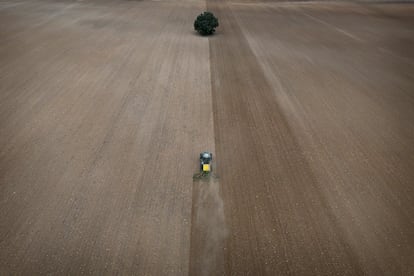

“Healthy people on a healthy planet with fair food systems.” This is the goal set by the EAT-Lancet Commission, made up of a multidisciplinary team of 50 scientists and affiliated with the prestigious publication The Lancet. As a result of this initiative, the so-called Planetary Health Diet (PHD) emerged in 2019. It is a proposal whose “adoption would reduce the environmental impacts and nutritional deficiencies of most current diets,” its authors argue.
This commission has updated its proposal six years later and, after reviewing the scientific evidence, has reached a staggering conclusion: if adopted worldwide, 15 million premature deaths per year (27% of all such deaths) could be avoided, as the impact of many food-related illnesses would be reduced.
The study’s authors warn that a common deficiency has been identified in every region of the planet: “Diets consistently lack sufficient fruits, vegetables, nuts, legumes, and whole grains.” And in many places, there is an excess of meat, dairy products, animal fats, sugar, and overly processed foods.
In fact, only 1% of the world’s population lives in a safe and just environment, from a social, environmental, and health perspective. But, as Walter C. Willett, co-chair of the EAT-Lancet Commission and professor at the Harvard T.H. Chan School of Public Health, points out, the PHD proposal is “very consistent with the traditional Mediterranean diet” and with other traditional diets from many parts of the world.
Basically, what they propose is a variety of whole or minimally processed foods, mostly plant-based. The fats, they explain in a study released on October 2, are primarily unsaturated, with no partially hydrogenated oils. They also propose small amounts of added sugars and salt. “The diet allows for flexibility and is compatible with many foods, cultures, dietary patterns, traditions, and individual preferences,” they state. It is characterized by a low intake of animal protein, contrary to what is found in most diets in developed countries.
Their proposal suggests an average daily intake of 2,373 kilocalories and is flexitarian, meaning it focuses primarily on plants (fruits, vegetables, legumes, nuts, and seeds), but allows animal protein (such as eggs, meat, fish, and dairy products). The authors have also developed vegetarian, vegan, and pescetarian alternatives.
“We’re not talking about a deprivation diet. It’s something that can be delicious,” says Willett. Aware that the proposal contains a lot of numbers and can be complicated to understand at a glance, this expert in epidemiology and nutrition offers a simplification that he summarizes in the formula “one plus one.” That is, a daily serving of dairy — which can be a glass of milk, a yogurt, or a portion of cheese — plus another daily serving of animal protein, reducing red meat intake to just once a week. Added to this are the other plant-based foods proposed by the experts. “It’s something I find simple to follow,” says Willett.
According to the EAT-Lancet Commission report, adopting the PHD, “along with ambitious climate mitigation policies, would result in substantial reductions in greenhouse gas emissions and land use.”
This diet, the authors explain, is primarily designed to achieve optimal levels of overall human health, with a reduction in the incidence of chronic diseases such as cardiovascular disease, type 2 diabetes, cancer, and neurodegenerative conditions. However, in the study, they also emphasize that “there is strong evidence that adopting diets consistent with the PHD would reduce the environmental impact of most current diets.” One of the clearest benefits of changing global dietary patterns would be the reduction of emissions.
“Food systems generate approximately 30% of global greenhouse gas emissions and, without changes, could alone push global warming beyond the 1.5-degree limit, even if fossil fuels were phased out,” says Johan Rockström, co-chair of the EAT-Lancet Commission and director of the Potsdam Institute for Climate Impact Research (PIK).
But the problem goes beyond global warming. In the 2025 report, the authors have analyzed for the first time the influence of food systems on exceeding the so-called planetary boundaries, which are nine fundamental Earth processes that scientists led by the Potsdam Institute maintain must remain stable for the Earth to remain habitable. Seven have already been exceeded. In five of them, food plays a determining role in exceeding safety thresholds. These are climate change, biodiversity loss, land-use change, biogeochemical fluxes (nitrogen and phosphorus), and freshwater use.
“Food is the main cause of planetary boundary violations,” the authors warn. “The food system is putting the planet’s stability at risk,” Rockström summarizes. That’s why a “transformation” is required. According to this expert, this change doesn’t just involve adopting a planetary health diet; it’s also “necessary to reduce food waste and transition to sustainable water use practices” and nutrients for agriculture.
There are proven effective ways to achieve this, as noted by another of the authors, Line Gordon, director of the Stockholm Resilience Centre. These include measures such as fiscal policy to eliminate public subsidies for harmful agricultural and livestock practices or strict regulation of food labeling that is presented as healthy, especially those aimed at children.
Although the authors emphasize that only 1% of the world’s population falls within the safe and fair zone, the degree of responsibility for the environmental impact of what we eat is far from uniform. The authors emphasize that “the diets of the richest 30% of the world’s population contribute to more than 70% of the environmental pressures” linked to food systems. “These statistics highlight the vast inequalities in the distribution of the benefits and burdens of current food systems,” they conclude.
Attacks and disinformation
A significant portion of the press conference held by the coordinators and lead authors of this commission prior to the report’s release Friday was spent highlighting the robustness of the study they conducted, in which 50 scientists participated. “There is overwhelming scientific evidence,” Rockström maintains. However, he and his team are prepared for the “attacks” they suspect they will receive.
Because that’s what happened in 2019, when they first launched the Planetary Health Diet, Willett recalls. “There was an orchestrated attack last time, and there will be one this time as well,” he predicts. “Last time, you did see that it came primarily from the beef and dairy industries,” Willett says. But this expert insists that his conclusions are based on “dozens and dozens of studies” and “rigorous reviews.”
Sign up for our weekly newsletter to get more English-language news coverage from EL PAÍS USA Edition









































