
Roger Davis, biologist: ‘If you eat a poor diet, it activates stress throughout your entire body: muscles, liver, fat… everywhere’
The esteemed scientist, one of the world’s leading experts in molecular biology, explains how disruptions at the cellular level influence health

The human body is an extremely complex system that functions well when kept in balance. Diets high in fats or sugar, lack of exercise, toxic substances, or insufficient sleep can disrupt that harmony and lead to all kinds of chronic diseases, such as obesity, cancer, or heart conditions, which rank among the leading causes of illness and death in industrial societies. It has long been known that the body’s inflammatory response to everyday damage — sometimes continuous and low-grade — explains the origin of many of these disorders. Understanding how this response is regulated is one of the most exciting areas for the medicine of the future.
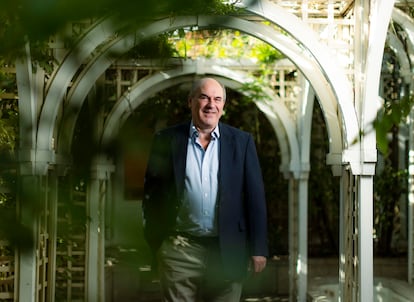
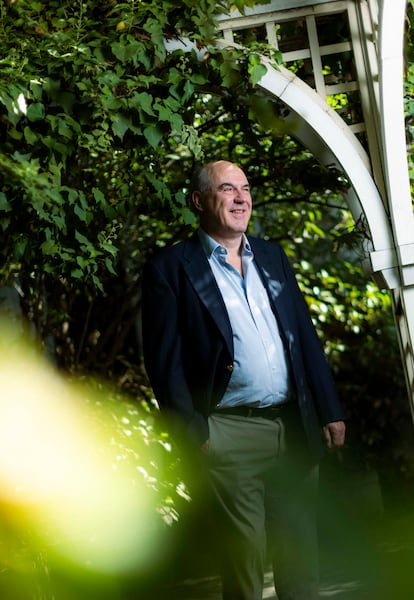
Roger Davis, 67, director of the Department of Molecular Medicine at UMASS Chan Medical School in the U.S., is one of the world’s leading experts in this field. His work in the 1990s led to the cloning of the protein JNK, a switch that activates in our cells when problems are detected, from infections to oxygen deprivation or excess sugar. When the mechanism works properly, it helps cells adapt and survive, but if it becomes overactive or the switch stays on, it contributes to the development of diseases such as arthritis or diabetes.
Davis, one of the most cited scientists in the world, was recently in Madrid to participate in the congress of the Spanish Society of Biochemistry and Molecular Biology (SEBBM), thanks to the collaboration of the BBVA Foundation.
Question. How has the way we understand the effects of stress on cells and our bodies changed since you began your pioneering work?
Answer. It’s been a good number of years since we first cloned JNK — I think some of my current students weren’t even born yet — and the way we think has changed a lot since then. We also know a lot more about the molecular mechanisms and the actual details of how they work. And I think there’s also been a shift in how we think about the purpose of the pathway, why we have it.
Originally, it was defined as a stress pathway, and there were many different types of environmental stimuli that activated it. So, people thought this was a way of responding to stress. Today, we look at it differently, in terms of homeostasis, the balance the body should be in. We now think of stress as the body getting out of balance, and this pathway recognizes the imbalance and corrects it. So it’s more of a physiological balancing act than what we originally thought, where it was simply a bad thing that happened when you were exposed to stress.
Q. When we talk about a mechanism that influences so many different systems, that can be disrupted for so many different reasons, and that doesn’t operate in such a simple way as just eliminating a harmful effect, how can it be used from a medical perspective? How can we manipulate it without causing unwanted side effects?
A. When you don’t understand something, and you start working on it, you discover things that are very unexpected. One of the things we found was that there was a lot of organ-organ crosstalk in the body, where, for example, if we manipulate one organ, what we discover is that the main impact of that is actually somewhere else in the body because of this organ-organ connection. This is something you need to know because if you use drug therapy to mimic what we can do with genetics, we would call that a side effect, but it may actually be the main effect.
If you want to affect one organ, one way of doing that is to target the pathway you want to manipulate, but in another place, which may be easier to treat pharmacologically, to have a beneficial effect on the organ you want to heal. The body is connected. You can’t deal with one part of the body in isolation or separate from another. You need to see it essentially holistically, as a whole.
Q. Demis Hassabis, CEO of DeepMind, has said that AI could cure all diseases within a decade. Do you think this is realistic, or do engineers not understand the complexity of biology?
A. Engineers don’t need to understand the complexities; they need to write software code that can do it. We’re headed in that direction, but I don’t think AI will solve the problem for us. It’s going to be a tool that everyone uses going forwards to interpret what we’re doing.
One of the problems in biology today is that the amount of data and detail we work with is beyond what a human mind can deal with. And having AI to process all the information and sort out what’s important and what isn’t is going to be a very common tool. But I don’t think AI by itself is going to solve the problems of biology. It’s like any other computer code: when you put garbage in, you get garbage out, and you need to use it intelligently, and you need to use it in a way that the software is designed to solve the problem and not just generically. We’re not there yet.
Q. Nowadays, it’s common to see people on podcasts or social media justifying certain nutrition or lifestyle advice by saying that a specific molecule plays a role in the body. Do you think using information from molecular biology in this way to give health advice is reasonable, or is there still not enough evidence to make those connections?
A. I think it’s reasonable to do so and should be done. The problem is that in many cases we don’t have enough knowledge to do it properly. Recommendations need to be made in a way that changes over time based on knowledge. There’s a lot we know now that we didn’t know before.
In the case of the JNK pathway, it actually responds to the food you eat. If you eat a poor diet, say a high-fat diet, it activates the pathways of stress throughout your entire body: muscles, liver, fat… everywhere. What you eat has a huge effect on biology, and obesity is a major epidemic in the developing world and increases the risk of many diseases, such as cancer.
We have to worry about what we eat and the food we’re eating, but when you eat and fasting periods are also important. But in many cases, human studies haven’t reached a stage where the same thing has been done as in other organisms like mice. In mice, having a fasting period every day can be quite beneficial, but there are many details like that that need to be worked out and understood in humans.
Q. What do you consider to be the most promising applications for improving health based on what is currently known about the regulation of cellular stress?
A. There’s a lot of what we know that we can translate into therapies, but the best therapies will probably be based on information we don’t currently have. And I think one of the important things right now is to sustain basic science and learn new things, because it’s those new things that are going to be revolutionary. It’s not going to be the application of the knowledge we have now.
If we think about the advances of recent years, for example, gene therapy with CRISPR, that was not done by planned science. It was discovered as an immune system in bacteria. And anyone interested in obesity or genetic diseases in humans would never have looked for that in bacteria.
Another example in the clinic is RNA interference, where there are nearly a dozen approved therapies, many of them targeting the liver. This stemmed from pioneering work in worms.
I don’t think you can predict where the next breakthrough will come from. You need the translational apparatus present so that when new findings are made, they can be moved to the clinic and then used. But you need a constant supply of new discoveries. I think we’re just touching the surface of how our bodies work; there’s still a lot we don’t understand.
Q. Are you concerned about what is happening in the U.S. with basic science?
A. One of the biggest problems right now is uncertainty: there are grants that aren’t being funded, and it’s unclear whether some will be funded in the future. And that uncertainty is a big problem for scientific careers. For example, with all the funding cuts, a lot of graduate programs have been terminated. At my university, we have maybe one quarter of the students this year compared to an average year. Most graduate student programs have been cut. And when those students see that there are problems getting money to fund science, it discourages them from pursuing a career in biotech companies or in academia. I think there’s a big impact on the flow of new talent, new students, and new postdocs. And I see this with my own students and postdocs, who always ask me what I think the future will look like. It’s tough to come up with a happy answer each time.









































