Lula da Silva loosens the purse strings at the end of the campaign for Brazil’s tight election
The president is using the power of his office over the budget to help the poorest families, entrepreneurs and transportation workers, just a few days before the runoff in a closely contested presidential race
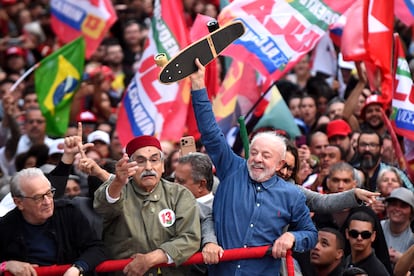

Twenty million families living in poverty will begin receiving extra cash this week, just days before the runoff in Brazil’s closely contested presidential election. The 15% increase in payments from Bolsa Família (the Workers Party’s flagship anti-poverty program) that President Luiz Inácio Lula da Silva announced in September, shortly before the first round of voting, is reaching the pockets of the neediest just ahead of Sunday’s runoff vote.
The rise in the benefits that guarantee the bare minimum for Brazil’s most vulnerable citizens is the main measure in the broad package of aid, subsidies and pay increases that the leftist leader is promising to an electorate that is split almost exactly in two, with a tiny share still undecided. Lula and Senator Flávio Bolsonaro are entering the final sprint in a deadlock.
Lula is on his seventh presidential campaign after losing the first three and winning three more. “This is my last campaign to be president and I want this term to be historic,” he declared on Tuesday at a rally in São Luís, in the state of Maranhão.
The package of measures Lula announced over the past year, with a marked acceleration during the campaign, totals nearly 300 billion reais ($57 billion) for the remainder of 2026 and 2027, according to calculations by the news outlet Folha de S.Paulo. They are extra allocations that will swell a public debt equivalent to 82% of GDP — a problem the person elected to govern for the next four years will have to confront.
The far-right candidate Flávio Bolsonaro promises deep spending cuts. He says he will keep Bolsa Família and other social programs, but has not revealed how he intends to achieve both goals while also balancing the public finances. It sounds like magic.
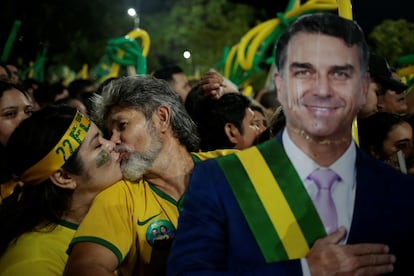
President Lula is following in his predecessors’ footsteps. Former president Jair Bolsonaro — the father of the current candidate — also launched a flurry of announcements to try to win re-election in 2022. It didn’t work for him, and he lost the election.
Lula has issued a challenge to Flávio Bolsonaro. He will lift secrecy over the assets and phone calls made by himself, his wife and his five children if his rival reveals the same information about himself, his wife, his parents and his three adult brothers, according to the pledge the president formalized before the electoral court.
In recent weeks, the president and leader of the Workers’ Party (PT) has announced measures aimed at easing life and expenses for many different groups. He promised free obesity injections within the public health system and banned all forms of online gambling, a move that has broad public support given the corrosive effect it has on people’s finances and mental health. The ban cut off a significant source of tax revenue.
The government also launched a new personal debt relief program after the two or three initiatives introduced during the term failed to restore the finances of families trapped by high interest rates. Eight out of 10 families have debts.
After the first-round votes were counted and Lula finished two points behind Bolsonaro (47%–45%), he resumed making announcements. He promised microentrepreneurs a pix (an instant payment) of $1,000 to invest in their businesses and to forgive their debts. It is a gesture to working-class voters, who in recent years have gradually turned away from the Workers’ Party and embraced the Bolsonaros as a symbol of change. He also cut several fuel taxes — a high-impact move in a vast country where goods move by road — and pledged that public transportation will be free on weekends, a demand that set the streets alight a decade ago and that left- and right-wing politicians have gradually adopted.
The largest items in this torrent of public money announced by Lula subsidize taxi drivers, Uber drivers, truckers and bus drivers who want to renew their vehicles.
The candidates are racing against the clock, traveling thousands of miles from rally to rally while a host of internet activists campaign on social media, the great agora of 2026. On Friday night Bolsonaro and Lula are scheduled to take part in a second and final televised debate in this campaign after Sunday’s debate, which ended in a draw.
With their focus on the undecided voters and those who abstained — who hold the key to this election — the candidates might try to contrast their programs at the debate. But they may instead engage in another sterile duel of attacks, accusations and unanswered questions. It will be the last chance for the PT and the Liberal Party candidates to break the tie they have carried in the polls for months. The far-right senator enjoys a small lead within the margin of error.
The raft of measures announced by Lula, which gives economists and financial markets nightmares, has had less effect on voter sentiment than the candidate and his team expected because they have barely moved the picture in the polls.
Jair Bolsonaro lost in 2022 because of his irresponsible handling of the Covid pandemic — so negligent that his own son intoned a mea culpa — although he walked back all his previous criticisms of Bolsa Família and even tripled its amount, a measure Lula has kept in place. Just in case, his son Flávio, who harbors the dream of returning the family to power, is now cleaning up his social media to delete old posts in which he said the program perpetuates poverty and others in which he compared the millions who receive it to animals.
Sign up for our weekly newsletter to get more English-language news coverage from EL PAÍS USA Edition