
The new oligarchs of El Salvador: How Bukele’s inner circle got rich
As the presidential family expands its real estate empire, lax fiscal controls and suspect loans open the way for a new club of millionaires in the Central American country
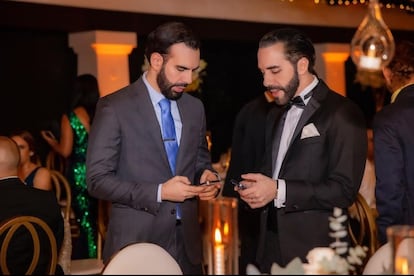
Ernesto Sanabria, press secretary to the government of President Nayib Bukele, is one of the most striking examples of the emergence in El Salvador of a new club of millionaires that has prospered under the umbrella of the controversial leader, who came to power presenting himself as an anti-politics messiah promising to restore dignity to the poor. Sanabria, whose wealth grew from $269,884 in 2019 — when Bukele took office — to more than $2 million in 2026, epitomizes the windfall that has descended like manna on Bukele’s inner circle of aides, loyalists, and family members.
Recent journalistic investigations reveal that, during just the first seven years of his presidency, Bukele and his family acquired 34 new properties, increasing their landholdings twelvefold to assets valued at more than $10 million.
“Unlike previous oligarchies, Bukele did not come from highborn families, and they were not major business owners; in fact, his family ran several bankrupt companies. But once in power, he became a member of the elite and displaced the old millionaires to make room for new actors such as bitcoin entrepreneurs and artificial intelligence agencies,” says Héctor Dada, former minister of economy.
According to Bukele’s asset declarations from the start of his political career and the most recent filing, published in May 2026, his net worth increased from $964,546 in 2012 to $4,466,478 today — a 363% increase over his initial wealth. The data also show that this growth in assets is not limited to the president. Asset declarations from 75 public officials analyzed by this newspaper indicate that at least 21 of them increased their wealth by as much as 713% in seven years or less.
In addition to the newly affluent Secretary Sanabria — who flaunts a luxurious lifestyle through his collection of designer shoes, watches, and high-end vehicles — those who have benefited from this prosperity include Chief of Staff Carolina Recinos; Secretary of Trade and Investment Miguel Kattán; and Douglas Rodríguez, president of the Central Reserve Bank (BCR), along with pro-government lawmakers such as José Robles Sorto, Kaleb Navarro, and Suecy Callejas.
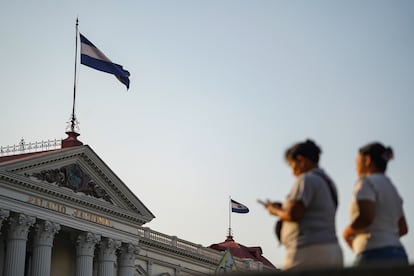
Kattán, identified by local media outlets as the president’s uncle, increased his wealth from $403,620 to $3.9 million, although most of that increase corresponds to a $3.1 million loan reported as a liability. Recinos increased her net worth from $182,945 to $1.3 million, while Rodríguez’s wealth rose from $153,130 to $1.3 million during his tenure as head of the Central Reserve Bank.
This newspaper contacted the aforementioned officials to ask them to explain the growth in their wealth, but they did not respond to requests for information.
Héctor Lindo, emeritus professor of history at Fordham University in New York, says this rise in wealth resembles the old practices of El Salvador’s oligarchies, which used their power and influence to enrich themselves. “What the Bukeles are doing mirrors exactly what previous elites did. They changed the rules as they pleased. They made laws to favor their own interests. They put relatives in key positions. They re‑elected themselves when it suited them,” he says.
Bukele, however, appears to coexist amicably with the old oligarchy. “Displacement does not mean he has eliminated the old elite. I have not seen any decision that has negatively affected the Poma, Dueñas, Regalado or Kriete families,” Lindo says, referring to the country’s traditional powerful families. “I have seen targeted attacks against the Simán family, because in the past they were the refined Palestinians who looked down on the Bukele family. The Simán family has also been particularly affected because they were in political competition with him.”
Pressure from the IMF
The assets of the president and his inner circle have become known largely because of pressure from the International Monetary Fund (IMF). For years, the government kept this information secret, even though under previous administrations it had been accessible to the public.
In December 2024, the IMF reached an agreement with the Salvadoran government on a $1.4 billion loan, but made the disbursement contingent on certain fiscal adjustments, including pension-system reform, measures to mitigate risks associated with bitcoin, and reforms to transparency policies.
The administration has been complying with these requirements, though only partially. For example, in January 2025 it reversed bitcoin’s status as legal tender, making its use “optional,” although it has continued purchasing the cryptocurrency. The government has now opened a small window into the financial disclosures of its officials, but it has done so through a difficult-to-access web portal containing only limited and incomplete information.
Two government officials, speaking on condition of anonymity, acknowledged that the asset declaration form is extremely lax and that, essentially, “anyone can write whatever they want,” according to one of them. The system also suffers from technical flaws: users sometimes have to make several attempts before obtaining results, and on some occasions officials appear under married names or legally accepted alternative names.
This newspaper requested from the Ministry of Finance, through the Public Information Access Law, the complete database that feeds the online consultation portal. After two weeks of waiting, the institution responded that the information had to be reviewed, official by official, through the website.
Prosperity under the protection of the state
The prosperity enjoyed by Bukele’s inner circle has also benefited Martha Carolina Recinos, the chief of staff and one of the president’s closest officials. Her net worth increased from $182,945 when she entered government to $1.3 million in May 2026. Recinos, who previously had a career in the left-wing FMLN party, joined Bukele’s team when the current president was mayor of Nuevo Cuscatlán. She is married to Efrén Arnoldo Bernal Chávez, a former FMLN legislator and current Salvadoran ambassador to Italy.
Another official on the list is Douglas Pablo Rodríguez Fuentes, president of the Central Reserve Bank, whose net worth rose from $153,130 to $1.3 million. His salary progression has also been notable: he went from earning $8,043 per month in 2020 to $16,500 per month in 2025. Several journalistic investigations by local media outlets claim that the newfound wealth of dozens of officials stems from controversial financing provided by a local financial institution, Banco Hipotecario, which allegedly granted multimillion-dollar loans to Bukele-aligned employees who lacked the financial capacity to repay the debt.
For the past 30 years, Salvadoran politics was largely controlled by the country’s traditional elites, led by the so-called “20 Families” — a reference to a small group of surnames that concentrated economic and political power. However, since 2019, when Bukele became president, his administration has displaced that old establishment and created a new order that benefits its allies, both within the public sector and in private business.
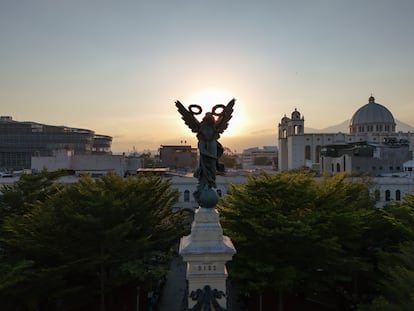
Dividing up downtown San Salvador
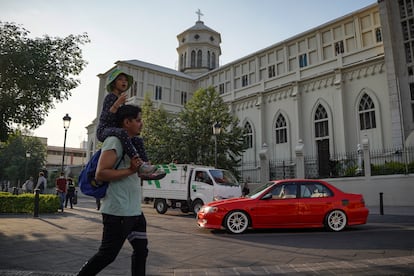
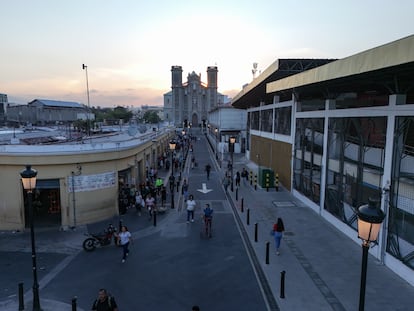
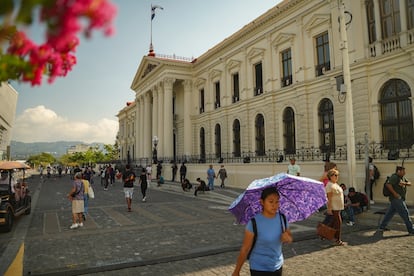
Since becoming mayor of San Salvador, Bukele turned the capital’s historic downtown into the crown jewel of his political project. He began promoting its redevelopment in 2015, transforming an area long marked by neglect and disorder into one of the main showcases of his political vision.
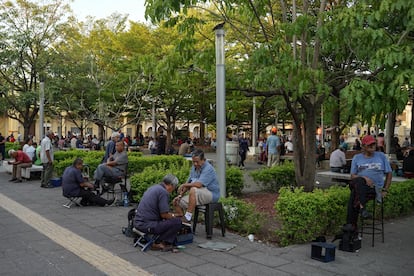
Once he became president, Bukele removed control of the historic center from the municipal government and placed it under the authority of the executive branch. Under this new arrangement, the government evicted tens of thousands of informal vendors who had occupied the area’s streets for decades and paved the way for chains such as Starbucks, Pizza Hut, KFC, GoGreen, and Marriott to establish themselves there. Three street-vendor leaders interviewed by this newspaper claim that the evictions were accompanied by threats: those who refused to leave the streets would be imprisoned indefinitely under the state of exception imposed by the president to combat gangs — a measure that has already left nearly 100,000 Salvadorans in prison.
The removal of thousands of merchants and residents sharply increased the value of commercial and residential properties in the historic center. At the same time, the government introduced tax incentives to attract investors and created the Authority for the Historic Center of San Salvador, an entity that imposes strict requirements for operating in the area and has forced numerous merchants with decades-long ties to the district to close or relocate their businesses.
While some were displaced, others took advantage of the area’s rising value. Among them were Karim and Yusef Bukele, the president’s brothers, who acquired properties worth millions of dollars. Four well-known bitcoin entrepreneurs who chose to invest in the downtown area have also benefited from the president’s favorable policies.
“They have changed the rules of the game about who can live and work in the historic center. They create hurdles for some and opportunities for others. Previous governments did the same,” says Professor Lindo. “Since independence, we have seen economic elites manipulate the political system.”
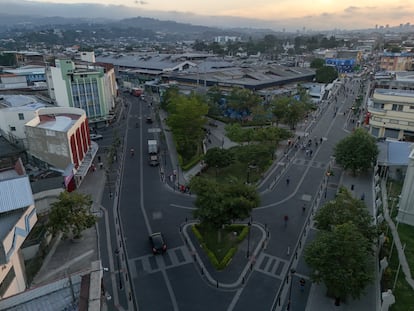
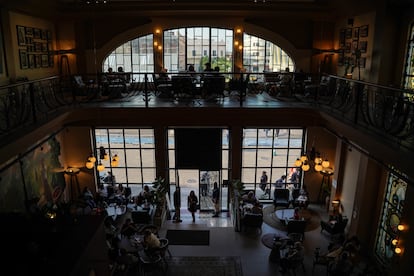
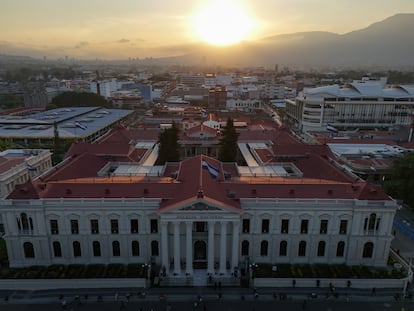
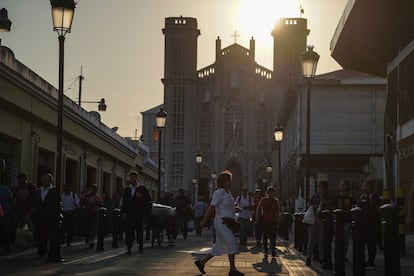
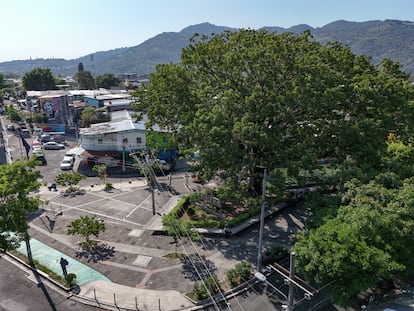
The president’s brothers, who reportedly make decisions within the executive branch despite holding no official positions, have said that their investment is simply a sign of confidence in the country and in the new historic downtown redevelopment project. According to reports by local media outlets and leaders of informal vendors, another group that has benefited from the evictions in the heart of the capital is Chinese businesses. Two vendor leaders who requested anonymity for fear of reprisals said that between 2024 and 2026, Chinese businesses and citizens have become increasingly common in the historic center. “We know some of them have even acquired entire buildings where they open clothing, toy and jewelry shops — everything,” says one vendor leader.
The historic downtown celebrated in official government propaganda, however, remains an incomplete reflection of Salvadoran reality. “It is an island of wealth surrounded by a sea of poverty,” says Dada.
According to data from the Central Reserve Bank, between 2019 and 2024, an additional 241,927 Salvadorans fell below the threshold of extreme poverty. While a small number of individuals connected to Bukele’s movement have grown wealthy, thousands of Salvadorans have become increasingly poor in a country where the flashy president promised both security and prosperity.
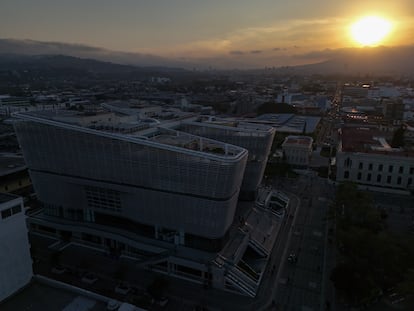
Local media have reported that Chinese imports to El Salvador increased by 16% between 2024 and 2025. According to local vendors, this may be linked to Chinese involvement in Bukele’s redevelopment project in downtown San Salvador, since the National Library of El Salvador (BINAES) — the flagship building that attracts attention during the day for its distinctive architecture and at night for its striking lights — was donated in its entirety by the People’s Republic of China. The same is true of other high-profile government projects, such as the new national stadium, which is still under construction, and an amusement park planned for the beach network known as Surf City.
“In the end, when they leave power, only Bukele and his family will remain part of the oligarchy. Perhaps a few others as well. The rest will simply have moved on to a more comfortable life, but they will still belong to the social stratum they originally came from,” concludes former minister Dada.
Sign up for our weekly newsletter to get more English-language news coverage from EL PAÍS USA Edition









































