
Iran’s Strait of Hormuz toll: Modern piracy contrary to international law
A hypothetical peace agreement authorizing the Islamic Republic to collect a navigation fee to finance the country’s reconstruction would be illegal and discriminatory, according to four legal experts
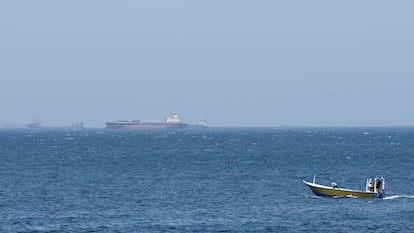
The United States and Israel launched a war against Iran six weeks ago with the stated goal of overthrowing the Islamic regime; they failed and, along the way, turned the world economy upside down: Iran blocked the passage of ships through the Strait of Hormuz — which is not its property, but borders its coast — and unleashed chaos in the trade of oil, natural gas, and fertilizers.
Now, the United States and Israel are presenting the reopening of the Strait of Hormuz, which functioned normally before the war, as a victory. Iran is even trying to capitalize on the new situation, or at least use it to recoup its losses.

In the 10-point document it has put forward to negotiate a lasting peace, the Islamic Republic demands guaranteed “control” over the Strait of Hormuz. According to various reports published in recent weeks and statements by some members of the regime, this control could involve charging ships a toll, with the proceeds earmarked for post-war reconstruction. Can Iran do this? What is the legal framework governing the Strait of Hormuz?
Jaume Saura, professor of international law at the University of Barcelona (UB), explains that the use of maritime straits is regulated by the UN Convention on the Law of the Sea of 1982. In these corridors, considered vital for international navigation, the so-called right of transit applies: any vessel can cross them freely (and any aircraft, fly over them) as long as the passage is quick and uninterrupted and does not threaten the security of the country that has sovereignty over the waters.
In the case of Hormuz, the strait lies in the sovereign waters of two countries: Iran and Oman. Both can assert that sovereignty in matters such as fishing rights or the laying of submarine cables, for example, but they cannot impede the right of transit, Saura insists. “Blocking the strait, or the hypothetical collection of a toll to allow ships to pass, has no legal basis,” he points out. Saura also believes that if a peace agreement were to authorize Iran to collect a toll as compensation for war damages, this should only apply to ships from the United States and Israel, the aggressor nations, and not to the entire international community.
Juan José Álvarez, professor of private international law at the University of the Basque Country (UPV) and an expert in maritime law, agrees: “Article 44 of the UN Convention prevents coastal states [those with an international strait in their waters] from obstructing the right of transit.” “It is true that, in the context of armed conflict, the convention authorizes a certain degree of discretion on the part of the state, but this is understood to refer to vessels with military equipment, not commercial vessels,” he points out.
Nor can any type of toll or charge be imposed: “The convention has an express article on charges, and it establishes that they cannot be levied for the mere passage of the ship, but only when it is a remuneration for services that the country provides to the ship in question (for example, the use of locks in the area). It is not legal to impose a toll for security reasons; something that, in fact, is almost reminiscent of a mafia concept,” argues the expert.
Thus, a hypothetical peace agreement authorizing Iran to collect these tolls “would contravene international law,” continues Álvarez, who predicts: “If a shipping company were to denounce this agreement before the Hamburg Court [the UN body in charge of settling legal disputes at sea], I think it would win.”
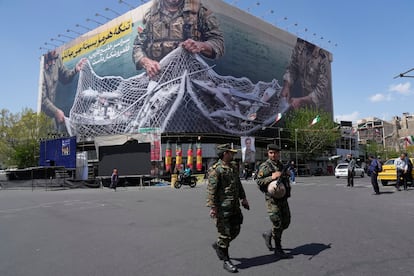
Álvarez knows of no precedent for a scenario like the one that has developed in the Strait of Hormuz. “I don’t recall any other case in recent decades where an international strait has been the subject of negotiations in this way. Perhaps it happened in the time of the privateers, but not in the modern civilized world. Everything has fallen apart,” he laments.
The UPV professor warns, in fact, of a significant repercussion of this latest war: “Maritime operators are beginning to prefer longer but safer routes. Geopolitics determines everything at this point.” He emphasizes that what has happened in the Strait of Hormuz sets a worrying precedent: “Now it’s Hormuz, but in the future it could be the Malacca Strait if there’s a regional conflict over Taiwan. International trade is at stake. I believe the underlying issue in this war isn’t oil or the Ayatollahs’ regime, but rather the struggle for geopolitical hegemony against China.”
Turning point
Neither the blockade of the strait during the war nor any eventual agreement involving Iran charging a toll on ships has any legal basis. This is also the view of María García Casas, PhD in law and with a Master’s in international relations, professor of public international law at the Autonomous University of Madrid (UAM). “Iran cannot dispose of the right of ships to navigate in the Strait of Hormuz. The country is not conceding anything: it is obligated to allow the passage of ships. This is not only stipulated by the UN Convention; it has also been established, long before, by customary international law,” she emphasizes.
“The blockade of these past weeks has been illegal, and so would charging a toll, as it would obstruct the exercise of that right. Even if such a charge were included in a political agreement between countries,” concludes García Casas.
Félix Arteaga, senior researcher for security and defense at the Elcano Royal Institute in Spain, sees what has happened in the Strait of Hormuz as a dangerous turning point. “It has highlighted how easy it is, with modern technology, to disrupt or obstruct the right of transit in international waters. The Houthis in Yemen did something similar in the past. Now Iran has done it, and the greatest risk is that a power vacuum will be created, allowing sub-state groups to exploit this vulnerability, as pirates did in the past.”
“The right to free transit applies even in a wartime context,” Arteaga insists. “International law expressly prohibits discrimination in the exercise of that right — ‘this one passes, that one doesn’t’ — and charging a fee.” He recalls that, during the Iran-Iraq War in the 1980s, “the United States had to escort ships” in the area. But back then, the Islamic Republic “didn’t have the missiles and drones it has now.” “This situation has created a breach in international security,” he points out.
Sign up for our weekly newsletter to get more English-language news coverage from EL PAÍS USA Edition









































