
The subway that brought life back to Quito’s historic center
More than 200,000 passengers a day travel underground in Ecuador’s capital. Above ground, the city has begun to revive
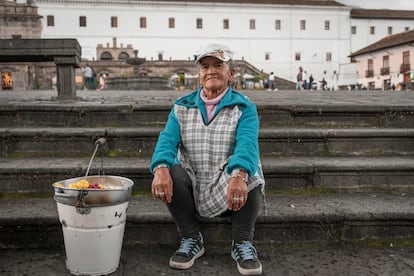
Natividad Domínguez introduces herself with a broad, genuine smile: “I’m a salchipapa vendor.” She’s been making salchipapa — a popular street food made of fried potatoes topped with sliced sausages — in Quito’s historic center for four decades and claims to know every corner, every shadow, and every shortcut in this stone labyrinth. Everything, that is, except the subway. “It makes me nervous!” she says, laughing and shrugging shyly. “It scares me… but it’s changed my life.”
She doesn’t use it. Not even to get to her house in the south, in the Lucha de los Pobres neighborhood. But since the metro started operating a little over two years ago, her business has been given a boost. “People have come back,” she says. Before, the city center was becoming increasingly empty. Getting there by car was a nightmare, with nowhere to park; by bus, a test of patience. “People stopped coming,” she says, as if reciting the slow chronicle of abandonment.
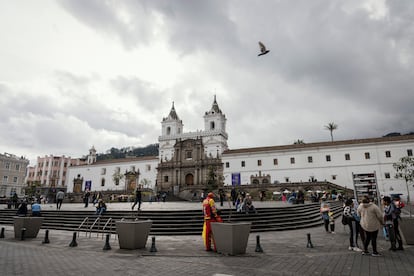
Quito’s historic center — declared a UNESCO World Heritage Site in 1978 — is not just a place; for many, it is the city’s living memory. Walking through it is like stepping back in time. The cobblestone streets punish your ankles, the sidewalks are narrow, and the air is filled with incense from churches, the wafting smoke from street vendors, and the warming oil of street food. Everything is for sale here, even the unspeakable, those objects without labels or categories that, nevertheless, always find a buyer. It is an endless market, a living inventory of the possible.
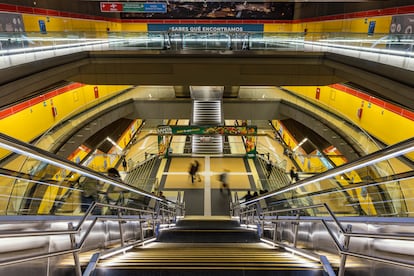
At the center of it all is Independence Square, where power converges: the Government Palace, the cathedral, and City Hall. But the mood has changed. Since the government’s security measures were put in place, the benches around the monument have been cordoned off with metal barriers. The elderly no longer sit to watch the afternoon go by. A block away, however, another hub has emerged: the San Francisco station, from which passengers depart every minute.
“The city center is buzzing again,” says Natividad Domínguez. “I’ve never seen so many people as there are now. There are parties, Masses, music, theater…” The revival, however, has brought with it competition: “Now there are many more of us selling salchipapas. Before there were four of us, now there are at least 18.”
For years, the metro was touted as the answer to the mobility crisis in Quito, a city 2,850 meters above sea level that is surrounded by mountains that force it to grow inward and outward. Some 600,000 vehicles circulate on its streets, and nearly a million people depend on public transportation. In Quito, traffic isn’t just a rush hour problem: it’s a constant.
Like so many Latin American cities, the Ecuadorian capital has not fully managed to tame its growth or offer a transportation system that is punctual, comfortable, and safe. But the metro has brought some relief amidst the chaos.
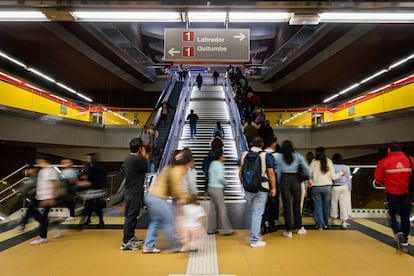
Line 1 — the only subway line for now — runs through the city from north to south in 30 minutes, a journey that at street level can take two or even three times as long. Underground, the ride is clean and quiet. It can feel almost unreal to those who have spent half a lifetime hanging onto a bus.

The impact is not measured only in minutes. Businesses near the stations have increased their sales by as much as 34%, according to data from the De Vuelta al Centro initiative compiled by the Quito Metro company. Food is the most obvious barometer.
“Before, the center would shut down at 7 p.m., now we can work until 10 p.m. on weekdays,” says Jaime Paredes, manager of the restaurant La Capilla.
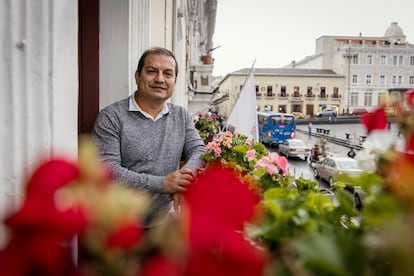
The change is also noticeable in the commercial landscape: shops that used to close early now stay open, and new businesses — cafés, small bars, and shops committed to staying — are beginning to occupy spaces that until recently were empty. Being able to arrive without pushing through traffic chaos has once again made the center a destination, not just a place to pass through.
Patricio Guerrero, 70, gets off the bus at the San Francisco metro station, leaning on a cane his children gave him after noticing his limp. “The hours we’ve gained!” he says. In less than 10 minutes, he’s covered a distance that, in a city trapped in gridlocked avenues, could have taken him up to an hour. He heads for the elevator to find the exit. “On buses, you have to jump, push... it’s a hassle. Here it’s safer; I can avoid the stairs with the elevator,” he adds, as though discovering a secret that will change his daily routine.
The number of vehicles on the road has grown at a much faster pace than the solutions designed to prevent traffic gridlock amid high demand. From the implementation of the Trolebús, an articulated electric bus system with exclusive lanes, to the Ecovía and the Metrovía, which attempted to replicate the model, and the pico y placa system, which restricts vehicle circulation for up to eight hours a day depending on license plate numbers, traffic remains a challenge. It is estimated that someone who regularly drives loses about 70 hours a year stuck in traffic jams — almost three full days — according to the Global Traffic Scorecard.
School uniforms are everywhere in the train cars heading downtown. Groups of teenagers travel with a tranquility rarely seen on other forms of transport. “Here, nobody dares to do anything to us,” says 16-year-old Dana Castillo. “It’s very different from the bus or even a taxi, which we’re sometimes terrified to get into.”
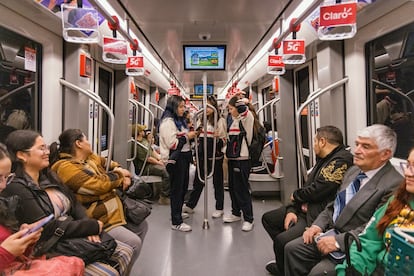
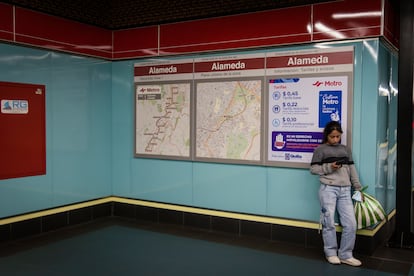
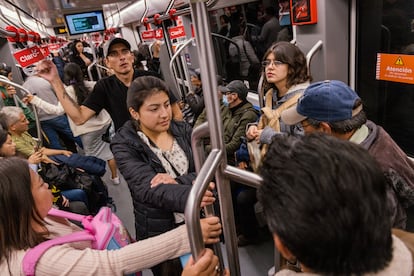
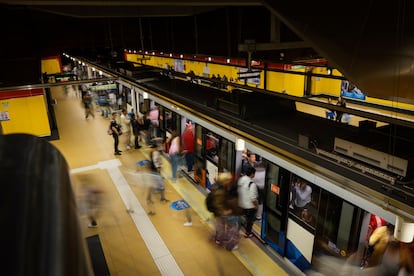
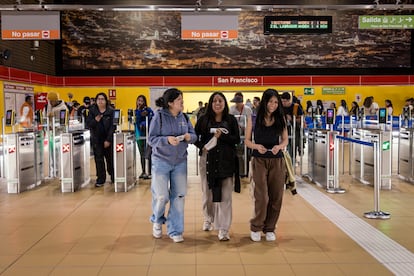
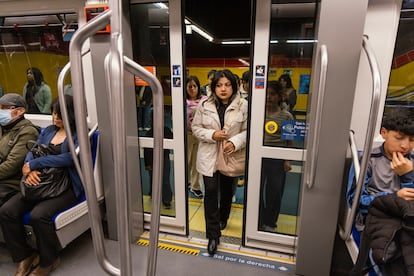
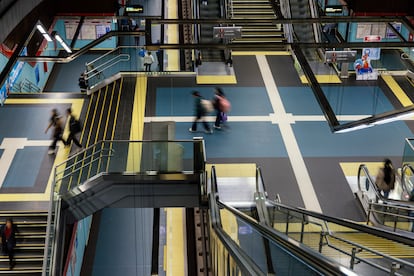
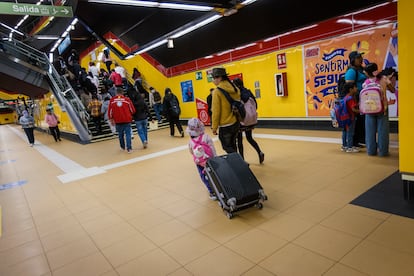
The metro walls remain untouched. “See, there’s no graffiti?” remarks Leonor, another passenger. “There are rules, and we’ve learned to respect them. This is a place for everyone.” Most of the passengers are women, and nine out of 10 prefer it because it feels safer and largely free of harassment, according to surveys conducted by the operator.
The service plans to expand with four additional stations, reaching a new northern terminus of the city in the La Ofelia area, which will even connect with rural zones. “We’re waiting for the Ministry of Finance to approve or reject the extension of the funding so we can notify the multilateral lenders,” explains Juan Carlos Parra, general manager of the Quito Metro. In December 2025, the Development Bank of Latin America (CAF) approved an $80 million loan for the expansion, but the central government’s final decision has yet to arrive.
The metro, more than a service, has been a political object: Quito’s residents had to wait a decade, weather five mayors and 10 general managers, before finally seeing it operate. Giving the green light to its expansion, in an election year in which the ruling party is seeking to consolidate power in the capital, could be interpreted as early campaigning.
Meanwhile, above ground, in the city of domes and bell towers, the bustle has returned. The metro has not solved all of Quito’s problems. But it has accomplished something that once seemed nearly impossible: making the center pulse with life once again.
Sign up for our weekly newsletter to get more English-language news coverage from EL PAÍS USA Edition









































