
Monterrey, the world capital of ‘carnita asada’
Grill culture prepares for the World Cup, with a stadium, businesses and families ready to receive thousands of fans
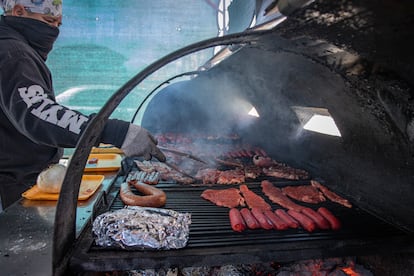

In Monterrey, there is no lack of reasons to light up the grill. “Because it’s someone’s birthday, because it’s Saturday, because it’s Wednesday,” says Rubén Ramírez, a 50-year-old local electrician. Eating meat is an essential part of identity for people in the Mexican state of Nuevo León. “It is the pretext for getting together, for seeing the nieces and nephews, for having visitors over. And of course, for a beer,” he says. For this grill expert, an asado can’t be without the salsa borracha, the Argentinian chorizo, the onions, the roasted potatoes, and the most important factor: soccer. With the World Cup around the corner, this everyday tradition will become a cultural experience for the half-million visitors who officials are predicting will make their way to the city. “Mexico [City] has its museums and Guadalajara, mariachi music and tequila, but here, there are carnita asada and Nuevo León hospitality, which is con madre [the best],” Ramírez says proudly.
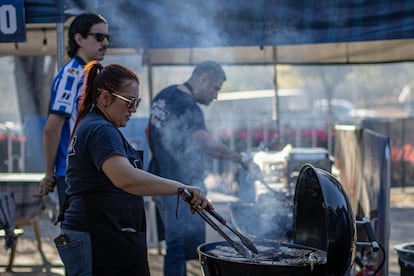
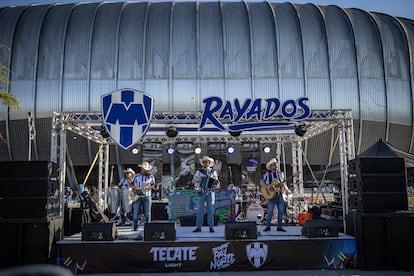
It’s Saturday and the Rayados, the Monterrey soccer club, are playing. There are still four hours left until the opening whistle, but smoke already floats above the parking lot of the BBVA stadium. Open coolers, norteño music and the crackle of coals set the tone for the pre-party. In the Carnita Rayada fan section, groups spread out around folding tables and lit grills. The pre-party, which is almost as important as the game itself, includes live bands, food and drinks for sale, and an atmosphere that fuses together picnic and soccer celebration. “You have to come ready, take advantage, eat and be prepared for the game,” says 45-year-old Omar Ríos, who never misses a match at the so-called Gigante de Acero [Steel Giant]. This tradition imitates the ritual of U.S. stadiums, where fans eat and drink in the parking lots before entering to watch the game. “Well yes, it looks like what the gringos do there, there’s nothing better. In fact, here we’re going to show them how it’s done,” jokes Ríos. It is the only one of the three World Cup venues that has this feature, and it will be available during the games. Spaces for up to 10 people can be rented for around $560.
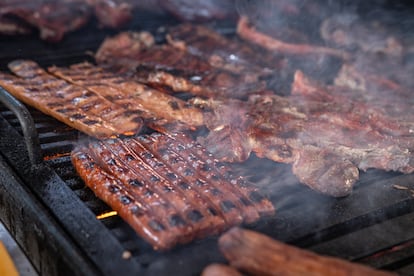
The ritual continues even when the game is done. Upon leaving the stadium, you have to get a taco. Las Delicias, a 42-year-old family business, has been located in the town of Guadalupe since long before the BBVA. When the Gigante de Acero opened, the traditional carne asada and barbacoa tacos became an obligatory stop, due to their taste and geographic closeness, with fans wearing Rayados jerseys often forming long lines. Eric Islas, manager of the establishment, shares that game-day sales are triple those of a day without a match. “It also depends on the score. If the Rayados lose, the fanbase leaves, they’re mad and we just see them walk by. When they win, we have them in here, sitting down talking about the game,” he says. “For the World Cup, first of all, I’m hoping my cousin who speaks English comes to help. Also, we are getting menus in different languages ready, and we think sales will go up a lot. It won’t only be the day of the game, there will be people who come to the Fan Fest, to see the city and the stadium, and who have a craving for taquitos,” he says.
Expectations are high. Nuevo León officials are predicting that the city will receive some 500,000 tourists during the World Cup, which will directly impact the restaurant sector and businesses related to meat. “I don’t have tickets because it’s impossible to buy them, but of course we are going to make carnita asada and enjoy the World Cup as a family,” says 22-year-old Sol Campos. The impact of the flood of visitors won’t only be felt in hotels and transportation, but also in supermarkets, butchers and restaurants, where the grilling tradition forms part of the experience tourists are looking for. An example has been set by other events that attract visitors, like music festivals that have taken place in Parque Fundidora.
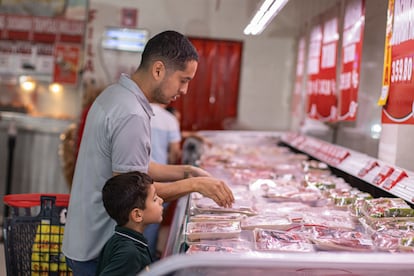
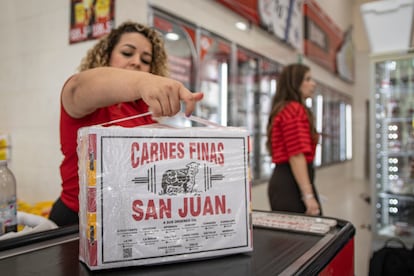
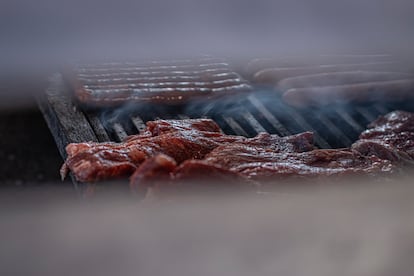
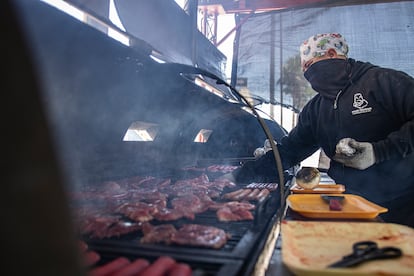
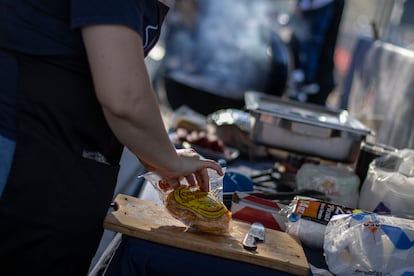
Others will experience the tradition from home. It’s 10 a.m. on a game day, and the Carnes Frías San Juan stores are already full of people. Their carts laden with aguja norteña (a high-quality cut of beef), coals and salsas advance slowly towards the cash register in stores as large as a supermarket. The chain’s 14 locations have everything one could need to fire up the grill: utensils, vegetables, sauces and condiments. Their busiest days tell a story: “December 31, because it’s common to say goodbye to the year with carne asada, and the day of the classic [the match between the Rayados and their rival Nuevo León squad, the Tigres]. Sales increase by up to 150%. The bestsellers are aguja norteña and rib eye,” says Marta Tello, who works in the administrative offices. For the World Cup, they are expecting even higher sales than on those dates. “We are calculating that there will be get-togethers starting early, and that they will go on all week, not just the day of the game,” she says.
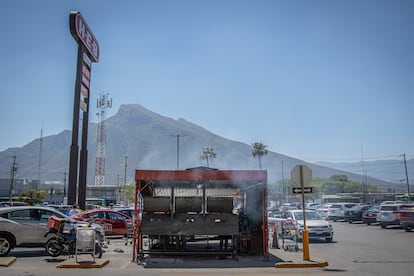
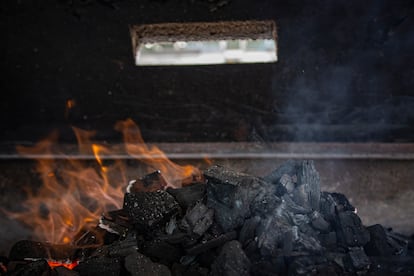
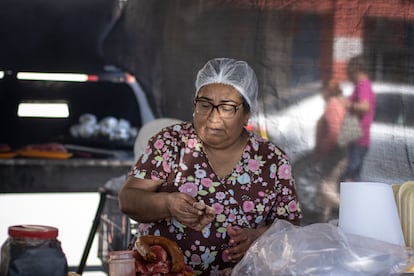
Even the larger businesses have had to adapt to the logistics of the asado. On weekends at the U.S.-born store HEB, customers leave with their recently purchased meat and stop in the parking lot, where there are grills and grillers who have the coals ready. “For convenience, to save money, time, cleanliness… there are a lot of people who save themselves the trouble of lighting up the coals and getting dirty, that’s why we make them their meat and they just take it home ready to eat,” explains 42-year-old Juan Carlos Sánchez, as he flips cuts on the grill. The smell suffuses the air, and attracts more customers, who join the improvised line.
Nuevo León is one of the states that eats the most meat in all of Mexico, at an average of between 66 and 77 pounds per person per year, more than double the national average of around 33 pounds. That habit, which is deeply rooted in everyday life, intensifies at sporting events and will be amplified during the World Cup, when Monterrey will host four games between June 14 and 29, in addition to two qualifying matches this week. Hotel industry leaders are expecting rooms to sell out during that time. For many businesses, it will be an economic opportunity: the Mexican Soccer Federation is estimating there will be $3 billion in earnings throughout the country.
The carnita asada is the social ritual that defines daily life in Monterrey. “It’s not just about food, but also the space for family members, friends and neighbors. We will be inviting a couple tourists who are here for the World Cup,” concludes Ramírez.
Sign up for our weekly newsletter to get more English-language news coverage from EL PAÍS USA Edition









































