
The faces of Venezuelan exile: ‘The hope of returning is always there. Now it’s a little closer’
Around eight million citizens of the South American country live abroad. Some fled the political repression of Chavismo. Others simply sought a way out of economic hardship. They have spread throughout the world, although most remain in Latin America. This is the story of 11 of them
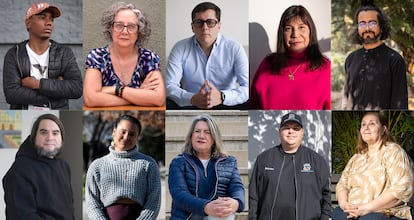

The Venezuelan diaspora watched with astonishment, uncertainty — and, many say, hope — the United States’ attack on Caracas and the arrest of President Nicolás Maduro on Saturday, January 3. In the last decade, more than eight million people have fled a country that now has just over 28 million inhabitants. This gives an idea of the hemorrhage Venezuela has experienced. They fled Chavista repression but also economic hardship. Many of these exiles watch the news with the hope of returning. Others assume that returning is now impossible, but they follow the news with the same anticipation and interest. This is the story of 11 of them.
David Fernández, 22, delivery driver in Bogotá: ‘I would love for the economy to change so I can return’
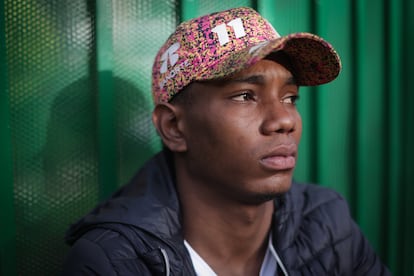
David Fernández, a 22-year-old delivery driver who gets around by bicycle, continues pedaling at the same pace as when he arrived in Colombia seven months ago, seeking the opportunities he couldn’t find in Venezuela. He is one of the nearly three million Venezuelans living in the neighboring country. The uncertainty surrounding his own country worries him, but it hasn’t altered his routine on the cold streets of Bogotá. On a corner in the north of the capital, Fernández stares at his phone, where he not only receives delivery requests through a digital platform but also follows the news from Venezuela. “For me, it’s the same, but I worry about my family back home, who say the streets are empty, that the supermarkets are this way or that way. You worry,” he confesses.
Before emigrating to Colombia, the young Venezuelan earned a living for himself and his family by cleaning windows, working as a vendor, and as a construction worker. “I worked at whatever I could find,” recalls Fernández, the second of five siblings. Years ago, he dropped out of high school to help his mother with household expenses. “In Venezuela, I made $10 or $15 a day. In Colombia, I make between 80,000 and 120,000 pesos a day (between $20 and $30), but back then, I’d buy lunch and the $10 would be gone. Here, money stretches further,” he says. He currently lives in a working-class neighborhood in Bogotá with his cousins, with whom he shares the rent and utilities.
Despite the uncertainty surrounding Venezuela’s future, Fernández prefers to face the situation with optimism. After the scare that woke him in the early hours of January 3, when a call alerted him to what was happening in Caracas, he hopes things will improve. “I would love for the economy to change in Venezuela so I could return,” he confesses. His dream: to find a stable job and buy a house when he has children.
Ligia Bolívar, 68, activist in Colombia. ‘This is a huge humiliation’
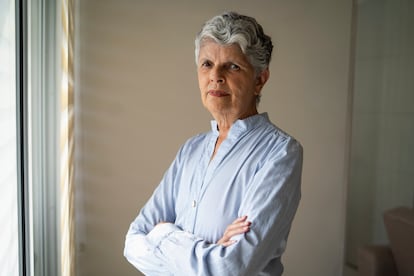
“This is a colossal humiliation.” This was the first thought of 68-year-old activist and human rights defender Ligia Bolívar when she learned of the U.S. attacks in Caracas. “The last thing I expected to see was a foreign force attacking my country. You see that in places like Iraq, but not on this side of the world,” she adds. Bolívar has been living in Colombia for more than six years—she prefers not to reveal which city for her safety—and now fears that the uncertainty in her country will push many more to emigrate. “There is no political will to respond to these kinds of situations,” she maintains. She deplores the fact that Gustavo Petro’s government, for example, eliminated a protection statute that regularized the status of Venezuelan migrants.
After the initial shock subsided, Bolívar says she feels worried because, for her, Maduro’s departure does not in itself signify a transition to democracy. “We are already seeing that repression and witch hunts are intensifying,” she laments. For this reason, unlike many other Venezuelans abroad, she is not optimistic. “I don’t see what has happened as a victory, although I respect the sense of hope and change that so many have,” she says. “Many have suffered blow after blow for 25 years, and their feelings must be respected.”
This activist justifies her concern by saying that “the concept of human rights is outside Trump’s vocabulary.” She also believes it’s outside the vocabulary of Venezuela’s acting president, Delcy Rodríguez, whom she describes as a “cunning woman.” Bolívar deplores Rodríguez’s lack of openness: “She doesn’t say they’re going to start legalizing opposition parties, nor that they’re going to allow the return of political exiles. And those are essential elements if we want to talk about democracy.”
Luis Peche, 32, political scientist in Bogotá: ‘I had a crying fit’
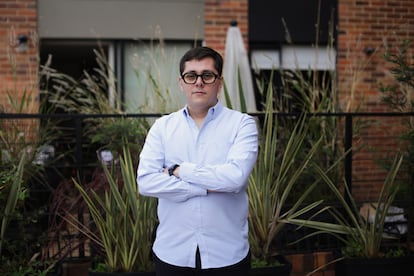
The political scientist Luis Peche, who has been in exile in Bogotá for less than a year, was woken by a relative around 1:00 a.m. on Saturday and informed that explosions could be heard in Caracas. From that moment on, since he works as a political consultant and monitors Venezuelan affairs, he remained awake for 24 hours. When Trump posted his message on social media, he saw it immediately. “I burst into tears. I started talking out loud to try to believe what I was reading. I called my mother, my friends who were awake, I was crying; it was very emotional,” he recalls.
Last October, he survived an assassination attempt that Colombian authorities have yet to solve. He and his friend, the activist Yendri Velásquez, were shot by three hitmen as they left their home. They narrowly escaped death. The attack sowed panic among the many political refugees persecuted by the Chavista regime who have crossed the border to settle in neighboring Colombia.
“This is a very dynamic situation, and we’ll probably be able to understand the implications a little later,” Peche says about this whirlwind week. There are around a thousand political prisoners in Venezuela, he notes. “That situation has to be reversed immediately. There are friends, acquaintances, and many other people imprisoned simply for having helped as election observers. It’s madness, utter barbarity, and it’s the top priority,” he emphasizes. “Without a doubt, the hope of returning is always there. Now it’s a little closer.”
Kell Aponte, 38, researcher in Mexico: ‘I felt a lot of anger, not because of Maduro, but because of the intervention’
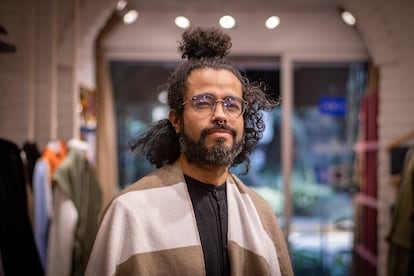
Kell Aponte was in his Mexico City apartment writing the draft of his doctoral thesis on how life is sustained in crisis contexts in impoverished neighborhoods of Venezuela, when he learned of the attack and capture of Nicolás Maduro. “I thought it was a lie, that it was artificial intelligence. I couldn’t believe it,” he recalls. “As I watched more videos, I was paralyzed. I felt terrible, frustrated, powerless,” he shares.
Aponte is 38 years old, he was born in Caracas, and left Venezuela in 2014, driven out by “hopelessness and disillusionment.” The rise of Maduro to the presidency was “the last straw,” he says. He first emigrated to Chile, and six years ago moved in Mexico to pursue a master’s degree in Anthropology. The plan was to return to Santiago, but he ultimately chose to stay: “I’ve made a home here.” However, there is one thing that the years haven’t been able to change. “Returning to Venezuela is not an option. It would worsen my living conditions,” he says.
In Mexico, where some 100,000 Venezuelans live legally, he collaborates with an organization that supports migrants from his country. “There isn’t just one reality. There are those who work as delivery drivers under precarious conditions and those who have great economic stability,” he says. There is a recurring pattern, however: “The treatment of Latin American migrants leaves much to be desired. The procedures are incredibly cumbersome.”
Although he questions Maduro’s legitimacy, his capture doesn’t reassure him. “I felt a lot of anger, not about Maduro, but about the intervention.” For Aponte, it’s “an imperialist policy of countries that believe they own the world,” and he declares himself pessimistic about the new scenario. “The United States isn’t interested in democracy in Venezuela, but in control.” He concludes: “I can understand the joy of the Venezuelan community abroad, but I don’t share it. This is a threat to all of Latin America.”
Mireya Tabuas, a 61-year-old writer in Chile: ‘I force myself to have hope’
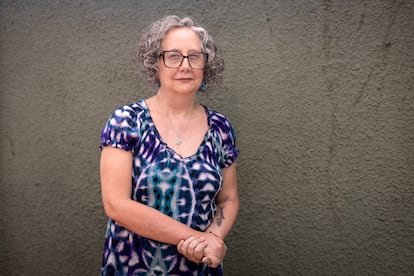
Mireya Tabuas, a 61-year-old children’s book author, university professor, and journalist, has lived in Chile for 12 years. She admits to experiencing emotional turmoil. “It’s frightening to think or feel, much less to say so publicly, because the repression and human rights violations continue, and there are still political prisoners,” she says. Currently, 730,000 Venezuelans live in Chile, where its president-elect, José Antonio Kast, has promised to return those who are undocumented to Venezuela.
Tabuas believes that changes in Venezuela won’t be “magical or happen overnight.” She knows this in theory, but in practice she’s impatient: “I just want to see a clearer picture, so we can achieve that well-deserved freedom.”
Tabuas has received expressions of solidarity from many foreigners, but also criticism from others for her thoughts and feelings. She believes it is still too early to know if she will ever return to her country. “I force myself to have hope,” she says.
Lupe Aguais, 71, psychotherapist in New York: ‘I couldn’t take it anymore’
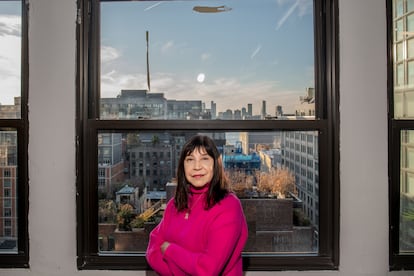
The moment Lupe Aguais, 71, decided she could no longer live in Venezuela was traumatic. In fact, the memory still haunts her a decade later. She was traveling in a taxi returning from a trip to the United States when another car intercepted her. A member of the so-called colectivos, paramilitary groups loyal to Chavismo, put a gun to her head and asked, “What are you doing here? Why didn’t you stay in the empire?” “I replied, ‘I’m in your hands,’ and waited for the shot. It was terrible, a few eternal seconds,” Aguais recalls. The shot wasn’t fired. “But I couldn’t take it anymore,” and, against her will, she embarked on a journey to the United States from which she never returned. Since then, she hasn’t gone back to her country. Not even when her parents died.
Her asylum application was accepted, and she obtained permanent residency. She lives in New York with her daughter and her dog. A psychotherapist by profession in Venezuela, she works as training director at Aid for Aids, an organization created to help Venezuelans with AIDS, and as director of immigrant initiatives at Aid for Life.
Aguais admits to having “a strange feeling” about Nicolás Maduro’s capture. “On the one hand, joy, because someone has dared to take him out, but on the other, I feel that nothing will change as long as Delcy Rodríguez, her brother, Diosdado Cabello remain… they’ve been the masterminds behind all of this,” she says. Even so, she acknowledges that there is “a lot of anticipation about how this will be resolved.”
Her decision to leave Venezuela was preceded by years of harassment and threats due to her opposition to Chavismo. She was demoted at her job because she “taught people not to stay silent” and organized pot-banging protests in her neighborhood. The day after appearing on a television program, men raided her house and nearly killed her dog. They left behind extensive damage and a note: “This is what we were trying to prevent.”
Aguais hopes to one day become a citizen of the United States, a country she did not move to in pursuit of the American dream – “I never had it.” She doesn’t plan to return to Venezuela, at least “until true democracy is restored.”
Ajamar Morales, 40 years old, businessman in the United States: ‘I would much rather something happen than continue under this yoke’
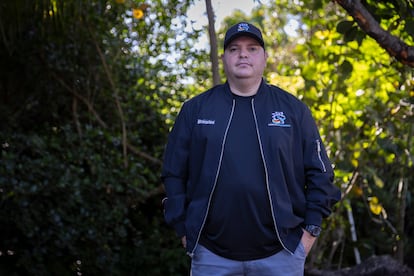
Ajamar Morales, 40, originally from Maracaibo, arrived in Miami in 2015 and applied for asylum, a process that is still pending. He has two children, ages 17 and 11, and owns a construction business. In 2021, he was granted Temporary Protected Status (TPS) and hoped to legalize his status later. When the Trump Administration canceled TPS last September, he felt “abandoned.” “I felt like a criminal, like I was doing something illegal. We felt like we were being cornered in this country, where we’ve built a life.”
But Maduro’s capture has given him hope. He wasn’t happy about “the attack on Venezuela,” because “in these kinds of actions, innocent people always die.” But he adds: “I’d much rather something like this happen than continue under the yoke we were under.”
He is confident that a government led by María Corina Machado will be established. However, he asserts that if the U.S. does business with the Chavista government, the people will not feel any difference. He doesn’t believe he will ever return, no matter what happens. “I would like to visit Venezuela, provided the conditions are right, to see my family, those who remain there, because they are my roots. But I already have two children here who don’t know any other system. As much as we want a transition and change, it’s not going to happen right now. I feel that, aside from the political and economic problems, society is damaged.”
María Elías El Warrak, 60 years old, cook and businesswoman in Brazil: ‘I didn’t think the government would stay in charge’
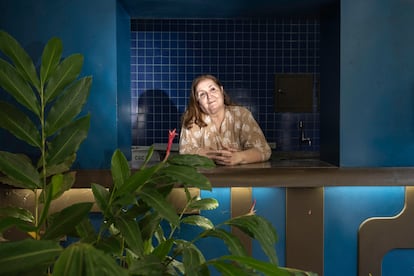
María Elías El Warrak, 60, followed the most tumultuous Saturday in recent years in her homeland, Venezuela, from her home in Rio de Janeiro, with her teenage son and sister-in-law glued to their cell phones and the news on YouTube. Finally, she thought. “They said, ‘Maduro has fallen,’ and in that moment of euphoria you believe that Venezuela will return to what it once was,” she recounts. “We thought it would be a complete removal of the entire leadership. I didn’t expect the government to remain in power,” she confesses. “So it was a relief, but not a complete one.”
Driven by economic uncertainty, when “everyday life was about putting your faith in God,” she, her late husband and their two children arrived in Rio a decade ago. It meant rebuilding their lives and learning Portuguese. Now an entrepreneur and chef, she runs a Lebanese catering business, with banquets for up to 60 guests.
Confirming that her four older siblings, who still live in Güigüe, a small town in Carabobo State, were safe eased her anxiety. After the initial shock, disappointment erupted when Trump snubbed María Corina Machado and turned his back on the opposition. “María Corina and Edmundo have been our light at the end of the tunnel!” she proclaims. The businesswoman sensed there would be a transition, but it never crossed her mind that it would be led by Chavismo. She thought that, temporarily, perhaps an American citizen would govern Venezuela.
“So, someone invades your country and says we have to go back to square one, hold new elections!” she complains. She fears that, by then, internal rivalries will have divided the opposition.
With her children’s futures secured and a Brazilian daughter-in-law, the cook says she would only return to her homeland to visit her siblings. Rio is now the family home. Of the 800,000 Venezuelans who entered Brazil, a secondary destination for the diaspora due to the language barrier, half stayed. Thanks to Operation Welcome, they receive support to start a new life and spread throughout the country. From the beginning, they have access to education, healthcare, and a way to work legally.
Fabiana Gamboa, 25, student in Madrid: ‘Many young people dream of returning to the country our parents knew’
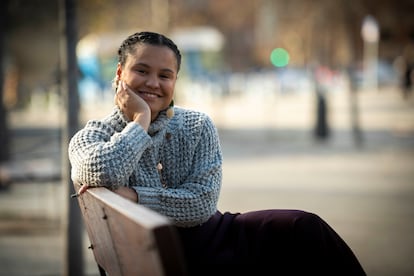
The closed-off Venezuela that Fabiana Gamboa, 25, knew in her early years is slowly crumbling. This young exile was only four years old when she and her family left, and the only Venezuela she has ever known is the one built under the dictates of the Chavista regime. “Both the political situation and the economy influenced my parents’ decision to go into exile,” she laments. Her father, an economist by trade, was offered a job in Mexico, and they didn’t hesitate to leave their homeland. “The situation wasn’t as dire as it would be years later, but you could already sense an atmosphere of instability,” she explains. Today, Gamboa glimpses “a glimmer of hope” for the first time in her life. “Many young people dream of being able to return and recover the country our parents knew.”
She has lived for the last two years in Madrid, where she is studying for a Master’s degree in International Business Management. Last Saturday, she was at her boyfriend’s house when she began to hear the first news coming out about the U.S. operation. “At first, I was scared because of the bombings and because I didn’t know what was happening,” she recalls. But soon, her doubts gave way to euphoria. In her WhatsApp chats, she began to read messages like “Free Venezuela” or “They’ve finally taken Maduro away.”
Gamboa is aware that the future of her country will be decided in the coming months, which is why she’s keeping a cool head and believes that endorsing Delcy Rodríguez as interim president is, for now, the best decision, even though it goes against her wishes. “It hit me like a ton of bricks that Trump decided, as if it were his own country, who would be president. We already had elections in July 2024 and we already made our choice. But after reflecting on it, I think that, for there to be a peaceful transition, it’s necessary that Delcy Rodríguez be the chosen one,” she adds.
Maribel Cernadas, 65, saleswoman in Spain: ‘Ali Baba fell, but the 40 thieves remained’

The cold that people feel outside their homeland weighs even heavier these days on Maribel Cernadas, born 65 years ago in Caracas. Since the United States captured Nicolás Maduro, Cernadas hasn’t stopped dreaming of regime change in Venezuela. “Ali Baba fell, but the 40 thieves remain,” she says. A saleswoman by profession, Cernadas arrived in Spain in 2020, at the height of the Covid pandemic. “In Venezuela, the health situation had spiraled out of control, and the precariousness had worsened as a result of Covid,” she recalls. Health was a concern, yes, but there was another compelling reason to leave her home: insecurity. “My husband had been killed two years earlier, and I was truly afraid at that time.”
With the pain of leaving everything behind, Cernadas packed what she could into a couple of suitcases and set off for Spain, where her two daughters, Katherine and Nathaly, were waiting for her. They had fled the Chavista repression in 2017. Cernadas settled in Jaén, in Spain’s southern Andalusia region, where she has learned to build a life far from home. Adapting wasn’t difficult. “I was lucky enough to emigrate to Andalusia, a land that’s actually very similar to ours; the people here are open and kind.” From the very first moment, she felt welcomed in her parents’ homeland. They were from the northwestern Spanish region of Galicia, specifically from A Estrada. Both she and her daughters have dual nationality. Thanks to this, they didn’t have to deal with the hassle of paperwork.
The Venezuelan woman misses swimming in the warm waters of the Caribbean and the caress of her country’s tropical climate on her face. But above all, she misses the warmth of her people. To all of them, her loved ones who are still there, she sends a message of caution. She wants them to stay safe, to remain vigilant. All with the hope of reuniting in the future, she believes, a future that is drawing ever closer: “Be careful, stay calm, and above all, be very smart.”
Luis Alejandro Marcano, 43, cook in Madrid: ‘People there are still very afraid’
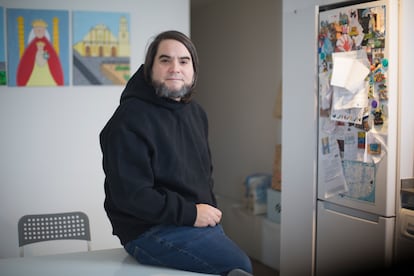
Luis Alejandro Marcano, 43, returns to his homeland whenever he can through food. Importing the flavors and culinary traditions of Venezuela to Spain is this chef’s way of healing the wound inflicted by leaving his country in 2017 with his wife, Marianela Salazar. They both remember with anguish that fateful year of protests against Chavismo. “The demonstrations were held a couple of blocks from our house, everything was closed, we couldn’t work,” Marcano recalls.
The memory of those violent days flooded back to him this week, following the capture of Nicolás Maduro. As soon as his wife heard the news, she woke him up. “At first, we felt uncertain because we didn’t know exactly what was happening. We didn’t know if an internal conflict had broken out or if a foreign agent had intervened.” When they realized it was a U.S. operation and that Maduro had been taken away, they were overjoyed, he explains, because the president’s capture represented “a visible and tangible change.” They didn’t believe it until they saw the images of Maduro in New York. “We both cried with joy. We believe this signifies a positive change for us and, above all, for the country,” he recounts, his voice breaking.
Marcano’s life is now in Madrid, where he and his wife have rebuilt their lives. Three years ago they had their first daughter, Marcela, and just six months ago they had their second child, Alejandro. He found work quickly; as he says, there’s room for everyone in the hospitality sector. He now works in product development at Comess Group, which manages franchises such as Lizarrán, Pomodoro, and Levaduramadre.
Despite having embarked on a new path in the capital of Spain, his destiny remains inextricably linked to his homeland, where his parents and the rest of his family still reside. There, he says, there is fear of reprisals for celebrating Maduro’s downfall. “My family shared photos yesterday about Maduro’s arrest, and then they spread through several WhatsApp groups. People are still very afraid,” he laments. For him, the most important thing is that the country “is calm” and “is well.” He still dreams of being able to return; it’s the only way for the wound caused by his departure in 2017 to truly heal.
Sign up for our weekly newsletter to get more English-language news coverage from EL PAÍS USA Edition









































