
Tulum falters: Tourism declines in the jewel of the Riviera Maya
Hotel occupancy fell by more than 10% in September, revealing a shift in tourism dynamics in the region


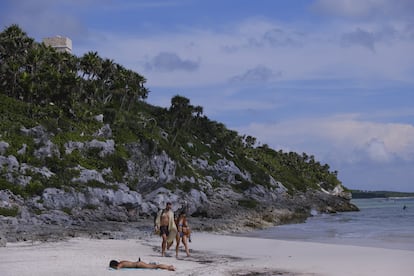
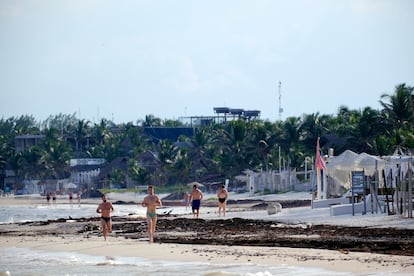
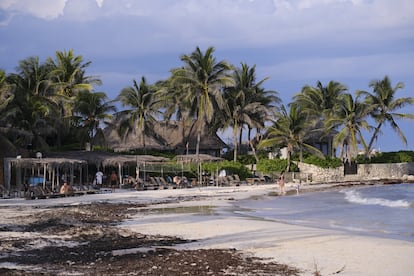
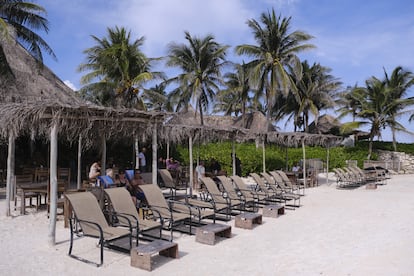
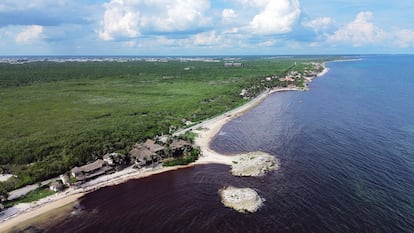
On the white sands of Tulum’s beaches, some seaweed still lingers as a handful of tourists stroll along the shore, carefully stepping around it. The restaurants and hotels along the Riviera Maya’s golden mile in Mexico have a few visitors, but nothing is crowded. It’s the low season — that’s the mantra repeated by hoteliers, shopkeepers, and even the mayor. The situation would be typical for this time of year — the end of hurricane and seaweed season — were it not for the official tourism figures showing that hotel occupancy dropped by more than 10% in September. The number has set off alarm bells across all sectors in this destination in the state of Quintana Roo, which until now had seemed unstoppable and, if anything, destined to die of its own success.
Tulum has found itself in a perfect storm: a record arrival of seaweed, global economic uncertainty, rising prices, and a reshuffling of tourism dynamics in the region due to two flagship projects of the Mexican government — the new Tulum airport and the Jaguar Park. In recent years, the area has branded itself as a premium destination, with experiences such as electronic music festivals, spiritual retreats, Mayan weddings, and spa sessions. The town now boasts 11,800 hotel rooms, but last month occupancy barely reached 50%. “There isn’t a destination in the world that can keep growing forever,” says Toni Chaves, president of the Riviera Maya Hotel Association.
Chaves acknowledges that several factors have come together in 2025 to cause a slight downturn in tourism, but he insists it’s not a lasting trend. What he does see as a real issue, however, is the rise of short-term rental platforms like Airbnb, which he argues create unfair competition since they are not subject to the same regulations and obligations as hotels. “Vacation rentals are a market trend, and you can’t stop market trends,” he says, “but they must be regulated.”
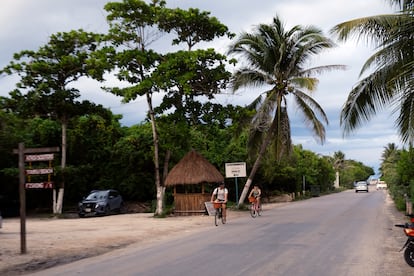
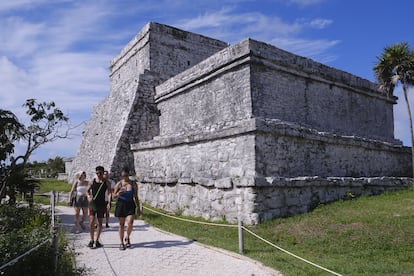
Tulum’s exclusivity comes with higher prices than elsewhere along the Riviera Maya. Carlos Hermosillo, visiting the new Regional Museum of the Eastern Coast with his girlfriend, has traveled all the way from Mexicali, Baja California, to the opposite end of the country to see the Mexican Caribbean. They flew into the new Tulum airport, where a taxi charged them nearly 1,500 pesos (around $80) just to take them into town. Then they looked into excursions to the archaeological site — famous for its iconic cliffside castle overlooking the turquoise sea — but found the prices excessive: 3,000 pesos (about $160). “I came in 2016, and it’s clear everything’s been renovated and looks great, but we do wonder how much of the jungle they had to destroy to build all this — and why they charge so much,” Hermosillo says. In the end, they managed to avoid the tour operators and spent only 800 pesos (around $40) visiting the Mayan ruins.
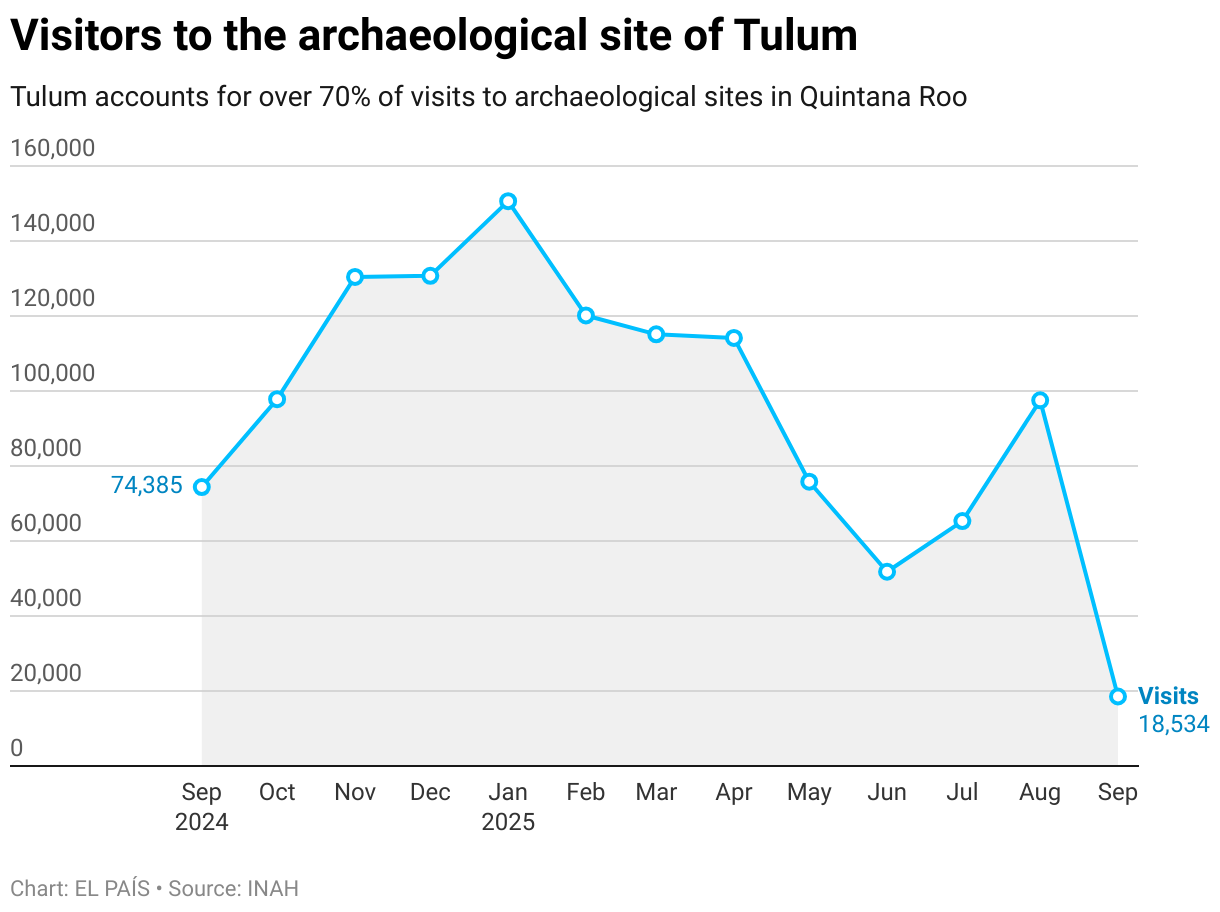
The Tulum archaeological site has historically been one of the most-visited in the Riviera Maya. However, the latest data from Mexico’s National Institute of Anthropology and History (INAH) show that visits to the ruins also dropped significantly over the past year. This decline has coincided with the creation and opening of Jaguar Park, a protected natural reserve surrounding the site. The park is managed by the Mexican army’s new tourism company and adds extra fees on top of those already charged for heritage and environmental protection. Besides making access to the archaeological zone more complicated, the park’s creation has also restricted free entry to some hotels, restaurants, and beaches in Tulum.
The dense jungle still shelters Tulum’s 11th-century Castillo, which was once teeming with Mexican and international tourists. This October, visitors continued to arrive, though the majority are now international travelers. Around the site, one hears English, Portuguese, German, French, and even some Spanish accents. Tourists take photos of the iguanas, but they can no longer access the beaches adjoining the archaeological zone. The stairways are closed, and vacationers make do with photography tricks that allow them to capture both the Mayan ruins and the turquoise sea. Mexican visitors must pay 355 pesos (about $20) to reach the Castillo, while foreigners pay 515 pesos (around $28).
During the Covid-19 pandemic, Tulum flourished: digital nomads flocked to this town of 46,000 residents, filling it with life as the disease raged worldwide. Singer Dua Lipa was spotted on the hotel zone’s beaches, and vacation photos from the area proliferated on social media. David Borjas moved from Mexico City to Quintana Roo during that time, found work in the Riviera Maya hotel industry, and became a regular visitor to Tulum. From the shore — now tinged red by seaweed runoff — he watches his mother and his child taking a dip at one of the few publicly accessible beaches. “This is one of the few beaches you can get to without going through a restaurant or hotel; it’s pleasant and quiet,” he says.
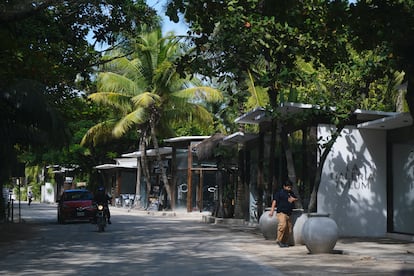
Borjas is referring to Tulum’s main hotel zone, where the coastline has been monopolized by hotels and restaurants and no one ensured there were designated public access points to the beach, as required by Mexican law. The hotel-centric layout effectively forced tourists to stay and spend at these establishments, with no free alternative. José Manuel Jiménez, a hospitality professor at the Escuela Bancaria y Comercial (EBC), notes that a series of planning errors has affected Tulum’s growth as a tourist destination. “There have been problems with land-use planning, service provision, and tensions from rapid development, which impact the tourist experience,” he explains.
For Jiménez, unplanned growth has played a crucial role in the challenges now facing Tulum’s tourist zone. “The offerings and diversity of the Riviera Maya could benefit Tulum. With its infrastructure and variety, the areas could complement each other, but Tulum should have developed sustainable and specialized offerings, promoting responsible tourism and unique experiences — and it didn’t,” he notes. The expert estimates that it will take at least 10 years to see a return on the investments made and to gauge the impact of the government’s plan to boost tourism in the area.
The crisis in Tulum has prompted Mexican Secretary of Tourism Josefina Rodríguez and Quintana Roo Governor Mara Lezama to meet with Tulum Mayor Diego Castañón. Rodríguez has stated that the Claudia Sheinbaum administration is evaluating various options to help stimulate tourism in the area and promises that measures will be implemented in the coming weeks.
Castañón has taken steps to ensure that hoteliers allow tourists access to the beaches through their properties. “Fifteen hoteliers gave us permission for tourists to enter through private property, because the beaches are public — they belong to everyone,” he says. The mayor announced the measure on the same social media channels that, just days earlier, had amplified opinions about Tulum’s drop in tourist numbers. Castañón remains optimistic, insisting that tourists will return as early as November and December and that Tulum will flourish once again.
Sign up for our weekly newsletter to get more English-language news coverage from EL PAÍS USA Edition









































