
How cocaine is flooding Norway
Consumption of the drug has skyrocketed in the Nordic country since the end of the pandemic, while gangs from Sweden are expanding throughout the country
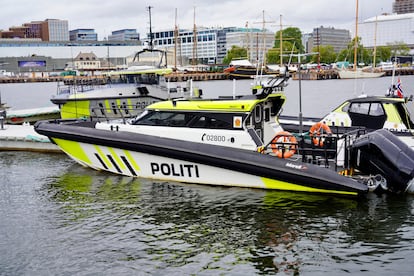

At first glance, the surroundings of Oslo’s port on a sunny September afternoon look like something out of a postcard. Some brave souls dive into the cold North Sea after a sauna session; others glide at high speed on water skis while dodging dozens of kayaks. The terraces next to the Edvard Munch Museum are full of diners and seafood. From the roof of the imposing Opera House, hundreds of tourists gaze out at the landscape: a majestic fjord dotted with boats, a near-perfect image marred only by the port cranes, which are increasingly unloading containers of cocaine under the watchful eye of Swedish criminal gangs expanding into Norway.
“We are not prepared to deal with this,” admits Karin Tandero Schaug, president of the Norwegian Customs union, alluding to what some local media have described as a “cocaine tsunami.” Tandero Schaug points to the Covid pandemic as the turning point: “Between the end of 2021 and the beginning of 2022, we clearly saw an increase. Among young people, among the jet set, in various social settings, cocaine use was becoming normalized at parties.” The union leader asserts that warning signs were raised, but that it took more than a year for the political class to react.
Her colleague Rune Gundersen recalls that it was in March 2023 when the matter burst into the media, following the seizure of 820 kilos of cocaine in a container of bananas from South America. “We had never seen anything like this. We were used to intercepting small quantities, mostly for personal use, but not kilos,” he says. The year closed with 2.3 tons seized, more than in the entire previous decade.
Customs officers feel overwhelmed: they lack sufficient resources and personnel to cope with the avalanche of cocaine. They only have one scanner capable of inspecting full containers in Oslo, which they must share among several ports. After a period of cutbacks, during which they were on the verge of having to dispose of several vessels, the customs service’s budget has been increased in 2025, which has allowed for some reinforcement, among other things, with the acquisition of another scanner — “although it won’t be operational for another two years,” laments Gundersen. Despite the budget increase, Tandero Schaug emphasizes that many officers will retire in the coming years and that not enough young people are being trained to ensure generational renewal.
Oslo Mayor Anne Lindboe, a conservative, acknowledged a few months ago that the Norwegian capital’s port had become “one of Europe’s favorites for organized crime” and admitted that current control and security measures are insufficient.
Drugs, however, don’t just enter through the port of Oslo in large amounts. They also arrive via various points along the coast, through airports, or the more than 1,600 kilometers of land border with Sweden, along the dozens of roads that connect the two countries, “or even by snowmobile, on skis, or on foot,” says Tandero Schaug.
In an effort to curb cross-border criminal activity, a joint police station was inaugurated last week on the border between Norway and Sweden. The solemn ceremony was attended by Crown Princess Victoria of Sweden and Prince Haakon of Norway. It is the latest step taken in the strategy to strengthen cooperation between the Nordic countries with the aim of halting the spread of Swedish criminal gangs.

In their latest annual report on threats from criminal networks, Norwegian police admit that Swedish gangs are now operating in all regions of the country. Denmark announced last year that it would strengthen police controls on the border with Sweden. Iceland is also facing its own crisis, with several seizures in recent months that are unprecedented in the country’s history, both in terms of the quantities and purity of the drugs.
Danish Justice Minister Peter Hummelgard, a Social Democrat, justified the tightening of border controls with the neighboring country: “The reality right now is that not only Denmark but large parts of the Nordic countries are suffering the consequences of Sweden’s failed immigration and integration policies, and we take this matter very seriously.”
Normalization among youths
The increase in the cocaine influx into Norway is reflected in numerous statistics. Consumption among young people ages 15 to 34 is the third highest on the continent, behind only The Netherlands and Ireland, according to the latest report from the European Drug Agency. A study by the same agency, based on wastewater analysis, revealed that cocaine use in Oslo has tripled since the end of the Covid pandemic. And, according to an Ipsos survey, a quarter of Norwegians ages 16 to 19 consider the white powder to be as common as alcohol at parties.
Furthermore, a report by the Norwegian Institute of Public Health from late 2024 underscores that 17% of boys and 8% of girls in their final year of secondary school used this drug during that year. The number of citizens in treatment for cocaine addiction has also skyrocketed in the Scandinavian country.
It’s not just the numbers. The abundance of drugs in Norway is also reflected on the streets, especially in the Greenland neighborhood, right in the center of Oslo. A district of just over 10,000 residents, most of them foreign-born, it has become the epicenter of drug trafficking in the Scandinavian country. “It’s the place in Norway where the most drugs are sold,” says Gundersen. Around the subway entrances, and despite the frequent presence of patrol cars, there are young people — and not so young — offering hashish and cocaine to passersby almost at any time of day. Many move around on electric scooters and either don’t carry drugs or only carry tiny amounts, to avoid serious problems with the police.
However, you don’t have to go to Greenland to get drugs in Oslo. “Most young people buy them through social media or instant messaging apps like Snapchat,” notes Tandero Schaug. “Getting cocaine is easier than buying alcohol: no one will check your legal age. And it arrives at your home faster than a pizza delivery.”
The challenge, authorities recognize, is not only to stem the flow of drugs, but also to halt a normalization that has already permeated Norwegian society. Tandero Schaug wonders what the situation will be like in five years. She doesn’t rule out Norwegian customs officers starting to carry weapons, as has been the case in Sweden since last December. Even so, she is confident that the trend can be reversed: “I hope that, at least, buying cocaine will go back to what it was like when I was young; that it will require some contacts, that it will require a minimal effort to get it.”
Sign up for our weekly newsletter to get more English-language news coverage from EL PAÍS USA Edition









































