
‘Homo Argentum,’ the film Milei showed to his ministers as part of his anti-woke war
Guillermo Francella plays 16 stereotypes of the average Argentinian in the latest film by the duo Cohn and Duprat


Are Argentines arrogant, hypocritical, devious, dishonest, and cowardly? The character of the Argentine chanta — the person who pretends to know much more than they actually do, almost always with the intention of taking advantage of their naive interlocutor — has been the subject of countless jokes, films, series, and plays.
This stereotype resurfaces in several of the 16 characters played by Guillermo Francella in Homo Argentum, the film by Mariano Cohn and Gastón Duprat that premiered this week and is breaking audience records in the country’s theaters.
Cohn and Duprat give it a twist: this time, the satirical barbs are aimed at protagonists who champion progressive banners such as social justice, environmental protection, Indigenous peoples, and feminism. This selection has received applause from President Javier Milei and his followers, and criticism from many of his detractors. The extreme polarization of Argentine society has reached the big screen.
The comedy premiered in theaters last Thursday. Two days earlier, Milei screened it at the presidential residence in Olivos, on the outskirts of Buenos Aires, with representatives from his party, La Libertad Avanza, and from Pro, his ally in the legislative elections scheduled for October 26. On Friday, he re-screened some of the stories in front of his ministers. For Milei, the film illustrates the cultural battle against the left he has waged since coming to power in 2023, which he has added to the ongoing electoral campaign.
“It exposes many aspects of the dark and hypocritical agenda of the woke progressives,” the president said of the film on social media. For the far-right leader, those criticizing the movie are those who see themselves reflected in it and who are hurt that it was made without state funding: “Don’t get angry at reality and the facts, try to escape the miserable life you live.”
At a libertarian conference held over the weekend, Milei again emphasized that the film shows that “social justice is theft” and clearly separates Argentines into two groups: “The good Argentines on the one hand, those who earn their living with the fruits of their labor, and the criminals who in some cases use the state to carry out this violence on the other.”
The individualism of the characters in Homo Argentum is similar to that of the protagonists of previous fictions by Cohn and Duprat, such as the misanthropes of El Gerente, Nada, and El ciudadano ilustre. It is, however, the antithesis of the other audiovisual phenomenon of the year in Argentina, El Eternauta.
The Netflix series, based on the eponymous science fiction comic book published by Héctor Oesterheld and Francisco Solano López in the late 1950s, extols the figure of a collective hero, the bonds of friendship and solidarity that unite a group of people who decide to confront an unknown enemy. Peronism and the social movements opposed to the government embraced the spirit of struggle and the image of Argentinity offered by El Eternauta with the same passion with which Milei now applauds Homo Argentum. They provide two visions of Argentina with few points in common.
Critics of Homo Argentum complain that its mocking portrayal of the national idiosyncrasy is “porteño-centric,” that is, limited to Buenos Aires and its metropolitan area. The characters return from Paris and Miami, have children in Madrid, and travel to Sicily, but they ignore what’s happening in the interior of Argentina, as the provinces farthest from the capital are known.
There are also criticisms of the prejudiced portrayal of the working classes, especially the story of the slum priest, a key figure in the country’s poorest neighborhoods, fighting addiction and drug trafficking, and of the chauvinistic traits with which women are portrayed. They are either lascivious young women, or wives and mothers. The extreme case is a femme fatale apparently willing to publicly accuse a businessman of rape if he does not give her $50,000, a typical case with no real basis: less than 4% of complaints filed with the courts for sexual abuse are deliberately false.
The president’s enthusiasm for an Argentine film is almost unprecedented. His administration has financially stifled the National Institute of Film and Audiovisual Arts — responsible for the promotion and distribution of national works — and has laid off workers. The portrait of the filmmaker that appears in the movie could not be closer to the imaginary constructed by Milei: a homosexual director who films a threatened Indigenous tribe with the sole goal of receiving an award and delivering a committed speech he doesn’t believe in.
Government officials took note of the president’s wishes and are spreading his message online. Speaker of the Chamber of Deputies Martín Menem compared the double standards of the protagonist of the first story with those of opposition legislators: “In my opinion, it represents the actions of a section of Argentine politicians who, through malpractice, ignorance, or bad faith, led the country to ruin. And even after having destroyed everything, they remain in office, hypocritically defending their ‘noble causes,’ outlining concepts of ethics and offering recipes for problems they themselves created, because they lacked the courage to tell the truth.”
Menem attacked the “cynicism of Kirchnerism and its allies” and closed the message in an electoral tone: “That culture is what condemned Argentina and it is what we must banish once and for all.”
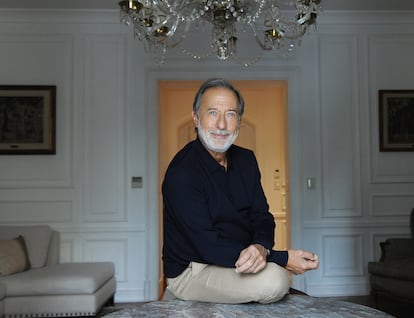
Guillermo Francella is one of the most beloved actors among Argentine cinemagoers, and his excellent characterization work, transforming himself into 16 distinct characters, is commendable. The reality of the country is much more diverse and complex than the comedy portrays, but its huge box office success suggests that its mockery does represent (or at least entertain) many people.
Sign up for our weekly newsletter to get more English-language news coverage from EL PAÍS USA Edition









































