The predator lived at Luz and Mario’s house
Sexual offenses are woven into the history of Ciudad Juárez, where authorities don’t have the necessary resources to fight the trafficking of minors

When what had happened finally hit Luz, she forgot how to write. She was 10 years old and earning good grades at school, but the shock kept her from putting one letter after another. The same thing happened to Mario, her eight-year-old brother: he no longer recognized numbers, couldn’t write out a full name, couldn’t read. Psychologists call this “cognitive deterioration,” and it is a result of trauma. Luz was a victim of rape and sex trafficking by her mother’s partner, Gregorio, for six years. At one point — neither of the children can remember when, exactly — the man began to victimize Mario as well. That was the turning point. Luz had normalized what was happening for the most part, but she was not prepared to see her younger brother suffer. “I cried a lot,” she said in one of her first statements to Ciudad Juárez’s Special Prosecutor’s Office for Women (FEM). At school, the little girl had shared a small part of what had happened to them, just a few sentences about what they were experiencing and luckily, alarms went off. The words that left Luz unable to write had uncovered a deep fissure: the childhood sexual exploitation that lives in the shadows of this border region.
Who was witness to the yearslong abuse suffered by Luz and Mario? How many people participated? What happens to other victims? Trafficking networks tie unsolvable knots into this sprawling, dusty city whose history is inextricably linked to sex crimes. It is an ultra-violent town — the world’s most violent, it has been declared in the past — and sexual offenses are, according to special prosecutor Wendy Chávez, the most common type of crime committed against Juárez’s children. In 2024 alone, the FEM documented 1,121 victims. This raises a generations-old question that has been repeated since the term “feminicide” was coined in the city: why here?
***
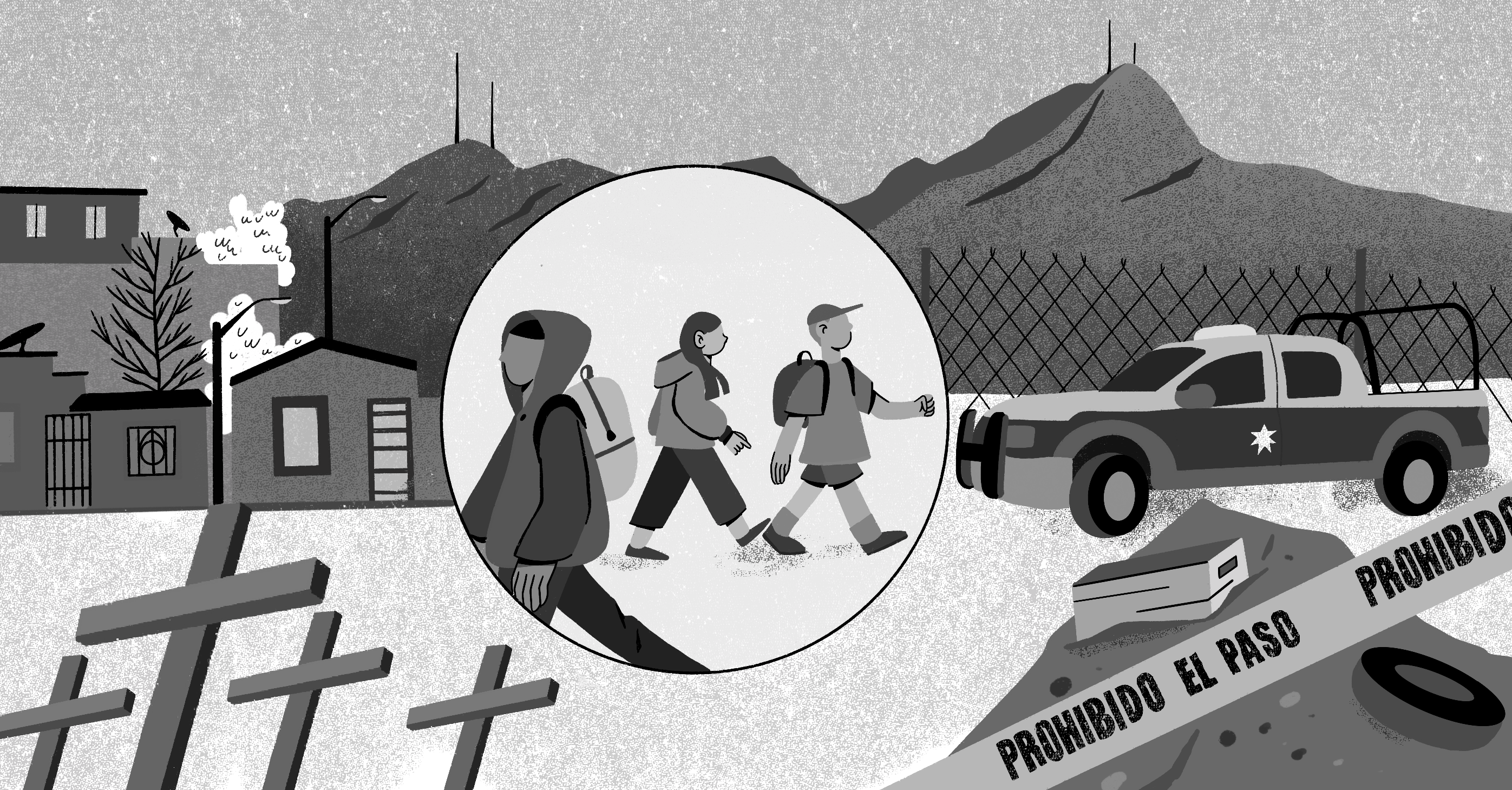
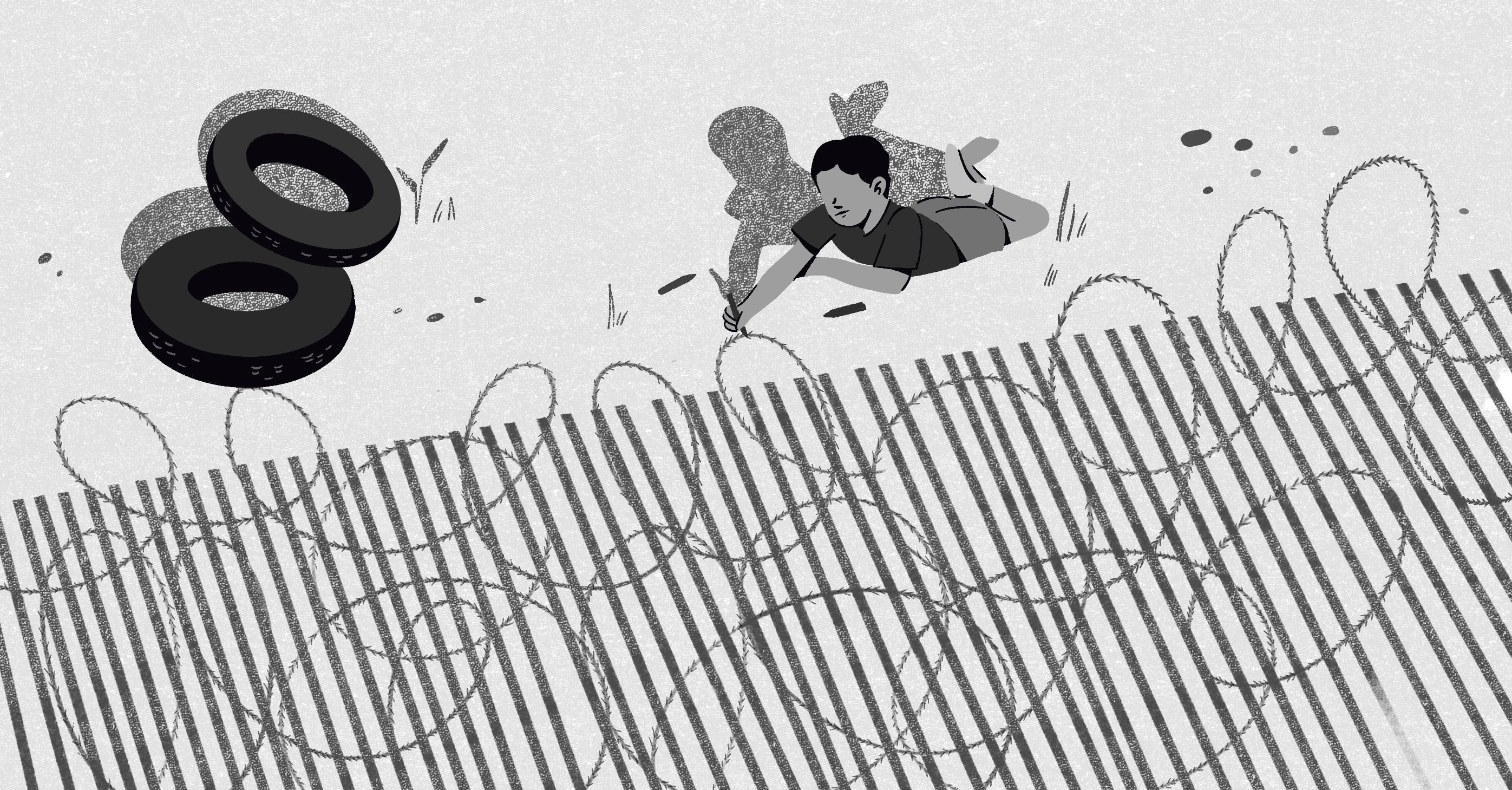
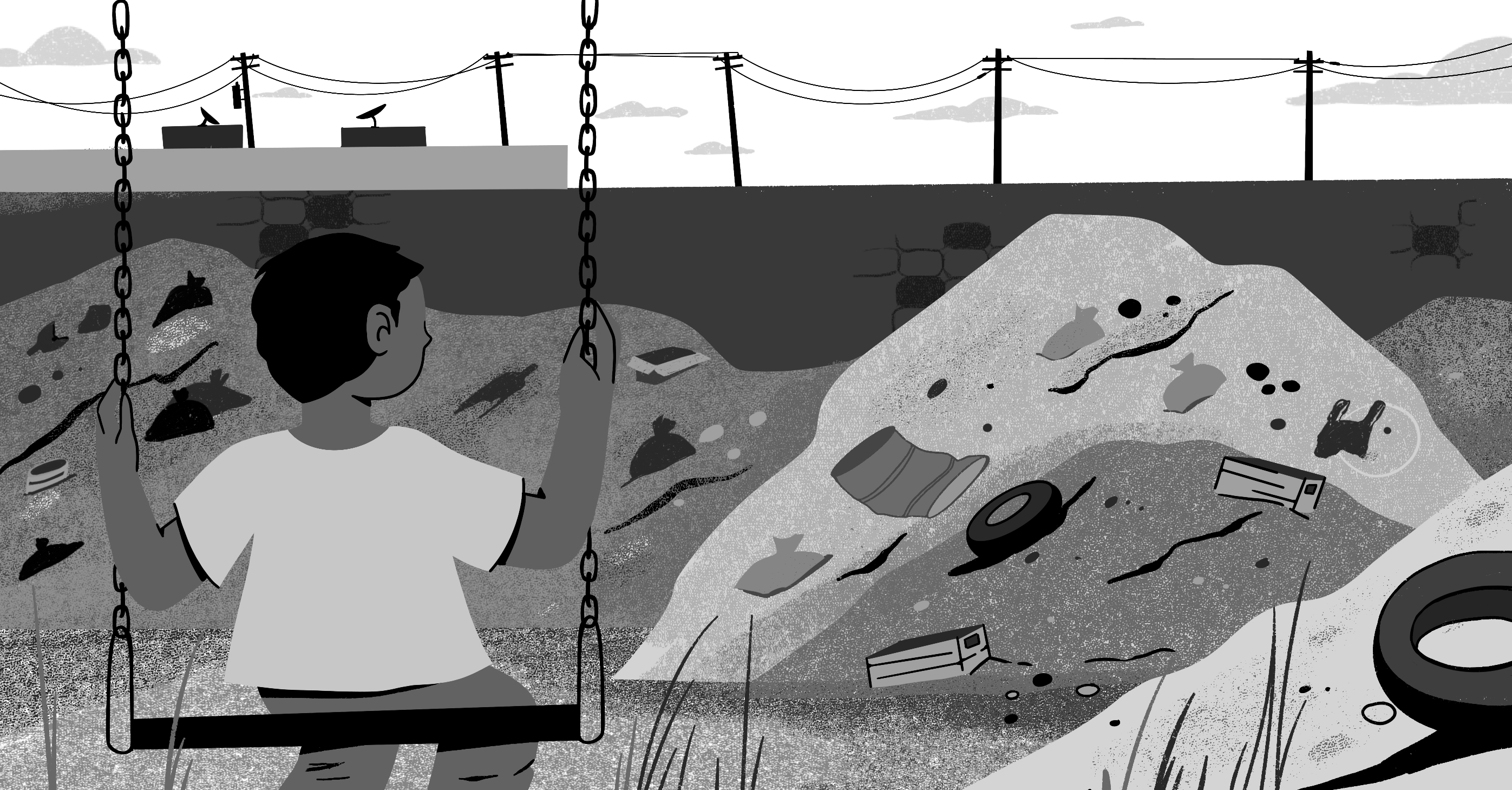
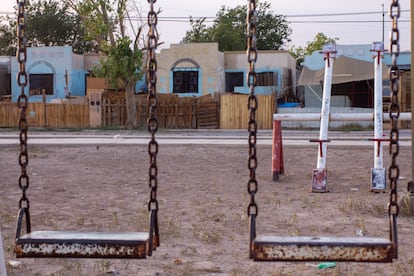
The little house is white, just one story, with barbed wire strung around its small back patio. There is little to distinguish it from its neighbors. The house is located in a massive and newly constructed complex in the southwestern part of the city. Here, tires act as a barrier against a sewage channel that breaks up the surrounding layout of dilapidated neighborhoods. A supermarket is built atop land that once housed a clandestine grave. This was where Luz and Mario lived with their younger brother Luis and their mother Ana. Around 2016, Gregorio, Ana’s partner and fellow factory worker, moved in. What happened inside that house is what happens in so many other houses on this desert plain, in stories that have never been told.
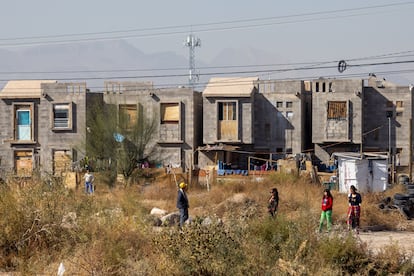
In Ciudad Juárez, 360 girls under the age of 10 were sexually assaulted in 2024, according to data from Red Mesa de Mujeres, a coalition of 10 non-profit groups dedicated to women’s issues. The organization found that over the last year, there have been 633 reports of trafficking of women and girls in the city. That number is growing — in 2023, there were only 20 such reports. The southwestern part of the city, where Luz and Mario lived, is the most common site of sexual abuse and rape. Among the causes of this are an incredible normalization of domestic violence; substandard housing that exposes children from a very young age to nudity, inappropriate touching and witnessing sexual relations; fathers and mothers who work 12-hour days in an area that has no childcare facilities; children who grow up essentially on their own, sometimes with help from a neighbor, relative — or an abuser.
All the names of family members that appear in this article are fictitious, chosen by the individuals themselves. Except Mario, who wanted to be called Sonic. His therapists had to dissuade him from the moniker. Nor is the aggressor’s name real, nor those of the psychologists, social workers and Casa Amiga lawyers, who have provided legal services in the case. The real name of Lidia Cordero, director of an institution that has become an indispensable shelter for the women and children of Ciudad Juárez, does appear.
***
Luz was a victim of sexual exploitation starting when she was four years old and continuing until she was 10. The abuse almost always took place in the evening, while her mother worked the night shift at the maquiladora. Her aggressor was the same person who dropped Luz off and picked her up from school, her trusted adult. The kids did not spend time with their biological father, who had abused Ana, left Juárez and never returned or sent them money. Ana’s partner quickly became their father figure. They called him Papá Gregorio.
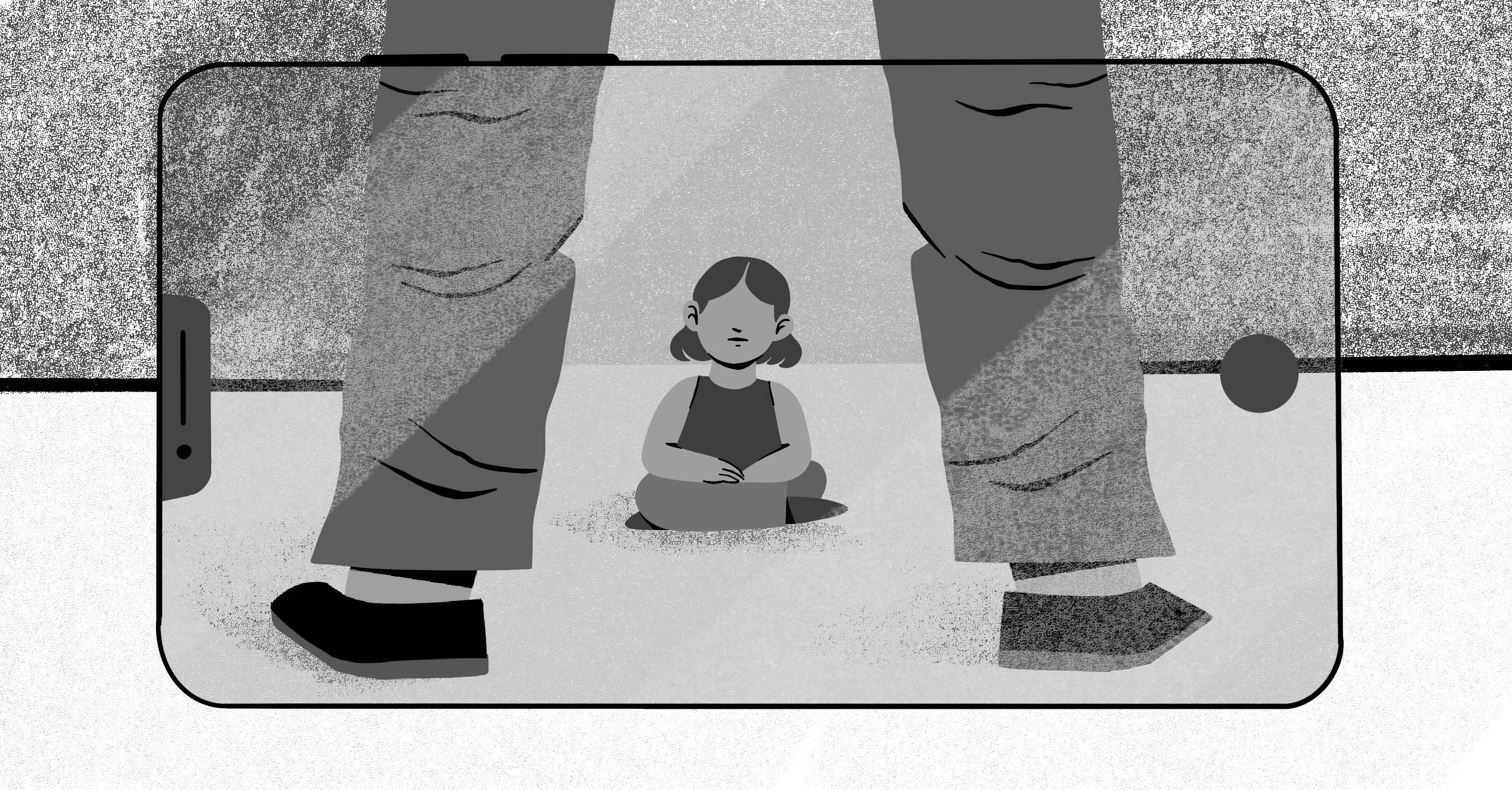
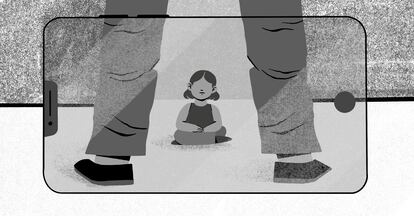
This man, who is now 39 years old, forced Luz to have sexual relations with him. Sometimes there were alone, other times her brothers saw them. Many times, the abuse took place in front of a camera, in recorded transmissions or lives, or on video calls where, on the other side of the screens, men followed the rape. Some of them “directed” the scene. In the words of Luz: “I took off my clothes to record videos with him and he uploaded them to an application so that strangers could watch. The guy on the video call would talk to me. Gregorio told me what to say to the person.”
Luz’s testimony is extremely hard to hear. Not just because of the pain that accompanies the words, but also due to the difficulty of children understanding that their abuse is being broadcast and sold. “He said I had to send photos and videos to a man and if I didn’t, that man could send us to jail, kill us or kidnap us.” And, “In 2022, when it was almost my birthday, I was nine years old, he showed up looking scared. He told me that a man had sent him a message from an application that wasn’t WhatsApp, he told me that the man wanted us to do sexual things and that everything he and I did, he had to record it and send it to the man [...] The next day out of nowhere, he told me the same thing, but I didn’t want to anymore. I began to cry and cry.”
At 10 years old, Luz can clearly explain the operations of a sex trafficking network. She says where proof can be found (“he has the videos saved on a console that is connected to the television in his room”); shares that Gregorio, who showed her videos that he’d taken of her from a very young age, also showed her images of the abuse of other little girls; and said beginning with her first interview with the special prosecutor on December 9, 2022, that one day, “Gregorio grabbed Mario and took him to the room.”
***
Luz has severe post-traumatic stress disorder, according to the special prosecutor’s initial psychological assessment. “It scares me to go where they hurt me.” “It scares me to remember what happened to me, sudden noises and movements scare me.” “He did it almost every day.” “I don’t know why he did it so much.”
The assessment adds: victim experiences suicidal thoughts.
Mario, according to the special prosecutor’s assessment: “Damages: childhood sexual abuse, psychological abuse of a minor, child neglect.”
Brutal physical wounds are identified on each child. Experts estimate that the emotional impact for both will be lifelong.
***
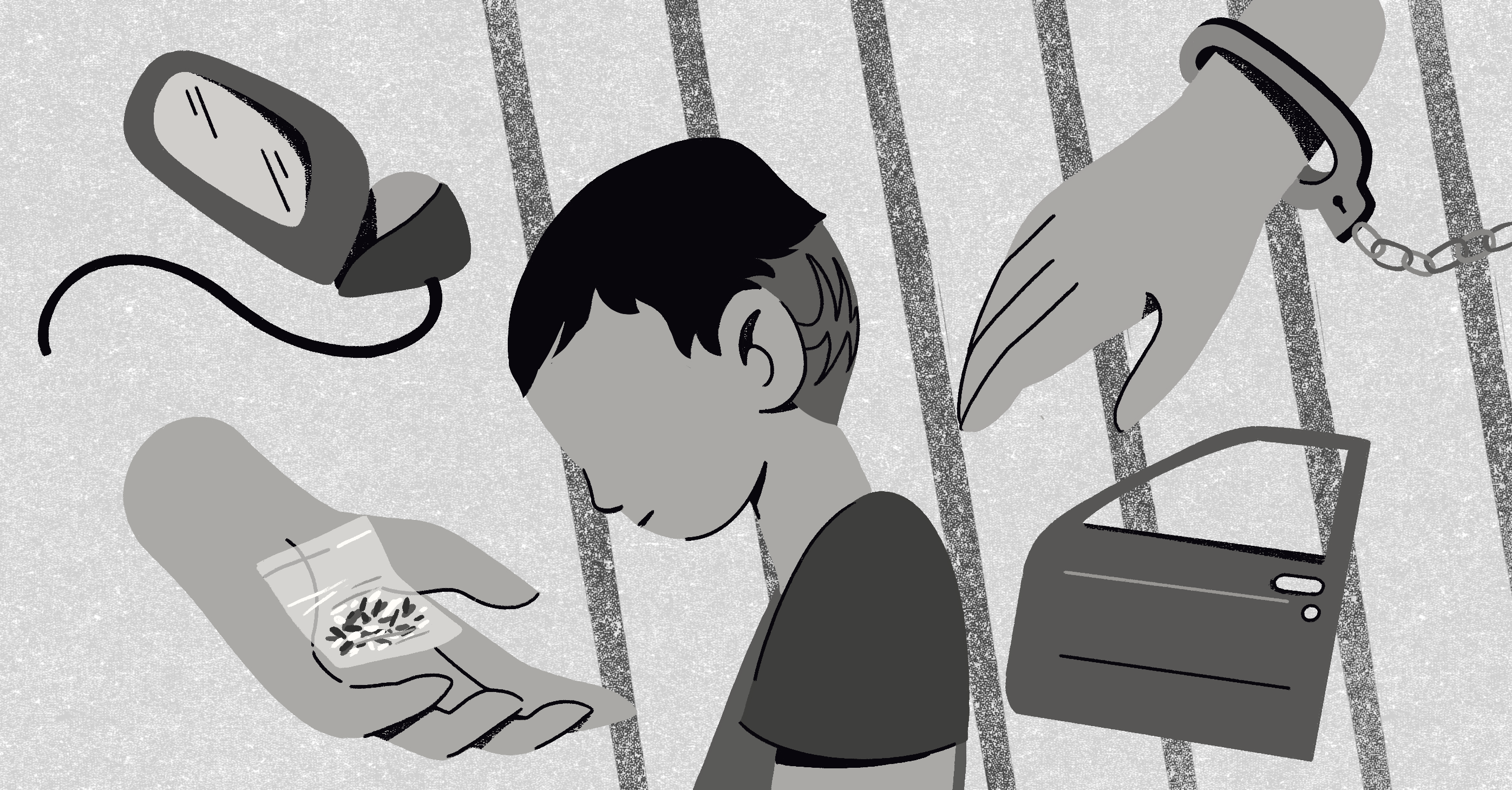
Gregorio was arrested by chance (he committed a traffic violation and law enforcement found out he was a fugitive) a few weeks after Luz and Mario’s testimonies. He was imprisoned until his trial, which took place in June 2024. It went on for a week. At that point, the children had testified so many times about what happened that they didn’t want to do it anymore. It was Irene, the Casa Amiga psychologist, who convinced them that it would be the last step. “They did super,” she summarizes. “They went out there and I remember Mario said to me, ‘Touch my heart, it’s going to jump out of my body.’”
Luz and Mario’s testimony led to an investigation of aggravated rape (there is no such classification within sexual violence against children), another for trafficking for sexual exploitation and one more for the sexual abuse of one of their cousins, who had been assaulted by Gregorio on one occasion when she spent the night in their house. Only the first crime has been tried. The children’s testimony, together with expert reports, was key to the perpetrator being definitively sentenced in July 2024, after appeal, to 66 years in prison and moral damages of almost one million pesos ($53,166 USD). He has not paid a cent.
***
Mariana Gil heads the Office of the Ombudsman for Children’s Rights (ODI). For more than 15 years, she has investigated the sexual exploitation of minors. In 2022, she uncovered a trafficking network in Mexican schools. Based on that experience, she states, “90% of the cases of childhood sexual abuse is connected to other crimes. Nearly all take place for years or are committed by several people or involve the creation of childhood sexual exploitation materials.” The lawyer explains that in the majority of cases, only one crime is tried — normally sexual abuse — due to a lack of further investigation. Mexican prosecutors, says Gil, don’t have sufficient programs, databases, experience or resources to find where the abusive content is being stored or streamed, much less to discover links between those images and banking platforms or transfers. “They’re not equipped for this new modality of crime. The victim is expected to provide all the information,” she says.
Sexual exploitation of minors on the internet has exploded. The United Nations says that the amount of material featuring the sexual abuse of children has grown “exponentially” since 2010. A 2024 report from the Child Safety Institute of the University of Edinburgh states that 302 million children were victims of some version of such material. The United States’ National Center for Missing and Exploited Children has found that there was a 12% increase in reports of websites with childhood sexual abuse material in 2023, when there were 36.2 million documented cases. And that’s just on the publicly accessible internet, not counting the deep web, where 80% of such material is stored, according to the NCMEC. There have been at least 800,000 such reports that link the location of abusive material to Mexico.
Alerts that reach Mexico regarding such complaints, states the ODI in its latest report, go nowhere. “They are stored as statistical data and do not lead to open investigations, even though the law requires action to be taken ex officio,” says the report.
Special prosecutor Wendy Chávez recognizes that her office lacks the resources to investigate these complex crimes. Mexican authorities’ lack of capability also has to do with their workload. For example, there are 14 agents in the sexual crimes unit at Ciudad Juárez’s Special Prosecutor’s Office for Women. Each has a caseload between 800 and 1,200. Every year, they get 1,100 new reports involving minors. They pile up in mountains of folders.
The December 10, 2022 prosecutor’s report registers the following pieces of evidence found in the home of the assailant and victims:
- Screen adaptor
- MP3 player
- SIM card reader
- 64g memory card
- Three sex toys
- PlayStation 5
- Two hard drives
Two years and seven months later, these objects, evidence of a childhood sex trafficking network, have yet to be reviewed. Initially, the public prosecutor assigned to the case stated that they had tried to analyze the devices, but that it had not been possible because “they were password protected”. In June 2025, at the insistence of Casa Amiga’s legal team, the devices were finally sent to experts. During this entire time, it has not been possible for the investigation into the sexual exploitation suffered by Luz and Mario, the one that would allow the rest of the perpetrators and victims to be traced, to begin.
Lidia Cordero, director of Casa Amiga, summarizes the current situation. “There continues to be a dearth of information as to knowing who views these videos, if someone else is recording them, if someone else has them, if there is information that is circulating on the internet. We don’t know, because the investigation hasn’t gotten there,” she says. “The way to stop these massive uploads of child pornography is through cyber intelligence, because getting children to realize that they are being recorded is very difficult,” says Cordero, who points out how easy it is to locate a cell phone and adds that the first battle is against the normalization of sexual violence.
***
They’re all quite small, especially those in the front rows. They arrive holding hands, happy, accompanied by their teachers. They sit down on chairs in front of the puppet theater that has been set up in their school. Some stand up, fidget, throw themselves to the floor, but most are mesmerized as soon as Miguelito and his grandmother appear on stage. The purpose of the two puppets is clear: to help the children identify which parts of their bodies are private, so that no one touches them, nor will they touch those of others. The Casa Amiga workers have succeeded, at least this morning, in getting the message across. “No, I won’t touch you, I don’t like that, respect me,” chant the 30-some little voices.
The theater forms part of the preventive activities that Casa Amiga organizes in schools. They are designed with caution, as they don’t want to open any doors they aren’t able to close. Staff know that there are dozens of cases like that of Luz’s family. “It requires a lot of strategy, we don’t want to uncover cases that we aren’t prepared to take on. We’re already at risk of oversaturation,” says Cordero. “Why would we make a child say it if there aren’t going to be any consequences?”
***
Luz wants to be a TikToker, or perhaps a pop singer. She also says that she wants to study and do something that will allow her to help her mother. She has begun middle school, has new friends and wants to get out there, to shake off the stigma, to live a life beyond having been assaulted. “Right now, it’s a new chapter for her,” says Loreto, her current psychologist. “She’s had to put the pieces together again, it’s been a lot of work.” Mario wants to be a police officer. That’s a relief for Luis, the youngest of the three, because it clears the way to a dream he has had for years: to work at his grandparents’ vegetable stand. “They have made a lot of progress,” says Loreto. “They are in the process of rediscovering themselves, of validating their emotions. They can express themselves openly on the subject. That fear no longer exists. They have goals, aspirations, which speak to their desire, their courage, and their strength.”