
Morphology of a violent city
A group of businessmen and government officials shaped Ciudad Juárez at the whim of economic interests, which even now explain the desolate conditions in which minors have grown up over the last four decades
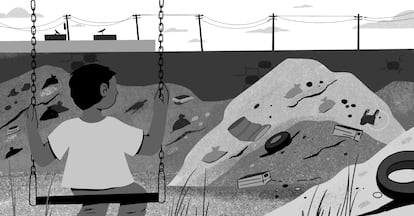
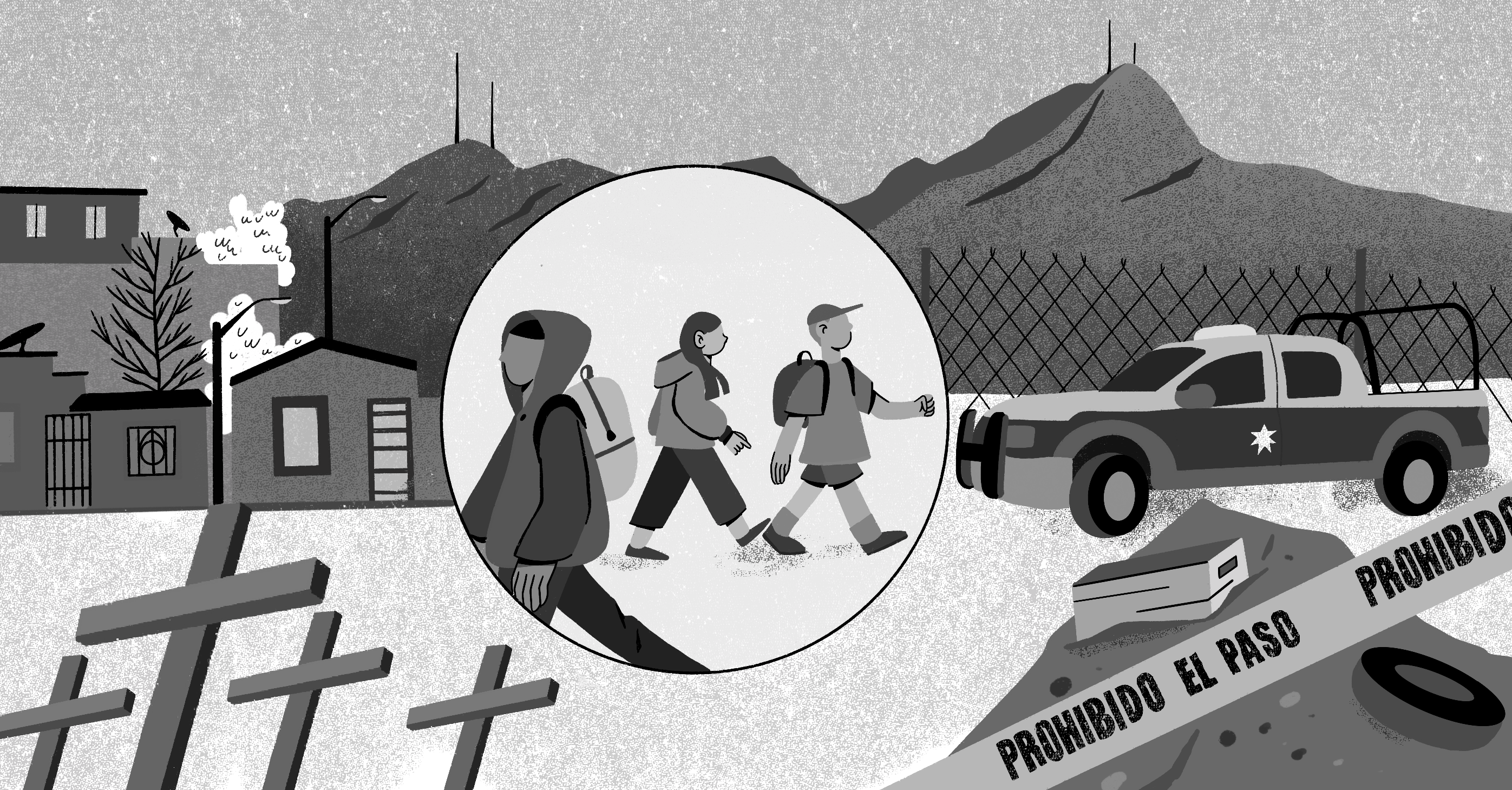
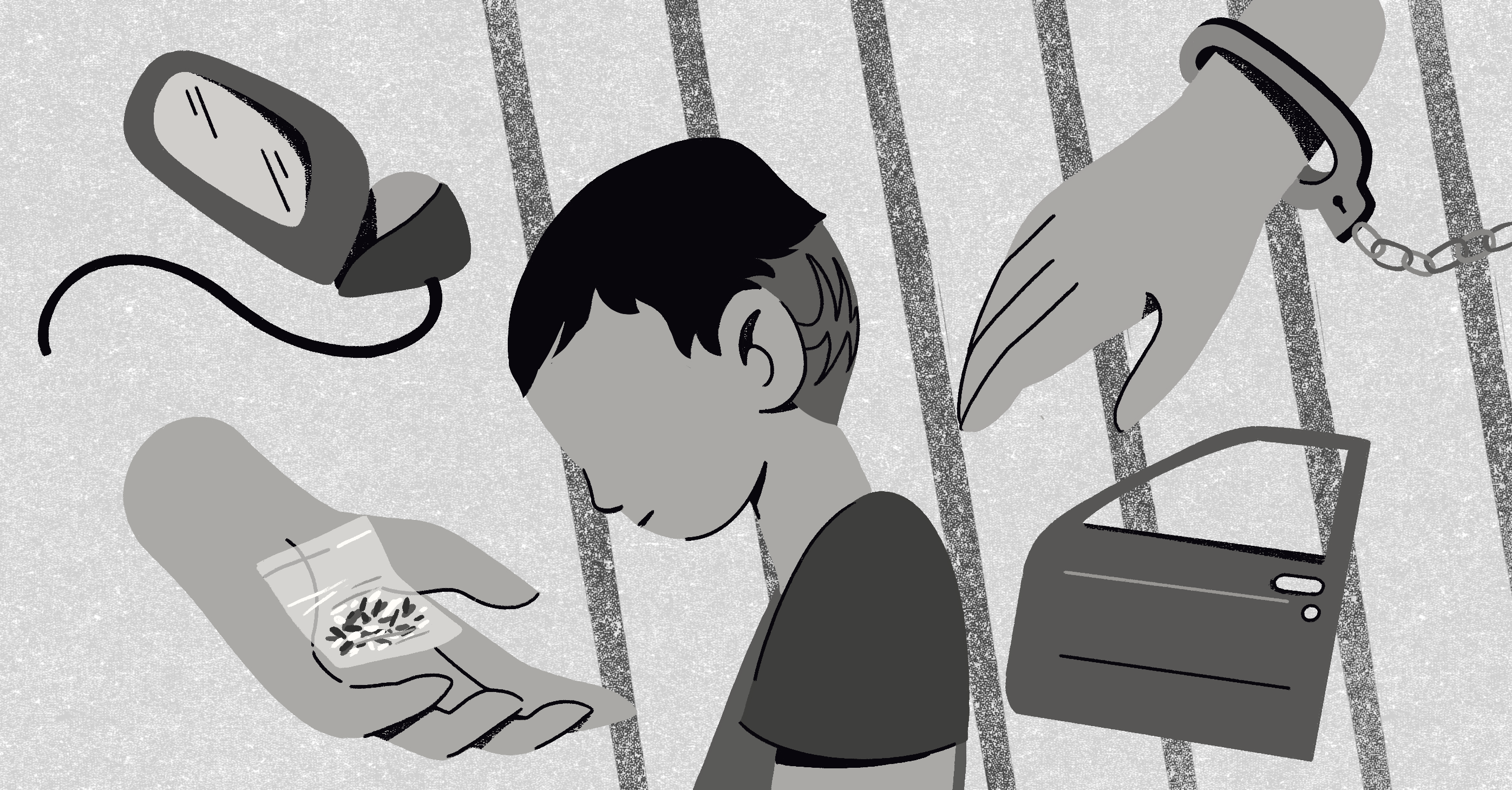
Sandra Ramírez has something to say as soon as she takes a break in the middle of her day, spending time with minors affected by violence. It’s about a 13-year-old boy she used to have as a student in one of her art workshops. She remembered him as tiny and enthusiastic. He worked as an halcón, a sentinel stationed on a neighborhood corner to warn of the presence of potential adversaries or the authorities. He carried a pistol tucked into his pants. “I couldn’t get into high school,” he explained, somewhat embarrassed. The area where he lives, in the southeast of Ciudad Juárez, is part of a chain of subdivisions with small, unmistakably identical houses, built for factory (maquila) workers three decades ago, just after the signing of the North American Free Trade Agreement (NAFTA). It’s an area inhabited by almost a third of the city’s 1.5 million people, where there’s water, sewage disposal, electricity, and major avenues, but no schools, hospitals, or parks. A city laid out as a dormitory where children are seen as budding factory workers.
The only school the teenager was able to enroll in caters to the demand of a dozen neighborhoods, so he didn’t find an available spot. “They looked for me, teacher, and offered me 500 pesos a week [about $25], and I just have to let them know by cell phone if anyone comes by,” he told Sandra. The director of Colectiva Arte, Comunidad y Equidad (Art, Community, and Equality Collective) then realized that this boy’s battle was a losing one. “I couldn’t tell him what they told me when I was his age, 40 years ago: ‘Study so you can work and buy a house and a car, so you can have a better life.’ That doesn’t exist anymore. The first thing this city kills is something psychological, a vision of the future. They live in the present, because nothing else matters.”
Juárez has been covered in scars for half a century. It is a violent place both inside and out, where a handful of businessmen pawned the city’s prosperity in exchange for an economic model that saw their own fortunes grow while disrupting the lives of every generation born since. Since 1970, 30 industrial parks have been developed, with more than 450 companies and 2,655 establishments dedicated to manufacturing, according to Index, the private organization that defends the sector’s interests. They employ 309,000 people, equivalent to 1.5% of the national total registered with the Mexican Social Security Institute (IMSS), and 64% in the State of Chihuahua.
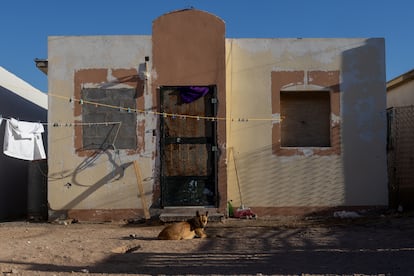
Becoming the main hub of this business model generated an unprecedented community model. The social architecture of Juárez is explained by the corrupt alliance between the holders of capital and government agencies, which created a lifestyle without variables for the working class, whose residential areas deteriorated over the years. The way in which this structure of misery and desolation was consolidated explains social phenomena such as the disappearance and murder of hundreds of young women, the high levels of alcohol and drug consumption, suicide among children and adolescents, and, above all, one of the longest and deepest streaks of criminal violence on the continent, perpetrated by both state agents and criminal organizations, although the latter are the only ones singled out in official discourse.
The ‘children of the maquila’
In the months leading up to the signing of NAFTA in 1994, the Chihuahua state government moved swiftly to expropriate hundreds of hectares within a polygon known as Lote Bravo, in the southeast. This vast desert expanse belonged to five families who owned almost the entire municipal territory, and who either promoted the assembly plant system or benefited from it. In its initial boom, the maquila industry sparked an unprecedented phenomenon in Latin America: an internal immigration of young women. They constituted the sole employed labor force for the next 20 years. Most of them arrived alone and gradually brought their parents with them. The wave of migration doubled the population decade after decade and generated an influx of families to the desolate lands of the west, also belonging to the same families attracted by the new industrial engine.
These women were the first to achieve economic independence. They didn’t need men to support them, and when it came to having children, they inaugurated a new family model, in which marriage was no longer the rule and they became heads of clans. In the 1980s, their children would form the gangs that ravaged the city until the early 1990s. The “children of the maquila,” as they were known, committed robberies and fought each other with knives, chains, and sticks. But, except for their own consumption, drug trafficking was a completely foreign world to them. Juárez, however, was rapidly heading toward collapse. Neither the promoters of the maquila system nor the government sought to address the needs of this urban population that was growing without order. They boasted of full employment, a vanguard for their working women, although they were not provided with educational institutions, daycare centers, hospitals, recreational centers, or public transportation that matched their needs.
“There never was, nor has there ever been, a childcare policy that could at least alleviate the lack of maternal bonding,” says Hugo Almada, the academic co-author of The Social Reality of Ciudad Juárez: Territorial Analysis. “The number of daycare centers has always been very small and concentrated in the northern part of the city, which has more economic power. But in the rest of the areas, where the working class resided and resides, they don’t exist.” A seemingly insignificant omission, at least for business owners and the authorities, created the perfect breeding ground for a branch that has only grown since the mid-1990s: drug dealing.
The new gangs, which by then the Municipal Public Security Secretariat estimated numbered over 400, switched from knives and clubs to firearms. They had established themselves as a local distribution network and, by the beginning of the century, had become pawns within criminal organizations. This new status would exert enormous pressure on the underage population, both for consumption and distribution, which would ultimately reveal its most brutal side between 2008 and 2011, the years of the so-called war on drugs. “That explosion of violence generated a new and terrible situation for two reasons,” Almada explains. “One, because of the number of young people murdered and the number of children left orphaned, and two, because the terror generated in the streets kept people from leaving their homes, and homes became pressure cookers with considerable domestic violence.” From the children of the maquila, Juárez quickly transitioned to the era of the children of violence.
“It’s easier to get a gun than a scholarship”
Between the summer of 2007 and December 2011, Juárez recorded 10,000 murders. Even for a city like this, the figure was beyond all parameters. In 2018, the Colegio de la Frontera Norte (Colef) decided to republish a study called Geography of Violence in Ciudad Juárez, Chihuahua. “It is possible to argue that Ciudad Juárez has been characterized by urban spaces with conditions that directly or indirectly bring its residents closer to the phenomenon of violence,” it was stated. Marginality was measured based on the level of poverty, well-being, infrastructure, and socio-spatial hierarchy. What was found was not novel, but it rendered irrefutable any contrary interpretation, in this case that of business leaders and government officials who deny the relationship between the model they created and the most serious expressions of violence: femicides, intentional homicides, juvenile delinquency, and child abuse.
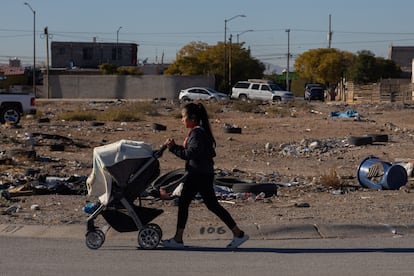
“Young people, girls and boys, see crime and violence as something completely normal,” says Adriana Chávez, general coordinator of Las Hormigas Comunidad en Desarrollo (Las Hormigas Community in Development), a civil association founded in 2000 in what is probably the most emblematic example of urban abandonment, a neighborhood called Anapra, right on the border with the U.S. states of New Mexico and Texas. “They would like to be judicial police officers to have the power to kill someone who does something wrong. Or else, they idealize the hitman, because it gives them an identity, this idea of the power of violence. But there’s a reason: in an area like this, where we are, it’s easier to get a gun than a scholarship.”
The year Las Hormigas opened its doors, Anapra looked like a refugee camp. The cardboard and wood shacks were scattered across the sand at the whim of their residents, mostly maquila workers. They were the last to arrive in the 1970s, encouraged by the promise of a job with benefits, such as social security and housing, and also by the proximity to the United States. But the idea of paradise is one thing, and actually accessing it is quite another.
Over the last quarter of a century, the neighborhood has had the highest rate of teenage pregnancy and has remained a primary center for femicides, murders, and child abuse. During that time, two schools have opened: one elementary and one middle school. There are no high schools, no parks, no cultural forums, and no daycare centers. Only the main avenue has been paved to accommodate the personnel transport trucks that carry workers from Monday to Friday. Yazmín Jiménez, coordinator of the educational program at Las Hormigas, describes the consequences of those most violent years: “The loss of the parental figure completely revolutionized an entire generation of children and adolescents who today are the parents of the population we serve, and we must not forget that many had already suffered the loss of women.”
Juárez, “where God wants to live”
Four decades ago, Juan Gabriel, a local singer, offered one of the few tributes to the dignity of the land that formed him: Juarez es el #1 (Ciudad Juárez is No. 1), from his most famous album, Recuerdos, Vol. II (1984). However, very little remains of the border, “where God wants to live.” In 1984, two-thirds of the population earned more than three times the minimum wage. That situation would reverse after the signing of the trade agreement with the United States and Canada, leaving that popular anthem as a reminder of a forgotten moment. “The impact of the implementation of the maquiladora industry since NAFTA has been a generalized decline,” says Susana Prieto, the leading figure in the defense of labor rights and a former federal representative, expelled from the ruling Morena party for demanding a reduction in the workday. “There is complicity with the Mexican government, regardless of its political affiliation. We can clearly see this in the lack of public policies for children. Children have been abandoned by the system for more than four decades.”
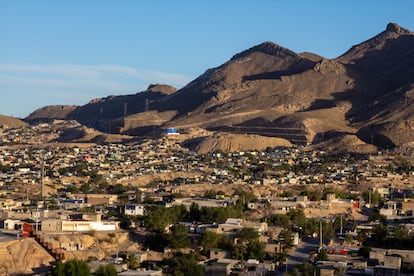
No one here is uncovering the secret. What is happening in Juárez is part of a fairly well-structured plan of ruthless capitalism. It is evidence of a predatory model in which women were the victims first, and then their children. The way they have been abused is not only restricted to the urban and social spheres, but also to health. In the last 30 years, people have been dying at an increasingly younger age, not only from bullets but also from the consequences of their hypertension and diabetes, a product of a diet conditioned by their low purchasing power. Or by suicide, when they are children or adolescents. “Kids these days don’t want to go and work 12 hours a day for a salary of 3,000 pesos [about $150] a week,” says the lawyer. “That money isn’t even enough to cover the food basket, much less pay for utilities, entertainment, housing, or healthcare. When we see this, it’s easy to understand why they are cannon fodder for organized crime.”
Sandra Ramírez, director of Colectiva Arte, Comunidad y Equidad (Art, Community, and Equality Collective), is nostalgic for the city Juan Gabriel sang about. In the 1980s, she says, life was enjoyed. Children went out into the streets without worrying their parents. Neighborhoods had their bakeries and grocery stores. Public space belonged to everyone, and everyone looked out for one another. But the opening of trade ended the idyll. “I remember one anecdote,” Ramírez notes, “there was a party and an armed group arrived and started shooting at the attendees. They were after two people, two men from the family. But at the event, they took more adults. The children ran away screaming. One of the hitmen took a child in his arms and turned him around so he wouldn’t see when he murdered his father. Then he let him go and left... And there are many cases like that that destroy hope.”
Sign up for our weekly newsletter to get more English-language news coverage from EL PAÍS USA Edition