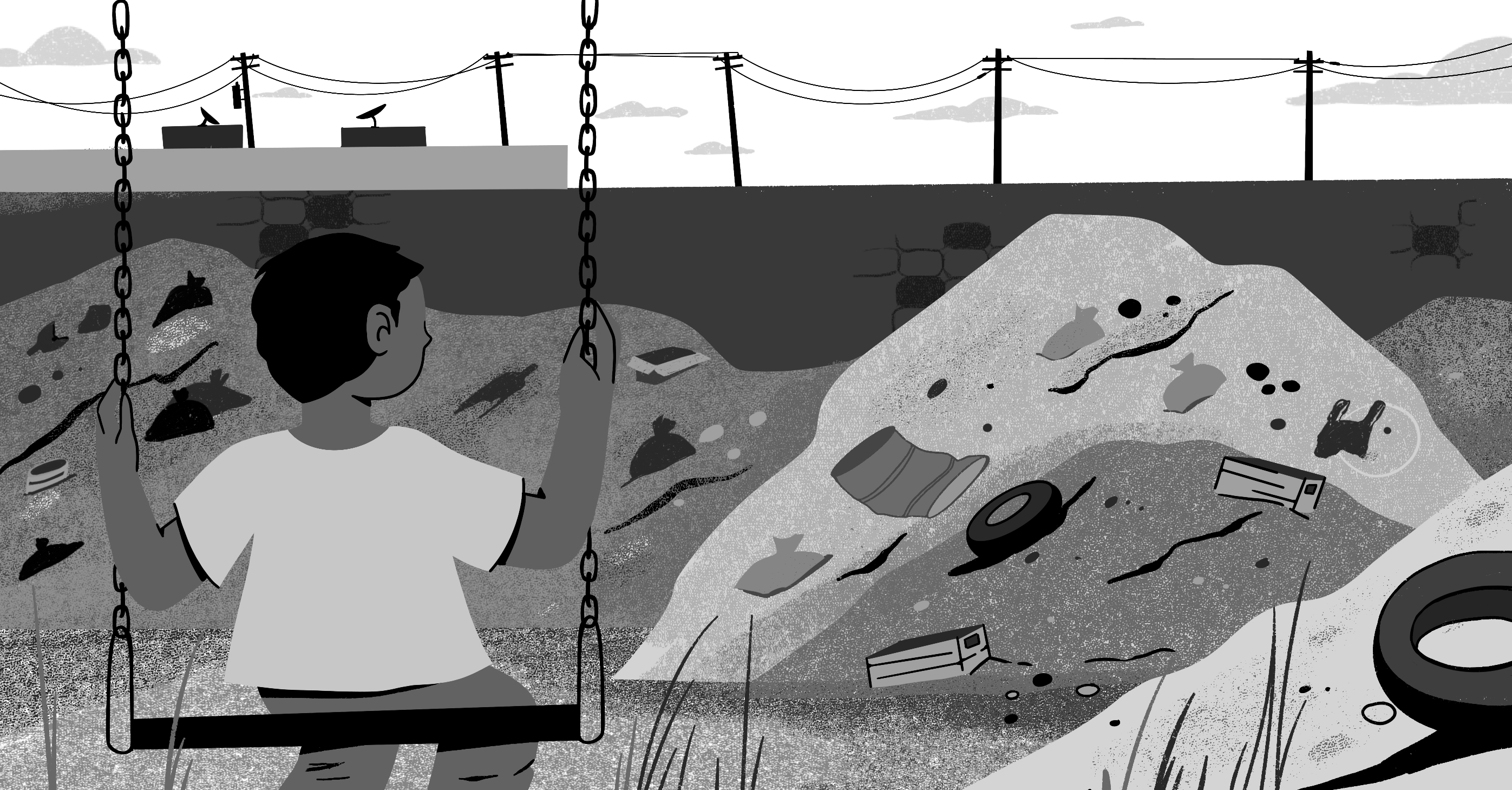
Orphans of a militarized border
They are the children and grandchildren of a generation that knew nothing but violence. Without support networks, criminal groups easily recruit them as spotters, or turn them into guides for migrants
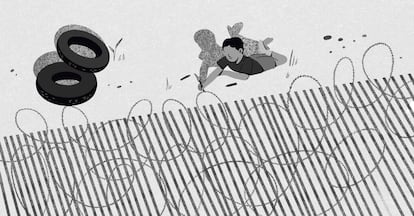
At 11, he dropped out of school. At 14, he became a lookout for smuggling operations. “I stopped going to school. I used to get bored there,” the boy explains, during one of 18 interviews conducted by Gabriella Sánchez. She’s an academic, specializing in migrant smuggling networks in Ciudad Juárez.
“A friend invited me to be a lookout for the others when they brought people across [the border],” he continues. “I had nothing else to do, so my friend and I thought: ‘At least we’re making some money doing this, right?’ So I stayed and worked with them for a while.”
His testimony reflects the pattern that defines hundreds of minors who live along the border: dropping out of school, being recruited by smugglers, and seeing this way of life as being the only viable economic possibility. As a spotter, Sánchez explains, the boy’s job was to keep watch while others guided migrants through clandestine routes to the United States. Through her research, she has documented the dynamics of these minors, who are known as “circuit children.”
The assigned roles form an operational chain: spotters who monitor the movement of the authorities, guides who know every trail and desert hideout, decoys who distract the Border Patrol, as well as drivers who transport migrants once they cross. The youngest children often start out as lookouts; as they grow older and demonstrate trustworthiness, they move up to more complex and dangerous roles.
Minors have become an “invaluable asset” for organized crime, explains Laurencio Barraza, director of the Tira Paro network. “If they’re caught, since they’re minors, absolutely nothing happens to them in the United States. In other words, they don’t go to jail. They’re returned [to Mexico] without further complications. [They’re invaluable] for those who make a living as [migrant smugglers],” he explains. The U.S. Border Patrol began a census in 2014 – which it discontinued the following year – that recorded 600 Mexican minors who had crossed the border that year. Some had crossed, been detained and returned to Mexico up to 48 times.
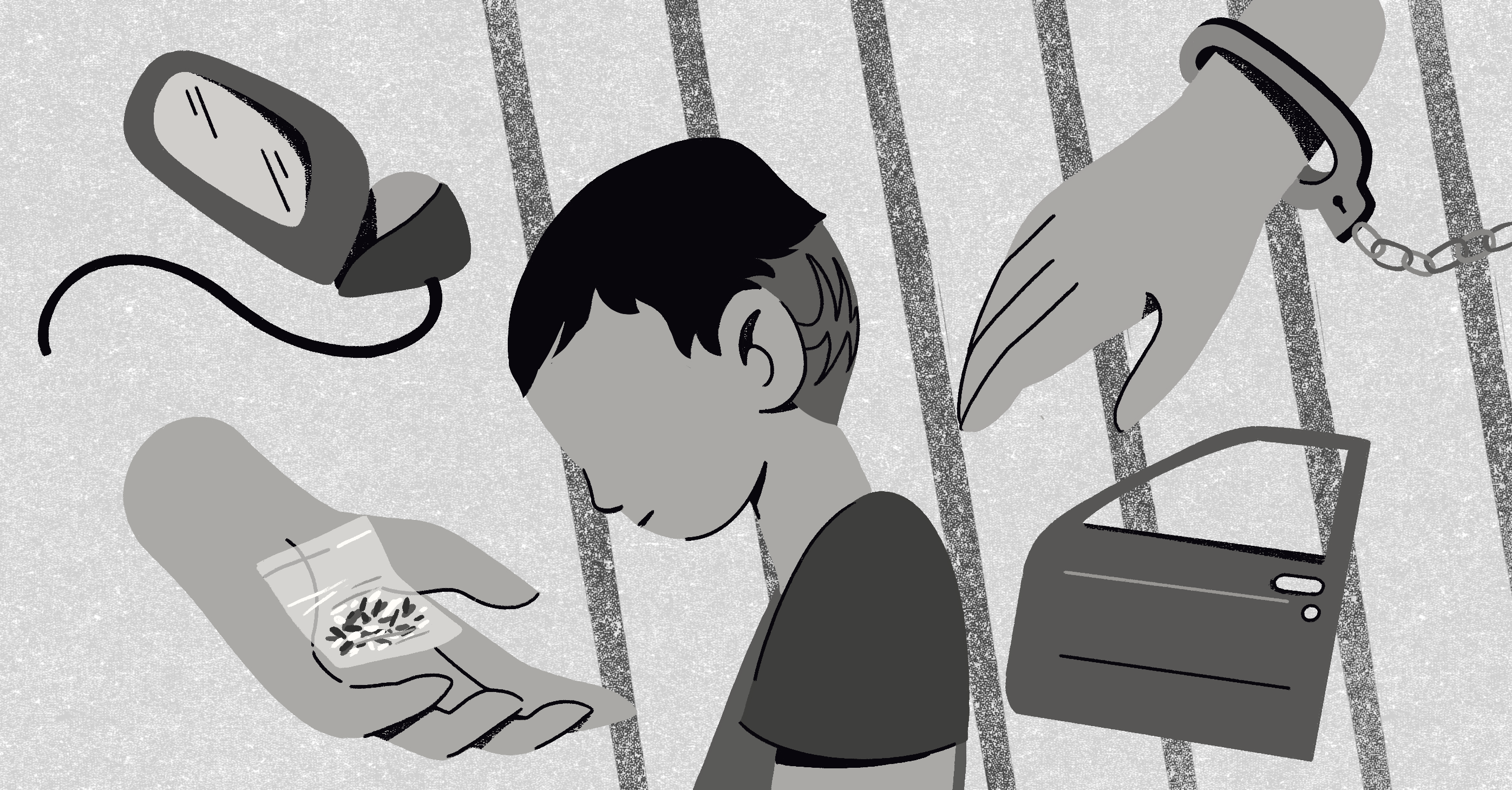
The situation is different now. Donald Trump’s return to the White House and the tightening of immigration policies have led to a 94% drop in border apprehensions. In this new walled-off environment, minors are being recruited for other illicit sectors, such as kidnapping and drug dealing.
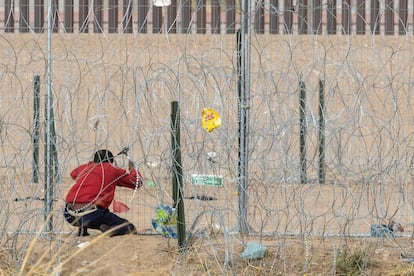
“They’re the orphans of the war,” says Fernando Loera, coordinator of the Program for the Care and Prevention of Children and Adolescents in Circuit Migration. Antonio Salas Martínez, director of Social Prevention for the Ciudad Juárez Security Secretariat, makes the same point: “[These] children and grandchildren lack a support network, because their parents or grandparents were murdered between 2007 and 2011.” The official is referring to the period in which former President Felipe Calderón’s militarized security strategy began. However, it’s the same strategy that incumbent President Claudia Sheinbaum has followed. Term after term, from the Calderón administration (2006-2012) to the present, the situation has escalated in Ciudad Juárez: first the military arrived, followed by the federal government, then the National Guard.
Experts shy away from calling these minors “coyotitos” or “polleritos” (slang for “little smugglers”), because these popularized terms are dehumanizing and unable to capture the structural problems at hand. Georgetown University researcher Gabriella Sánchez, who has spent years focusing her extensive research on children in the human-trafficking trade, describes the situation: “Young people of the border region have historically been involved in these markets. Yet their activities have become more visible in recent years in the context of increased border militarization, and immigration and crime controls implemented by both the U.S. and Mexican governments.” Far from these children seeing themselves as victims, she explains, they “articulate legitimate, important claims concerning their engagement in illicit markets, reflective of the ways they navigate the complex economic, socio-political and migratory contexts of the U.S.-Mexico border.”
****
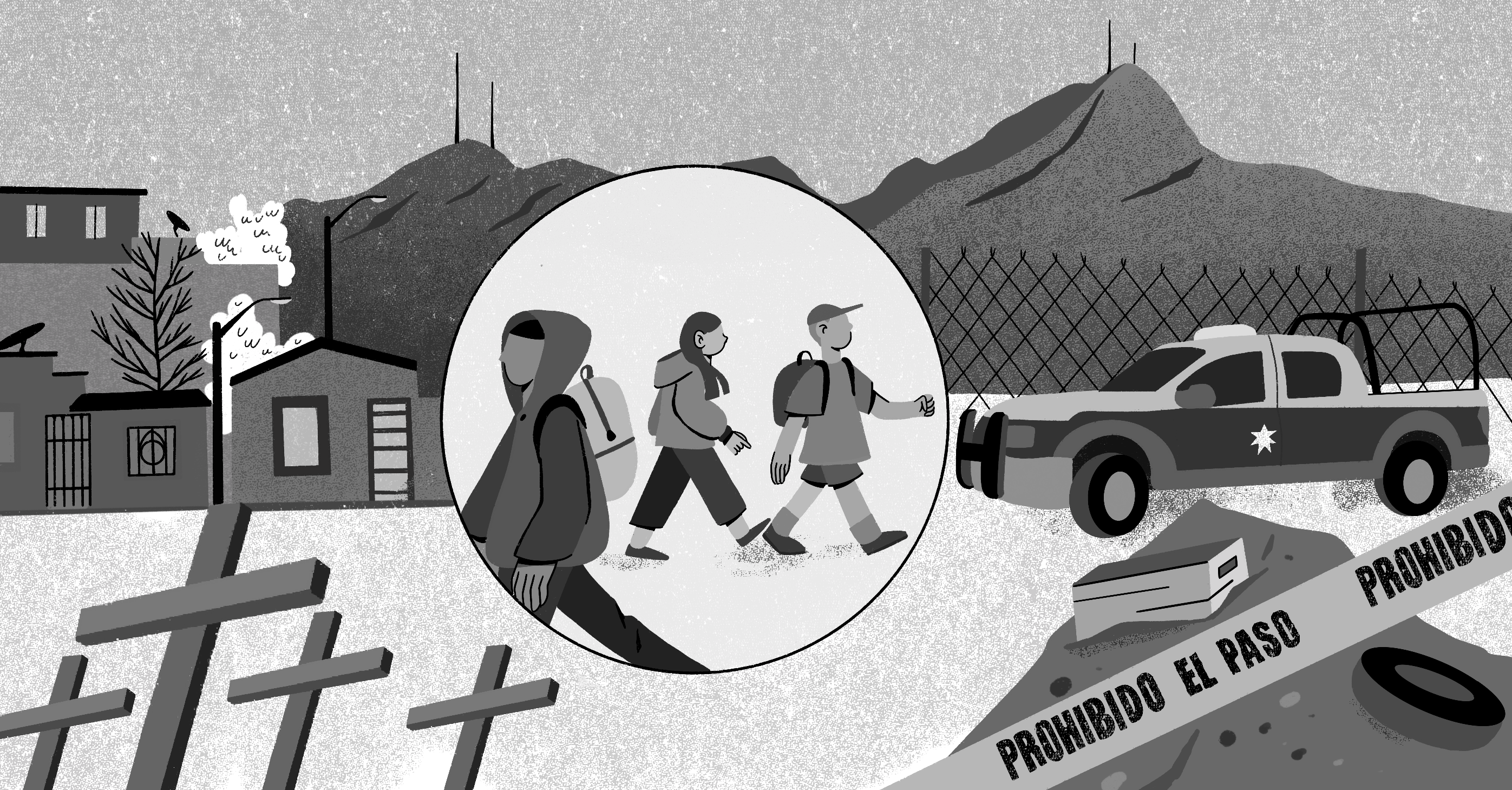
Ciudad Juárez is a city where temperatures exceed 100 °F in the summer, with the desert sun turning the pavement into a griddle. And, in winter, temperatures can drop below freezing: icy winds sweep through the dirt streets of the outskirts. The imposing wall that divides this city from El Paso stretches out across the horizon, made of metal and concrete. At its feet – in neighborhoods such as Anapra, Fronteriza Baja and Felipe Ángeles – brick houses and dirt roads disappear into ravines and clandestine dumps, where dust covers everything in ocher.
Laurencio Barraza began his work with children in this area a few years ago. One day, a member of his Tira Paro network gave him a warning: “One of the young people from the program hasn’t come by. It’s been a few days… a week or so. No one knows what happened to him.” The 14- or 15-year-old boy had vanished. “They’re using [the kids] to smuggle people across,” his colleague noted.
“They’re smart kids,” Barraza explains, in a frank, battered voice. “They know the routes, the paths along the border, without needing maps or GPS. And that’s one way the cartel – the smugglers – economize.”

To understand how these minors perceive their work, we must listen to their voices. Gabriella Sánchez collected the testimonies of 18 children and adolescents in an ethnographic work published in 2018, entitled Circuit Children: The Experiences and Perspectives of Children Engaged in Migrant Smuggling Facilitation on the US-Mexico Border. It reads: “We were able to buy pizza for everyone. You know, the one with ham and pineapple – that was my favorite,” recalls a teenage boy, who began working as a guide at the age of 12. “I was only 12, but I knew [then] what it meant to be able to buy that by myself, for my little siblings. Se siente bonito (it feels nice) to be able to buy shoes and clothes for everyone, to tell my mom not to worry, that I can take care of things.”
The older sister of a teenage boy who worked as a smuggling guide described the family dynamic when interviewed by Sánchez: “My parents died and I was already married so I brought my little brother and sister to live with us. But my brother realized pretty quickly that we were struggling [financially]; he wasn’t dumb. My husband did not earn much and I could not go get a job, because there was nobody who could help me watch my children.”
“One day,” she continued, “my brother came home and gave me money and said, ‘here, so that you can buy us food.’ I got scared because he was only 13 and I wondered, where [did he get] all this money from? And so I asked him [...] and he wouldn’t tell me. ‘What do you care?’ he said. ‘I am just tired of seeing how much you guys struggle. Just take it.’ I didn’t know [that he was involved in smuggling], but I was like, ‘what else is there for him to do?’ My husband and I would sit down with him, tell him we wanted him to go back to school. But he also knew we couldn’t afford that.”
A teenager can earn about $100 in a single crossing. Sometimes, even more. The money they receive depends on the task and how effective they are. For example, the fee for getting non-Mexican migrants across the border is higher. This is a very attractive income for children who grew up hungry, in neighborhoods that sometimes didn’t even have running water or electricity. “There’s no way to compete,” Barraza admits “The kids get things they would never have been able to get in the traditional way, based on their [socio]-economic status.”
In the first reports she received when she started her organization, Barraza identified a pattern: teenagers who, weeks or months ago, had barely enough to eat three times a day were suddenly arriving at sessions wearing designer sneakers and clothes. And they didn’t keep this bonanza to themselves. They shared their fortune with friends in the program: they bought candy, soft drinks and even sneakers and t-shirts that were identical to the ones they wore.
***
Fernando Loera has documented how U.S. decisions are reshaping the criminal market in Ciudad Juárez. For example, “with the caravans and mass arrivals, there was an increase in demand for adolescents recruited by organized crime to facilitate undocumented crossings.” Now, the trend has shifted: Trump has canceled the CBP One asylum app, removed refugee protections, raided churches and schools, deported migrants without criminal records to El Salvador or Sudan, and has imprisoned others in his new Alcatraz in Florida. As a result, fear has emptied the shelters on this side of the border.
But crime continues, adapting with brutal efficiency. “Organized crime’s greatest strength is seeking different forms of sustainability,” Loera points out.
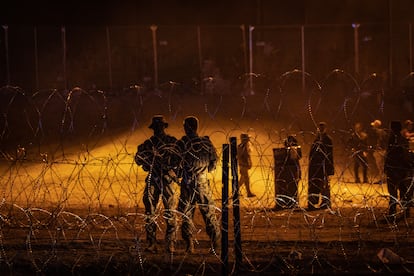
In recent months, Loera has identified an increase in the involvement of teenagers in kidnappings, “which was something we didn’t [see] before.” And these aren’t random kidnappings: they target immigrants or deported Mexicans who have relatives in the United States, believing that loved ones will be able to pay a ransom.
From January to June of this year, between 175 and 179 teenagers who had previously been detained for administrative offenses – such as drinking in public, disturbing the public order, or disobeying the authorities – have been referred to social prevention programs, Salas Martínez reports. These young people arrive through coordination between his office at the Ciudad Juárez Security Secretariat and the state DIF (the National System for Integral Family Development), thereby avoiding prosecution within the criminal justice system.
***
In a suburban neighborhood, a teenager described her work as a guide to Gabriella Sánchez: “It is very sad that you can’t be with your family because of what happens at the border. I always felt bad about the people we crossed. Why? Because we are poor, but we have always been together. If it is not my mom, [I’m] the one who is caring for my boy and my little siblings, so I understand that it is only natural that people want to be with their families.”
Thus, the minors who participate in these crossings for money also understand the situation, based on their own experiences of precariousness, as well as the pain of family separations. Another 12-year-old boy who worked as a driver explained why he preferred to transport migrant women: “I guess they reminded me of my mom and my sisters. I would walk in, find them, wake them up if they were asleep and tell them, ‘Wake up, I am here to drive you, let’s go, you don’t have to stay here.’ I had heard really bad stories of what happens to women when they cross and I didn’t want anything to happen to them. And then we would drive and they would be all quiet, but I [would] then try to put them at ease by telling jokes.”
“They would ask me how old I was and when I told them, they would laugh [because I was so young] and that would kind of break the ice.”
Sometimes, they exchanged phone numbers: “They would text me when they arrived at their destination. It felt nice to be part of what they went through, that I could help.”
****
Four years ago, almost 46% of adolescents in Ciudad Juárez said they lived under the shadow of kidnapping, enforced disappearance and murder, according to a survey by the INEGI (the National Institute of Statistics and Geography). A quarter cited robbery and insecurity as the greatest risks, while 35% mentioned femicides and insecurity for women.
Given the lack of schools and educational spaces, there are gaps that are filled in other ways, says Mariel Martínez, who is the coordinator of Community Participation for the Ciudad Juárez Strategic Plan. “Recruitment is a way out, a way to fill this opportunity gap.”
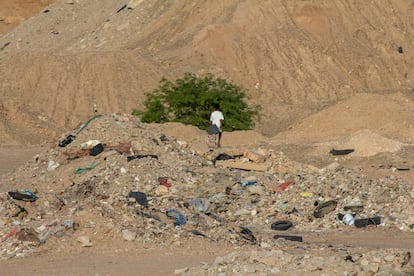
In the Va de Nuez program, organized by the Tira Paro network, 10 out of 20 participants are involved in criminal activities. Many of these youths come from a group of 30 neighborhoods in the northwest of the city, where authorities have identified houses that are utilized to imprison victims of kidnappings. Most of the kids have participated in facilitating irregular migrant crossings. “In their naiveté,” Barraza notes, they sometimes boast about their exploits and reveal sensitive details about everything that the boss or ringleader orders them to do. But smuggling drugs or killing is different. “Many weren’t willing to cross that line,” Barraza clarifies.
For many adolescents who live far away from the city center, their neighborhood isn’t just a high-risk zone.
“When I see pictures of my colonia [neighborhood] it feels nice,” a 16-year-old girl who worked as a spotter told Sánchez in her testimony. While pointing at a picture, she detailed: “There’s my aunt’s house, my mom’s house, the street where I play with my friends.” Far from stereotypes, the kids build bonds of belonging with the places where they come from. “There are poor people… and yes, there are also bad people. But it is my neighborhood, you see. We get together, party together, go to school together. I like my neighborhood and I miss it when I’m gone. I really do.’ There, she learned to play hide-and-seek, to climb up the hill, to run. Like any ordinary girl.
Translated by Avik Jain Chatlani.