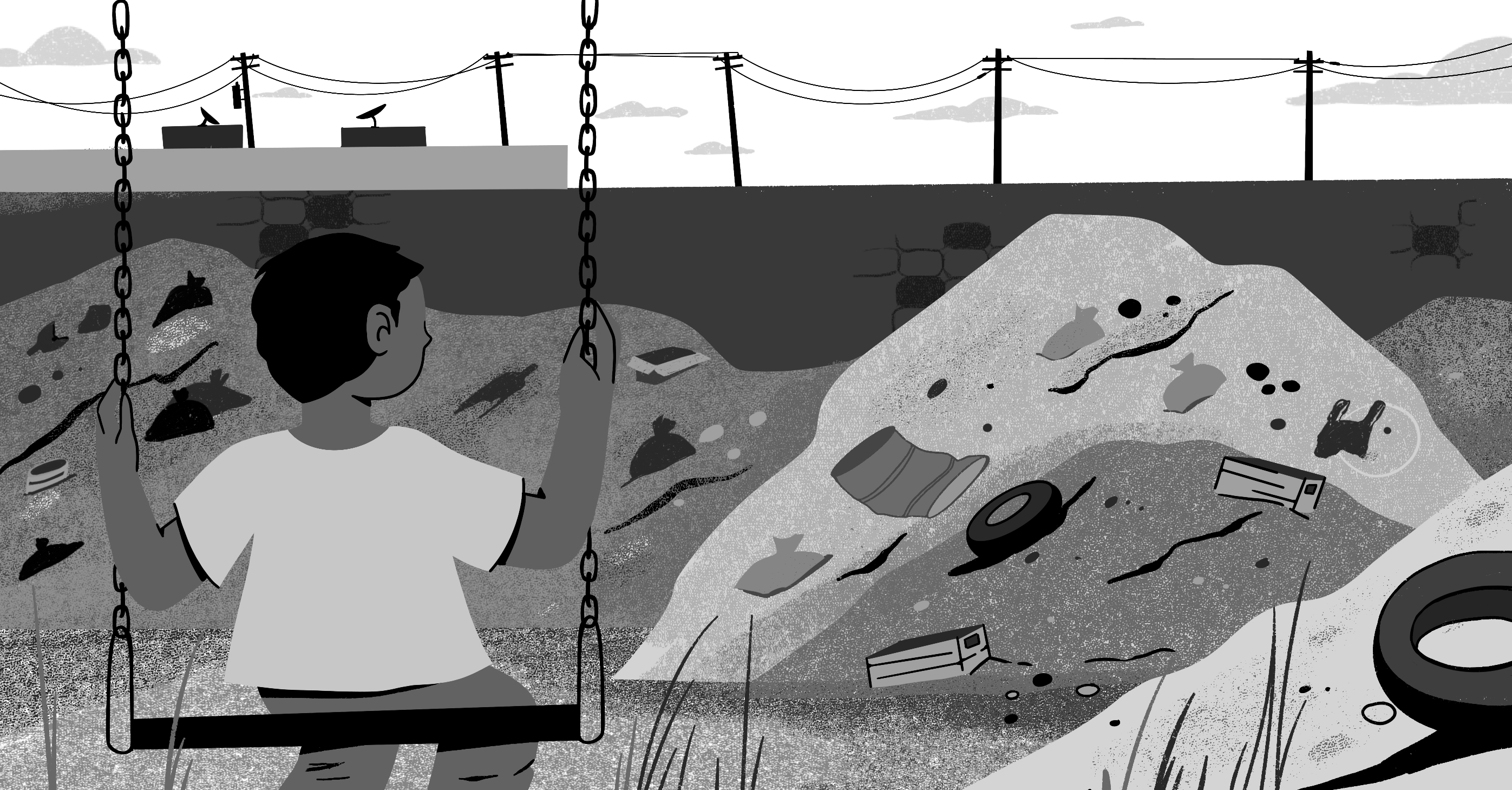
Maquiladora, prison or death: Alan’s three choices
Teenagers in Ciudad Juárez face precariousness, urban decline and violence every day, their options limited to organized crime or exploitative factory conditions
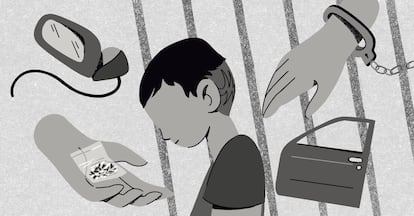
Alan has a tattoo over his left eyebrow that says “good life” in a Gothic font. A subjective concept if ever there was one, but it’s hard to imagine what is “good” in the life of the young man currently sitting in the patio of the government-run Center for Social Reintegration (CERESO) No. 3 in southwestern Ciudad Juárez. The 22-year-old has his own doubts on the subject here, in the outdoor visitor’s area, as he tells his story and a gust of wind ruffles his gray uniform like a piece of discolored, torn flag.
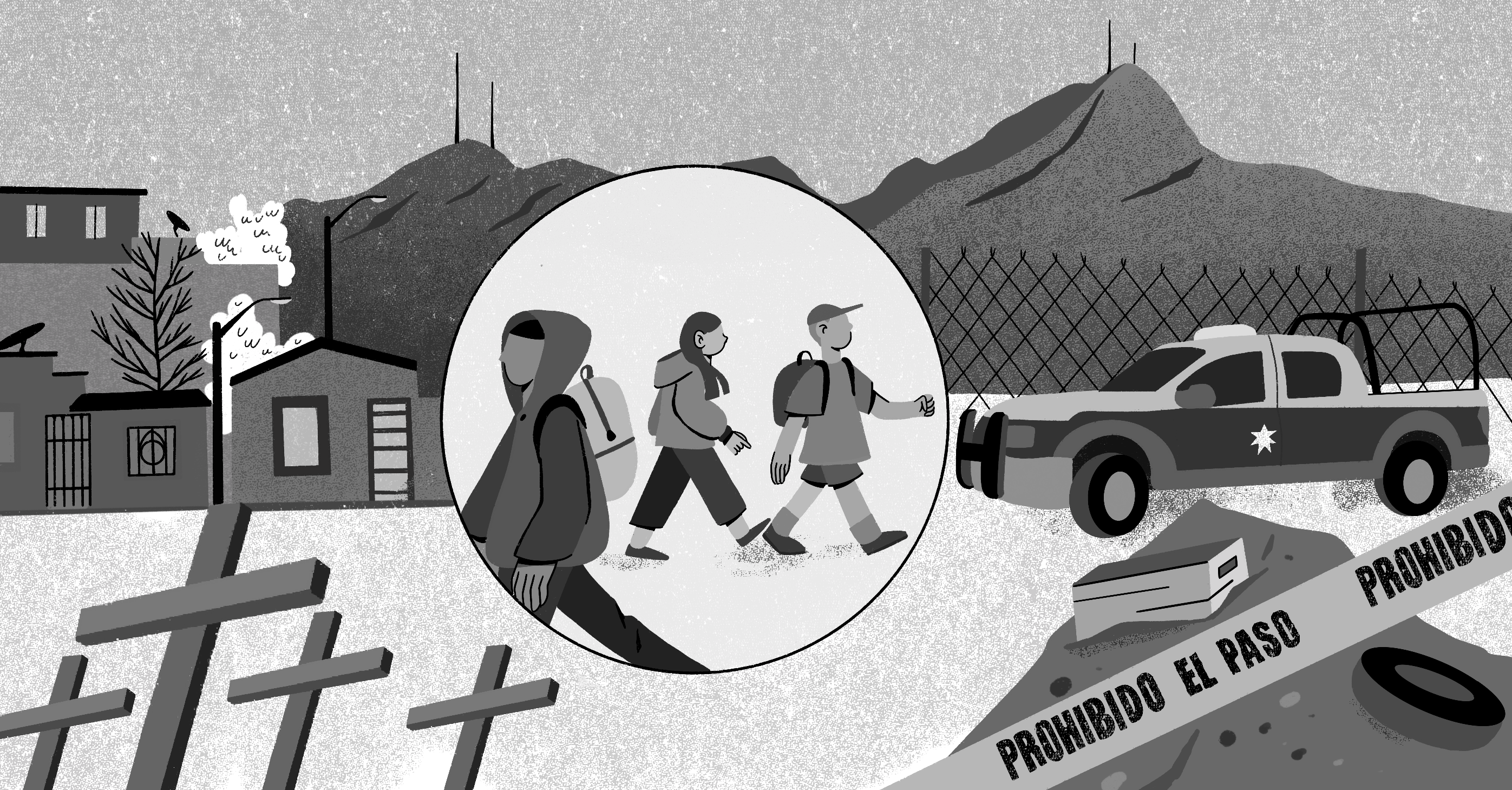
For those born in Ciudad Juárez, specifically in its peripheral neighborhoods, and who grew up amid want and violence, there are few options. It’s possible that Alan’s destiny was already written at 17 years old, when he decided to quit school for a job as an operator at the Seisa plant, where he began to manufacture medical devices. “I couldn’t continue with my studies, it was too big of an expense, and my mother was on her own. She worked at a maquiladora (a factory in a duty-free zone), she has always worked at a maquiladora, as a laborer. My father died when I was five years old from driving under the influence of drugs and alcohol. He also worked in a maquiladora and was a welder. He would come home from his job and continue working. I have five siblings and I am the oldest,” he says, speaking quickly.
It was in the maquiladora — paradoxically, located two blocks from the CERESO — where it all began. They began to offer Alan extra hours: two, three or even four, in addition to the eight that comprised his official workday. With them his paycheck, which started around 1,500 pesos a week ($80 USD), could get up to 2,500 ($133). But his fatigue began to accumulate.
The first person to offer him crystal meth as an alternative to that weariness caused by days without rest was not a dealer in a bar or a gang member on the corner of a tough neighborhood, Alan says, but rather a co-worker on the production line. What for Alan started as a solution soon became his problem, as it has for thousands of adolescents and other employees at Juárez’s maquiladoras. “I began to spend the week’s paycheck in a single day, on pure crystal meth or crack,” he says. When he didn’t have the money to buy more drugs, he began to rob. “My grandfather had a store in the neighborhood, and I used to help him when I was a boy. I spent a lot of time there with him and saw how people would come and rob him. Later, I was on the other side,” he says.
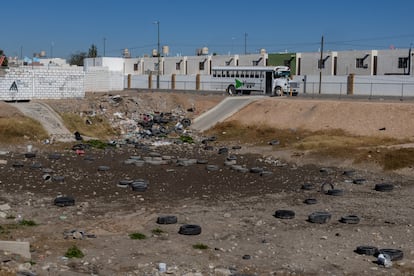
Crime is not an external force, a far-off threat, nor a close-by internal organism, but rather, the foundation of the city itself. “Organized crime has infiltrated communities, which has allowed it to take over lives at the border. It doesn’t have to threaten anyone, because it has been infiltrating for years and years, which had led to many girls and boys being part of it since birth. Those who become a part of it later on are seduced, compelled by a life of precariousness, not violence,” says Salvador Salazar, a sociological researcher at the Universidad Autónoma de Ciudad Juárez and author of the Spanish language book La cárcel es mi vida y mi destino (Prison is my life and destiny).
The failure of the reintegration model for minors
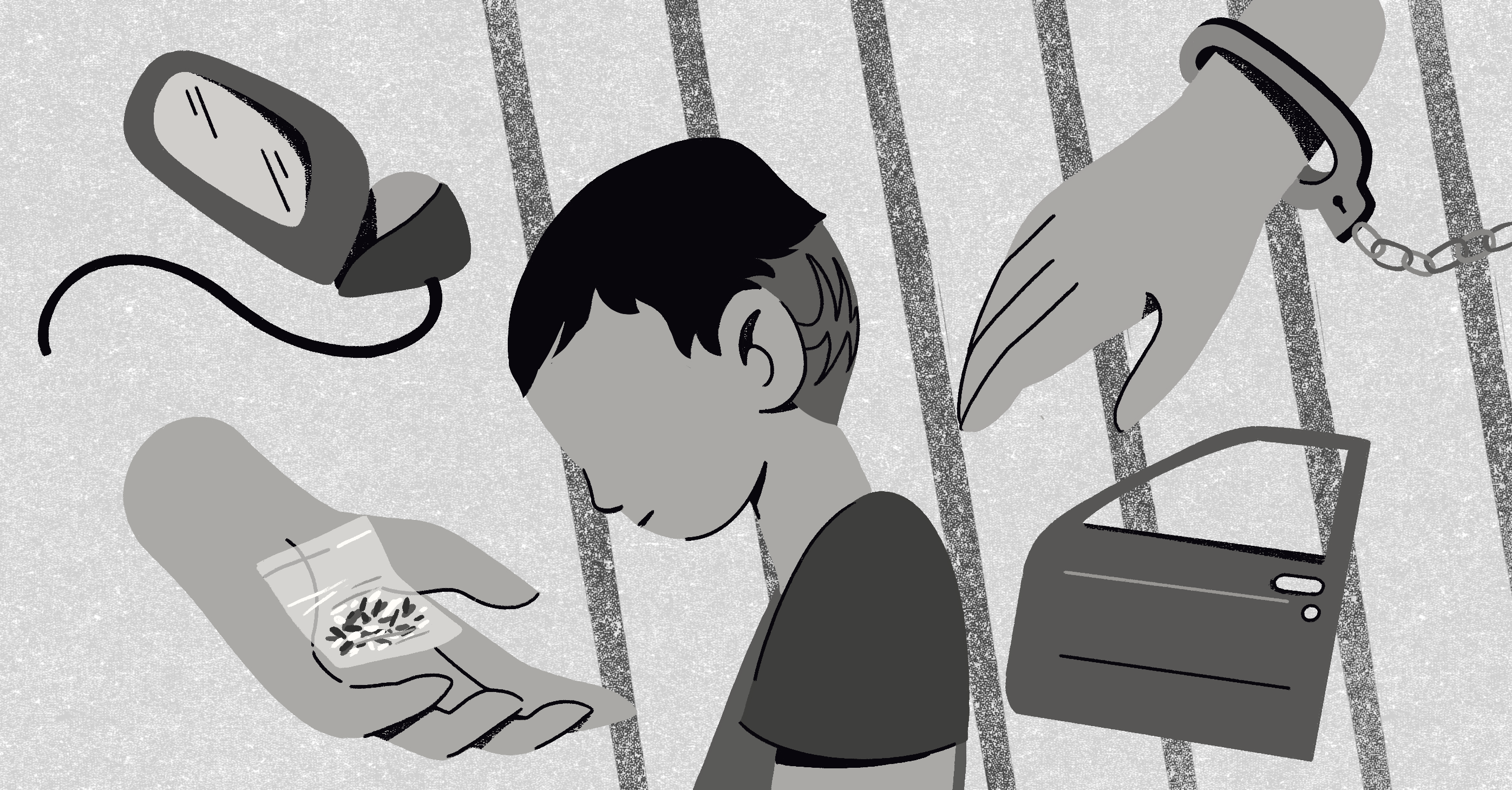
Alan’s first encounter with the penal system took place after he robbed a grocery store. He had spent his paycheck on crystal meth and he and a friend entered the establishment, armed, to take the owner’s money. A police patrol that was nearby caught them fleeing the shop.
He spent just a few months at a Center for Social Reintegration for Minors (CERSAI). By the time he got out he was 18 years old, and he returned to Lucio Blanco, the neighborhood located on the southwestern edge of the city where he had grown up. He was back in the same situation that had brought him to the CERSAI, the same friendships, the same streets and even the same job as operator, though in another maquiladora — and the same drugs. But there was a key difference.
This time, because he had been in the CERSAI and knew people inside who were connected to the drug trade, he was invited to sell crystal meth at his place of employment. Once more, Alan was on the other side from when he started. Not only was he not reintegrated into society, he was back in the criminal pyramid, having climbed up a tier. Now it was he who offered drugs to coworkers who he noticed were tired.
“We are facing a historic crisis at these detention centers. They get out and what happens is they go back to crime or they are simply murdered. When a young man serves a sentence and he is released, the conditions to be able to access spaces that might allow him to think about his life’s purpose and formal employment or education do not exist. The networks of complicity between organized crime and these spaces are so strong that when these young people get out, they return to networks of macro-criminality,” says Salazar. Graciela Delgado, a social worker who has been employed for more than 10 years at the Ciudad Juárez CERSAI, shares this opinion. “The context outside doesn’t change, there’s no way for successful reintegration to happen because in reality, they go back to poverty, precariousness and crime.”

Sneaker hierarchy
In Ciudad Juárez, 34% of the population is younger than 19 years old, which is to say, there are more than 550,000 children and teens. Currently, the city’s CERSAI houses between 55 and 60 teenagers (of which 90% are male), according to Gloria Farfán, a judge who specializes in adolescent justice. She emphasizes that the Ciudad Juárez facility is one of the country’s fullest. “There are centers for adolescents in other states in which there are two or three inmates.”
Farfán says that Juárez has certain characteristics that have led its adolescents to become involved in crimes that are considered serious, whose complexity means that the reintegration process must begin with internment. “Most adolescents who are in penal internment processes have problems with participating in organized crime. Ciudad Juárez is full of orphans from the War on Drugs and these adolescents were children who lived under the premise of that war,” she says.
Making matters worse, adds a CERSAI employee who requested anonymity, is the way in which young people are utilized by criminal organizations. “The youth who are in the CERSAI can’t be sentenced longer than five years, which makes them more attractive to criminal groups. They commit the serious crimes, or act as the operators. They get out and are promised the world, and they can’t leave the criminal life. They’re tied to it, that’s why reintegration can’t take place, because those who are on the outside are waiting for them.”
The CERSAI is a business by which many benefit. Inside, everything has a price. Having a mobile phone costs 500 pesos ($27) a week, despite the fact that use of devices is prohibited, even by staff. They also have access to blades in order to cut their hair — an indicator of status — as well as brand-name clothes and shoes that few can afford, according to the anonymous employee. “Their uniform is designer, gray sweatpants and a sweatshirt like they ones they give you, but with a Tommy Hilfiger logo, for example. The sneakers say it all, it’s a very crazy hierarchy, they say it’s the first thing they look at in prison,” explains the employee.
And of course, there is access to drugs, especially marijuana, but also crystal meth. Alan left a space that should have protected him even more immersed in the world of crime.
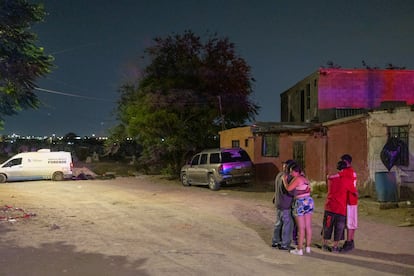
Carlos Guadalupe and Ever Armando
On January 1, 2023, Juárez and the rest of Mexico saw one of the most violent episodes to take place in the history of its penitentiaries. An armed group entered Ciudad Juárez’s CERESO No. 3 and murdered 10 guards and four inmates, provoking an uprising that ended with the escape of 30 inmates. Among those who fled were Carlos Guadalupe and Ever Armando, who were 29 and 27 years old at the time. Their involvement in the world of crime had started a decade previous.
Both were detained and sentenced for murder in the case of a mass grave found in Valle de Juárez. They were part of a cell comprised by at least 10 members — of which five were minors — that worked for the Sinaloa Cartel in the border region. In the grave were found three decapitated bodies (their heads were located on the Juárez-El Porvenir highway on February 1, 2010). Carlos Guadalupe and Ever Armando were arrested a few days later. They were 14 and 16 years old.
Both did time at Mexico’s School for Juvenile Social Improvement —the former name for Cersai— and walked out in early 2016. By November of that same year, now aged 20 and 22, they were charged with participating in the kidnapping of a Mennonite individual in Valle de Juárez. Their next stop was prison. They escaped, but both were recaptured, and to this day, remain at CERESO No. 3.
Life on the street
Alan’s period of freedom post-CERSAI was likewise short. He only worked as a crystal meth dealer for a few months. Midway through 2021, he was arrested while walking home from work. He had several doses on him. He was imprisoned at CERESO No. 3. After three months, he was set free. This time, he decided he would no longer deal. But he couldn’t stop consuming drugs once he was back out in the streets. “I needed more and more, I didn’t care about eating anymore,” the young man says.
It only took a few weeks for the situation to become unsustainable. What had begun as a way to work longer hours at the maquiladora now made it impossible to work at all.
The maquiladora is a spectrum of light and shadow, the city’s economic pillar and a negative force in its urban and social development. “The industry we live with every day is an expression of predatory capitalism. These are very powerful exploitative conditions. People have to spend between 10 and 12 hours a day, between transportation and work. It is one of the worst expressions of the most brutal, most savage capitalism,” says Salazar. “It seems like everything is so nice, formal employment, medical insurance, but within the maquiladora there is a market of consumption of diverse substances to exploit the life of the operators even more. This is known among the executives, but while things continue to be productive for their interests, they turn a blind eye,” says the researcher.
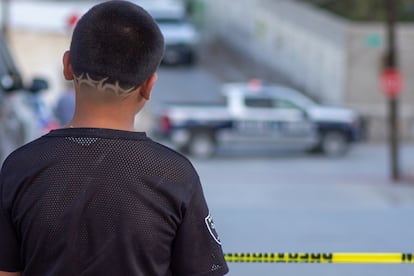
Alan stopped going to the maquiladora because he was too high. He worked washing cars in the street and asking for money at intersections. Soon, almost without realizing it, Alan was living in the street. He shared space underneath a tarp in an empty lot next to an overpass in the western part of the city. “I looked like a corpse,” he recalls. Just like the others who came and went from the tent where they smoked crack and crystal meth.
Back to zero
Once again, in February, municipal police officers stopped and searched him, with no explanation, as is customary in the cops’ treatment of the city’s young people. They found a dose of crystal meth. He was taken to CERESO No. 3, where a judge awaited to sentence him through mid-August. “I’m hoping for between six and 10 months in jail, I wasn’t carrying much,” says the young man, resigned.
Alan’s path had once again led him back to jail, where he is now surrounded by guards while he thinks about the good and bad of life. Outside, the only good is his mother and siblings. Inside the CERESO, he interlaces his fingers and says, “At least I can go back to enjoying the simplest things. It’s been a long time since I smelled the scent of wet earth, I really like that smell.” The rest, he says, isn’t worth talking about.
And it’s true, a scent of wet earth permeates the outdoor visitors’ area. To the northwest are visible dark clouds that move with the force of the gusts of wind that nearly drown out our words, as the first drops of the storm begin to fall.