
Putin and Trump torpedo negotiations in Istanbul
The US president defends the Russian leader even though he rejected a 30-day ceasefire proposal and has snubbed the Ukrainian negotiators in Turkey
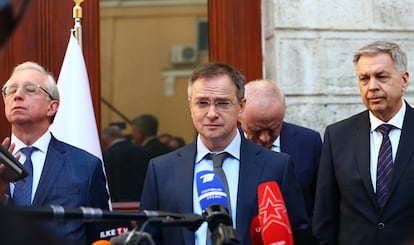

Vladimir Putin and Donald Trump have made it clear that the chances of success for the peace negotiations between Russia and Ukraine, scheduled for this Friday in Turkey, are slim. The paradox is that it was the Russian president who proposed the Istanbul meeting, an initiative applauded by Trump. But the Russian autocrat has ultimately undermined the return to the negotiating table by sending second-tier representatives. Trump, for his part, has shown understanding toward Putin and has torpedoed the Istanbul initiative by stating on Thursday that any decision about the future of the war will be made by him and the Russian leader. These moves leave Ukraine and Europe in a vulnerable position because Trump is once again ignoring them in a key process.
Kyiv and its European allies want to show Trump that Putin does not want to negotiate any kind of peace and that it is time to put pressure on Moscow, but the U.S. president has turned a deaf ear. The U.S. president forgives Putin almost everything — including the latest humiliation of what was supposed to be his ambitious peace process. Putin sent a delegation of second-tier negotiators to Istanbul. Ukraine, by contrast, was represented by its highest-level officials, led by President Volodymyr Zelenskiy.

Putin ignored requests from Trump, Turkish President Recep Tayyip Erdoğan, and even from his Brazilian ally, President Lula, to meet with Zelenskiy in Istanbul. Not only that: he didn’t even consider sending his Foreign Minister, Sergey Lavrov, to the meeting. Instead of engaging in dialogue, Lavrov, speaking from Moscow, called Zelenskiy a “pathetic person” and a “Nazi.”
The Ukrainian delegation, in addition to the president, includes his chief of staff and right-hand man, Andriy Yermak, Foreign Secretary Andrii Sibiga, Defense Secretary Rustem Umerov, and the military leadership. Trump sent his Secretary of State, Marco Rubio.
The U.S. president, who in the days leading up to the meeting had expressed confidence and hope for direct dialogue between Zelenskiy and Putin, justified the Russian leader’s absence on Thursday. “Why would he go if I’m not going? Because I wasn’t going to go,” he said. “But I didn’t think it was possible for Putin to go if I’m not there.”
During his visit to Qatar, Trump added that he was considering traveling to Turkey on Friday, depending on how contacts between Russia and Ukraine developed. A few hours later, the Kremlin confirmed that Putin had no intention of attending Friday talks in Istanbul.
“Nothing [important] is going to happen until Putin and I get together,” Trump later said, thus calling into question the usefulness of the negotiations in Istanbul.
Rubio reiterated this idea from Turkey: “I don’t think we’re going to have a breakthrough here until President Trump and President Putin interact directly on this topic,” he said.
I don’t think we’re going to make any significant progress until the president [Trump] and President Putin interact directly.” “I hope tomorrow [Friday] the news says they’ve agreed a ceasefire. But it’s not my assessment,” Rubio said.
Trump has repeatedly come to Putin’s defense in recent days. The core message of the U.S. president is that both sides share equal responsibility for the war in Ukraine and should sign a peace deal as soon as possible. But in practice, he usually ends up showing more understanding toward the Russian side. “I’m not disappointed in anything,” Trump reiterated when reporters asked him about the low-level Russian delegation in Istanbul.
The conclusions from the May 10 summit in Kyiv between Zelenskiy and the leaders of Germany, France, Poland, and the United Kingdom are a good example of the White House’s ambivalence. That meeting resulted in a proposal-ultimatum to Russia to accept a 30-day unconditional ceasefire starting this week as a prelude to peace negotiations. The Ukrainian head of state and his main European allies spoke with Trump from Kyiv and announced that he had expressed support for the immediate ceasefire, even for imposing sanctions on Russia if it rejected the measure.
Trump avoided making a public statement on the matter, even though the European leaders said that he had given them his support. But he did something else: when Putin counter-proposed starting a dialogue with Ukraine in Turkey beginning Thursday instead of a ceasefire, Trump publicly expressed his satisfaction with the idea. Zelenskiy responded by proposing that the meeting in Istanbul take place at the highest level — between heads of state, i.e. between himself and Putin. Trump supported the idea. When the Kremlin confirmed on Wednesday that no high-ranking officials would attend the meeting in Turkey, the U.S. leader not only refrained from criticizing the decision, he also showed understanding.
Kyiv and Moscow are both trying not to upset Washington. Zelenskiy doesn’t want to lose his top military ally, and Putin wants for the U.S. to disengage from the war. And that is exactly what the White House has warned it will do if there are no results from the negotiations.
The president has issued an ultimatum to both sides that without those direct talks and if they don’t occur quickly, then he believes the United States ought to step back from this conflict,
Trump’s special envoy for Russia, Steve Witkoff, warned on May 12 that the Trump may exit the conflict if the peace talks make no progress, a point Rubio also made back in April.
“If we’re so far apart that this is not going to happen, then I think the president is probably at a point where he’s going to say we’re done,” he said. “It’s not our war.”
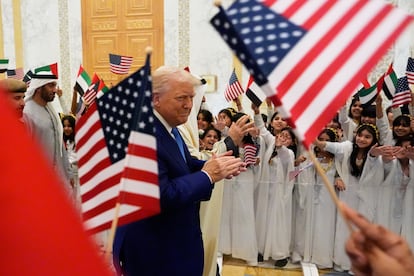
Ukraine and the European powers are trying to convince Trump to get on board. “Trump needs to believe that Putin actually lies. And we should do our part. Sensibly approach this issue, to show that it’s not us that is slowing down the process,” Zelenskiy said on May 13. The Washington Post reported Thursday, citing diplomatic sources, that representatives of the U.S. and U.K. governments persuaded Zelenskiy this week to travel to Turkey despite the fact that it was clear Putin would not be going.
Every move by the Ukrainian and European side is aimed at appeasing Trump. Germany in particular is pushing in the public sphere with statements meant to influence the White House. “Trump is clearly losing patience with Putin,” Chancellor Friedrich Merz told the Bild newspaper on Saturday.
German Foreign Minister Johann Wadephul told a NATO meeting in Turkey on Thursday that the EU has a firm agreement with Washington to increase pressure on the Kremlin: “There is complete agreement with the United States, and that includes sanctions. There is strong momentum in the U.S. Senate, where many senators have said they are ready to pass a sanctions bill.” “The U.S. administration assumes this will happen if Russia doesn’t move,” Wadepuhl added.
Trump, for the moment, is not sending any clear signals in this regard. Quite the opposite: several media outlets have reported that the White House has, for the first time, blocked NATO from inviting Ukraine to the upcoming Alliance summit, scheduled for June in the Netherlands. Since the full-scale Russian invasion, Zelenskiy has been a regular guest at these meetings. The Ukrainian leader will have the chance to address the recent setbacks with his European partners at a European Union summit taking place this Friday in Albania, a candidate country for EU membership.
Sign up for our weekly newsletter to get more English-language news coverage from EL PAÍS USA Edition









































