
The Sahrawi pharmaceutical lab battling against sand and shortages: ‘We are a rose in the desert’
In the Algerian desert of Tindouf, 11 Sahrawi workers manufacture antibiotics, eye drops and dermatological creams for a refugee population that has been surviving in exile for half-a-century
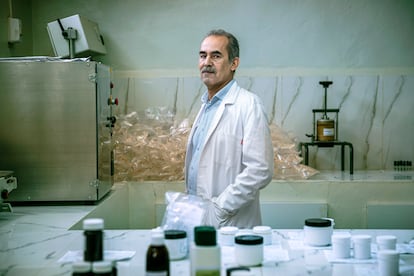

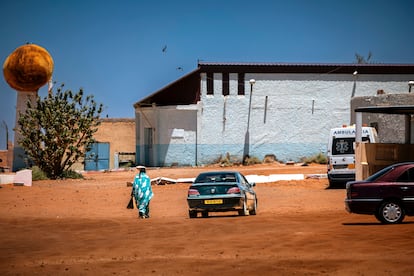
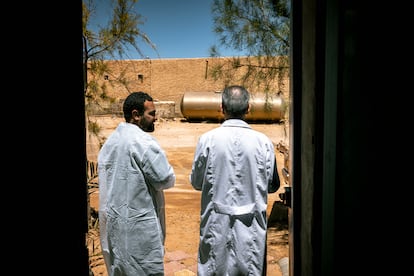
The Mohamed Embarek Fakal·la Pharmaceutical Production Laboratory is sometimes called “a desert rose,” because no one expected something like this to grow here. Mulai Mesaud Jarrachi, the lab’s logistics manager and deputy director, explains it to EL PAÍS. And, when he says “here,” he gestures broadly toward the Algerian hamada: a stony, hostile desert with scorching temperatures, where the wind constantly whips up sand that seeps under doors (and even gets between your teeth).
In this part of the desert, for the past 50 years, some 173,000 Sahrawi refugees have lived in the Tindouf camps, in southwestern Algeria. The Sahrawi people are an ethnic group native to the western part of the Sahara desert. Their refugee camps were established after the Moroccan occupation of Western Sahara, a former Spanish colony. Under these extreme conditions, schools, film and nursing institutions, fish farms, as well as this pharmaceutical laboratory have been built. For three decades, the lab has produced paracetamol (acetaminophen), ibuprofen, eye drops, serums, ointments, ultrasound gels and antibiotics. This work is carried out every day by 11 Sahrawi technicians, seven men and four women.

A drop in the ocean
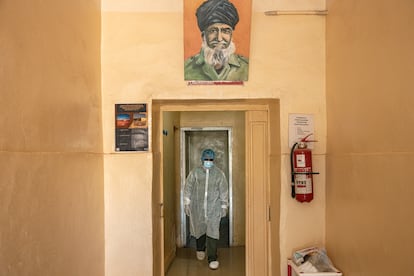
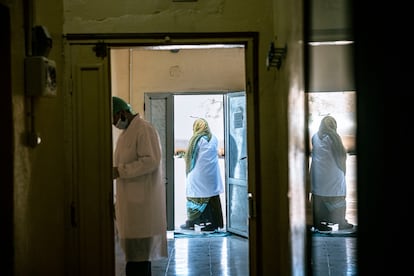
In a small building on the grounds of the Bachir Saleh National Hospital located in Rabouni, the administrative center of the Sahrawi refugee camps in Tindouf Province, a portrait hangs in the hallway that leads to the laboratory. It depicts Mohamed Embarek Fakal·la, a historical figure in the Sahrawi healthcare sector.
It all began in 1992, when Carles Codina, a pharmacist with the NGO Medicus Mundi Mediterrània, visited a dispensary in the camps. He saw a Sahrawi technician preparing an antiseptic. From that encounter came the idea to build this laboratory, which was inaugurated in 1996. It began producing medicines two years later.
“We started with just a few formulas, between five and eight. By 2000, [we had begun producing] half-a-million capsules [annually] of various medications. Now we maintain a list of about 15 or 20 drugs,” explains its director, Mohamed Lamin Abdi. This mustachioed man, who wears a white coat over a light blue shirt, speaks in a measured tone. He’s been working in the laboratory since 1998. Born in 1968 in Western Sahara, he studied Pharmacy in the Ukrainian city of Kharkiv. He has also spent time in Italy, where he earned a doctorate, and in Spain, where he worked in pharmacies. But he always returns to the camps. Not only because of family obligations, he clarifies, but also for the Sahrawi cause. “It’s part of our lives,” he emphasizes.
“Everything we produce,” he continues, “covers a portion of the needs of the Sahrawi population.” It’s not much: Lamin estimates that only 5% of the medications needed in the camps are produced in the laboratory. The rest is dispensed by the central pharmacy, which receives funding from the European Union. “But not enough arrives to cover all national consumption,” he explains. This assessment coincides with that of healthcare workers and NGOs consulted by EL PAÍS, who report a shortage of medicines in the clinics and hospitals of the Sahrawi refugee camps.
However, despite being a drop in the ocean, the lab is especially valuable amidst the complex humanitarian context of the camps. While it doesn’t meet all the demand, the director acknowledges, it functions as a kind of emergency reserve. “Ten years ago, there was a delay in the arrival of medicines. We had to work twice as hard to at least guarantee the availability of painkillers, syrups and antiseptics,” he recalls.
Brahim Saleh Labeid, 39, is a graduate in Experimental Pharmacology. He has worked at the facility since 2019. He mentions another key year: 2020, when the world came to a standstill due to the COVID-19 pandemic. That was when his work became essential. “There was no hand sanitizer, so we started producing it here. We managed to manufacture enough to distribute to all the wilayas (camps),” he explains, as he removes the lab coat, mask and green cap that he usually wears while at work.
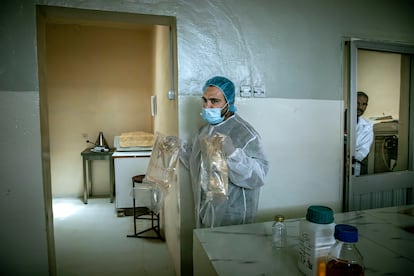
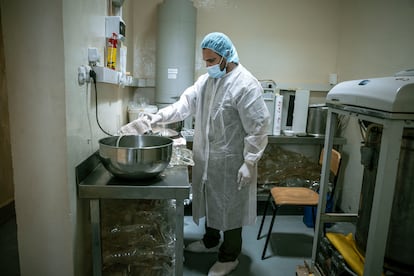
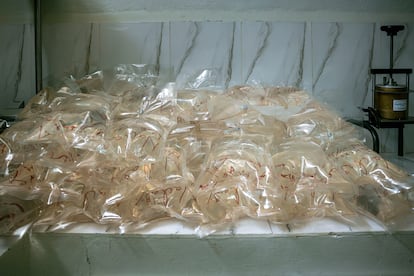
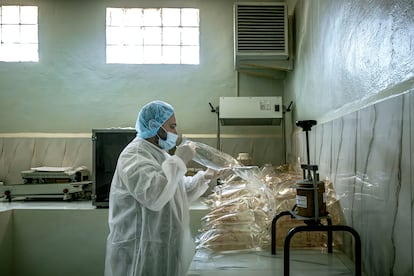
Labeid spent the morning in one of the lab’s two rooms: the one designated for manufacturing medications that require less sterilization. He prepared three-liter bags of sodium chloride for urinary irrigations. The lab meets 100% of the demand for this product, producing about 200 bags a month. “In the past, the urology committee purchased them from other parties, but the transportation was very expensive. Today, we handle it ourselves. We prepare [the IV bags] and take them directly to the hospital’s operating room, which is just 650 feet from the lab,” Mesaud explains.
It is a continuous struggleMohamed Lamin Abdi, director of the Mohamed Embarek Fakal·la Pharmaceutical Production Laboratory.
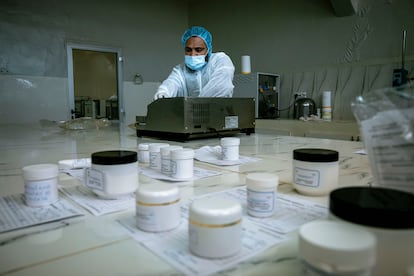
On the large central table, there are bottles of corticosteroids, antibiotic ointments and creams for various dermatological problems. These compounded medications are also produced entirely at the facility. “The Dermatology Department sends the prescriptions and we prepare the treatments and deliver them to the patients,” Lamin explains. At the lab, he adds, they consider this project, which began in 2024, to be a “window of opportunity to obtain more funding.”
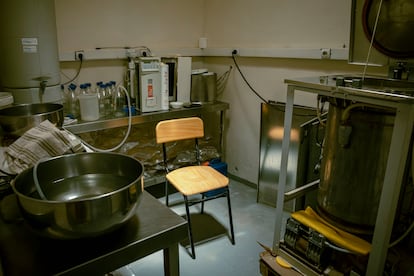
A laboratory like this one faces significant limitations. “In the desert, there are only four things: sun, sand, drought and the wind, which blows sand under the doors and through the windows,” the director reflects. “It’s a constant struggle. There’s a very serious problem with equipment maintenance. [And] there aren’t enough technicians, especially [when it comes to handling] medical equipment,” he points out.
The facility’s secretary, Fatimetu Ahmed, a resourceful woman who has worked there for 21 years, adds the lack of materials to that list of limitations. “There’s a shortage of both active ingredients and empty containers,” this professional notes. She’s in charge of the laboratory’s administrative tasks: the arrival of raw materials, the dispatch of prepared medications, inventory control and report writing.
Money – or rather, its scarcity – comes up in almost every conversation. Although the laboratory hasn’t suffered the cuts that have affected other projects funded by international organizations like UNHCR, there are never enough funds. The project in Rabouni is run by Medicus Mundi Mediterrània and, in recent years, has been funded by the Catalan Fund for Development Cooperation, an entity that brings together various municipalities in Catalonia, Spain. Throughout its history, it has received funding from other organizations, such as the Spanish Agency for International Development Cooperation (AECID), the Catalan Agency for Development Cooperation (ACCD), along with other donors.
Over the past two years, a gradual decline in funding has been noticeable; it’s becoming more difficult to make ends meetMaría Elena del Cacho, Médicos Mundi Mediterrània
Even with an approved budget, you still have to raise the funds. María Elena del Cacho, from Medicus Mundi Mediterrània, explains this to EL PAÍS over the phone. She’s one of the project’s driving forces and coordinators.
“One municipality gives you €800 ($930). Another one gives you €3,000. And that’s how you fill in the gaps. But it’s tough, because, until the end of the year, when the books are closed, you don’t really know what you’ll be able to raise… and yet, you have to cover expenses upfront. Up until mid-January, we were struggling,” she emphasizes.
“Over the last two years, there’s been a noticeable decline in funding; it’s harder.”
“A complete change”
During the 25 years he has worked at the laboratory, Mesaud, the deputy director, has noticed “a complete change.” He recalls that, at first, when people came to pick up their medication, many threw it away as soon as his back was turned. “They didn’t believe that medicine could be made in the desert,” he recounts. “But now, that’s changed. People want our local medicines, because they’re very effective,” he says with a laugh. “They even tell us, ‘I only want the ointment that’s made here.’”
Lab technician Saleh cites the case of diclofenac, an anti-inflammatory drug: what they produce is “of very good quality.” The workers explain that some Sahrawis even come to pick it up from as far away as Mauritania or Morocco. “There are even some people who take it to Spain,” Mesaud points out. “We’ve earned the trust of our patients,” he says with satisfaction.
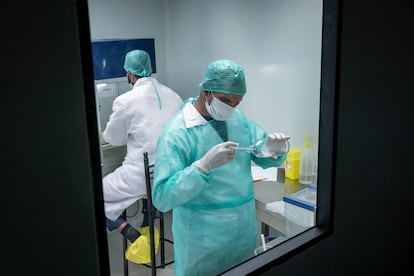
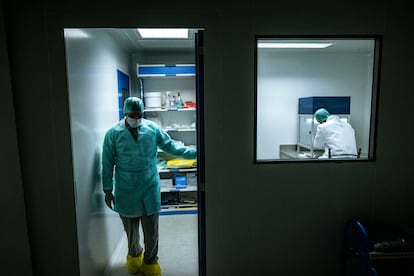
Back in 2015, in another wing of the building, the cleanroom was inaugurated. This is where drugs requiring high levels of sterilization are manufactured, such as glaucoma eye drops and amoxicillin capsules. Safety measures are strict to prevent contamination: lab coats, caps, gloves, masks, clogs and shoe covers are mandatory before entering.
The laboratory doesn’t just manufacture medications. It also fulfills another valuable function: it offers continuing education, whether through online or in-person courses, conferences, as well as mentoring among the employees themselves. “Everyone who has worked in the laboratory has done so under my tutelage,” Mulai Mesaud Jarrachi proudly declares. He, a Spanish national, doesn’t want to leave. “I love my job, that’s why I’m staying here.”
“The only people left from the original teams are Mulai and me. The others are from a different generation,” the director notes. Some young people leave for France, Spain and other European countries in search of a better life. “There are no jobs here in the [refugee] camps. And there are so many educated people who have left the country,” Lamin laments. “The incentive for the staff who work here in the camps is symbolic. Currently, [in the lab], we receive about €100 a month ($115), paid every three months,” the director points out.
“Sometimes, when that [$345] arrives, you first have to pay off all the debts [you’ve incurred],” Mesaud summarizes.
They didn’t believe medicines could be manufactured in the desertMulai Mesaud Jarrachi, logistics manager and deputy director of the laboratory
Recently, they’ve begun integrating traditional Sahrawi knowledge into their pharmaceutical portfolio, in order to address two of the biggest health problems in the camps: anemia and malnutrition. The lab workers have done so through capsules made from traditional plants that provide vitamins and iron. “We first conducted the study in three dairas (neighborhoods) in Smara, one of the five refugee camps. The study involved children and women: it took place between May and November of 2025. The overall result was positive,” Saleh notes.
Mesaud explains that they compared women who used these plants with a control group that did not, demonstrating that the capsules successfully raised their hemoglobin levels.
Sign up for our weekly newsletter to get more English-language news coverage from EL PAÍS USA Edition









































