In the Sahrawi refugee camps in Tindouf, set up after the 1975 exodus, about 173,000 people live trapped in a limbo that has now lasted five decades. Their lives are increasingly dependent on precarious humanitarian aid
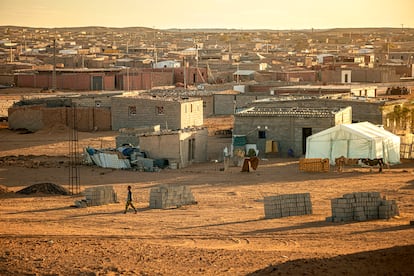
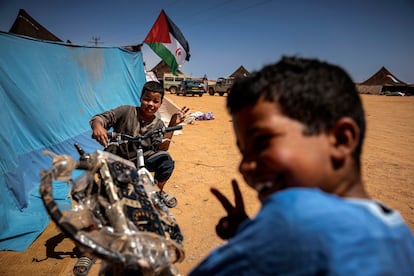
The desert wind whips the canvas of the tents pitched beside the houses and stirs the sand, which creeps into every corner. It is impossible to sweep it completely out of the schools, clinics, or homes where some 173,000 people live, according to United Nations figures. The rocky landscape of Algeria’s hamada, a desert within the desert, a barren wasteland where life barely takes hold and temperatures reach extremes, has seen several generations of Sahrawis born, raised, and die in the Tindouf refugee camps in southwestern Algeria. Originally conceived as temporary settlements, the camps have become the setting for one of the world’s longest-running exiles. For half a century, they have been home to those who fled following the Moroccan occupation of Western Sahara, as well as their children and grandchildren, who have grown up knowing little other land than this corner of the Algerian desert. Their inhabitants, who depend heavily on humanitarian aid that is steadily dwindling, have built schools, hospitals, film academies, and even fish farms in an effort to create a life in a place that was meant to be temporary. In the image, a general view of the Auserd camp on April 29, 2026.Mònica TorresThe Sahrawi population has lived in exile since the mid-1970s in five refugee camps named after the towns they left behind in the former Spanish colony of Western Sahara: Bojador, Dakhla, El Aaiún (Laayoune), Auserd, and Smara. It is a territory that is currently around 80% controlled by Morocco, from which tens of thousands of people were forced to flee following Spain’s withdrawal from what had been its 53rd province and the beginning of the Moroccan occupation at the end of 1975. The occupation followed the so-called Green March, through which King Hassan II ordered a mass civilian advance into the Spanish colony.
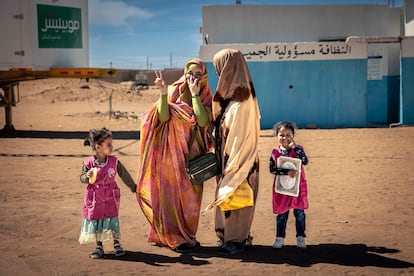
In the image, two women accompanied by two girls wearing school smocks pose in the Sahrawi refugee camp of Auserd, in Algeria’s Tindouf province.
Mònica TorresLife in the camps depends to a large extent on humanitarian aid that is becoming increasingly precarious. Food distribution, healthcare, access to clean water, and education remain possible thanks to the support of international organizations, although funding cuts are placing ever greater pressure on the refugee population. “In November last year, the Sahrawi Red Crescent presented its humanitarian response plan. A total of €177 million is needed to cover needs between 2026 and 2027. None of the response plans previously submitted have ever fully met those needs across all sectors. They have always been underfunded,” explains Aida Sanz, coordinator of Médecins du Monde in the camps.
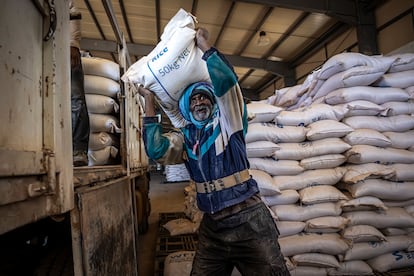
In the image, taken in May 2026, a man loads trucks with sacks of food from the World Food Programme (WFP) as they leave the central warehouses of the Sahrawi Red Crescent in Rabuni, the administrative center of the Sahrawi refugee camps in Tindouf, Algeria.Mònica TorresThe Sahrawi population has been subjected to a double exile for half a century. Living conditions and the lack of opportunities have driven many Sahrawis to migrate, or to spend periods abroad, in order to work or study. Schools, hospitals, and other services rely on the voluntary work of the refugees themselves, who receive modest financial stipends every three months through United Nations funds and other NGOs. However, these payments are very small, and in sectors such as education, teacher turnover can reach 25%, as many periodically leave their positions.
“This means that children build relationships with their teachers and then, suddenly, stop seeing them because those teachers are refugees too,” says Tamara Abu Saham, UNICEF’s field office chief in Tindouf.
A similar situation affects the healthcare sector. “The Ministry of Health is responsible for managing these stipends for all healthcare workers at every level. The problem is that most of the funding comes from humanitarian aid. Because there is an almost total dependence on that aid, when it is cut, the impact on salaries is immediate,” explains Sanz.Mònica TorresMore than 65,000 children and adolescents are growing up in one of the world’s oldest refugee camp systems. Many of them have never known any life beyond the desert, where temperatures can reach 50°C (122°F) during July and August. The camps’ heavy dependence on humanitarian aid means that children face daily challenges affecting their health, nutrition, and education.
Currently, around 40,000 children attend school across the five camps. “For children, school is not just a classroom. Education is a lifeline: it allows them to learn essential life skills, grow, safeguard their mental health, interact with other children, play, and imagine a better future,” explains Abu Saham. Their education is made possible by the work of 2,000 teachers and education professionals, all volunteers from the Sahrawi community itself.
“Our main challenge is ensuring that children have access to quality education. Around 60% of schools require improvements to water supply and sanitation services, while 80% need some level of repair and rehabilitation,” she explains. Some schools are already 35 years old and have very basic infrastructure that was never intended to be permanent. They are also frequently affected by sandstorms, flooding, and extreme temperatures.
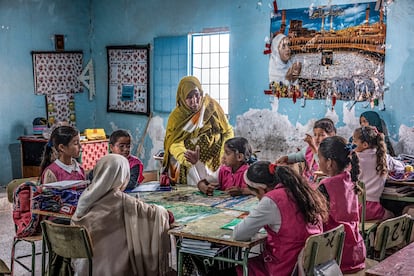
In the image, a fifth-grade class at one of the schools in the Auserd refugee camp.Mònica TorresFor Abu Sham of UNICEF, one of the main concerns is the impact of being born and raised in the camps, and the consequences that this protracted crisis has for children’s mental health.
“There is limited evidence about that impact. However, we do know that many children, according to observations made by teachers and parents, show signs of anxiety and stress. This is linked to living in the harsh conditions of the desert, as well as being exposed to numerous extreme weather events that, frankly, no human being should have to endure on a regular basis. Added to that are their basic living conditions and the knowledge that they will probably continue living as refugees until a solution is found for them,” she explains.
This situation, she stresses, not only shapes the present but may also have long-term consequences. “When that child grows up and becomes a young person and then an adult, what will their emotional well-being really look like? Mental health and overall well-being are, for us, a genuine concern,” she adds.Mònica TorresAnother of the most pressing problems is the shortage of childhood vaccines caused by funding cuts.
“By September, we will not have the vaccines needed to immunize all the children who are due to receive certain vaccines against preventable diseases, despite the funding appeal and UNICEF’s efforts to internally reallocate resources to cover part of the shortfall. Even so, we cannot fully make up for this deficit. For us, this is truly a child health emergency,” explains Abu Sham. “We have recently launched an appeal to raise more than $1.1 million to address this situation,” she adds.
The UNICEF official warns that the impact of global aid cuts is “immediate, but also long-lasting,” especially for children who should be receiving routine immunizations or be able to attend school without interruption. “When these cuts affect programs aimed at children, what we are witnessing is, unfortunately, the development of a catastrophe,” she concludes.
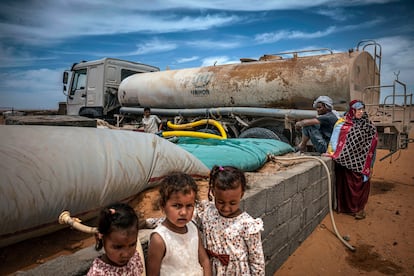
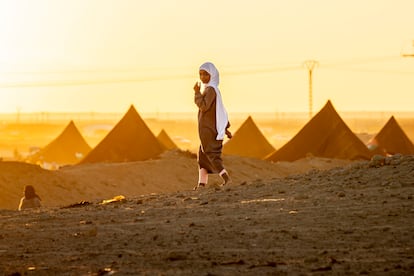
In the photograph, a girl walks through the Sahrawi refugee camp of Auserd at sunset.Mònica TorresEach family in the camps has water storage tanks, and it is common to see flexible “bladder” tanks beside homes, large canvas or PVC reservoirs used to store water for household consumption. The water comes from a treatment plant located about 31 miles away and is then distributed among the different camps by tanker trucks operated by the Association of Workers and Technicians Without Borders (ATTsF), the Navarre-based NGO responsible for maintaining and repairing the fleet and managing water distribution in the camps.
This sector has been one of the hardest hit by cuts in humanitarian aid funding. Eduardo Irigoyen Soria, director of ATTsF, explains that in 2023 the fleet consisted of 36 tanker trucks. By 2025, UNHCR was financing 26 vehicles, as well as the salaries of drivers and mechanics and the costs of maintenance. That funding disappeared in January 2026.
For several months, the system operated with only 10 tanker trucks. However, an agreement with the European Commission’s Directorate-General for European Civil Protection and Humanitarian Aid Operations (ECHO) made it possible to expand the service to 16 vehicles, with funding guaranteed through March 2027.
Ahead of the summer season, the fleet increased to 28 tankers thanks to the addition of four vehicles financed by local institutions in Navarre and 12 more tanker trucks provided by the Algerian government, Irigoyen explains.
In the image, one of the tanker trucks fills water tanks at a home in Auserd.Mònica TorresHarsh living conditions, poverty, and funding cuts have exacerbated health problems in the camps. The latest nutrition survey, conducted in 2025, revealed that acute malnutrition among children under five stands at 13.6%, a level considered critical according to World Health Organization (WHO) standards, while chronic malnutrition affects 37% of children.
In addition, nearly one in three children suffers from stunted growth, and around two in three are affected by anemia. Iron deficiency also affects 60% of pregnant women, increasing the likelihood of high-risk pregnancies and deliveries, as well as the risk that newborns will be anemic at birth. According to Médecins du Monde, this makes babies more vulnerable to infections from birth and throughout their lives.
“Another major challenge is that a significant number of people, between 11% and 20%, live with chronic illnesses that require follow-up care which is currently inadequate. We are also facing considerable food insecurity, with 67% of the population experiencing food insecurity,” says Sanz.
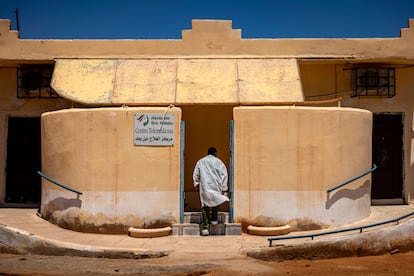
In the image, a healthcare worker enters one of the departments of Bachir Saleh National Hospital in Rabuni, the administrative center of the Sahrawi refugee camps in Tindouf.Mònica Torres“We are trying to guarantee the bare minimum, the minimum operational capacity of the healthcare system,” explains Sanz of Médecins du Monde.
“All the links in the chain are fragile when it comes to strengthening the health of the population. Take, for example, an elderly person with diabetes and hypertension who does not have continuous access to the medicines they need. That can have rapid and irreversible consequences for their quality of life,” she says.
“Every year, through funding from ECHO and Médecins du Monde, we secure 75% of the essential medicines needed by the Sahrawi refugee population. But you never know when stocks may run out because needs can increase. There is still 25% that is not covered, and that is a huge gap when it comes to monitoring and treating all the conditions that depend on these essential medicines,” she adds.
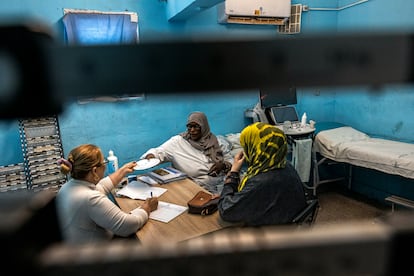
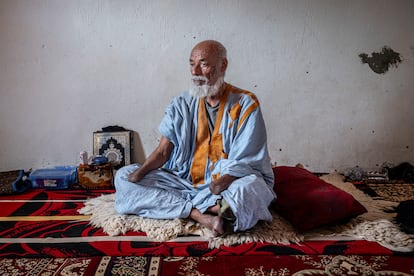
In the photograph, taken on April 29, María Ofelia Benítez, a gynecologist with the Cuban medical brigade, attends to a woman pregnant with twins during a consultation at Bachir Saleh National Hospital in Rabuni, the administrative center of the Sahrawi refugee camps in Tindouf, Algeria.Mònica TorresWestern Sahara remains one of the most heavily mined places in the world, according to the United Nations Mine Action Service (UNMAS), which warns that explosive devices left behind from the conflict fought between the Polisario Front and Morocco from 1975 to 1991 continue to pose a threat to civilians, nomadic herders, and livestock, especially camels. Hundreds of miles from those minefields, in Tindouf, Algeria, the consequences of that war are still deeply felt. The Martyr Chreif Center for War and Mine Victims, built in the middle of the desert, has for decades been home to people who survived explosions caused by these devices. One of the residents is Ahmed Salam, a 78-year-old native of El Aaiún.
Sitting on an animal-skin rug, this light-eyed man, who still keeps his Spanish identity card, calmly recalls how, on December 31, 1984, he lost both hands and one of his companions. That day, he was with two fellow soldiers in the Zamour area, near the border with Mauritania. They had stopped to rest in the shade of some trees. They lit a fire and, suddenly, everything exploded. Ahmed lost both hands, one of his companions was killed, and the other suffered minor injuries.
He has lived at the center for years. Today, it accommodates around 50 patients, most of them elderly men, according to its director, Moulud Saklma.Mònica TorresAfter three decades, the ceasefire agreement between Rabat and the Polisario Front collapsed on November 13, 2020, following an incident in the demilitarized zone of Guerguerat, in southern Western Sahara near the Mauritanian border. Moroccan forces dispersed a group of Sahrawi civilians who had blocked the road to Mauritania in order to press the United Nations to hold the self-determination referendum that had been promised since 1991.
Since late 2020, Morocco and the Polisario Front have been engaged in a low-intensity conflict in Western Sahara. The fighting reached one of its highest levels last June, when a Moroccan drone strike near the sand berm built by Hassan II killed three Sahrawi fighters, including Lahbib M. Abdelaziz, 37, a Polisario Front leader and military commander and the son of former Sahrawi leader Mohamed Abdelaziz, who headed the independence movement from 1976 to 2016.
Weeks earlier, another incident had taken place when the Polisario launched an artillery attack against a Moroccan military base in Smara, in northeastern Western Sahara. No casualties were reported.
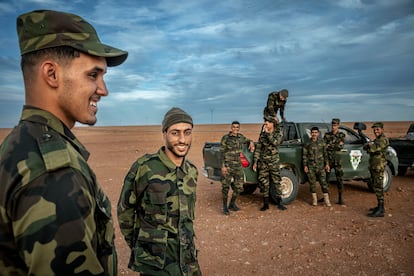
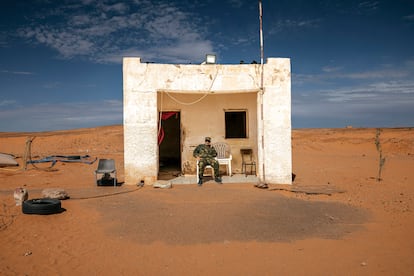
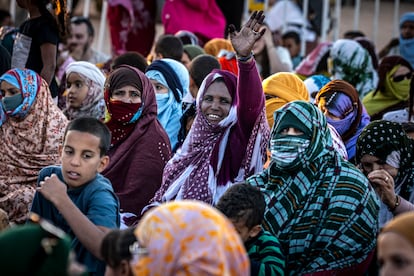
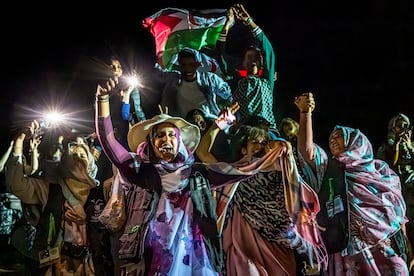
In the image, a group of Polisario Front soldiers escort visitors and officials during the FiSahara festival held last May.Mònica TorresIn the photograph, taken on April 29, 2026, a soldier sits at a checkpoint at the entrance to the Sahrawi refugee camp of Auserd, one of the five settlements where the Sahrawi refugee population has lived for the past 50 years.Mònica TorresThe camps are home to a range of local initiatives, including a fish farm, a pharmaceutical production laboratory, a culinary school, a beauty center, and a nursing school. They also host cultural and sporting initiatives such as the Sahara Marathon and even a film festival, which each year transforms this territory shaped by exile through open-air screenings, talks, and workshops.
“FiSahara was born in 2003 out of a shared desire among the Sahrawi people, solidarity activists, and the Spanish film community at a time when a solution still seemed within reach, because there had been some progress in the negotiations to hold a referendum in Western Sahara. However, the cause lacked visibility and needed renewed momentum,” explains María Carrión, the festival’s executive director.
“The idea was also to celebrate Sahrawi culture, make it visible, strengthen it, and do so through cinema, opening a two-way window: from the camps and Western Sahara to the outside world, and from the outside world back to them,” she adds.
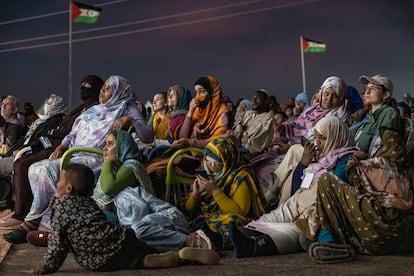
Since then, this traveling film festival has held nineteen editions (it was not possible to organize it every year) in different Sahrawi refugee camps. Over time, it has grown, become more international, and expanded to include other peoples and causes from different parts of the world.Mònica TorresIn the image, a group of people attends one of the activities organized as part of the FiSahara Film Festival in Auserd. For one week, the Sahrawi population, international guests, activists, and journalists live together in the camps during an event that combines cinema with efforts to raise awareness of the Sahrawi cause.Mònica TorresThe festival also gave rise to another initiative in the camps: a film school. Carrión explains that every year FiSahara offered short-film workshops whose productions were screened at the end of the festival.
“Until there was a demand for something more permanent, and that’s when the film school was conceived. It opened its doors in 2011,” she recalls.
“You can’t conceive of the festival without the school, nor the school without the festival. One project was born from the other, and they continue to nourish each other. When the FiSahara projectors are switched off, the school’s projectors are switched on, not only for classes but also for screenings throughout the year. At first, FiSahara was a very unfamiliar concept for many people in the camps and could be perceived as rather Western because of the type of films shown and the nature of the event. But the existence of the school, and the fact that those films are now Sahrawi films, has led to much greater acceptance,” explains the festival’s director.
Sahrawi filmmakers use cinema not only to tell the story of their people’s struggle and history, but also to explore issues such as unemployment, drugs and addiction, as well as comedic themes and social attitudes within Sahrawi society.Mònica Torres