
The desert’s ‘resurrection plant’ paving the way to fridge-free vaccines
A thermostable tetanus and diphtheria vaccine has just cleared its first human trial. If it reaches the market, the innovation could help bring immunization to remote communities where maintaining the cold chain is a challenge

It lives in deserts where not a drop of rain falls for months, and botanists call it the resurrection plant for its seemingly miraculous return to life. When it receives no water, it looks brittle, shrunken and brownish — apparently dead. But as soon as the first drops begin to fall, its leaves unfurl and turn green within hours. The best-known example is the rose of Jericho (Selaginella lepidophylla), but there are others, and all are able to survive almost completely desiccated thanks to, among other mechanisms, a sugar called trehalose that protects the plant’s cells until water returns.
Now, that same substance is emerging as a promising tool in the quest to overcome a longstanding challenge: preventing vaccines from spoiling when refrigeration fails.
If successful, the approach could help solve one of global health’s most persistent obstacles: the cold chain. Most childhood vaccines must be kept at temperatures between 2°C and 8°C from the moment they leave the laboratory until they reach the recipient. Any disruption during transport or storage that alters those temperatures can render them ineffective. The World Health Organization estimates that up to half of all vaccines may be wasted each year, and has repeatedly warned about deficiencies in refrigeration systems, particularly in health centers across low- and middle-income countries, where equipment is often lacking, malfunctioning or dependent on unreliable electricity supplies.
The inspiration came from Bruce Roser, a British researcher searching for a solution to a problem that continues to hamper global immunization efforts and cost lives: how to deliver vaccines to the world’s most remote places without losing efficacy if the cold chain breaks down, something that frequently happens because of difficult transport and logistical conditions.
The World Health Organization estimates that immunization saves between 3.5 million and 5 million lives a year, but 1.5 million children under the age of five still die annually from diseases that could have been prevented with a simple injection or a few oral drops. One day, while preparing a lecture, Roser was reading a scientific paper about this family of plants and wondered whether trehalose might provide the answer. That idea has since evolved into a technology called StablevaX, which has now passed its first clinical trial in humans.
The trial was conducted at the Clinical Research Facility of Southampton University Hospital in the United Kingdom, with 60 healthy adults who received SPVX02, a thermostable version of an existing vaccine against tetanus and diphtheria, made possible by trehalose. The vaccine showed a positive safety profile, and the immune response it generated was comparable to that produced by two already approved vaccines. The promising, peer-reviewed results were published this August in the scientific journal eClinicalMedicine, which is part of The Lancet group.
Saul Faust, the trial’s principal investigator, welcomed the findings. “We have demonstrated proof of concept in humans,” he said. According to Faust, the refrigerator-free vaccine generated immune responses comparable to those of existing vaccines while maintaining a similar safety profile. He added a note of caution, however: “This was an early-stage study conducted in a relatively small number of volunteers, so a larger trial is needed to confirm these results.”

Özgur Tuncer, chief executive of Stablepharma, the British company behind the technology, says in a phone interview that it effectively allows refrigeration to “disappear completely.” He compares SPVX02 to any other medicine whose label simply states that it should be stored below 30°C and protected from direct sunlight. “It shows it still does exactly what it should even after spending a year outside a refrigerator,” he said, noting that the vaccine can withstand temperatures of up to 40°C for six months.
A World Health Organization spokesperson strikes a more cautious note, however, saying that it is “too early to say” that this is a vaccine that requires no refrigeration. Greater thermal stability, the spokesperson points out, does not necessarily mean the cold chain can be dispensed with altogether. “More stability data, regulatory review and larger trials will be needed before its real storage conditions and value for public immunization programs are known,” the WHO representative said in an email.
Faust, for his part, believes the description is justified. “It is definitely accurate,” he said, while noting that the public claims being made are in fact more conservative than the technical data presented in the study would allow.
“A safe, effective vaccine that is stable at room temperature could ease pressure on very limited refrigeration systems,” the WHO spokesperson said, adding that freeing up space in refrigerators would allow other vaccines to be stored, facilitate mobile immunization campaigns and reduce the risk of accidental freezing of formulations.
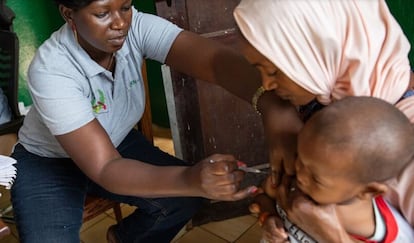
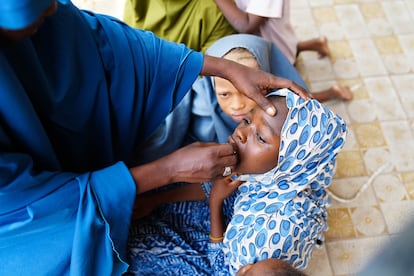
For vaccination teams in villages across the Sahel, or in remote settlements tucked away among Tanzania’s forests and mountains, transporting a cooler full of vaccines is not as straightforward as it sounds. It can mean traveling for miles along poor roads, when there are roads at all, often relying instead on dirt tracks. It means coping with extreme heat, frequently above 40°C, as well as power outages and unforeseen obstacles that can compromise the vaccines and their ability to save lives.
During the interview, Tuncer stresses that another challenge is the persistence of the belief that breaks in the cold chain are no longer a serious problem. “Many people assume that everyone has refrigerators nowadays, but it’s not that simple,” he said.
With safety and immunogenicity now demonstrated, the next step will be to establish the vaccine’s effectiveness on a larger scale, Tuncer explains. Stablepharma has recently launched a Phase IIb trial involving 160 participants aimed at showing that its trehalose-based tetanus and diphtheria vaccine is no less effective than the conventional version. If the trial succeeds, the company expects to complete the vaccine’s clinical development over the next few years.
Tuncer describes Stablepharma as a small biotech company and says its biggest hurdle is no longer a scientific one. “The technological challenges are solved; what we need now is investment,” he said. The company, which has a research center in Tres Cantos, in the Madrid region, has received a €2.5 million ($2.91 million) grant from the European Innovation Council to support the project. But Tuncer acknowledges that manufacturing and scaling up new vaccines will require the backing of public and international partners, citing organizations such as the World Health Organization, UNICEF and Gavi, the Vaccine Alliance, as potential allies.
The company believes there are still key pieces to put in place. “What makes SPVX02 so exciting is that we are bringing together all the elements a thermostable vaccine needs to succeed in the real world: robust clinical data, long-term stability, scalable manufacturing and a real advantage for health systems,” said Juana de la Torre Arrieta, associate director of Chemistry, Manufacturing, and Controls and Clinical Development at Stablepharma.
If everything goes according to plan, the vaccine will still have to clear regulatory approvals, navigate a manufacturing scale-up that has yet to be funded and, ultimately, pass the definitive test: proving that a vaccine can truly withstand the heat and remain effective after traveling thousands of miles from the laboratory to some of the world’s most remote health clinics.
Sign up for our weekly newsletter to get more English-language news coverage from EL PAÍS USA Edition









































