
Updated US guidelines for the hepatitis B vaccine in newborns: What they say and why they’re controversial
Vaccine advisers to the CDC voted to postpone immunization in specific cases, a decision that has raised concerns among experts
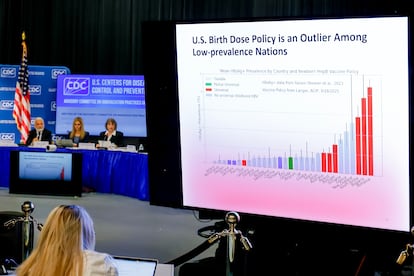

The U.S. Advisory Committee on Immunization Practices (ACIP) to the Centers for Disease Control and Prevention (CDC) voted to update the guidelines for the hepatitis B vaccine for newborns. The new proposal, which was approved last Friday, states that if the mother tests negative for hepatitis B, the first dose may be delayed until the baby is two months old.
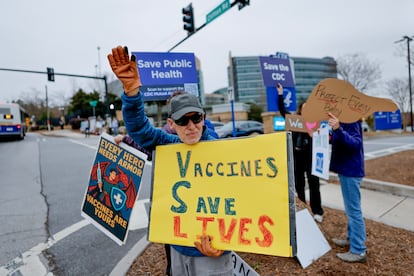
Although it still needs to be ratified by acting CDC Director Jim O’Neil, the measure has been described as “irresponsible” by the American Academy of Pediatrics (AAP), which warned that it could lead to an increase in hepatitis B infections in infants and children. “I want to reassure parents and clinicians that there is no new or concerning information about the hepatitis B vaccine that is prompting this change, nor has children’s risk of contracting hepatitis B changed. Instead, this is the result of a deliberate strategy to sow fear and distrust among families”, said AAP President Susan J. Kressly in a statement.
For his part, U.S. President Donald Trump praised the committee’s decision and called for an evaluation of the recommended vaccination schedule for minors in the United States. “Many parents and scientists have been questioning the efficacy of this ‘schedule,’ as have I! That is why I have just signed a Presidential Memorandum directing the Department of Health and Human Services to fast-track a comprehensive evaluation of vaccine schedules from other countries around the world, and better align the U.S. vaccine schedule, so it is finally rooted in the gold standard of science and common sense!” he wrote on Truth Social.
What is the universal recommendation for the hepatitis B vaccine?
The World Health Organization (WHO) guideline states that infants should receive the first dose as soon as possible after birth, ideally within the first 24 hours. After that, it is recommended that two or three additional doses be given, with a minimum interval of four weeks between each dose. Since 1991, the CDC committee had maintained this same recommendation, which is reflected in the figures: according to AAP data, cases of hepatitis B in infants and children have dropped from around 16,000 to less than 20 per year.
What are the new CDC guidelines?
For babies born to mothers who test negative for hepatitis B, the committee suggests that the decision about when — or whether — to administer the vaccine, including the dose at birth, should be left to the discretion of each family in consultation with their healthcare provider. The recommendation suggests evaluating the benefits and risks of the vaccine, as well as the risk of exposure to the virus, for example, if someone in the household has hepatitis B or if there is frequent contact with people from regions where the disease is common. In cases where the dose is not given at birth, it is proposed that the first dose not be administered before two months of age.
ACIP resolutions define which vaccines are funded by the U.S. government, influence state and local vaccination laws, and help determine what insurers are required to cover.
The controversy surrounding the committee
Since the appointment of Robert F. Kennedy — a former anti-vaccine activist — as U.S. secretary of health, the sector has undergone a controversial restructuring. In July of this year, the politician fired all 17 members of the ACIP and replaced them with ideologically-aligned individuals. Subsequently, the White House dismissed Susan Monarez, then director of the CDC, for her refusal to accept vaccine guidelines not backed by science. O’Neill, a businessman with no medical experience and a close ally of Kennedy, was selected to replace her.
Soon after, the new commission revised its recommendation on the quadrivalent vaccine (MMRV), which provides combined protection against measles, chickenpox, rubella, and mumps. The updated guideline states that children should receive separate measles-mumps-rubella (MMR) and chickenpox vaccines instead of a single combined dose. With Kennedy as secretary of health, experts predict that these adjustments will be only the first and have expressed concern that future decisions may be made without thorough scientific review.
Sign up for our weekly newsletter to get more English-language news coverage from EL PAÍS USA Edition









































