
Cuba faces a sharp drop in tourism as fuel shortages force airlines to cut flights
Several groups of visitors have been relocated to higher-category hotels due to the island’s energy crisis
Ever since Donald Trump’s threats against Cuba intensified, the situation on the island grows bleaker day by day. Even the tourism sector — historically prioritized by Cuban authorities for its role in guaranteeing foreign currency inflows — has not been spared contingency measures the government is implementing to address the fuel shortage resulting from Trump’s energy embargo.
And now the Cuban government has announced that it has run out of fuel for commercial aviation, prompting airlines to react in ways that will further strain the island’s fragile economy. On Monday, Air Canada — which flies a large portion of the tourists visiting the island — announced it is suspending operations until May. Spain’s Iberia is maintaining its flight frequency but is offering refunds and ticket changes, and, along with Air Europa, will make a technical stop in Santo Domingo to refuel. Only Aeroméxico will continue operating normally.
In hotels, the uncertainty has already begun to be felt. When David Torres, a 29-year-old worker at the Metropolis Hotel in Havana’s historic center, heard one of the bosses tell the IT guy to save all the sensitive information on hard drives because “we’re going to shut down the hotel,” he felt a paralyzing and demoralizing emptiness.
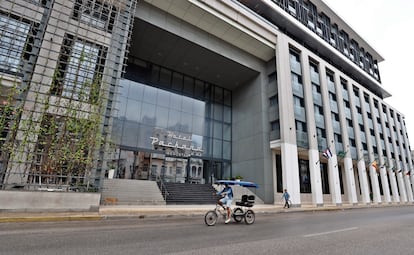
He and his coworkers had spent months finalizing the details for the opening of the newly renovated building, another of those new hotels that the island’s authorities have built in the city in recent years, despite the discontent of many residents and the ever-decreasing number of tourists in the country. “It was sad to see the hotel lights go out and to see people leave disappointed after so much effort for an opening that, for now, won’t happen,” says the young employee of this hotel, which is not the only one in Cuba to have closed its doors.
Authorities have ordered the temporary closure of establishments like the Metrópoli, which were not yet operating, as well as others with few tourists. Tourists have been relocated to hotels better equipped to handle the current energy crisis. Places like the Hotel Meliá Cohíba, the Hotel Nacional de Cuba, and the controversial Torre K (Cuba’s tallest building) seem to be unaware of the fuel shortage plaguing the island.
People like Daniel had to take paid leave (around 9,000 CUP, approximately $376). Others were suspended from their jobs, with the guarantee of receiving the minimum wage for a month. After that time, all workers have the option, Daniel explains, of accessing the so-called labor pool, where they would be reassigned to other positions, in other hotels, for the duration of the situation. “Luckily, I was already considering other options and had started a second job in the private sector,” says the young man, relieved. Even so, he admits the situation has been a shock. “It’s a sudden change that we’re trying to fit into our family budget,” he adds.
Despite the very low official wages, tourism workers in Cuba value their jobs because proximity to foreign visitors allows them to earn tips in dollars. “That’s the real benefit for all of us,” says a worker in the sector from Matanzas province, east of Havana. She works for one of the companies belonging to the Gaviota military group that operates in the enclave. She explains that “Varadero has long been a ghost town. The situation is critical.” What is considered Cuba’s largest sun and beach destination, the crown jewel of tourism on the island, has not escaped the sector’s steep decline or the sharp drop in foreign visitors in recent years. In 2025, arrivals fell below two million.
In Varadero, it has become normal to see empty streets and restaurants with no customers, explains the young woman on condition of anonymity. “The recreational areas have almost no customers; there’s no variety on offer, and the quality has declined significantly,” she says, referring to the dwindling number of visitors, most of whom are Russian, Chinese, and from various Latin American countries, with Canadian and Spanish visitors arriving in smaller numbers than in previous years. “Now, with the fuel shortage, this whole situation will worsen, and the conditions for those who continue working will also deteriorate,” she adds.
She has already been forced to take vacation leave. “They pay you for the whole month, but if the situation continues, we’ll be considered furloughed until further notice.” Her boyfriend, a waiter at one of Varadero’s all-inclusive hotels, earning 7,000 CUP a month (about $292), plus tips from tourists, has had to improvise ways to get to work because the hotel can no longer provide staff transportation.
Private initiatives have emerged, “and I don’t know where they get the money for that,” says the young woman, who organizes round-trip transportation for workers through WhatsApp groups. Some hotel chains have reopened nearby shuttered properties as makeshift dormitories for staff, but without providing them with proper facilities. “They have to bring their own sheets and blankets, all their belongings, and stay on a set schedule for several days, as decided by the hotel management. Otherwise, they tell you to quit,” she explains.
Solar panels to stay open
While government hotel workers are processing the shock of this impasse, private rental properties and other tourism-related businesses that have sprung up in recent years are trying to adapt and weather the storm. Celine Terry manages a boutique hotel near Revolution Square, with five rooms, for which she has achieved energy independence by installing solar panels imported through a private company.
“Everything we’re starting to experience these days feels like the times of the pandemic and the travel restrictions,” says the manager, who explains that 2025 was a very bad year in terms of guest arrivals, except for academic groups that kept the business afloat. “Cuba isn’t being marketed as a destination by travel agencies. And it’s becoming less and less recommended,” says Terry, who has had to shift her focus toward local clients, offering wellness activities and yoga sessions. “We went from six employees to just two,” she says.
Uncertainty hangs over every decision Cubans make these days, and in the tourism sector, that feeling seems even more acute. A pervasive anxiety is palpable: from a tour guide who hasn’t been able to conduct a single tour since the beginning of the year because all her reservations were canceled, to the taxi drivers waiting outside the Hotel Nacional de Cuba, still unsure where and when the authorities will allow them to refuel so they can continue working.
“Of all the speculations you can make, the only one that’s true is that everything is going to get worse,” says Eugenio, one of the drivers stationed outside the hotel. He remembers when U.S. and Cuba began to thaw relations under Barack Obama as a dream-like period, when he had plenty of clients and substantial profits.
From those boom years, María R. remembers how lucrative it was to rent out her house in Old Havana. Little by little, thanks to that money, she bought other houses and today owns four apartments scattered throughout strategic locations in Havana. “For several years now, since the pandemic, tourism hasn’t recovered,” says the owner, who adds that she has had a steady stream of clients that guarantees her a stable income. “I’m not getting many long-term reservations; they’re coming in almost overnight,” she explains, adding that she hasn’t considered buying a generator for her rental properties because “it wouldn’t be an investment I could easily recoup.”
She’s worried because “many potential travelers are canceling. I’ve had cancellations myself, and other friends who do the same thing have too. First it was because of fear of the virus, then the power outages, and now this situation where nobody knows what will happen.” Even so, María R. doesn’t plan to abandon her business, which she combines with her work as a taxi driver. “Even when business is really bad, it’ll always bring in something.”
Given the current situation and with little hope of improvement on the horizon, María R., like many Cubans, still holds on to the belief that “this will be resolved when there’s a change of system, when Cuba is a free and democratic country. Meanwhile, all we can do,” she says, “is try to survive.”
Sign up for our weekly newsletter to get more English-language news coverage from EL PAÍS USA Edition









































