
Mexico declares war on sugary drinks: More taxes, less tolerance
The government expects to collect $2.2 billion from soda drinks in 2026, and the money will be fully allocated to the health budget to combat an epidemic of obesity, diabetes and cardiovascular disease, says President Claudia Sheinbaum
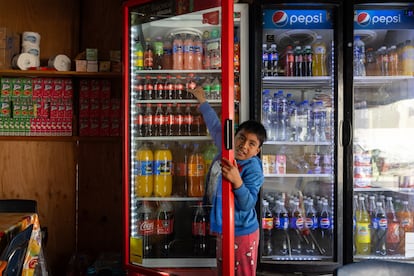

In Mexico, sugary drinks have been banned from schools and labeled with warnings, and nine out of 10 people know they’re harmful to their health. But Mexicans continue to consume them, and the government wants to change that. In a new front in his battle against sugar, Finance Secretary Édgar Amador on Monday announced an increase in the Special Tax on Sugary Drinks Production and Services as part of the 2026 Economic Package. The measure, he noted, has two purposes: to discourage consumption and to invest the proceeds in a health fund to offset the costs generated by illnesses resulting from the consumption of these beverages.
The proposal includes an increase in the tax on sugary drinks, which will be 3.08 pesos (17 cents) per liter, compared to 1.64 (9 cents) this year. According to the head of the Ministry of Finance, this increase will generate approximately 41 billion pesos ($2.2 billion) in 2026, which will be entirely allocated to the health budget.
In a news conference, Amador explained that the measure seeks to “incentivize healthier consumption habits and contribute to financing the costs associated with chronic diseases, under the logic of a comprehensive humanistic health policy and not a revenue-driven one.” The “health taxes,” as the secretary called them, will also apply to tobacco, video games and gambling.
President Claudia Sheinbaum welcomed the measure this Tuesday at the National Palace, where she presented the results of a survey that show widespread consumption of these beverages in the country. Nearly 30% of the population consumes them daily at home, and 45% at least once a week, despite the fact that 88% know they negatively impact health. “What strikes me the most is that people know they’re harmful. It’s very important that the effort be made,” Sheinbaum said.
Health Secretary David Kershenobich is leading the fight against sugary drinks. He has pushed for their ban in schools and promoted awareness campaigns. At a presidential conference in August, Kershenobich reported that Mexico is the country that consumes the most soft drinks in the world. A Mexican citizen drinks an average of 166 liters of soda a year, and the habit starts early. Seven out of 10 children and teens consume them frequently, even with their first meal of the day.
In 2024, 192,593 deaths from cardiovascular disease and 112,641 from diabetes were recorded. According to Kershenobich, one in three new cases of diabetes and one in seven cases of cardiovascular disease in Mexico are directly attributed to excessive consumption of sugary drinks. “We shouldn’t just focus on deaths, but on how these people live before they die. They can live up to 10 years with disability due to the complications they experience, and they lose up to 10 years of life due to consuming these types of drinks,” the secretary warned a month ago. Even diet sodas and sugar-free versions increase the risk of heart attack or stroke by up to 30%.
One of the most common treatments for affected patients is hemodialysis. This procedure, which connects the patient to a machine for four to six hours several times a week to filter the blood, has grown “alarmingly.” In 1993, fewer than 20,000 sessions were performed annually in Mexico, and by 2019, the number had already exceeded 100,000. “Kidney damage is closely associated with sugar consumption,” Kershenobich emphasized. “If we don’t take preventive measures, there will be no way to avoid the development and burden of this disease.” These data reflect the high healthcare costs associated with soft drink consumption, which the government referred to when presenting the new Economic Package.
The struggle has been long. Since 2019, Mexico has required labeling of products high in calories, sugar, sodium and saturated fat. Furthermore, soft drinks have been banned in schools, and there are awareness campaigns targeting children and adolescents. However, the Ministry of Health acknowledged that the strategy should be extended to adults as well.
President Sheinbaum has insisted that the proceeds from the new tax will be allocated exclusively to the healthcare system. “Everything that is raised will go to treating illnesses linked to its abuse,” she stated. The president noted that beverage industry leaders maintain that there is no evidence that their products have any negative health effects, and said she will release additional studies on the impact of these beverages on health as part of a new health campaign starting on Thursday.
Mexico, according to the president, wants to reduce the consumption of soft drinks due to the urgent need to curb an epidemic of obesity, diabetes, and cardiovascular disease that is plaguing the country and has worsened in recent years. Kerchenobish finished listing the serious consequences of excessive consumption of these beverages by posing a question: “A single 600-milliliter bottle of soda is equivalent to 15 teaspoons of sugar. After knowing that, would you drink a soda every day? It’s necessary to think about it and reflect.”
Sign up for our weekly newsletter to get more English-language news coverage from EL PAÍS USA Edition









































