
New York’s big moment: A portrait of a city awaiting the Mamdani era
In 2026, the eyes of the world will be on the great US metropolis and unofficial capital of the planet. As Trump unleashes his authoritarianism, a Muslim socialist will assume the mayoralty on January 1. EL PAÍS toured the city’s five boroughs to understand how the proud inhabitants of the Big Apple feel as it faces what may be its last chance to preserve what makes it unique
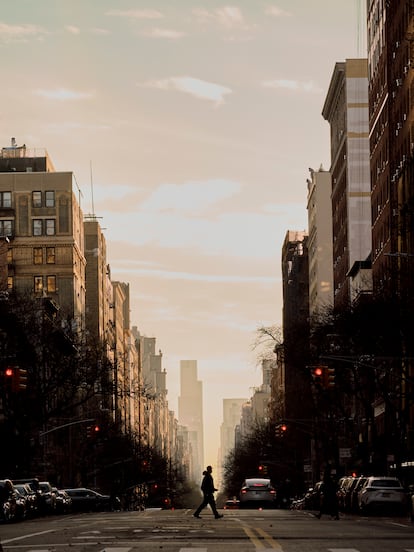

The Friday before his surprising victory in the Democratic primary for mayor of New York City, Zohran Mamdani went for a walk.
The candidate set off on a sweltering June night from the northernmost point of Manhattan. Seven hours and almost 17 miles later, he finished at the southern tip of the island. This act became one of those viral videos that paved the meteoric rise of a recently unknown politician, who was born in Uganda and is a member of the Democratic Socialists of America (DSA). With this walk, Mamdani aimed to prove not only his flair for the dramatic, but that he was willing to listen to New Yorkers. Dozens of them, perhaps hundreds, stopped him along the way to chat.
On the first Saturday of December — 26 days before January 1, the day that Mamdani will be sworn in as the first Muslim mayor of the city that saw the 9/11 terror attacks — we, too, set out for a walk.
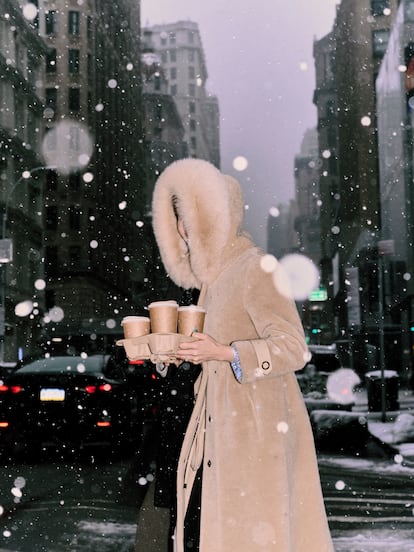
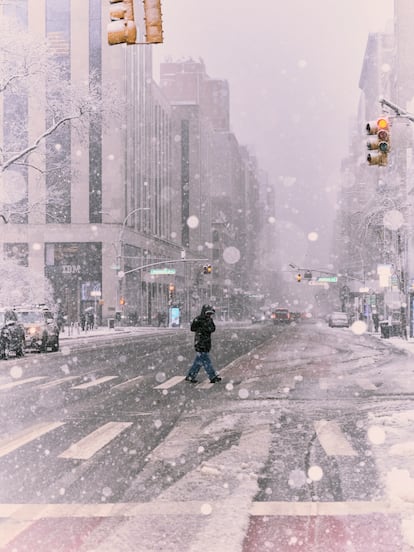
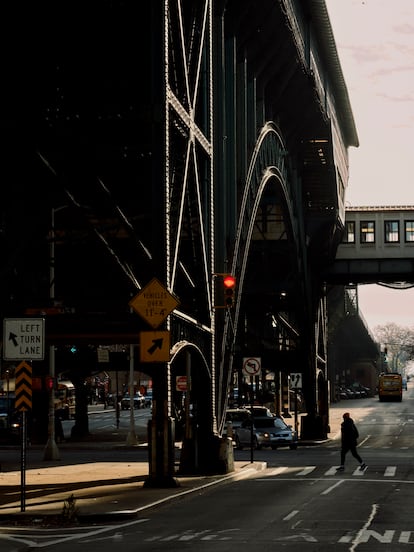
The morning that EL PAÍS decided to emulate the trail was below freezing. The total of about 50,000 steps — barely leaving Broadway — had served the Lenape Indigenous people as a trading route long before the arrival of European settlers (or apps that track your steps). Centuries later, the writer Nik Cohn described it as “the heart of the world.” It still is.
The walk took us from the bustling Spanish-speaking Washington Heights — where a forward-thinking car dealership also offered funeral services — to the vibrant Black pulse of Harlem. It also led us through the tranquility of the Upper West Side, where Mamdani’s parents, the Indian filmmaker Mira Nair and the Ugandan academic Mahmoud Mamdani live, all the way to the tourist pandemonium and advertising apocalypse that is Times Square. Broadway then led us to Wall Street, via the comfortable anonymity of Midtown and what remains of Lower Manhattan, after it was overrun by brands and luxury hotels, the youngsters who max out their wealthy parents’ credit cards and all possible sequels of Sex and the City.
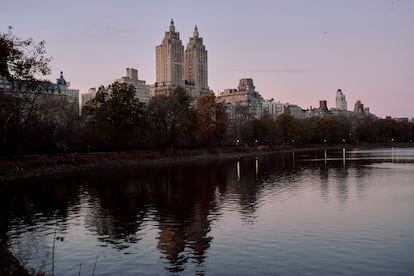
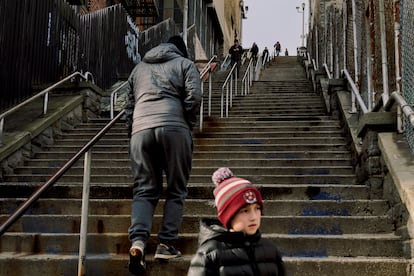
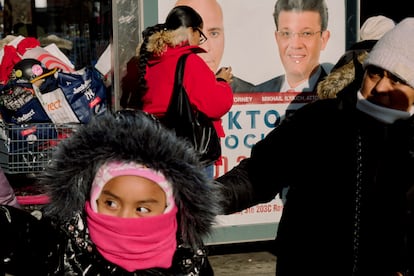
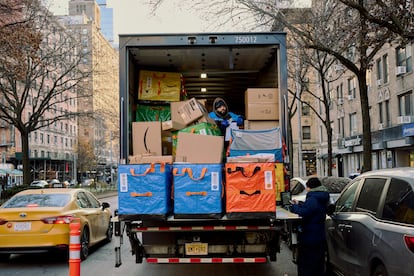
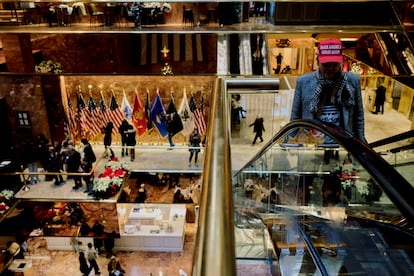
We strolled by Donald Trump’s hotel on one of the corners of Central Park. Then, we walked past 26 Federal Plaza, a place where the dreams of those aspiring to U.S. citizenship used to come true. Recently, it has become a nightmare for immigrants: they come to comply with the law, but are subsequently detained and disappeared by U.S. Immigration and Customs Enforcement (ICE) as part of the government’s mass deportation plan.
On our walk, we also lost count of the bank branches (there are so many, almost one on every corner… a reminder of who’s in charge here), the pizzerias that no longer charge a dollar for a slice, due to inflation, and the franchises that drive out local businesses and further disprove that cliché — so beloved by Europeans — that New York isn’t the United States: if there’s a common experience in divided America is the certainty that there’s alway a Starbucks’ coffee or a Chipotle’s burrito not far from where you are.
The walk was the beginning of a week-long trip through the five boroughs that make up New York City. From Manhattan — where life prevails, despite the ultra-rich and the tourists — to Brooklyn, the most populous borough. From Queens (trendy because the new mayor lived there) to the Bronx, the poorer sibling. And, of course, we went to Staten Island, the only Republican stronghold: a piece of Trump Country in the middle of a vast Democratic territory.
The goal was to understand what the city is like, and what worries it. The shadow of Mamdani loomed over us everywhere. Even at an LCD Soundsystem concert, the frontman — James Murphy — peppered the lyrics of the band’s anthem (New York, I Love You, But You’re Bringing Me Down) with veiled references to the politician’s promises. And at The Faggots & Their Friends Between Revolutions — a play currently showing at the old armory on Park Avenue — the trans actress made the audience laugh by saying, “See, this is what happens when you elect a communist mayor.”
Thanks to a man who was barely known just a year ago, 2026 will thrust the most populous U.S. city into the spotlight. The metropolis is awakening from a long and arduous convalescence from the pandemic, which hit New York particularly hard. After COVID-19 — as psychoanalyst, writer and anti-gentrification activist Griffin Hansbury, whose pen name is Jeremiah Moss, lamented during a stroll through the bohemian remnants of the East Village — “a collective effort to erase the trauma was undertaken” and “the camaraderie and strange beauty of that era in the city” were lost. The extravagant administration of Mayor Eric Adams — who leaves office pardoned by Trump, but tainted by corruption — didn’t help matters, either.
The new year will also be the year of the FIFA World Cup (June 11 to July 19), whose final will be played at the Giants’ and Jets’ stadium. And it could also be that pivotal moment when New Yorkers are forced to test their resilience against Trump — one of their own — if he, as he’s done in other cities, deploys the National Guard. Everyone was prepared for this eventuality… until, after months of mutual attacks, the mayor-elect and the president finally met in November. It was the day they surprised the world with a live broadcast from the Oval Office, during which they demonstrated an outpouring of brotherly love.
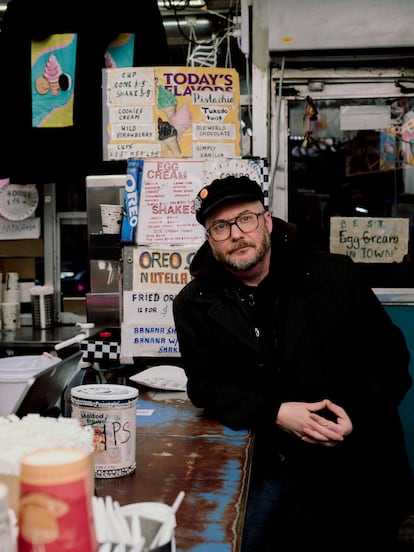
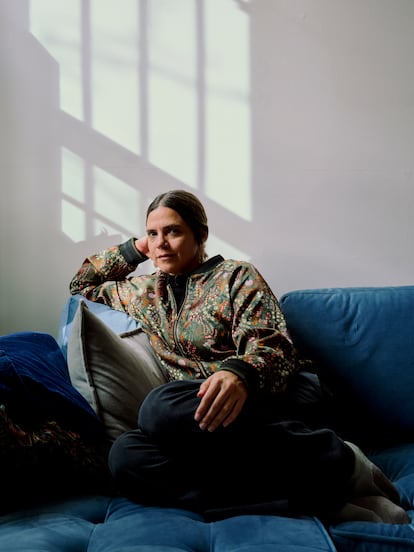
That shock event sparked a new sport in New York: the (over)analysis of what happened at the White House. It was, says Moss, “like knowing your dad has forgiven you; that he’s no longer angry with you.” He adds that Trump — who threatened the city with reprisals if New Yorkers didn’t vote for his preferred candidate, former Democratic governor Andrew Cuomo — “behaves like an alcoholic; he can be kind and loving one moment and terribly cruel the next.”
The Mexican-American writer Valeria Luiselli doesn’t rule out the return of that cruelty. She’s aware that the Republican administration may be saving New York City — where she has lived for 20 years — for last. It could serve, she notes, as “a doctorate in the president’s authoritarian career.”
“New York is a rebellious city, and it won’t be as easy to take on [compared] with others,” Luiselli, who is the author of a non-fiction book (Tell Me How It Ends: An Essay in 40 Questions) and brilliant novel (Lost Children Archive) about the family separation policy of Trump’s first presidency, warns EL PAÍS in her Harlem studio.
Our walk, as Mamdani’s, ended at the Staten Island Ferry Terminal. He didn’t take it, although it gets you free of charge to another world. What distinguishes this borough (the only one where Mamdani didn’t win) is its insularity. It wasn’t connected by road to the rest until the construction of the Verrazano-Narrows Bridge in the 1960s. In the early 1990s, Staten Island even threatened to secede. With half a million inhabitants, it’s the least densely populated part of the city.
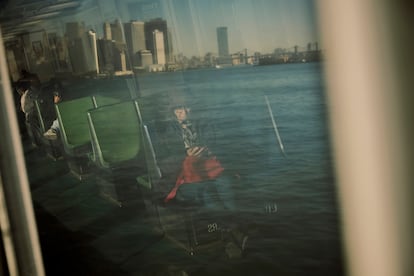
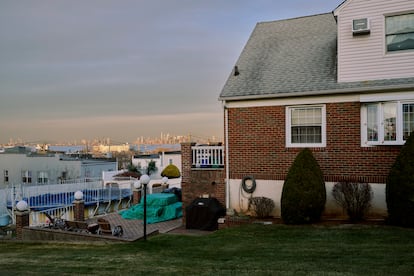
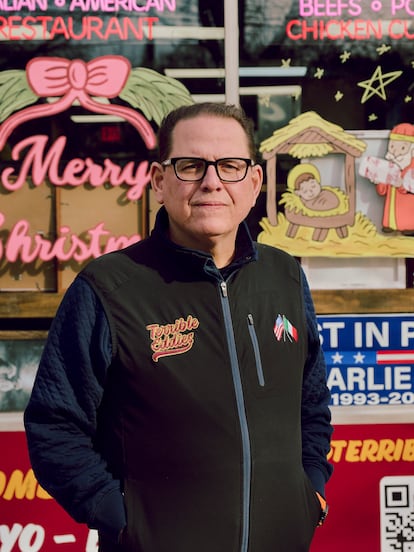
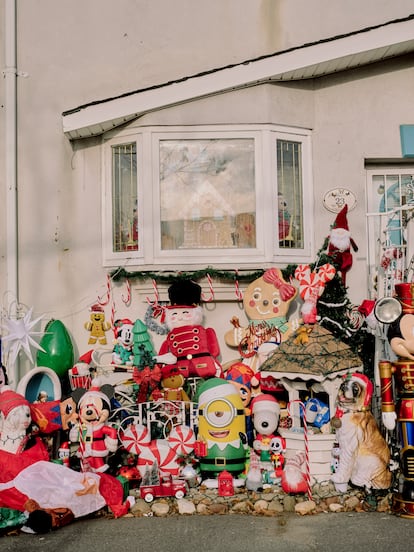
Numerous police officers and firefighters live on Stratten Island: the atmosphere is vaguely reminiscent of The Sopranos. It’s often called the “forgotten borough.” However, for Eddie Monahan — a resident of Staten Island — it represents more of “the real New York.”
A Trump supporter, he was born in this corner of the city. And, while it may be largely unknown to many of New York’s residents, it’s famous among rap fans (Mamdani included) for having produced one of the greatest hip hop groups: the Wu-Tang Clan. Its members are honored on the island, depicted in a mural that’s one of the tourist attractions in Stapleton, a neighborhood that has a significant Black population. We went there guided by a guy named Daniel Speller, who, aboard the ferry, instructed us on the island’s long African-American history, which dates back to the time when the abolitionist Harriet Tubman made it a stop on the Underground Railroad.
“This is the only place where kids play together in the street. And the New York accent? It doesn’t exist outside of here,” Monahan told us later, adding that he was “proud to sound like Al Pacino, Robert De Niro, Fred Flintstone and Woody Woodpecker.” His conversation with EL PAÍS was constantly interrupted, as he welcomed customers to the business he opened a couple of years ago on the southern part of Staten Island. Monahan sells Italian food and pop-culture-inspired snacks, amidst posters commemorating the slain pro-Trump activist Charlie Kirk. There are also provocative “anti-woke” messages on the walls, such as “Black Olives Matter.” Monahan — who has a background on Wall Street and in the adult store business — believes that Mamdani will be “a disaster for New York from an economic standpoint and in terms of the loss of the city’s true identity.”
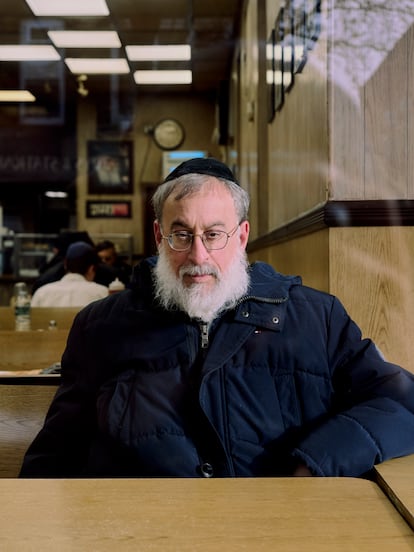
Rabbi Daniel Schonbuch went even further in his criticism of the mayor-elect, during a stroll through the Orthodox Jewish quarter of Crown Heights, in Brooklyn. The walk ended at a synagogue, which is also the headquarters of a global Hasidic movement: Chabad-Jelavich. There, dozens of young men were diligently studying the Torah. “He’s a dangerous person,” Schonbuch claimed, referring to Mamdani. “In college, he founded an anti-Israel, antisemitic, pro-Hamas organization. His policies to defund the police are very serious in a city with tremendous violence. He’s a left-wing extremist, a communist.”
Schonbuch isn’t convinced by the fact that Mamdani has repeatedly condemned acts of antisemitism, moderated his rhetoric regarding the NYPD, or affirmed that he intends to keep Police Commissioner Jessica Tisch, who has managed to lower crime rates (certainly when compared to what they were like decades ago). Another rabbi — the conservative Pesach Woliki — is also unconvinced by these actions. He argues that Mamdani is Shia, and that the mayor-elect’s faith is “the most radical and anti-Western branch of Islam.” Woliki has strong ties to Trump’s MAGA movement.
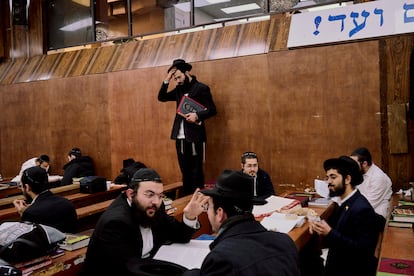
When Schonbuch said goodbye to EL PAÍS — after promising to continue his fight against the new mayor — one of the dozens of young people in the synagogue approached, shaking his head. He said: “The rabbi should stop with this nonsense. Do you know that he’s one of the world’s leading experts on [the psychiatrist and Holocaust survivor] Viktor Frankl? I don’t know why he has to get distracted by politics. Antisemitism will always be there; there’s nothing you can do about it.”
The truth is that Mamdani — who has promised to arrest Israeli Prime Minister Benjamin Netanyahu if he sets foot in New York City — garnered 33% of the Jewish vote in the municipal elections. Schonbuch attributes this to the fact that it was “assimilated Jews” who supported him, “leftists with university degrees.” What seems clear is that it’s not possible to understand the triumph of the city’s first Muslim mayor without considering the change in U.S. public opinion about Israel’s brutal campaign in Gaza — which Mamdani has strongly opposed — nor without recognizing the effect that the repression of the pro-Palestinian encampments at Columbia University had, especially among the younger generations.
A growing Jewish community in Crown Heights is just one example of how Brooklyn — with its 2.7 million inhabitants and its dizzying population shifts — behaves less like a borough of New York and more like a microcosm of the world. It’s a gigantic container of parallel universes. Not far from Rabbi Schonbuch’s domain await the ultra-Orthodox Satmar Jews of Williamsburg. They’re anti-Zionists, and often draw attention at pro-Palestinian demonstrations.
Nearby, in Bed-Stuy, is the Masjid al-Taqwa mosque. The imam — Siraj Wahhaj — became a key figure in the final stretch of the mayoral campaign, when Mamdani met with him. The New York Post – a mouthpiece for Rupert Murdoch’s conservative empire in the city – published one of those headlines with the rare ability to contradict itself: “Mamdani appears smiling, arm-in-arm with unindicted ‘93 [World Trade Center] bombing co-conspirator and terrorist apologist.”
Inside the mosque, while the photographer from EL PAÍS was taking pictures of Moustafa Bayoumi — a Brooklyn College professor of English Literature and one of the intellectual leaders of the Arab and Muslim communities in New York — a volunteer laughed at the mention of those accusations. “Islam is a religion of peace,” he said. Then, a man started shouting: he didn’t like that we had been allowed to take photos.
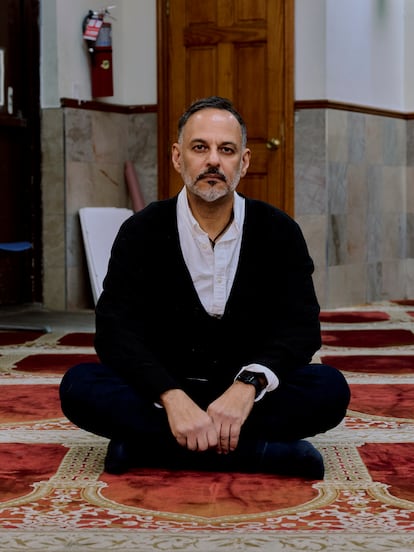
There are now around one million Muslim residents of New York, a population similar to that of the Jewish community. “Twenty-five years ago, we were the scapegoats for 9/11; now, we have one of our own in the mayor’s office,” Bayoumi explained. This will allow people to “speak more freely about the genocide of Palestinians,” while making “life easier for Muslims and those who want to support our cause, without worrying about surveillance,” he said, beneath an NYPD tower, whose camera focuses on the mosque 24 hours a day. “It has also changed the conversation about Gaza,” he added, before celebrating that “this time, it was the young people who convinced their parents [to vote]; not the other way around.”
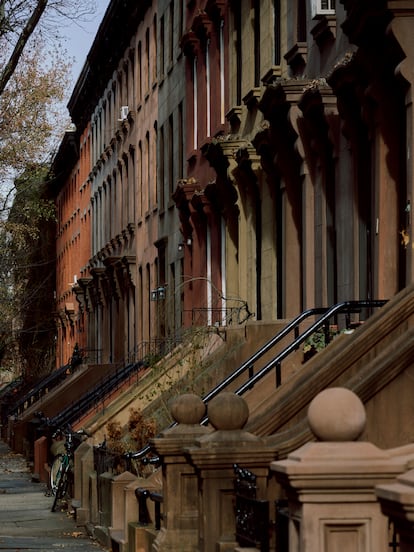
Beyond religion, Brooklyn offers a unique vantage point for observing New York’s transformations. There are few places more evident of this than at the foot of the Williamsburg Bridge, which connects a part of northern Brooklyn to Manhattan. That’s where journalist Paola Ramos met us. “This used to be a Puerto Rican neighborhood. Living here, among tall buildings and low-rise buildings still untouched by gentrification, makes you a living witness to it. Even young people who earn good money struggle to make ends meet,” she told EL PAÍS.
The process began at the turn of the century and has ended up populating the East River with luxurious skyscrapers. The streets are now filled with advertisements that appropriate the language of graffiti to sell luxury handbags, while the area is populated with employees of tech companies, for whom money is never an issue when it comes to paying rent. As a consequence of this gentrification, the city is driving out its inhabitants every day. They’ve been defeated by the impossibility of living in the capital of the world.
Steven Joerg, a jazz producer, lived in Brooklyn for 28 years… but he’s now been in neighboring New Jersey for six. “The rate at which rents increased was astronomical; the neighborhood’s transformation was equally dizzying,” he sighs.
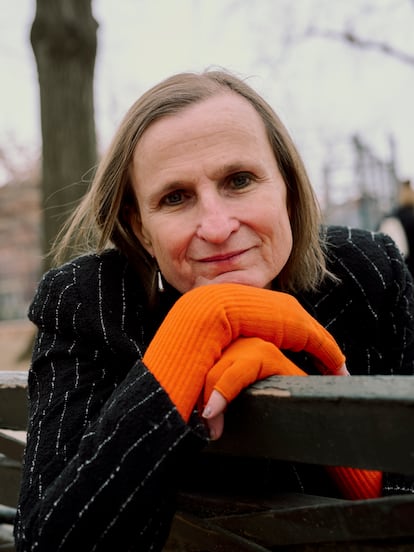

McKenzie Wark hasn’t been pushed out of the city quite yet. When she moved to New York at the beginning of the 21st century, the Australian philosopher landed in Williamsburg (a neighborhood in Brooklyn). Now, after a long stint in Queens, she lives in Bushwick, “six stops further south on the L subway line.”
“If things continue like this, the city will end up throwing me out into the sea,” she joked, when we met her at Hive Mind Books, her partner’s queer-owned independent bookstore. “The problem is that not enough is being built, and the regulations don’t allow for this to change. And wages are stagnant… so, who can afford the city?”
For Wark, the key is finding a formula that allows New York to remain attractive to the driving forces of its economy (“finance, insurance and real estate”) while, at the same time, “continuing to behave — to use neoliberal terminology — as a trendsetting city.”
“Those of us who [the developers] want to expel are generating a culture that the rest of the world copies. If we can’t live here,” she believes, “that part of the formula will be lost. I hope big capital understands that [our absence] can be counterproductive.”
During the pandemic, after completing her transition, the philosopher resumed her habit of going to illegal raves, which proliferated in a quarantined Brooklyn. Later, she wrote a small book titled Raving (2023), which offers a glimpse into those months when the vaccine existed — “and you’d run into people you hadn’t seen in real life for two years” — but the city, which was much slower to reopen than Europe, was still closed. She, too, believes that COVID-19 has changed New York.
Perhaps because of that disappointment, among the different tribes that emerged from the polls in November of 2024 — the opponents to change; the indifferent, given that the system doesn’t care about them; the optimists who took part in the young, multiracial, pro-Palestinian movement that propelled Mamdani to victory, and the skeptics, who might have voted for him but are braced for some form of disillusionment — Wark subscribes to that last group.
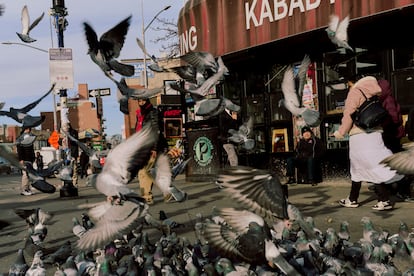
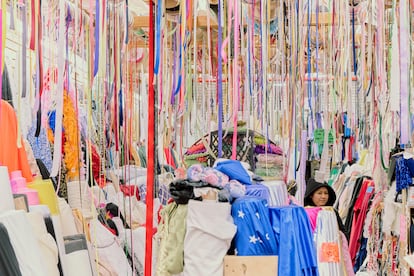
Before Bushwick, Wark lived in Jackson Heights, in Queens. There, you’ll find Diversity Plaza. If it isn’t the most diverse place in the world, it certainly looks like it: there are halal restaurants, Bangladeshi-owned travel agencies, Egyptian jewelry stores, colorful fabric shops and Kabab King, a Pakistani restaurant whose waiters no longer see the mayor-elect as often as they used to.
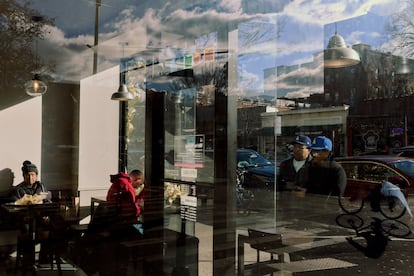
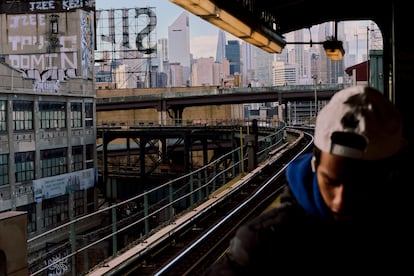
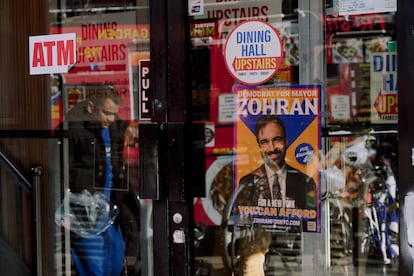
Years ago, acclaimed Indian novelist Kiran Desai bought a house in one of the quieter parts of the neighborhood, in a section that used to be predominantly Colombian. “I like feeling close enough to the action to know that I can always go there for stories, just like I would in India.” Desai first moved to the United States in the late 1980s. In 2006, she won the prestigious Booker Prize for literature. She then spent 20 years “in the seclusion that only New York can offer,” writing her latest novel, The Loneliness of Sonia and Sunny (2025), which The New York Times hailed as one of the best books of the year.
“These streets are some of the most interesting places in the city,” she told EL PAÍS, during a walk through Jackson Heights, where franchises have recently popped up, though she doesn’t quite understand why. “Who would want to eat at Taco Bell, with all the Mexican food spots here?” she wonders.
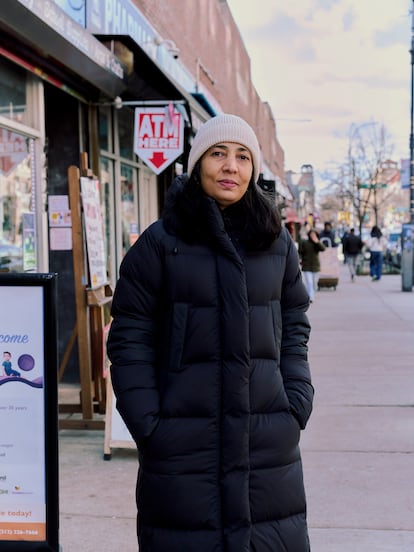
Desai has reason to celebrate that one of her own is going to govern the city where she lives. Not only because Mamdani has Indian roots (which, the writer notes, didn’t prevent many of her compatriots in New York — supporters of right-wing Prime Minister Narendra Modi — from voting for him), but also because (like Trump once was), he’s a resident of Queens.
To clarify, he’s about to stop being one. The politician currently lives in a rent-controlled apartment — one of those whose rents he promised to freeze during his campaign. It’s a one-bedroom apartment in the Astoria neighborhood, across from Manhattan. But as he announced at the beginning of the month, he’ll leave it in January to move across the river. There, Gracie Mansion — the mayor’s official residence — awaits him. He’ll be accompanied by his wife, the Syrian-American illustrator Rama Duwaji. She belongs to Generation Z and doesn’t seem quite comfortable in her new role as first lady.
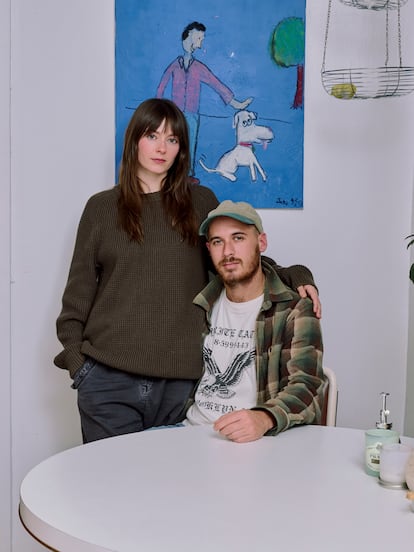
There are just over two million rent-controlled apartments in New York City. And their tenants are like four-leaf clovers: you hear about them, but they’re not so easy to find. Jacob Gottlieb and Emma Cargill joined this exclusive club during the pandemic, which triggered an exodus that left some opportunities for those who stayed in the city. They live in Williamsburg, where they pay $2,000 for two rooms in a building managed by a company that’s always trying to change the rules. “We’re lucky: in this area, an apartment like ours easily costs twice as much,” they point out.
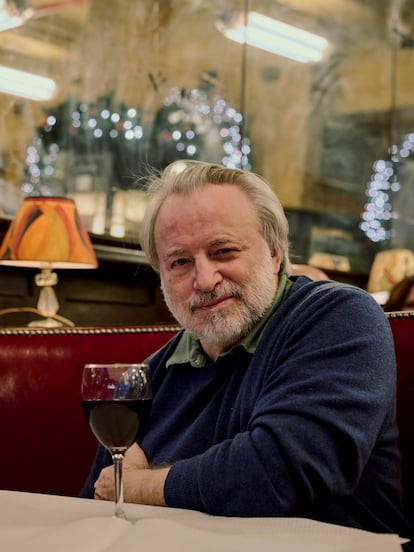
During the campaign, Mamdani also promised free buses and public daycare for children up to the age of five. He said that he would fund these initiatives with a 2% income tax increase on those earning over $1 million annually, as well as through an 11.5% corporate tax increase. This turned the city’s economic elite against him. However, he has also given voice to dissenters within that select group, most notably restaurateur Keith McNally. He’s the owner of Balthazar (where he met us) and Minetta Tavern, among other landmarks of Lower Manhattan’s hospitality scene. “He is only proposing to tax billionaires to help fund affordable housing for the poor,” the businessman explains. “As common sense as it sounds, this has terrified most wealthy New Yorkers.”
So much so that — as was said during the campaign — his proposals could trigger an exodus. The day before the election, a poll predicted that a Mamdani victory would cause nearly 9% of New Yorkers to leave the city, which hosts the most billionaires in the world (123, according to Forbes). This, as is now clear, was an exaggeration. For now, very few people have taken this path, after discovering that simply spending more than 183 days in another state isn’t enough. Leaving NYC requires completely severing ties with the city, and not many are willing to do so after listening to their accountants.
“The threat of an exodus is a classic tactic, wielded against every mayor, but it never actually happens,” Gianluca Galletto, a veteran of local politics and advisor to Mayor Bill de Blasio (2014-2023), warned us during a lively conversation at the end of the day at Ear’s Inn, a bustling bar that one of its regulars described as “one of the few remaining sanctuaries for lost souls in Manhattan.”
“The exodus we should fear most is that of the middle class, either because they can no longer afford the high cost of living or because crime is on the rise,” Galletto said. Like half the city, he scrutinized the list of the 400 residents Mamdani recruited to his transition team, tasked with tackling the city’s problems according to their areas of expertise, and he is closely following the appointments to his administration, such as that of Police Chief Tisch. “It’s smart to keep her; she comes from one of the city’s best families,” according to Galletto.
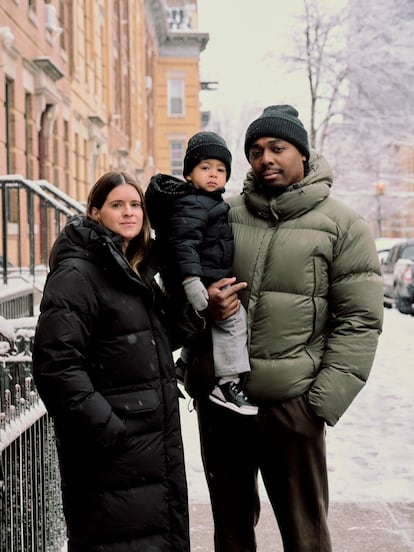
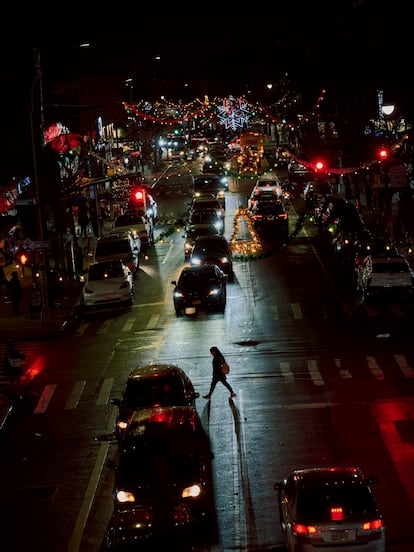
New York City’s budget amounts to approximately $150 billion. The promise of universal childcare is valued at around $6 billion in a city where raising a child costs about $26,000 per year. Jamal and Ashley — the parents of two-year-old Jace — are hoping that 2026 will bring them some relief from the financial burden of parenting, as they await the arrival of their second child. Despite both of them working, they had to forgo the expense of hiring a nanny. “In this city, childcare can cost between $3,000 and $5,000 a month,” Jamal notes. Meanwhile, Juan — a bus driver on the M-4 line — isn’t so sure the free bus experiment will be successful, though he estimates that “up to 80% of passengers don’t pay” the fare on certain routes.
Devin Garcia — a barista at Little Flower, the new mayor’s favorite coffee shop in Astoria — told us the day we visited the cafe that Mamdani’s decision to move to Gracie Mansion has put some of his neighbors on edge. Could this be the first sign that success will corrupt the man who won them over with his charisma and his message of solidarity with the working class?
One must remember that this is the city of Robert Moses, the idealistic young man turned despotic bureaucrat who outlasted mayors, governors and presidents to forge modern New York. He built bridges, thousands of small neighborhood parks, the United Nations building, Lincoln Center, the 1964 World’s Fair site, and the scale model of the city that can be visited in Flushing Meadows (Queens). Along the way, however, he displaced half a million people and planted the seeds of many of the problems that still plague New York.
Moses is also the protagonist of Power Broker (1974), Robert Caro’s masterpiece. At over 1,200 pages, it’s both a fable that details the difficulty of governing the city, as well as a warning about New York’s formidable corrupting influence.
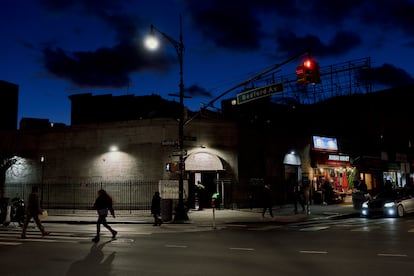
The final stop on our journey was a return to the Bronx corner where it all began. The mayor-elect launched his campaign at a crossroads on Fordham Road, a commercial artery in the city’s poorest borough. Here, life unfolds with an intensity reminiscent of a major Latin American metropolis, even amidst a December cold snap.
Last year, the then-unknown candidate — already sporting his signature suit and tie — stood on the corner with a microphone, a few days after the Democrats’ defeat in the 2024 presidential election. He asked Bronx passersby — most of them Hispanics — why they had embraced Trump. Few spoke to him. However, a year later — when he had become an international superstar — he returned to the neighborhood to discover that many more people wanted to stop and talk to him. At the polls, he won the Bronx with a similar percentage of the vote to the one that won him the entire city.
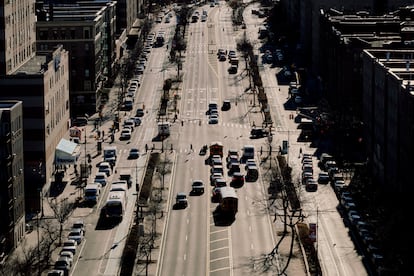

We stood in front of Gyro King, which has been selling kebabs, hot dogs, and pizzas ever since it was opened in the mid-1970s by a Greek immigrant named Chris Menexas. The 83-year-old still works every day: he’s scared of retiring. He says he fears that he’ll die if he stops.
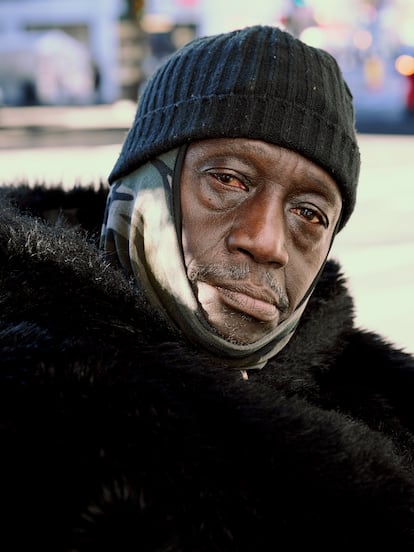
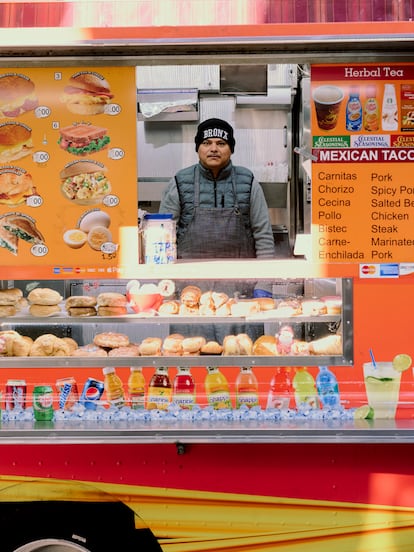
Nearby were Rosa and Julio, two undocumented fruit vendors praying that the authorities wouldn’t shut down their stand. Yaloh Sowo, from Guinea, was selling winter hats from a street stall. And, a little further on, Luis and Jessica Sánchez were tending to their Mexican food truck, while passersby took refuge in one of the cafes that bank branches have recently started opening.
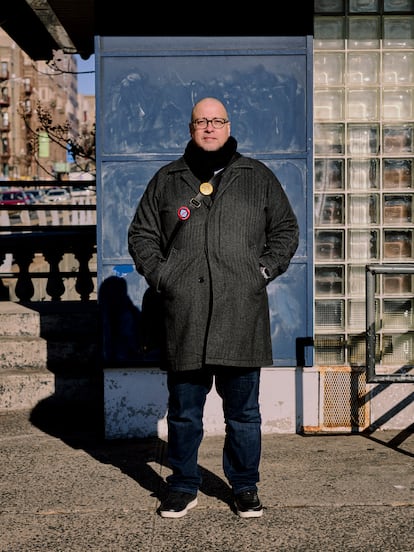
Amid the hustle and bustle, Gustavo Rivera — a Democratic state senator, who has represented the Bronx in Albany for 15 years — was handing out pamphlets (in four languages) to inform residents about their rights in New York, regardless of their immigration status. He also offered whistles and instructions on how to use them: three short blasts alert people that ICE agents are nearby, while one long blast means that they’re arresting someone. “We also tell them that, starting January 1, they’ll have someone at City Hall who’s ready to defend them,” said the politician.
Rivera, who explains that he didn’t want to join Mamdani’s team because he believes he can help him better in Albany—“beyond good ideas, the success of many of his policies will depend on the state assembly”—has no doubt that Donald Trump will end up deploying the National Guard on the streets that were so vibrant on that frigid December morning.
If he’s right, it remains to be seen how far the new mayor is willing to go, the same mayor who, on the day of his victory, told the president that this city “will continue to be a city of immigrants, built by immigrants and driven by immigrants.” It also remains to be seen whether the new year will be remembered as the one in which its residents were forced to resist. And 2026, as New York’s moment; Mamdani’s time.
Sign up for our weekly newsletter to get more English-language news coverage from EL PAÍS USA Edition









































