
The legacy of Spain’s Doñana national park belongs to all of us
This unique and vital wetland faces grave threats from agricultural and urban development
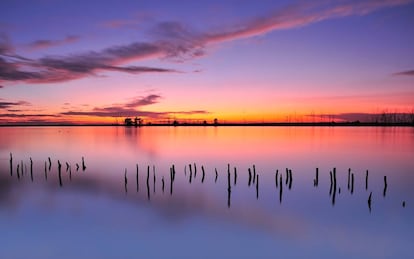
In 1963, when I was just five years old, my father, a lifelong lover of birds and other nature, helped newly formed conservation organization WWF acquire a plot of land in southern Spain. This extraordinarily rich wetland, then known as the Coto de Doña Ana, was slated for drainage, which would have been catastrophic.
Now, 53 years later, Doñana is Spain’s most famous national park, and its complex of marshes, lagoons and sand dunes is afforded an array of international projections as a World Heritage site, Ramsar wetland of international importance, UNESCO biosphere reserve, and European Natura 2000 site.
We must unite to find sustainable solutions that preserve Donana’s natural, social and economic values
This global recognition is well deserved. A staggering six million migratory birds stop over in Doñana each year on their epic travels back and forth between Africa and Europe. Wild horses still roam, and endangered Iberian lynx prowl for prey.
While Doñana’s sweeping vistas still inspire awe, troubling threats are looming at its borders. The amount of water coming in from rivers and underground sources has been reduced by 80%. This obviously essential element to any healthy wetland is being siphoned off illegally. And the little remaining water is at risk of contamination from nearby mining, underground gas storage, and industrial river dredging.
Today, Doñana’s predicament is perilous for the 200,000 people who live near the park and rely on it as an economic engine. Yields are down for family-run fishing boats, and artisanal farmers are struggling against unlicensed competition.
Without restoration, Doñana soon could be inscribed on UNESCO’s List of World Heritage in Danger. To prevent this harrowing prospect, we must unite to find sustainable solutions that preserve Doñana’s natural, social and economic values.
The legacy of Doñana belongs to all of us. It is my hope that it will survive as source of inspiration, pride and prosperity for Spain, Europe and the world.
André Hoffmann is vice president of WWF International.









































