
Police go back to work in Argentina as death toll from lootings rises to 12
Fernández de Kirchner government believes unrest was a "destabilization" ploy
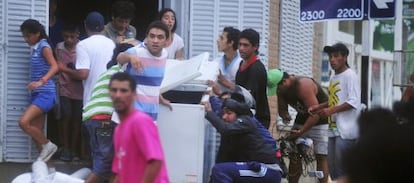
The death toll from deadly lootings and violent protests that have swept across Argentina over the past week rose to 12 on Wednesday. The unrest was ignited when local police officers went on strike simultaneously in a number of provinces.
The most volatile disturbances were reported in Córdoba - located 700 kilometers from the capital - where the lootings and riots began on the night of December 3. The violence quickly spread to other cities, forcing the government of President Cristina Fernández de Kirchner to dispatch the Gendarmerie national police force to areas where officers held protests and the lootings took place.
The latest fatality occurred in Tucumán province, where a 30-year-old man was gunned down early Wednesday morning by neighbors who were trying to protect their properties, authorities said. He was the fourth victim to die in the province since the strike began.
In Resistencia, Chaco province, four people died on Monday night in different incidents.
Police cannot go on strike because thieves never go on strike"
Outside Buenos Aires, a Chinese national was reportedly killed as he tried to defend his business from looters, who burned the establishment down. Before dawn Monday, one looter was electrocuted as he tried to break into a business in Concordia, Entre Ríos province.
The government believes it is not a coincidence that the violence has taken place on the eve of the 30th anniversary celebrations to observe the restoration of democracy, which took place as scheduled at the Plaza de Mayo in downtown Buenos Aires.
Cabinet chief Jorge Capitanich claimed the lootings were an attempt to "destabilize" the country, and said there were similarities in the way police called the strikes in the different provinces, suggesting that the officers helped organize the unrest. Only four of Argentina's 23 provinces reported no violence.
"Police cannot go on strike because thieves never go on strike," said Córdoba governor Juan Manuel De la Sota at a news conference, where he was accompanied by Capitanich.
The striking officers began to walk off their jobs on December 3 to demand better pay from the provincial governments. By Tuesday, all but four provinces had reached salary agreements with their officers.
Opposition leaders and media outlets critical of the Fernández de Kirchner government have begun to suggest that there is a "deterioration of morals" around the country, with an attitude that "anything goes."
Córdoba Senator Norma Morandini of the opposition Civic Front Alliance believes that the lootings are the result of the national government's political failures.
"Just as we celebrate 30 years of peaceful democracy - far from a brutal repressive dictatorship - it is very sad that citizens believe that only the police can instill rule of law," Morandini, a former journalist who used to work in Spain, told EL PAÍS.









































