
A Spider-Man for every person and generation
The Marvel franchise is a goldmine of popular culture. The superhero triumphs on both the big and small screen, in video games and, of course, in comics. The latest installment in the saga is here

Spider-Man is always present. The philosopher Grafton Tanner coined the term “foreverism” to refer to phenomena like the Star Wars saga (which never ceases to explore its own intricacies), or those veteran rock bands that never stop reuniting and never quite break up.
These are cultural expressions that have transcended their era. They remain relevant, generation after generation, making nostalgia impossible (and business always possible). Such is the case with Spider-Man: the industry surrounding this character continually offers products for people of all ages and backgrounds. He’s still, quite literally, a kid at heart. And to demonstrate his enduring appeal, the latest installment in the franchise, Spider-Man: Brand New Day (2026), is premiering between July 29 and July 31 around the world.
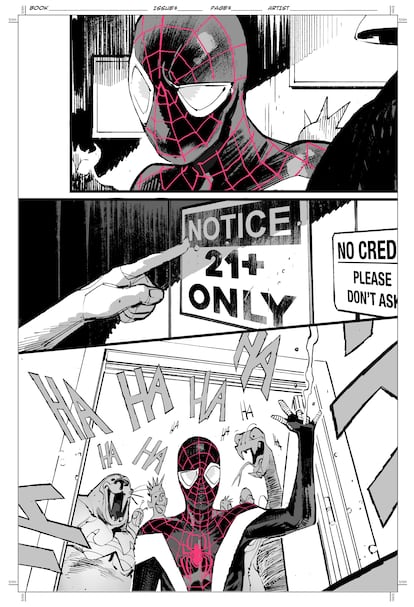
“What’s interesting is that he’s a character who feels timeless,” says Julián M. Clemente, author of the seminal book Untold Tales Of Spider-Man (2015), published in Spanish by Panini Comics. “If you’re a kid from the 1970s or 1980s, if you grew up with the cartoons from the 1960s, you’ll see him as someone who’s always been around. But a kid carrying a Spider-Man backpack today sees him as something very current. He’s managed to metamorphose; he doesn’t seem outdated to the new generations.”
The infinite comic book
An X-ray of the superhero helps contextualize his unstoppable success. Spider-Man was created by Stan Lee and Steve Ditko in issue #15 of Amazing Fantasy, published in the United States in August of 1962. It told the story of young Peter Parker, who, after being bitten by a radioactive spider (it was the era of nuclear fervor and terror), acquired strange powers that were inspired by the abilities of these arachnids.
One of the novelties of the character was that he was an adolescent with limited social skills. And, with the comic books featuring a teenage protagonist (who wasn’t merely the sidekick to an adult hero), many readers were able to identify with him.

The Spider-Man franchise just kept getting bigger and bigger. The 1980s and 1990s saw numerous milestones, including the black suit, the appearance of Venom, as well as the 1994 animated series. And, in the 21st century, he would be embodied by another character who wasn’t Peter Parker (something previously unthinkable): in 2011, after Peter Parker’s death in a branch of the Marvel Universe, writer Brian Michael Bendis and artist Sara Pichelli created Miles Morales, a young man of color. Half African-American and half Puerto Rican, he resonated with the era’s focus on diversity.
Later, in 2014, writer Dan Slott came up with a wild idea: the Spider-Verse comic book series, which also focused on diversity. Spider-Men of all kinds emerged, from a Spider-Punk to the futuristic Spider-Man 2099. One version was inspired by cowboys of the Wild West, while another was inspired by 1930s film noir. There was even a Spider-Ham (Peter Porker)!
“These [were] fresh ideas that worked out really well; they led to a series of highly-original animated films. [The many versions] demonstrated the character’s resilience, allowing him to reach another generation,” Clemente explains.
While there’s a wide variety of Spider-Man stories aimed at younger audiences, there are also options for those in middle age: Dan Slott’s Renew Your Vows series focuses on a 40-something-year-old Peter Parker’s married life with Mary Jane Watson. In that parallel universe, they have two children together, a situation also found in Jonathan Hickman’s recent Ultimate Spider-Man comic book series. “[This scenario] really connects with the audience that came to Spider-Man in the ’80s and ’90s,” Clemente points out. Going even further, Spider-Man: Reign shows an older, gray-haired Peter Parker, who’s around the age of 70. His eternal love, Mary Jane, has already died. He now lives under the rule of an authoritarian regime, in an atmosphere of darkness that seems inspired by Frank Miller’s aged Batman in The Dark Knight Returns.
A spider on screen

“Spider-Man’s audiovisual situation has always been peculiar. The film rights still belong to Sony, even though Marvel Studios has managed to integrate the character into its universe, thanks to agreements between the two companies,” says Jorge Iván, co-director of the Celsius 232 comic book festival in Avilés, Spain.
The truth is that Spider-Man is, by a long shot, the superhero who has best conquered cinema. While Superman certainly paved the way for major adaptations — and even though Batman influenced several generations — the wall-crawler is the character who has been consistently successful for more than two decades.
Sam Raimi’s 2002 film, Spider-Man, was a turning point for modern superhero cinema: it demonstrated that a comic book hero could become a global phenomenon, paving the way for the genre’s explosion in the following years. Since then, few characters have amassed so many cinematic versions: Tobey Maguire, Andrew Garfield and Tom Holland have all portrayed Peter Parker at different stages in his life, culminating in Spider-Man: No Way Home (2021), an event that brought all three generations together on screen and became one of the franchise’s biggest hits. Together, these films have grossed over $7 billion. And, in addition to that figure, we can add the animated saga that began with Spider-Man: Into the Spider-Verse (2018), considered by many to be one of the best superhero movies ever made, with its revolutionary visual style and a story that turned Miles Morales into yet another icon of the franchise.
“Spiderman has managed to adapt to each generation, without losing his essence. In recent years, the biggest success has been Miles Morales, born in the Ultimate Universe (an imprint created by Marvel Comics) and firmly established through the Spider-Verse films,” Iván explains. He maintains that this so-called “Spider-Verse” is the most interesting aspect of the Spider-Man franchise today. “Its success lies in the fact that it presents complex storylines, while respecting both veteran fans and new generations.”
The truth is that Spider-Man’s dominance in film goes far beyond the character’s movies. For years now, Sony, which owns the film rights to the character, has tried to build a parallel universe, starring some of the villains and supporting characters (without including the hero himself). The result has been mixed: productions like Morbius (2022), Madame Web (2024) and Kraven the Hunter (2024) have received a lukewarm reception from critics and audiences alike. However, there is one major exception: Venom, the oil-like symbiote that bonds with people and grants them powers similar to Spiderman’s. The version starring Tom Hardy resonated with audiences, thanks to its more irreverent tone. It was so popular that it became a highly-successful trilogy.
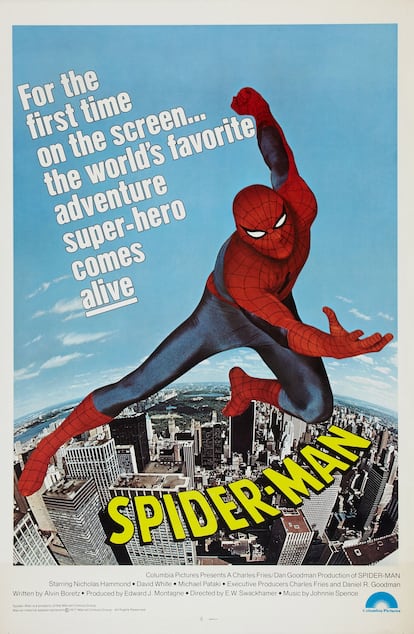
And then, of course, there are the numerous TV series. From the 1977 live-action series to the recent Spider-Noir (starring Nicolas Cage and featuring a film noir aesthetic), the hero has appeared in numerous television productions for audiences of all ages. In fact, in recent years, the children’s series have become a global phenomenon, such as Spidey and His Amazing Friends, a show for young viewers that breaks ratings records and fuels a vast merchandising ecosystem.
Web-swinging through New York
Spider-Man’s capacity for reinvention is also evident in another of the most successful facets of the Marvel Universe: video games, where the superhero stars in some of the industry’s most ambitious productions.
After decades of adaptations (of varying quality), the character found his definitive consecration with the saga developed by Insomniac Games for PlayStation. Since 2018, Marvel’s Spider-Man (2018), Marvel’s Spider-Man: Miles Morales (2020) and Marvel’s Spider-Man 2 (2023) have put together a spectacular web-swinging system through New York City, with visually stunning combat scenarios and a narrative on par with the best films. Their commercial success (analysts indicate that these three games have grossed over $3 billion) has made the franchise one of PlayStation’s cornerstones, further bolstered by budgets worthy of a cinematic blockbuster (close to $250 million were spent in the case of the second installment).
Few characters can boast of performing equally well across such diverse types of media. Spider-Man demonstrates that his popularity transcends formats, generations and technologies. So, with all this dominance across popular culture, what, then, is the superhero’s great secret?
“Spiderman triumphs because the true protagonist isn’t the superhero: [in fact], it’s Peter Parker. There [have been] many superheroes, but people became fans of the person beneath the mask,” Jorge Iván concludes. “He’s a profoundly human character: he’s constantly worried that his Aunt May will discover his identity, he has precarious jobs and he barely makes ends meet. Unlike other heroes, his everyday problems are just as important as the villains [he faces]: if he gets fired, he doesn’t have money for food.”
Ultimately, deep down, he’s not a hero. He is, as the wall-crawler reminds us, just “your friendly neighborhood Spider-Man.”
Sign up for our weekly newsletter to get more English-language news coverage from EL PAÍS USA Edition









































