
Spider-Noir: A Spider-Man with Nicolas Cage’s face that is ‘70% Humphrey Bogart and 30% Bugs Bunny’
The actor, a longtime fan of superheroes, finally gets to play one who is simultaneously a detective in 1930s New York
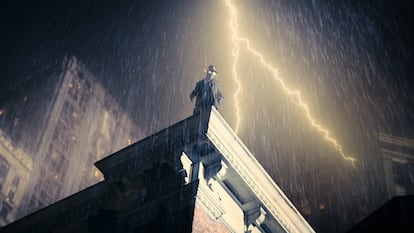

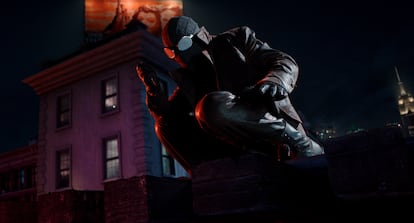
Nicolas Cage always wanted to be a superhero. Not surprisingly, his stage name (his real surname is Coppola, since he is the nephew of the director) comes from Marvel’s strongman Luke Cage. As if that weren’t comic-bookish enough, his son is named Kal-El (like Superman). His collection of 400 classic comics included the first Action Comics, which he bought for $150,000, someone stole at a party and which later got sold for $15 million. Hollywood’s most singular superstar still couldn’t be Tim Burton’s Superman, and although he settled for the skull-faced Ghost Rider, at age 62 Cage finally gets the chance to play another great: the new television Spider-Man. There is, however, a twist in his Spider-Noir: this wall-crawler is also a detective in 1930s New York.
“From the start I worked with Nic to give a version of Spider-Man that had never been seen before. He wanted to understand how what turned him into a spider-man had seeped into his DNA, and now he’s fighting to become human again,” says screenwriter Oren Uziel, who adapts for the small screen his curious take known as The Spider, a character that Cage already voiced in the animated Spider-Verse films. “We were creating another interpretation. I knew he was a comic-book fan, but I discovered he also has an encyclopedic knowledge of noir films. He would tell me: ‘Today I’m going to be Bogart from The Big Sleep’ or ‘today it’s Peter Lorre or Edward G. Robinson,’" recalls the creator of this adventure, which Amazon Prime Video premieres this Wednesday and whose ingredients were ideal for Cage to do a series for the first time in his career.
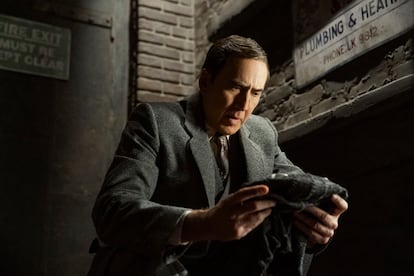
Uziel joined the project not out of superhero fandom but because producers Phil Lord and Christopher Miller, who worked with him on 21 Jump Street, knew of his fondness for detective films and their tropes. Talking to EL PAÍS by videoconference, he cites direct references and makes nods to Sunset Boulevard and Double Indemnity by Billy Wilder; The Third Man, In a Lonely Place and neo-noirs like Chinatown, L.A. Confidential, Red Rock West and Kill Me Again. He even mentions Howard Hawks’s classic The Dawn Patrol for the residue of screwball humor and fast dialogue they bring, elements also present across the eight episodes, amid trench coats, mobsters, corrupt politicians, traumas and dark alleys.
This Marvel series is so distinctive that it is being released in both Authentic Black & White and True-Hue Full Color (in a palette of colors increasingly rare to find in series and films). “At first I would have said my favorite is the first, but we have devoted a lot of time to the color one. It’s vibrant, saturated, different from the comfort zone we usually operate in today. We wanted to move away from the natural and easy, and make it magical. I think that makes them very different experiences: black and white gives a more melancholic series, closer to mystery, and the color version is vibrant, playful and Dick Tracy–like fun,” he says.
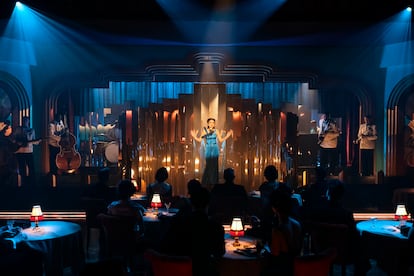
For Uziel, in fact, his protagonist contains a bit of both: 70% Humphrey Bogart and 30% Bugs Bunny. This Spider-Man is a character who has already seen his worst days and now hides under the name Ben Reilly, the clone of Peter Parker in the Marvel comics. “He’s his own invention, a kind of Rick from Casablanca. He’s trying to hide the classic qualities of Spider-Man; he pretends that tragedy and injustice don’t bother him. He doesn’t want responsibility and so he hides his power. He says he won’t help anyone or put himself in danger, but you see he can’t resist. It’s a sham; his nature is to do good. In this immoral world, he is the moral center. That is always Spider-Man," he explains about the parameters that make this hero special.
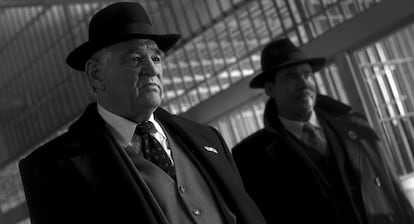
The references are not only internal: the plots also include multiple nods to Spider-Man’s rich universe. There are villains like Sandman, Tombstone and the mobster Silvermane (played by Brendan Gleeson), and supporting characters such as reporter Robbie Robertson (Lamorne Morris) or Cat Hardy, who in the comics is the Black Cat and here is the Asian singer and femme fatale at one of the genre’s typical nightclubs.
Because, despite superheroes not being at their peak in film and television, Spider-Man remains an unrivaled draw in entertainment. Besides this adaptation and a third Spider-Verse film that will include Nicolas Cage among a host of web-slingers, Tom Holland’s Spider-Man returns to theaters in July to write a new chapter of success in the ill-fated life of this unlucky superhero. And if that weren’t enough, the animated Spidey and His Amazing Friends remains one of the most successful series among Disney+’s young audience. “I think it still works because it’s easy to identify with him and very human, even in this version we’ve never seen. He’s aged and fallen a few times, he’s tired of getting up and has become a little cynical, something that happens to all of us. But someone like him always bounces back,” the screenwriter says of the highest-grossing superhero in history.
What ultimately makes this Spider-Man different is Cage himself, always unique in his performances, and Uziel has witnessed it firsthand: “We all know he can go all out, but he also achieves subtlety in quiet moments. He has that star charisma—you either have it or you don’t. He pushes you to go to the edge, and when he does, we always keep his take. You have to trust him.” Perhaps Nicolas Cage is, in reality, a superhero who doesn’t need a mask, capable of making a strange experiment like Spider-Noir, which had every reason to fail, actually work.
Sign up for our weekly newsletter to get more English-language news coverage from EL PAÍS USA Edition









































