
Frida Escobedo: ‘The accessibility of a museum is also about who feels represented’
The Mexican architect is the first woman commissioned to design a wing of the Metropolitan Museum of Art in New York, scheduled to open in 2030
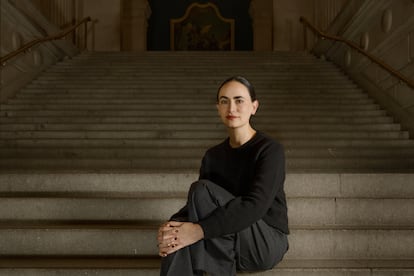
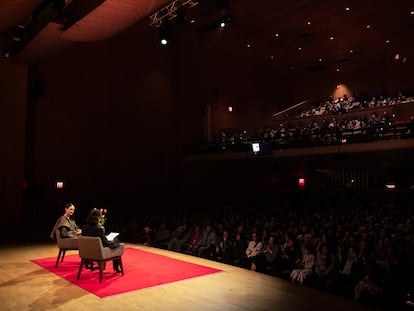
On New York’s Fifth Avenue, Mexican architect Frida Escobedo spoke in her own language. It was a big deal. In a full auditorium at the Metropolitan Museum of Art, an institution that for decades has embodied an idea of universality, Spanish became the vehicle for an intimate reflection on architecture, identity, and belonging.
Entitled Our New York: The Architecture of Frida Escobedo, the talk took place on Friday, April 24, at the Grace Rainey Rogers auditorium. There, the architect in charge of designing the Tang Wing for modern and contemporary art at the MET, shared the stage with Mexican architect and university professor Laura González Fierro in a conversation that touched upon both the professional and the personal. Escobedo is not only responsible for one of the museum’s most ambitious projects, she is also the first woman to design a wing in the history of the institution.
“Yes, that’s very exciting,” she tells EL PAÍS. “The whole talk was a little bit about human language and how it is important to connect, to identify ourselves, to express ourselves, and to transmit our heritage.” The choice of language was not accidental. “It has been complicated for me, speaking in English, to be able to transmit the emotions that have to do with this. So, for the first time, I kind of feel that I can connect more directly with an audience.”
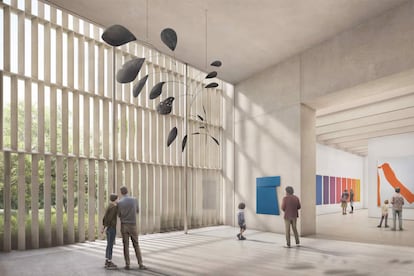
This ties in with her approach to architecture. Escobedo understands the museum to be not only an exhibitor of works, but also as a space of representation. “The accessibility of a museum is not only about whether admission is free at some point of the day... but also about who feels represented,” she explains. In this sense, her proposal for the Tang Wing seeks to articulate a conversation between geographies, histories, and sensibilities. “How do we incorporate a past that belongs to me as a Latin American, in a place that represents the geography, history, culture of the world?”
When she received the news that she had been selected for the project, her reaction was one of disbelief. “I couldn’t believe it. It was a huge surprise,” she recalls. Aside from breaking the glass ceiling, it was also a generational breakthrough: Escobedo, who is now 47, was the youngest architect in the race. “A person from the MET reminded me that other architects had come up with their first museum at my age. So first, I didn’t feel so young anymore, and second, it was like, there has to be someone at some point in your life who trusts you for the first time, and I was that lucky,” she reflects.
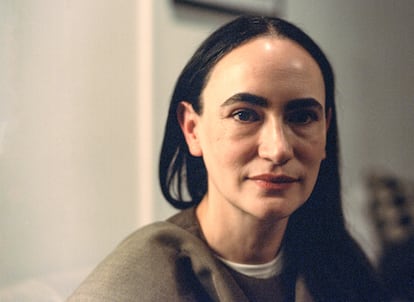
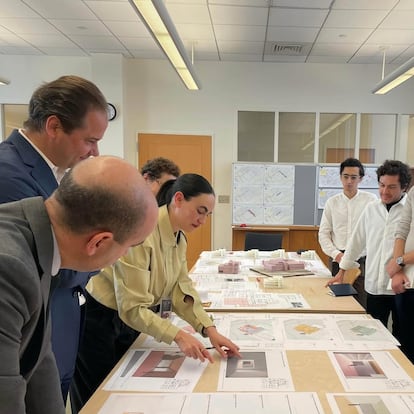
The idea of the collective is recurrent in Escobedo’s discourse. “It’s not the design of a single person, it’s a very large group,” she says when describing the process. She compares the type of architecture she likes to a broth: “This is a very sophisticated broth... There has to be a good base, but it allows for a lot of interaction.” In other words, each voice contributes without the project losing its essence, “rather it is improved. It is the result of many efforts and the plural voice is read in that process.”
Still under development and scheduled to open in 2030, the Tang Wing aspires to provoke a double experience in the visitor: namely, both surprise and contemplation. “Above all, we want them to rediscover the connection,” says Escobedo. “The collection of modern and contemporary art that the MET has is extraordinary, and the intention is that they find a place that has the right conditions, such as the scale, lighting and relationships necessary to showcase that.”
There is also an urban dimension: the relationship with Central Park. “It’s a bit like emerging from this experience of being immersed in art and finding yourself with other people and in such a cosmopolitan city.”
Escobedo herself has found a refuge from the relentless pace of the city in the park. “New York can be quite brutal... it never stops, except when you’re in the park,” she says. There, between seasons that mark the passage of time, the architect finds an environment that allows for a pause that also seems to be reflected in her way of conceiving spaces.
There is in Escobedo’s story a constant awareness of living an extraordinary moment. “This is bigger than me,” she says, explaining that on the one hand, she is “very aware that many generations of women had to come before me who headed up offices, who paved the way, who broke through so that I could be here, and I thank them for that, and I feel incredibly privileged and lucky.” On the other hand, because she is part of a team: “We are 15 people working on this project and for me that is the central core. That is what grounds me because the design is also theirs.”
When asked about the future, Escobedo responds with a mixture of humor and honesty: “A sabbatical,” she says. However, she is also leading the renovation of the iconic Pompidou Center in Paris, a project entitled Centre Pompidou 2030, which aims to give a fresh feel to the famous high-tech building originally designed by Renzo Piano and Richard Rogers and adapt it to new cultural needs.
At a time when artificial intelligence is redefining multiple disciplines, Escobedo’s stance is pragmatic. “It can be used as a tool,” she acknowledges, especially to solve technical aspects. However, she drew a clear line: “I very much doubt that it can replace human capabilities. The human perspective will continue to be needed.” And she anticipates a return to the essential: “There will surely be pendulum reactions meaning we will also return to the most human, and that always becomes valuable again.”
Sign up for our weekly newsletter to get more English-language news coverage from EL PAÍS USA Edition









































