
Was pasta a Chinese invention or Italian ingenuity?
A new book by Antonio Campins reflects on the origins of humanity through noodles, spaghetti, and gyozas
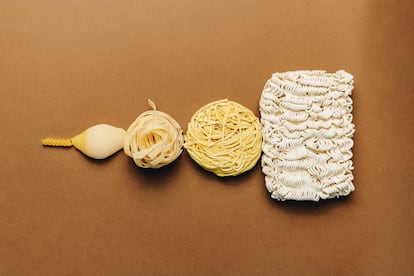
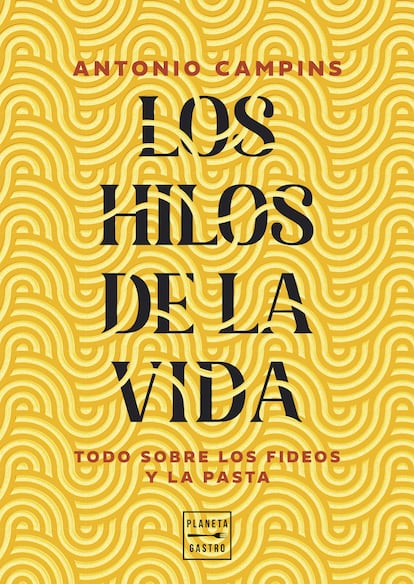
Could we tell the story of humanity by following the trail of a noodle forgotten 4,000 years ago? Could we define the character and life of a country simply by looking at the array of different types of pasta they produce? If we pulled on the thread of a noodle, would we be able to travel the globe and understand what unites the cuisines of the world? When you read Antonio Campins’ latest book, Los hilos de la vida (The Threads of Life), you discover that only by pursuing the artifice of a dough can you understand who we are and where we come from.
The book is a concise, encyclopedic manual where you discover the differences between bulgur, couscous, and quinoa; or how many dishes around the world have been inspired by a Chinese baozi; or that the most delicate and crispy noodle is of Palestinian origin, although it is also made in Syria, Jordan, Israel, Greece, Turkey, and Lebanon, and is called kataif; or that in Japan, people who really like noodles are called menkui. And those who like to savor a sip of sake before enjoying a plate of soba noodles are called sobamae.
“I have always believed that what unites two cultures most, however different they may be, is their own cuisine, and therefore, I don’t know of anything that unites different societies as much as a plate of spaghetti, ramen, or gyozas,” explains Campins.
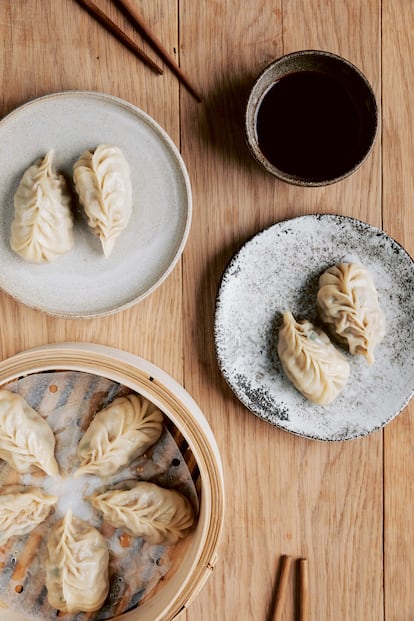
The Threads of Life poses the dilemma: who invented pasta? While the book states that “an upside-down, sealed ceramic bowl containing thin, yellow noodles was unearthed during an archaeological excavation in Lajia, northwest China, and later dated to around 4,000 years old,” Campins confesses: “Honestly, we don’t know how it originated, because who’s to say that some kind of pasta wasn’t made in ancient Mesopotamia?” He adds: “The truth is, if we had to find a noodle that united the cultures of, say, America, Asia, and Europe, it wouldn’t be Italian spaghetti, but rather Asian instant noodles.”
Massimo Motanari, author of Il mito delle origini. Breve storia degli spaghetti al pomodoro (The Myth of Origins. A Brief History of Spaghetti with Tomato Sauce) argues that “it is not the origins that matter, but the causes, the transformation of a seed [...] The more numerous and interesting the encounters, the richer the results will be [...] In this way, it will have built its own identity, which, like every product of history, is alive and changing.”
This book begins with an investigation of a simple dish of spaghetti with tomato sauce to analyze the history, culture, and identity of the country. “In Italy, there are hundreds of variations and thousands of recipes [...] Each shape, each preparation, has its own story, tells of particular experiences and tastes, and has more or less strong ties to local produce or market offerings.”
When you read both books, you get the feeling that China, with its over 1,000 ways of preparing dough, started this story, and Italy popularized it through its 1,300 different types of pasta (as published by Oretta Zanini da Vita in the book The Encyclopedia of Pasta).
From there, the passion and fascination with pasta have found a place over time in different books such as The History of Pasta and How to Cook It! by Steven Guarnaccia. A beautifully illustrated edition, aimed at the youngest members of the family, that is full of curiosities and anecdotes about pasta in Italy.
Or Tutti a tavola! A Journey Through Fresh Homemade Pasta by Teresa Martínez Gil, an educational book that not only showcases some of Italy’s most famous pastas but also teaches the reader how to make, cook, and enjoy them at home.
But if you want to discover what noodles and pasta are like in Asia, it’s a good idea to delve into the pages of Dumplings and Other Dim Sum by Karin Lei, where you’ll find beautiful illustrations showing you how to prepare Chinese dumplings like xiao long bao, har gow, or jade cabbage, for example.
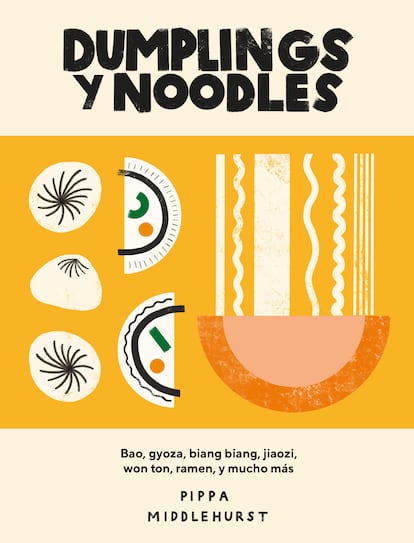
Or, you can continue following the thread of a noodle to understand how gastronomy has evolved around the world and end up opening the pages of Dumplings and Noodles, in which the author, Pippa Middlehurst, not only reveals the craftsmanship involved in making the dough and provides recipes for cooking them, but also introduces you to the science of noodles.
Sign up for our weekly newsletter to get more English-language news coverage from EL PAÍS USA Edition









































