
ICE expands use of iris scanners in its operations through a multi-million-dollar contract
According to NPR, the agency will have nationwide access to a private database containing more than five million biometric records
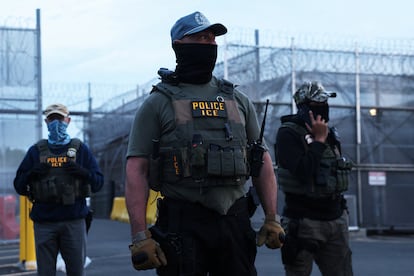

Amid growing concerns about surveillance and privacy in the Trump administration’s immigration policy, U.S. Immigration and Customs Enforcement (ICE) is significantly expanding its biometric identification infrastructure. According to NPR, the agency entered into an agreement with BI2 Technologies—a company specializing in biometric technology—that includes the deployment of iris scanners, access to private databases, and real-time verification tools for field agents.
The no-bid contract, valued at approximately $25 million, represents a major expansion of a previous agreement signed in 2025. According to the contract documents, ICE will receive more than 1,500 iris-scanning devices, as well as continuous access to biometric systems designed for the rapid identification of individuals during immigration enforcement and detention operations.
The system relies on iris recognition technology, a method that identifies individuals based on unique patterns in their eyes, which are considered as distinctive as fingerprints. In addition to the hardware, the contract includes access to mobile platforms and databases operated by BI2.
The contract documents also indicate that access will be virtually unlimited. ICE will be able to perform bulk searches and download records. The system will run on mobile and desktop platforms compatible with Microsoft, Apple, and Android.
Similarly, the agreement stipulates that the devices must be distributed to ICE facilities nationwide within a short period, with thousands of units ready for deployment in the field. It also specifies that the supplier must ensure the system remains operational throughout the 12-month contract period.
BI2 Technologies, a Massachusetts-based company, is responsible for developing the IRIS (Inmate Identification and Recognition System) and the MORIS (Mobile Offender Recognition and Identification System) platform. These tools enable both verification at fixed facilities and mobile identification using portable devices. Under this agreement, federal agents will be able to verify identities in the field in real time—even if individuals do not have official documents—by cross-referencing the information with the company’s private biometric network.
Although authorities maintain that the goal is to streamline the identification of individuals during immigration enforcement operations, the expansion of the system has raised concerns among privacy and civil rights experts. One of the main concerns centers on the scope of access to sensitive data and the lack of external oversight mechanisms.
The contract does not require prior federal security certification under the FedRAMP standard (Federal Risk and Authorization Management Program, which standardizes security assessment, authorization, and continuous monitoring for cloud services), nor does it provide for mandatory independent audits prior to implementation. Nor does it specify a review process by Congress or external entities regarding the use of the technology or the management of the biometric database.
Despite this, the agreement includes restrictions on the use of the information. BI2 may not reuse data from queries made by ICE or share it with third parties, and is required to delete processed images after they have been used for identification purposes. Security requirements are also established for the handling of personal and sensitive data, including encryption, access control, and compatibility with federal authentication systems.
The system also introduces continuous monitoring capabilities, including the ability to generate automatic alerts based on patterns defined by the agency, which could transform the use of biometrics into a surveillance mechanism broader than simple identity verification.
The deployment of this technology is not entirely new in the U.S. law enforcement arena. For years, local police forces and sheriffs have used similar systems to identify individuals in jails and during arrests. However, the scale and level of integration of the new contract represent a significant leap in the federal use of biometrics applied to immigration.
Sign up for our weekly newsletter to get more English-language news coverage from EL PAÍS USA Edition









































