
Literature that crosses the line: Cocaine in books
Since the mid-19th century, the drug has been a cultural constant, and today, reveals ego addiction in a world under the influence
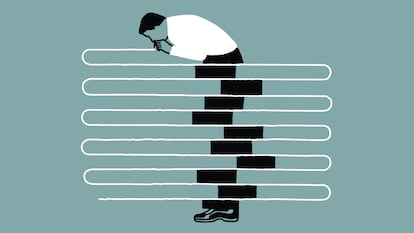
In the first four pages of Roberto Saviano’s ZeroZeroZero (Penguin Books, 2013), an account of how cocaine rules the global economy from the criminal underworld, colonizing nearly every sphere of human existence, the author recites a very long list of people who might be doing the drug. They come from all walks of life: a teacher, your favorite writer, your neighbor, your department head, your oncologist, a family member — anyone, really. To top it off, Saviano writes, “But if, after you think about it, you’re still convinced none of these people could possibly snort cocaine, you’re either blind or you’re lying. Or the one who uses it is you.”
You won’t forget those four pages, because they’re telling the truth.
That truth may be approached from different angles — financial, therapeutic, political — to understand how cocaine affects decision-making in small, private lives and in presidential offices. There’s the issue of the euphoria and the wounds the drug may be amplifying, what empires it sustains, how many heads are cut off in its name every year. And then there is the cultural perspective, of cocaine entering and exiting books, starring in them, embellishing them, stimulating, exhausting, and deforming the minds of the writers who pen them and the readers who read them. The following lines speak to this angle.
Cocaine culture
Since well before Bret Easton Ellis and his 1990s classic American Psycho, the ritual associated with snorting cocaine has constituted a fantastical visual synthesis of unrestrained capitalism. It involves a substance that looks like a pharmaceutical, placed on a surface in the form of graphic lines with the help of a credit card. We inhale through a rolled-up dollar bill. Bridging the gap between bestseller and literature (think what you will about those categories), Ellis’ novel, which was published in 1991, has with time become a most popular portrait of a cruel and materialist way of inhabiting the world, that of the ruling class of speculative capitalism. In its pages, violence takes the shape of gore, yes, but also that of a banal conversation, a grotesque outpouring of luxury brands (clothes, household electronics, cars) and most certainly, stunted communication. The friends of its protagonist Patrick Bateman call him “a good guy.” Then, he does a gram, looks at himself in the mirror, and commits murder in his high-end apartment. In American Psycho, cocaine is a source of fascination and revulsion in equal measures (although probably the best novel on the subject from the same generation is Jay McInerney’s 1984 Bright Lights, Big City).
In recent times, coke has become a more explicit and more normalized subject of conversation. While it might be said that only cocaine fans find jokes about cocaine funny (“Prince Harry stuck his grandmother up his nose when he did blow with a 50-pound note, ha ha ha”), certainly there are many who find it amusing when a politician is fingered as acting over-stimulated, or when an entertainer partakes on public television primetime. Almost everyone is wary of sounding too frivolous when speaking about the subject, yet at the same time, almost everyone is loathe to sound too moralistic or judgmental. The bottom line is that public discourse has embraced cocaine wholeheartedly, often as an easy joke or in festive complicity, and in other moments as a component of an arc of redemption.
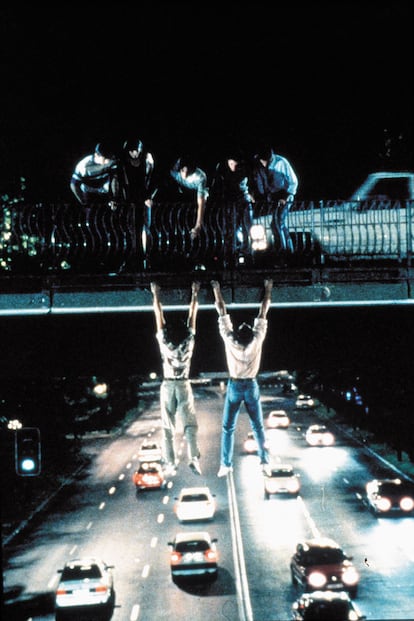
It is in this context that David López Canales’ Spanish-language book ¿Una rayita? (Want a line?; Anagrama, 2025) must be read. The slim volume does a good job of explaining cocaine’s journey from drug of the elite to democratization, represented by an economic situation in the author’s home country that is likely unique: for the last four decades in Spain, a gram has retailed at around $70. López Canales places two interlinked debates on the table: one, whether addiction treatment must be based on total abstinence or whether it can involve harm reduction; and another, that of the possibility of legalization. Though he seems to lean towards this latter option, the author is not a hardliner and limits himself to highlighting the importance of putting up for debate, reminding the reader that our current situation is linked to lavish expense and a complete lack of control over health standards (one might well wonder if any of López Canales’ country people have tried pure cocaine). One thing is certain: judging by the recurring behavior of the human species throughout history, cocaine will probably be with us for a long time to come, and prohibitionist policies may contain, but never eliminate it.
Since the mid-19th century, cocaine has occupied a particular position in culture. To mention a few of most canonical, even clichéd examples of its ubiquity: Arthur Conan Doyle and Sherlock Holmes were familiar with its charms. Sigmund Freud consumed, prescribed and elaborated on it in several works, including On Cocaine. The German poet Gottfried Benn, one of the most somber voices of the interwar period, addressed the subject directly when he thanked cocaine for “the dissolution of ego, that sweet, deeply longed-for state, this is what you give me.” Here too are the nightmares of early Stephen King, which certainly would have been different were it not for his own enthusiastic consumption.
In the 20th century, literature traced cocaine’s path from a marginal world to the world of the upper class, and finally to a common feature at weddings, baptisms and communions. Readers can explore the 1934 Novel with Cocaine by enigmatic M. Aguéiev to discover the underground world of gambling and sex work through which the writer circulated for decades. Or London, one of the unpublished works by Céline discovered in the summer of 2021, a work that produces sweet and nauseous yearning for proletarian bar sawdust, in which thugs and sex workers snort cocaine like crazed animals to resist life and delay for one more day the betrayals and atrocities which they will inevitably receive and hand out to one another.
Then came the 1980s with the moral ambiance of yuppie luxury portrayed by Martin Scorsese in The Wolf of Wall Street and by Spanish director José Ángel Mañas in 1994 with Stories of the Kronen. The latter is but a minor contribution when compared to Cocaine Nights, a novel by one of the greatest minds of the end of the century, J.G. Ballard, in whose pages cocaine and the Mediterranean tourist landscape combine to prophesy a society both psychopathic and dissatisfied by design — ours, of course.
In 2007, the Mexican writer Julián Herbert put out Cocaína (manual de usario) (Cocaine: user’s manual), a collection of short stories that continue to figure among the best that have been written on the subject in Spanish, intelligent and ambiguous texts rife with the cynicism in which addicts tend to cloak themselves, peering into their customary void, sharing that sweaty enthusiasm and overactive jaw that characterize the moment of the high. Suddenly, literature was no longer pretending to be sober.
From then on, little by little, we arrive at the present day, when drugs often appear as a familiar note of thirty-something authors like Aixa de la Cruz and Rocío Collins, whose tales mix cocaine with speed and other synthetic drugs. These substances are no longer a provocation or a theme unto themselves, but merely one symptom among many of the need to escape, of anxiety. It is easy to recognize the companionable trips to the bathroom in the verses of “Arnau”, the narrative poem in Catalan by Adrià Targa (also a thirty-something), whose voice is lucid enough to tell of another truth: “What they have sold you is not cocaine/It is Yorick’s crumbled skull”. And Daniel Jiménez titled his first novel in 2016, on post-crisis precariousness and disenchantment, Cocaine. In short, coke is everywhere. One author even credited his dealer in the acknowledgments of his most recent book.
Addiction as the fuel of capitalism
But beyond this library of resources, it may be worth noting that cocaine is only part of, or a metonymy for, a broader truth: that the world is under the influence, and it has been for a long time. I say “world” to refer to contemporary human beings, both individually and collectively.
In The Age of Addiction (Belknap Press, 2021), historian David T. Courtwright identifies the advance of civilization with the increase of pleasure (sublime or mundane, from music to inebriation), which has been the object of desire for our species since forever, and also the conversion of those desires into needs and in the worst cases, addiction. To Courtwright, the economic system we call “capitalism” (in reality, more of a phenomenal atmosphere of shared/imposed common senses developed over centuries, states and structural mutations) requires stimulating the formation of repeat, compulsive buyers who return again and again to the same products. Hence his term “limbic capitalism”: industries, governments and mafias manipulate the neural system of potential customers, the part of the brain that manages emotions and immediate reactions.
“The internet supercharged limbic capitalism,” writes the author. “But it did not invent it.” That’s true, but its perfecting of the formula thanks to social media — that “cognitive cocaine” as Johann Hari calls it in Stolen Focus: Why You Can’t Pay Attention (Crown, 2022) — is among the biggest problems of our times, a problem knowingly induced by tech companies, and at the root of extreme sociopolitical polarization and conditions our ability to face the future.
In any case, in reading Courtwright, a certain intuition takes shape: it is not only that the contemporary world is under the influence, but that it is being directed by a profound logic of addiction linked to the compulsive behavior of the addict, with the ups and downs of the waves of cravings, those irrepressible desires that take over the brain completely and which cannot be resisted.
It is not merely a question of how many legal or illegal drugs we consume, though we certainly consume a great deal. Nor, the fact that Elon Musk and other world business leaders are more-or-less open consumers of amphetamines and ketamine. What I mean is that the underlying basis of our relationships with our environment, information and emotions responds to a compulsive dynamic. I am sure that Oihan Iturbide, Courtwright’s Spanish publisher, will agree with me: it is no coincidence that three years ago he founded the Yonki (Junkie in Spanish) Books imprint, which specializes in books that study different aspects of drugs. The very existence of the publishing house is a striking cultural symptom. In another book from that same imprint, Insaciable (Insatiable, 2025), the neuroscientist and recovering drug addict Judith Grisel refers to the lives of addicts in terms that could just as well be used to explain the cultural cycles of the last 30 years (with their comings and goings from polyamory to spirituality, from revolution to conservatism, without ever establishing anything solid) or the long hours of scrolling in our bedrooms in the early hours of the morning: “gloomy cells of repetition.”
Addiction to sex, work, one’s mobile phone, Diazepam, gambling, angry ideologies — the dimensions of the issue are many, but some have greater metaphoric power than others, and among the illegal addictions, there are two that have special charisma. Marijuana is the drug of degrowth, deceleration and the left. Cocaine, whose popularity has reached impressive heights, presents the characteristics of accelerationism and neoliberal ambition. Left-wing drugs and right-wing drugs, they might be caricatured. Once again, we are not talking about their consumers, but rather their symbolic packaging, about the cultures with which we associate them. Because each drug generates its own mythology: poppers and MDMA and ecstasy are festive, while crystal meth and heroin are seen as suicidal.
Here too, this growing normalization signals various factors: that cocaine is highly present, that we’ve lost our fear of it, and that its disruptive moment is long gone.
Redemption and its enemies
This would explain why what has become the real cliché, as opposed to cocaine consumption, is the story of overcoming addiction. The goal seems to be that no celebrity should miss their chance to tell us about their rehabilitation, a new trend that is somewhat comforting (as Iturbide recalls in his weekly newsletters, the stigma of the junkie persists, so hearing respectable voices place therapeutic processes at the heart of normalization is both desirable and important), but at other times, it hints at a new escalation of public confession and scrutiny, held up as a hegemonic source of authority and personal branding.
And as anyone who has gone through therapy for an addiction quickly finds out, the key to recovery lies in resetting one’s own identity, which in addicts tends to become colonized by drugs and is forever confused with one’s natural state. Cocaine momentarily intensifies the sensation of identity, but at the cost of disintegration. The self moves from dopaminergic expansion to existential fracture in a chemical illusion of coherence that is ultimately unsustainable.
Of course, the initial effect of cocaine is euphoria, pleasure, one big party. If that were not so, how would the drug have achieved its success? Still, you probably don’t know anyone who has become a better person thanks to blow, and in the long run, the drug contributes to a hysteric egoism well-known by psychiatrists and which singer Joaquín Sabina sums up in a verse from his song 19 días y 500 noches (19 days and 500 nights): “Gente sin alma que pierde la calma con la cocaína (Soulless people who loss their calm with cocaine”). No wonder that Robert Louis Stevenson wrote The Strange Case of Dr Jekyll and Mr Hyde while using cocaine. In fact, the moral bifurcation of that book’s protagonist is similar to the anguish that takes hold of an addict. Though Stevenson didn’t write a “cocaine novel,” he did bring the book to life in the cultural and medical climate of the Victorian era, the age of stimulants and moral conviction suspended between duty and pleasure.
Above all, the story of Jekyll and Hyde raises a question that pertains to the nature of self, individual identity and the responsibility we have for our own actions. Anyone who has experienced sitting in a circle at group therapy, surrounded by other addicts, will know that patients confront a fascinating dilemma. They must decide who they are, which acts define them, which do not, and confront the emptiness, insecurities, fears and fragilities that the white powder can obscure. In a cultural context of the hyperinflation of the ego, responses must imply the adoption of limits, imposing the requirement of knowing that we are not so great, that we do not encompass so much, and that we cannot have as much as we might like. This is the true lesson that stands in opposition to compulsive cocaine use and, beyond it, any type of addictive behavior, power, networks, fame and disloyalty. Perhaps the truly addictive substance of the present, and for our species, is the self.
Sign up for our weekly newsletter to get more English-language news coverage from EL PAÍS USA Edition









































