
Peter Gelb, general manager of The Met: ‘An opera house can play a role in making people’s lives better’
The prestigious artistic director reflects on the cultural impact of Trump’s policies and discusses his staunch support for Ukraine
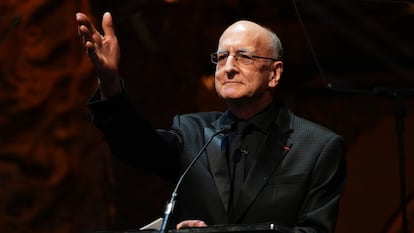

Peter Gelb, 72, has been linked to the Metropolitan Opera since he was a child. That was when he attended a performance of George Bizet’s Carmen — starring Grace Bumbry — with his parents: New York Times editor Arthur Gelb and writer Barbara Gelb.
When he was still a teenager, his first job was at the Met, working as an usher. He then trained as an artist’s agent, relaunching the career of legendary pianist Vladimir Horowitz. By the 1980s, he was an executive producer for CAMI Video, putting out the famous opera television broadcasts from the New York opera house, which were directed by Brian Large. These broadcasts were later reissued on DVD by Deutsche Grammophon.
In 2006, Gelb was appointed as the general manager of the Metropolitan Opera, after leading the record label Sony Classical as president for 11 years. He has just renewed his contract until 2027: he has no intention of leaving.
“I feel ready to continue beyond that date if the board of the Met wants me to,” he says with a warm smile during a video call.
The leading opera director in the United States spoke with EL PAÍS from Sardinia, Italy, where he was spending a few days on vacation after a brief visit to Kyiv with his wife, conductor Keri-Lynn Wilson.
EL PAÍS chatted with Gelb about his support for Ukraine against Russian aggression, the renewal of the Metropolitan Opera under his leadership, the distribution of its productions to theaters around the world and the challenges of private financing. He also discussed the impact of Donald Trump’s policies on American culture.
Question. How was your recent trip to Ukraine?
Answer. This was only my second time to Ukraine since the invasion. The people who live in Kyiv have a very fatalistic attitude now about the nightly bombings, which they call ‘Russian roulette,’ because they don’t know who’s going to get killed. It’s the equivalent of the Blitz. Putin and Hitler have a lot in common.
Q. You were one of the first cultural leaders to take a stand in favor of Ukraine after the 2022 invasion. What work have you done since then?
A. What I’m trying to do is make the Ukrainian people feel that they’re not isolated, that they’re our friends. Ukraine is the last frontier of democracy right now.
In Ukraine, my wife is regarded as a cultural hero. She’s been there at least seven or eight times since the invasion. She has two Ukrainian ensembles. Inside Ukraine, she conducts the Kyiv Camerata, which is a chamber orchestra of about 25 to 27 musicians. Together with her and the general director of the Polish National Opera, we created the Ukrainian Freedom Orchestra in 2022, made up of the country’s top musicians
We also commissioned an opera titled The Mothers of Kherson by the Ukrainian composer Maxim Kolomiets, who is living in exile right. It’s about the brave mothers who traveled thousands of miles to rescue their children, who have been kidnapped by the Russians.
The opera is not yet finished, but during the international tour in August, the orchestra will premiere a suite from it and perform Beethoven’s Fifth Symphony, which was precisely a symbol of resistance and hope during the Blitz.
Q. What do you think about Russian conductor Valery Gergiev’s controversial return to the West, on July 27, to conduct a concert at an Italian festival? His appearance was subsequently canceled…
A. I think it’s absolutely terrifying and disgusting to see that people can allow something like this to happen. I spent my whole life having cultural exchange, ever since I took the Boston Symphony to China in 1979.
And certainly doesn’t conform with the Italian government’s position, which is to support Ukraine. He’s a great conductor. But he sacrificed his conducting to become Putin’s leading cultural representative.
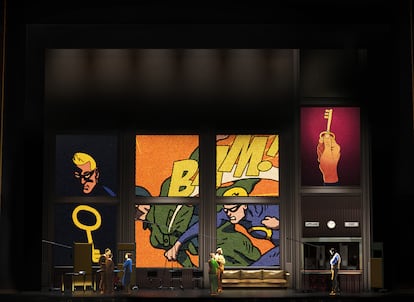
Q. Let’s talk about opera. The Met’s upcoming season in New York will open with the world premiere of Mason Bates’s The Amazing Adventures of Kavalier & Clay, based on the novel of the same name by Michael Chabon. It’s another operatic adaptation of a literary success, a trend that has been fostered in recent years. We’ve already seen this in Europe with Francesco Filidei’s The Name of the Rose.
A. I think it’s a question of going back to an old trend. Verdi and Puccini told stories that made sense to the public and captured their imagination. That’s what cinema and theater have done, but I feel that opera became stale as an art form in the second-half of the 20th century. I think the people who ran opera companies made a great mistake by not realizing that opera needs to take the kind of creative risks that are necessary to move an art form forward, so that it can continue to exist.
There’s always room for the great classics, such as works by Mozart and Wagner and Verdi, since some of their stories seem to have even greater meaning today. You feel this when you see an opera like Tosca and you realize it’s about fascism, or a new opera like The Amazing Adventures of Kavalier & Clay, which is about the birth of a comic book hero in New York called the Escapist, who fought against Hitler.
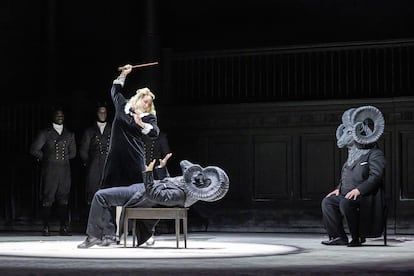
Q. One of the hallmarks of your administration has been the inclusion of innovative stage proposals, such as the dark psychological reading of Richard Strauss’s Salomé, which was directed by Claus Guth last season. This is something that was rare until your arrival.
A. We cannot live in the past. We have to live in the present and imagine the future. I was very proud of this production, which also marked Guth’s debut at the Metropolitan Opera. I think he did an amazing job with it. It stimulated and excited the audience.
It’s so important that, when you’re running a performing arts company, you never forget the bond with the public The greatest success — and this doesn’t happen all the time — is when the public is surprised and excited by what they see.
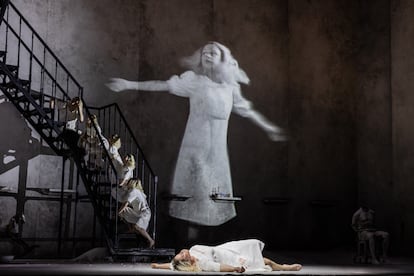
Q. What role should an opera house play today?
A. At a time when people are frightened and worried about the future of the world, art can step in, step up. An opera house like the Met can play a role in making people’s lives better. Through our cinema transmissions or radio broadcasts, we really are able to connect the world in a way that, I think, lifts people’s spirits. That’s why, when I took the position in 2006, I launched The Met: Live in HD, which broadcasts operas live to cinemas around the world.
Q. This has allowed audiences to follow major productions and see footage of the Met Opera.
A. As soon as the pandemic began, I felt that the Met had a public duty and a responsibility. We immediately started transmitting a free nightly stream of an opera every single night.
We even created what we called our At-Home Gala: we connected opera singers who were all in lockdown in their various apartments and houses around the world. I produced this from my home using Skype.
However, after the pandemic, entertainment habits have changed, and fewer people go to cinemas. Our audience globally is about 55% of what it was before the pandemic. We still have a significant audience. We reached countries across eleven time zones, but whereas we used to have over 400,000 viewers per broadcast, now we have around 200,000.
Q. Are Donald Trump’s policies affecting the Opera in any way?
A. The performing arts companies in the United States have always relied upon philanthropy. We don’t get government funding. But there’s no question that, in recent months, people are more afraid to come to New York, to come to the United States. And that is affecting us, just as it has Broadway. We have to somehow convince tourists to come back, by persuading them that New York isn’t the rest of America. We’ll also have to rely upon getting more of our local audience to come to the opera.
Q. And isn’t economic uncertainty reducing donations?
A. The richest people in America aren’t interested in the arts. They’re interested in important things, like Bill Gates eradicating disease, or in social justice. But we need to convince them that an artistic company like the Met is part of the social justice system. That’s my job, to persuade them.
Q. Have there been artists who have refused to perform at the New York Opera House because of Trump’s policies? For example, some European soloists — such as violinist Christian Tetzlaff and pianist András Schiff — have refused to perform in American concert halls.
A. So far, nobody has said they won’t come to the Met. I think this is partly because the Metropolitan Opera distinguishes itself in the American political landscape as a beacon of democracy. People know that it represents artistic freedom and freedom of expression.
Sign up for our weekly newsletter to get more English-language news coverage from EL PAÍS USA Edition









































