
Graydon Carter, the man who knows Hollywood best: ‘Seeing the Kardashians on a magazine cover is the end of civilization’
The former editor of ‘Vanity Fair’ reflects on the future of magazines, his clashes with Donald Trump, how social media has changed celebrity culture, and the rise of tech tycoons, in a rare break from his busy schedule following the release of his memoirs
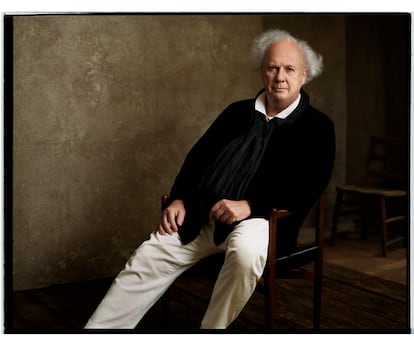

Getting an interview with Graydon Carter, 76, is almost as difficult as gaining access to the rich and powerful he has surrounded himself with since he began working as a journalist in the 1970s. Last March, the former editor of the U.S. edition of Vanity Fair published his memoir, When the Going Was Good: An Editor’s Adventures During the Last Golden Age of Magazines, and has since been immersed in a marathon of promotional interviews.
After five months, his team finally finds a slot in his schedule, in the middle of August, for an interview with EL PAÍS: 30 minutes via video call. Carter is 20 minutes late, but he has a good excuse. “Sorry, my wife was finishing cutting my hair,” he explains from his apartment in Greenwich Village, New York, where actress Bette Midler is his neighbor. “You’re the first person to see me with my new cut,” he adds, showing his signature white hair.
Carter has been living in southern France since leaving his post at Vanity Fair in 2017, but he enjoys spending part of the summer between his Manhattan apartment and his home in Connecticut. “When everyone leaves the city, I come,” he notes.
He has always liked going against the current. He left university before graduating and, in 1978, moved from Ottawa to New York to work at Time magazine. Writing for one of the world’s most prestigious publications wasn’t enough for him, and five years later he moved to Life, another sacred temple of journalism. But that, too, failed to meet his expectations, and he eventually founded his own magazine, Spy, a satirical monthly covering the lives of New York high society during the Reagan era. Spy was an instant success, but Carter left it after a few years to revive The New York Observer. Another success.
From there, he went on to lead Vanity Fair, one of the two crown jewels of the Condé Nast publishing group (the other being Vogue). During his 25 years at the helm, he elevated the magazine to the status of a global arbiter of style and trends, a beacon of American pop culture, and a powerhouse of exclusives. Revealing the identity of Deep Throat, which brought down Richard Nixon; the reemergence — and redemption — of Monica Lewinsky after the Bill Clinton scandal; Tom Cruise and Katie Holmes’ first photoshoot with their daughter Suri; Jennifer Aniston’s first interview after her split from Brad Pitt; and Caitlyn Jenner’s introduction as a transgender woman are among his most high-profile scoops.
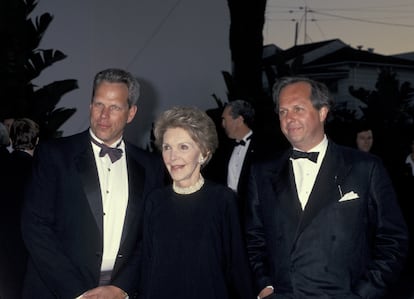
During his tenure at Vanity Fair, he also turned the magazine’s Oscars party into Hollywood’s most important social event. The rich and famous tried to bribe him just to get an invitation. “A Saudi prince even offered us a quarter of a million dollars,” he recalls.
In 2017, on the eve of a reorganization at Condé Nast, he decided to step down. His idea of retirement, however, was to create yet another success: in 2019, he launched the newsletter Air Mail, a kind of weekly digital magazine focused on trends and lifestyle, which now boasts over half a million subscribers in more than 200 countries. It is a turbulent time for the publishing industry, but Graydon Carter still knows how to captivate readers.
Question. Your book is a tribute to the golden age of print media. Who is to blame for the death of magazines? The internet, social media, or traditional media?
Answer. A little bit of all of them. It was a combination of factors, a natural progression of events. In 2007, the internet began to overshadow the print media. Then the financial crisis of 2008 came, and when that happened, many large companies pulled their advertising from the media. That really hurt magazines. Here in New York, there used to be a newsstand on every block. Sometimes there were even two. They gradually began to disappear, and now they no longer exist. You can walk for miles and you won’t find a single newsstand.
Q. Can magazines survive?
A. They’ll live on, but not as we know them. They won’t be like Time or Life anymore. They’ll be large, well-produced publications, expensive titles, more like books than magazines. On 8th Avenue in New York, there’s a big newsstand with titles from all over the world. Most of them are like books, with lots of photography, and they seem to do very well with young people. I think the magazine business is healthier in Europe than in America. In the U.K. and France, I still see a lot of them. So I don’t see the end of an era.
Q. You were one of the first journalists to take note of Donald Trump, when he was just a real estate mogul. In the 1980s, you wrote a hilarious profile of him in GQ magazine, titled The Towering Ambition of Donald Trump. You could say he’s your oldest enemy. Now he’s president of the United States, and you’re no longer editor of Vanity Fair. What’s wrong with the world?
A. In 1984, I spent three weeks with Trump to write that story. We’ve had an on-again, off-again relationship for more than 40 years. If someone had told me then that he was going to be president, I would have thought, “This person is crazy.” What Trump has done is far worse, more inhumane, and more corrupt than I could have ever imagined. I don’t think anyone could have foreseen the presidency he’s created.
Q. You are perhaps Trump’s longest relationship.
A. [Laughs] Yes. Although I’m glad to know there are other people in his sights now. When I was on Twitter, Trump used to write about me regularly. He’d say the magazine was doing badly, my restaurants weren’t doing well [Carter co-owns The Waverly Inn and Monkey Bar in New York], that my Oscar party was terrible. Now he has people doing that for him. He’s outsourced the work of writing badly about journalists.
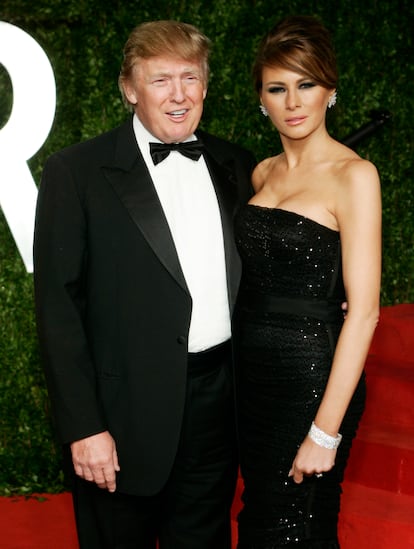
Q. In that GQ story, you noticed a curious detail: Trump has small hands and short fingers. Could that explain his behavior?
A. [Laughs] He must hate me forever for that. If you look at Trump cartoons, he always has a giant body and small hands. He likes everything to be big. In New York, there’s Manhattan, and then there are the suburbs: Queens, Brooklyn, Staten Island, and the Bronx. Going from Queens to Manhattan is a very difficult journey. People from Manhattan think people from Queens are kind of ordinary, rude, and not very intelligent. Trump came from Queens and was always very ostentatious and bossy. Most successful New Yorkers I know don’t brag about their accomplishments. Trump brags about everything.
Q. Now he wants to build a ballroom in the White House almost as big as the White House.
A. A new ballroom, a new Boeing 747 gifted by the Qataris... His style isn’t very different from Saddam Hussein’s or Putin’s. It’s the style of a chic dictatorship.
Q. Many prominent figures have left the United States since Trump’s rise. You, who are Canadian but also American, have moved to the south of France. Are you ashamed of being American?
A. Many of us who live in Greenwich Village wear a pin that says, “I didn’t vote for him.” Most sensible Americans realize that we get strange looks from outside. When I travel, I can say I’m Canadian. I travel around Europe with my Canadian passport. We feel the same way we did when George W. Bush invaded Iraq. We’re getting used to this, and that’s not good.
Q. Who would you like to see on the cover of a magazine today?
A. It’s very difficult because all the famous people have social media these days and are on it all day long. There’s very little mystery left. Right now, the most interesting and controversial personality would be [actress] Sydney Sweeney. If I were running Vanity Fair, I think she’d make a great cover girl. Glen Powell is a real movie star and appeals to both Republicans and Democrats, and to both men and women. I can see him being a political candidate in the future, like Reagan. But I recognize that doing your job is getting harder, 10 times harder than it was 20 years ago.
Q. Competing with social media isn’t easy.
A. Famous people are no longer interesting. The celebrity industry is going through a period of depression.
Q. Why are you no longer as interested in Hollywood stars as you used to be?
A. Because they put everything on social media. Besides, Hollywood is going through tough times and has its own problems: fires, writers’ and actors’ strikes... I have a daughter who lives there and has a wonderful life, but opportunities are becoming increasingly scarce. However, people still go to the movies and watch television, and someone has to create content for that audience.
Q. What was the hardest story to get at Vanity Fair?
A. The report in which we revealed Deep Throat’s identity. It was a mystery for decades, and we worked on that story for two years.
Q. And who has been the most difficult celebrity to deal with?
A. For my team, the most difficult celebrity was Hugh Grant. I know he plays the charming guy, but they hated working with him.
Q. You banned Harvey Weinstein from your parties long before the #MeToo movement began. Do you think the movement changed anything in Hollywood?
A. Yes, and for the better. He was one of the worst of the worst, and he got what he deserved. A lot of good things came out of that. Women are treated differently in Hollywood now. There’s more quality. It used to be a white, male-dominated business, and now it’s not necessarily that way.
Q. But now there’s talk of the end of the “woke” era. Do you agree?
A. Voters believe we’ve gone too far. The ideal would be somewhere in the middle, where I think the majority of us are. I’d like to believe the majority of us are in the center.
Q. You never wanted to see a Kardashian on the cover of Vanity Fair. Why?
A. For me, seeing the Kardashians on a magazine cover is the end of civilization as we know it. I’ve never given them a cover, never invited them to our parties, and never featured any of them in the pages of Vanity Fair. They represent a certain kind of fame and wealth that doesn’t work for me. I’m obviously in the minority on this issue.
Q. But you did give a cover to Caitlyn Jenner, the Kardashians’ stepmother. How do you explain Jenner being a Trump supporter?
A. That was pretty upsetting. It was a surprise that she endorsed Trump. I always tried to make the cover subjects have lasting values and be good for the culture. Seventy percent of the time we’re right and 30% of the time we’re wrong. But I still think Caitlyn Jenner’s cover was important. It was the first time a trans woman with her fame was on the cover of a magazine of the caliber of Vanity Fair. Bruce Jenner was like Pelé, he was huge when I was young. And he wasn’t a Kardashian.
Caitlyn Jenner poses for Annie Leibovitz on the cover of Vanity Fair #CallMeCaitlyn http://t.co/NRyh6R09RR pic.twitter.com/GO1ZgJJKBR
— VANITY FAIR (@VanityFair) June 1, 2015
Q. One of your last Vanity Fair covers featured Meghan Markle, just as she was beginning her romance with Prince Harry. Did the Duke and Duchess of Sussex make a mistake by breaking from the royal family?
A. Of course they made a mistake. Trying to live on your own at their pace of life is hard, especially in a place like Hollywood. They don’t have much of a say and aren’t particularly talented at what they do. Their children don’t have any relatives; they don’t see anyone from her side of the family or his. They’re isolated. I don’t know if you’ve ever been to Montecito, California: it’s beautiful... and lonely. You don’t see the other houses, and there are very few children because it’s so expensive for young families to live there. It’s a place you go when you’re old, rich, and waiting to die.
Take a look behind the scenes of Meghan Markle's October 2017 Vanity Fair cover shoot. pic.twitter.com/cONZgDlqMl
— VANITY FAIR (@VanityFair) September 5, 2017
Q. Anna Wintour has announced that she’s stepping down as editor of Vogue. Have you written to her?
A. I think she’s going to remain in complete control of everything. She wants to delegate the monthly operational management of American Vogue, but she’ll still be the most important person at Condé Nast. She can’t be happy. I haven’t asked her, but there’s no way she can be happy because the company’s money is constantly shrinking. And I think she’s the only person trying to sustain that.
Q. Is Wintour the last of a generation of editors with such power?
A. Yes. There won’t be anything like it again. If you’re a designer, you don’t want American fashion magazine editors front row at your shows. If you’re a designer, you want influencers. That’s the new world. It’s neither good nor bad, it is what it is.
Q. You were the first to focus on Jeffrey Epstein [Vanity Fair published a story on the tycoon in 2003, two years before he began to be investigated for sexual crimes]. In the book, you explain why the magazine didn’t address the issue of abuse at the time. Do you regret how it handled the subject?
A. I regret a thousand things, but not that. At the time, he was a private citizen. And private citizens have more rights than public figures. We needed those women to speak on the record so we could publish what they said about this person, and for obvious reasons, they didn’t want to talk. I don’t blame them. I can count 50 stories like this where sources didn’t want to speak on the record, and we had to omit their testimony. Most of the people quoted in Vanity Fair speak on the record.
Q. Ghislaine Maxwell, the only woman convicted in the Epstein case, has just been transferred to a minimum-security prison in the United States. What’s your take on this move?
A. [Laughs] Well, I think she’s going to keep her mouth shut about Trump and blame everyone else.
Q. You were also one of the first to take an interest in how Silicon Valley’s new billionaires live. Elon Musk claimed Trump appeared in the Epstein papers, then retracted his claim. Has the president won that battle?
A. I don’t think so. Of those Silicon Valley men, Elon was one of the nicest. I think money and ketamine have dramatically affected his character. But he’s young, apparently healthy, and will be here long after Trump’s term is over. When we first started reporting on these Silicon Valley men, they all thought they were going to make the world a better place. Now, I don’t think any of them think they’re making the world a better place. I don’t think any of us do, either. Silicon Valley is like America’s Death Star right now.
Q. Members of this “techno-caste” have even changed physically. Look at Jeff Bezos or Mark Zuckerberg.
A. I call it “very expensive muscles.” Right now, Jeff Bezos is the happiest middle-aged man in the world. He’s got all those new muscles and married the woman any 12-year-old boy would want. He has the biggest boat in the world and is enjoying himself.
Q. Are these the people who control us and dominate the world?
A. If the world is run by anyone, it has to be them. It’s a time of great uncertainty for everyone.
Q. As a Canadian, what do you think about Katy Perry and Justin Trudeau’s alleged romance?
A. [Laughs] I don’t think that’s real. I think it’s a fabricated relationship intended to help the two of them move on from their respective marriages.
Q. Have you thought about retiring or is that not an option?
A. No, it is an option. But I quit golf, I don’t play tennis anymore, my kids are grown now, and I think doing something you love keeps you healthy and connected to culture. I can still talk to my kids about Megan Thee Stallion or whatever. I watch the TV shows they watch, I read the books they read, and I have a lot of young friends who keep me informed. Journalism is very addictive. It’s almost impossible to quit.
Sign up for our weekly newsletter to get more English-language news coverage from EL PAÍS USA Edition









































