
Biden administration taps $366 million to fund clean energy for Native American tribes and rural areas
About a fifth of homes in the Navajo Nation — located in northeastern Arizona, northwestern New Mexico and southeastern Utah — do not have access to electricity
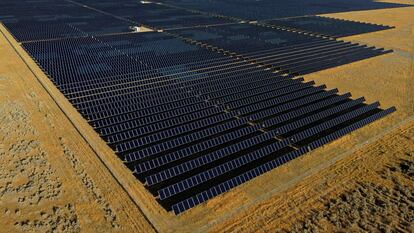
The federal government will fund 17 projects across the U.S. to expand access to renewable energy on Native American reservations and in other rural areas, the Biden administration announced on Tuesday.
The $366 million plan will fund solar, battery storage and hydropower projects in sparsely populated regions where electricity can be costly and unreliable. The money comes from a $1 trillion infrastructure law President Joe Biden signed in 2021.
About a fifth of homes in the Navajo Nation — located in northeastern Arizona, northwestern New Mexico and southeastern Utah — do not have access to electricity, the U.S. Department of Energy estimates. Nearly a third of homes that have electricity on Native American reservations in the U.S. report monthly outages, according to the Biden administration.
The announcement comes as Native tribes in Nevada and Arizona fight to protect their lands and sacred sites amid the Biden administration’s expansion of renewable energy. It also comes days after federal regulators granted Native American tribes more authority to block hydropower projects on their land.
The Biden administration will only secure funding for the 17 projects after negotiating with project applicants, federal officials said. Officials from the Department of Energy prepared to meet with tribal leaders to discuss clean energy projects at a summit in Southern California.
“President Biden firmly believes that every community should benefit from the nation’s historic transition to a clean energy future, especially those in rural and remote areas,” U.S. Energy Secretary Jennifer Granholm said in a statement.
The projects span across 20 states and involve 30 tribes. They include $30 million to provide energy derived from plants to wildfire-prone communities in the Sierra Nevada mountains in California and $32 million to build solar and hydropower to a Native American tribe in Washington state.
Another $27 million will go toward constructing a hydroelectric plant to serve a tribal village in Alaska, while $57 million will provide solar power and storage for health centers in rural parts of the Southeast, including in Alabama, Georgia and South Carolina.
Sign up for our weekly newsletter to get more English-language news coverage from EL PAÍS USA Edition









































