
More than 100 feet away and no whistles: Activists train to respond to ICE at the midterms
Thousands of volunteers are taking part in training sessions aimed at preventing voter intimidation amid uncertainty over the government’s position on the presence of federal agents at polling places
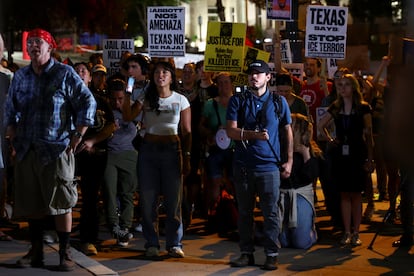

From the government, officials speak of unnecessary “alarmism,” but thousands of citizens are not convinced. They are training to respond to any potential interference in the upcoming midterm elections. Many were previously active in efforts to protect migrants from raids by Immigration and Customs Enforcement (ICE), and their focus has now shifted to defending democracy against possible threats.
One concern is that immigration agents could appear at polling places to carry out arrests. Even if no arrests are made, activists argue that their mere presence could intimidate voters and discourage them from exercising their right to vote. Several civil society groups that trained volunteers to monitor ICE activity during immigration raids have adapted that training for the November 3 elections.
“We are worried about several things,” says Zach Mueller, strategist at the organization States at the Core (STAC). “One is possible ICE activity; maybe not directly inside a polling place, but around it. Also, we know from informant reports that DHS [Department of Homeland Security] is looking for ways to use a specific incident — or the case of a few people who registered incorrectly — as a pretext to send ICE agents to polling places.”
“We don’t know if that will happen, but there is a real possibility it could, or that attempts will be made to question poll workers on election day to sow fear and intimidation,” he adds. His organization was formed when Trump began his second term. Since then, STAC says they have trained about 55,000 people to respond to ICE operations.
Mueller recently offered guidance to around 150 people who joined a Zoom session to receive training on how to respond to threats that could undermine democracy in the midterm elections. Two key points emerged from the hour-and-a-half discussion he led with several colleagues: people should act collectively rather than on their own, and they must be familiar with local laws to avoid breaking them.
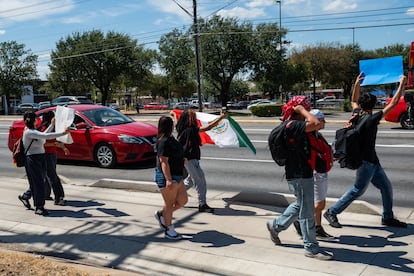
“Do not interfere, act nonviolently and avoid verbal or physical aggression even if what you witness is truly horrifying. If you document from outside polling places, you must also follow additional rules about how far you must stay from the voting location; generally the rule is 100 feet,” explained Jessica Acee, senior organizer at STAC. In some places, such as Tennessee, the required distance is greater.
Documenting events without interfering and de-escalating violence if an incident occurs were the guiding principles for volunteers responding to ICE raids, and are also central to election-monitoring efforts. There have been a few adjustments, however. One example is the use of whistles, which neighbors previously used to alert one another to the presence of immigration agents. At polling places, organizers fear that such alarms could frighten voters and discourage them from casting their ballots.
The session also covered how to organize teams of neighbors or friends and what role each person should play. Some record what is happening, others relay the information, others spread it more widely, while others specialize in calming potentially violent situations… Some members are assigned to drive voters to polls, advising them to remain in their vehicles until it is time to vote, and waiting until they have finished before taking them home.
These are precautions in case federal agents violate the law. A federal statute dating back to the Civil War prohibits the deployment of “troops or armed men” at places where elections are being held, “unless such force be necessary to repel armed enemies of the United States.”
Statements from the administration regarding the presence of agents at polling places have been ambiguous. In September, Markwayne Mullin, the secretary of the Department of Homeland Security (DHS), accused Democrats of “fearmongering” by expressing concern about the presence of ICE agents at voting sites. He said that agents would not routinely patrol or monitor polling places, although they could be present for specific purposes, such as making an arrest pursuant to a warrant or responding to a threat.
Trump unclear
When asked in a recent interview with Time magazine whether he planned to deploy ICE agents to polling places, Trump replied: “Haven’t thought of it.”
According to Mueller, “DHS and ICE have lied repeatedly after having taken part in lethal acts of violence. We’ve seen it throughout this year, and therefore, unfortunately, I think people are right to consider that ICE could show up.” He warns that intimidation could also come from other actors, such as the National Guard or the FBI.
One difference between the training for monitoring ICE raids and for monitoring elections is that, in this case, the people whose rights are being defended are all citizens. Trump continues to insist on the narrative that electoral fraud is widespread because foreigners who are not U.S. citizens vote in elections. In reality, such cases are exceedingly rare.
Instead, Latino, Black and Asian Americans have experienced harassment by ICE, being stopped or detained because of their appearance despite holding U.S. citizenship. Many have stopped attending churches, hospitals, schools and other places considered sensitive locations for fear of encountering federal agents. Civil rights organizations fear that the same thing could happen during the midterms.
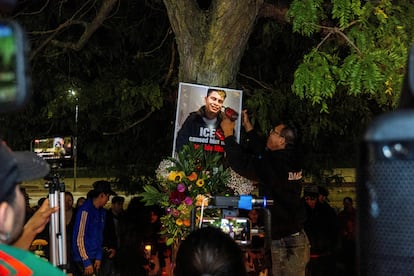
“We selected certain cities and counties because they are home to very dynamic and powerful communities of Black, Latino, Asian, immigrant and multilingual Americans; we considered them the places most likely to feel intimidated by this kind of rhetoric, and they also represent key electoral blocs in the midterm elections,” says Mary Corcoran, executive director of Save American Movement (SAM).
Her organization will deploy so-called trust teams made up of clergy, veterans, teachers and nurses in 20 key electoral districts in Georgia, North Carolina, Michigan and Ohio “to bear witness and provide confidence and reassurance to the community that will go to vote.” Those communities have traditionally voted for the Democratic Party.
Trump, who won the 2024 election thanks to a swing in Latino votes, fears losing elections in which so much is at stake. Voters will decide all of the House of Representatives and one-third of the Senate. The war in Iran, the high cost of living and the aggressive enforcement of immigration policies have driven down the president’s popularity, and polls suggest that the Republican Party could lose control of Congress in less than a month.
Corcoran founded SAM when the Trump administration launched large-scale immigration operations in Los Angeles in the summer of 2025. SAM organized teams to record and document agents’ activities, logging numerous instances of alleged abuse and violations affecting local communities. The group later carried out similar work in other cities that saw major enforcement operations, including Chicago, Charlotte and Minneapolis. On November 3, the mission will be the same: documenting and filming any potential intimidation or abuses by law enforcement officials or other actors seeking to intimidate voters.
“We wanted to make sure we did everything possible to help eligible voters who felt intimidated, worried or fearful about going to the polls because of ICE-related events over the last year and a half,” Corcoran explains. “We thought we could add value by bringing our Operation Liberty directly to the polls through the Vote Safe program, which is the initiative we are implementing for this election.”
To reassure voters, members of their trust teams will be easily identifiable by visible pins and other signs. What may happen remains uncertain, as these will be the first elections since Trump launched his aggressive immigration crackdown. “ICE as a possible instrument to intimidate voters represents a new, unknown factor that did not exist before,” says Corcoran.
Sign up for our weekly newsletter to get more English-language news coverage from EL PAÍS USA Edition









































