
Lawsuit alleges FEMA and DHS are withholding funds to 25 states that do not support Trump’s immigration and election policies
They argue the federal government is demanding changes to electoral systems and cooperation with immigration authorities in order to release the funds

Billions of dollars allocated each year to strengthen the response to natural disasters, cyberattacks, and other threats are now at the center of a new legal battle against President Donald Trump’s administration. On Thursday, 25 states and the District of Columbia sued the Department of Homeland Security (DHS) and the Federal Emergency Management Agency (FEMA), alleging that the government is conditioning those funds on changes to their election systems and greater cooperation on immigration enforcement.
The coalition of plaintiffs is made up of the attorneys general of 23 states and the District of Columbia, as well as the governors of Kentucky and Pennsylvania.
The lawsuit, filed in federal court in Rhode Island, challenges new conditions imposed by DHS and FEMA to access funding through the Homeland Security Grant Program, which supports emergency response, cybersecurity, bomb squads, security at houses of worship, and disaster preparedness.
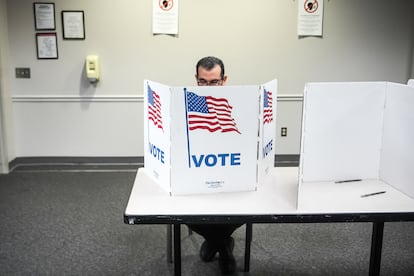
According to the plaintiffs, the new rules require states to verify voters’ citizenship through a federal database, transition toward hand-marked paper ballots, conduct manual audits of election systems, reconcile the number of voters with the ballots cast, and cooperate with federal immigration authorities.
The states argue that failure to comply with these requirements could cost them at least 20% of the funding allocated under the program, an amount that exceeds $148 million for the plaintiff states alone. They also challenge a provision that would allow FEMA to terminate grants entirely if it determines they no longer align with the administration’s priorities or the so-called “national interest.”
The coalition argues that these conditions exceed the federal government’s authority and encroach on powers that the U.S. Constitution reserves to the states, particularly the administration and conduct of elections.
Rhode Island Attorney General Peter Neronha, one of the leaders of the lawsuit, accused the Trump administration of jeopardizing public safety by attaching conditions to funds appropriated by Congress. He said the government is “threatening to jeopardize public safety by unlawfully withholding billions in critical funding” and argued that those resources were allocated by Congress to help states prepare for emergencies, terrorism, and natural disasters, meaning the executive branch has no authority to decide how they are used. He added that federal emergency funds “cannot and will not be held hostage from the states.”
The lawsuit argues that the measures violate both the Administrative Procedure Act and the Constitution’s Spending Clause by imposing conditions that, according to the states, are unrelated to the programs being funded and are intended to pressure them into changing public policies unrelated to emergency preparedness. The plaintiffs are also asking a federal judge to immediately block the conditions, declare them invalid as applied to the plaintiff states, and order the federal agencies to issue the documents needed to release the funding.
For its part, FEMA defended the Trump administration’s policy and described the lawsuit as a partisan response. A spokesperson for the agency said it expected “these left-wing politicians to oppose common-sense measures designed to protect election security and safeguard the integrity of American democracy.”
The agency also said that states must adopt “critical, common-sense steps” to “protect” elections before receiving their full grant awards, adding that the new requirements are intended to preserve the integrity of the electoral process.
The dispute comes amid growing tensions over election administration in the United States. Since the 2020 presidential election, Trump has repeatedly claimed that mail-in voting was marred by widespread fraud, despite audits and investigations — including some conducted by Republican officials — that found no evidence of widespread irregularities. The new requirements announced by DHS on July 10 are also part of a broader effort by the administration to expand federal oversight of various aspects of state election administration.
It is not the first time the courts have intervened in disputes of this kind. In previous rulings, federal judges blocked the administration from placing conditions on other FEMA funding and from redirecting DHS resources based on whether states supported the administration’s political priorities.
Sign up for our weekly newsletter to get more English-language news coverage from EL PAÍS USA Edition









































