
ICE officer who killed Colombian national in Maine has history of gender-based violence
Revelation that David Brouillette had a history of violent behavior calls the immigration agency’s recruitment process into question
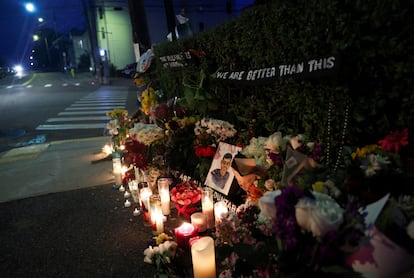

New information has revealed that the Immigration and Customs Enforcement (ICE) officer who killed Colombian national Johan Sebastian Durán Guerrero in Biddeford, Maine, last Monday is an army veteran with serious mental health problems and a history of gender-based violence.
According to statements to The Associated Press from his relatives and court records obtained by the agency, officer David Brouillette was a violent man. The serious allegations allege the shooter who killed Durán Guerrero has assaulted several women over the years, including both of his ex-wives and their daughters. Another alleged victim shared with AP a voice message from last winter in which he told her someone should cut her throat.
Brouillette, 37, told his ex-wife Ashley Brouillette late last year that he had been hired by ICE, AP’s report says. She told the agency that because of his long history of psychiatric problems she thought he was having a mental-health episode and did not believe him. She did not realize he had told the truth until this week, when videos of the Biddeford incident began circulating.
Ashley told AP she had spoken with Brouillette and that he had admitted killing Durán Guerrero. Their 18-year-old daughter also told the agency that her father called her on Wednesday and said he had shot and killed the Colombian, who was the father of a three-year-old girl.
The revelation has renewed doubts about the immigration agency’s recruitment process. The top Democrat on the House Homeland Security Committee, Representative Bennie Thompson of Mississippi, said that Brouillette’s history of violence and mental-health problems, and the death in Maine, “directly call into question the purported vetting and training process ICE conducts with its recruits.”
Brouillette’s violent past should have barred him from joining ICE. His recent hire exposes the inadequate background checks the agency, under pressure to hire more officers, has been conducting as it expands its workforce. Since President Donald Trump returned to the White House and pushed his goal of the largest deportation effort in history, ICE has struggled to carry out necessary arrests, prompting a recruitment drive and a shortening of training hours for new officers.
The move drew heavy criticism, especially after images circulated showing federal officers using excessive force during arrests in raids — breaking car windows, raiding homes, and violently beating migrants they detained and protesters who challenged them.
ICE has said most new hires come from police and military backgrounds. However, evidence has emerged that candidates with questionable records were not given thorough vetting before joining, or were hired despite their backgrounds. Some received “conditional selection letters” and offers to start working on temporary status before required checks were completed.
The vetting process included reviewing candidates’ criminal records and credit history. Interviews with former employers and other contacts were also conducted, a procedure that can take weeks.
To entice applicants, ICE offered hiring bonuses of up to $50,000, announced that college degrees were not required, and lowered the minimum age for new recruits to 18. Deportation officers are required to carry a firearm, which automatically disqualifies anyone convicted of domestic violence.
Department of Homeland Security (DHS) Secretary Markwayne Mullin, upon succeeding Kristi Noem, adopted some reforms, including a return to the regular training for new hires. However, the deaths of two people from agent gunfire in less than a week have cast doubt on whether anything has truly changed at the agency.
In Biddeford, the small coastal Maine city where Durán Guerrero lived, residents remain shocked by his death. Brouillette shot him as he was leaving his home and driving to work. ICE immediately justified the officer’s actions, saying he felt threatened, but eyewitnesses have provided a different account. They say the driver had already been shot when his car spun in what the officer described as an attack on him. The fact that Brouillette was not wearing a body-worn camera makes reconstructing the events difficult, but footage from a nearby business camera challenges the official version.
On July 7, Mexican national Lorenzo Salgado Araújo died after being fatally shot in his van by an immigration officer who had stopped the vehicle during an enforcement operation in Houston. Again, DHS said Salgado Araújo had tried to use his vehicle as a weapon, a claim witnesses have disputed.
Neither Durán Guerrero nor Salgado Araújo were ICE targets. Relatives, lawyers, and politicians have demanded transparent investigations into both incidents.
Sign up for our weekly newsletter to get more English-language news coverage from EL PAÍS USA Edition









































