
Jesse Jackson, veteran US civil rights activist, dies at 84
‘His unwavering belief in justice, equality, and love inspired millions,’ says the family of the former Martin Luther King Jr. associate and two-time Democratic presidential candidate in the 1980s
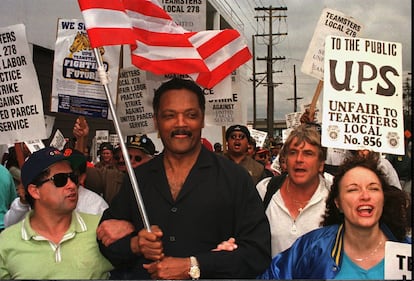
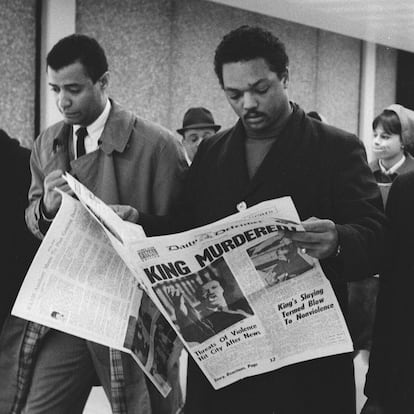
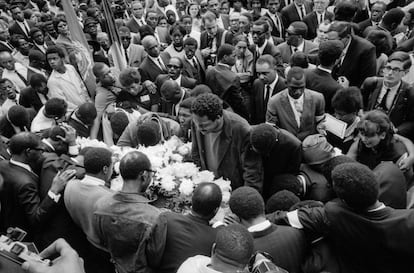
Jesse Jackson, American civil rights activist and two-time Democratic presidential candidate, died Tuesday at the age of 84, according to NBC and Reuters. Jackson was an eloquent Baptist minister raised in South Carolina, one of the states where racial segregation was prevalent at the time. He became a close associate of Martin Luther King, who was assassinated in April 1968. “Our father was a servant leader — not only to our family, but to the oppressed, the voiceless, and the overlooked around the world,” the reverend’s family said in a statement.
Jackson, who had suffered from Parkinson’s disease since 2017, was admitted to hospital in November after more than a decade of paralysis that affected his ability to walk and swallow. The activist participated in the legendary Selma march for civil rights, faced the wrath of segregationists, and accompanied Luther King in his final moments. In an interview with EL PAÍS in 2018, on the 50th anniversary of King’s death at the Lorraine Motel in Memphis, Jackson said: “Our greatest weapon is the vote. That was the lesson Martin Luther King taught us.”
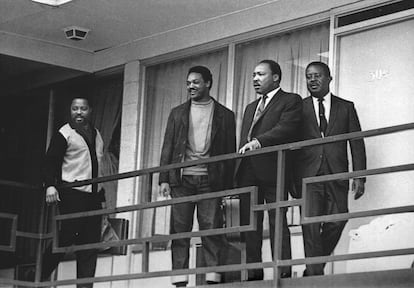
“We shared him with the world, and in return, the world became part of our extended family,” the statement released by the family continues. “His unwavering belief in justice, equality, and love uplifted millions, and we ask you to honor his memory by continuing the fight for the values he lived by.”
Jackson, with his mastery of the media, advocated for the rights of African Americans and other marginalized communities since the turbulent civil rights movement of the 1960s, led by his mentor King, a Baptist minister and prominent social activist. He weathered a wave of controversies but remained the most prominent figure in civil rights in the United States for decades.
He ran for the Democratic presidential nomination in 1984 and 1988, attracting African American voters and many white liberals in unexpectedly strong campaigns, but he failed to become the first African American candidate for the White House from a major party. Ultimately, he never held elected office.
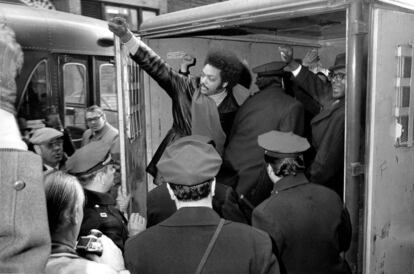
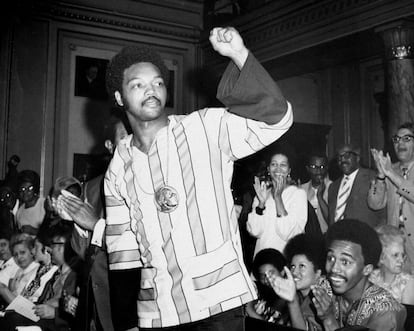
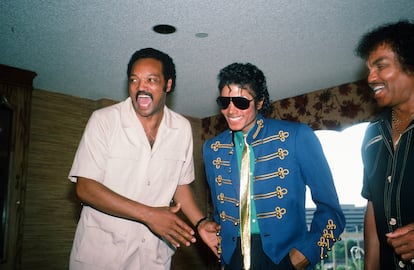
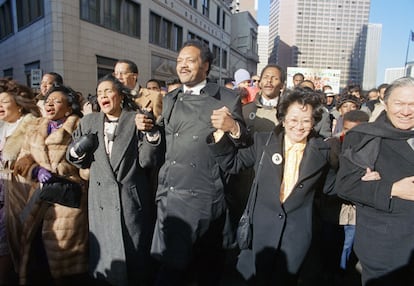
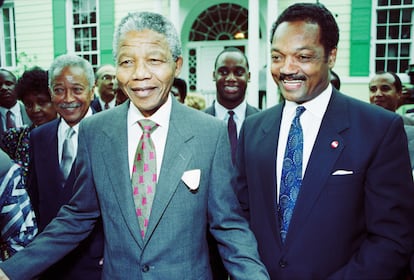
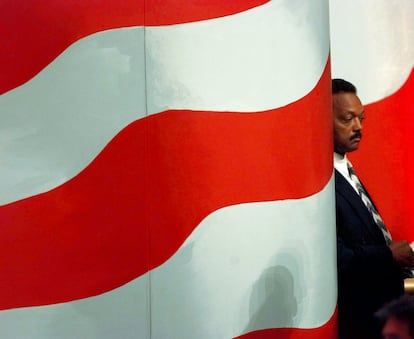
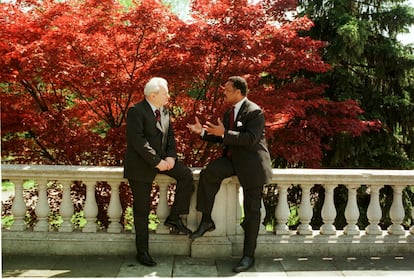
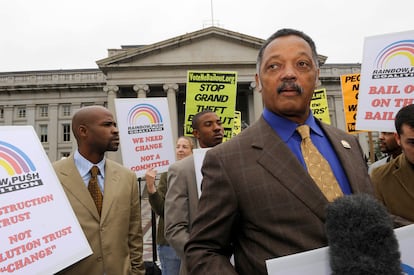
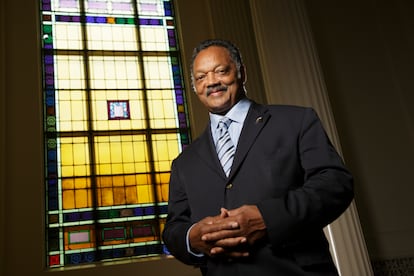
In 1984, he garnered 3.3 million votes in the Democratic primaries, approximately 18% of those cast, and came in third behind eventual nominee Walter Mondale and Gary Hart in the race to face Republican Ronald Reagan. In 1988, Jackson was a more refined and conventional candidate, finishing a close second in the Democratic contest to face Republican George H. W. Bush. He competed against Democrat Michael Dukakis, winning 11 state primaries and caucuses, including several in the South, and accumulating 6.8 million votes in the primaries, or 29%.
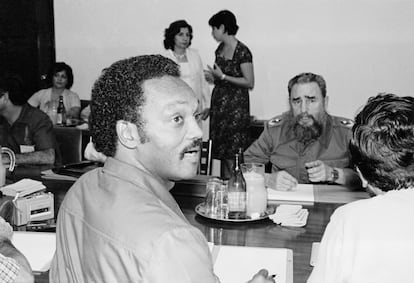
The reverend founded the Chicago-based civil rights groups Operation PUSH and the National Rainbow Coalition, and served as Democratic President Bill Clinton’s special envoy to Africa in the 1990s. Jackson was also instrumental in securing the release of several Americans and others detained abroad, in places such as Syria, Cuba, Iraq, and Serbia.
After decades of fighting racism, Jackson always said that discrimination persisted in the United States. “We have been slow to recognize that we are a post-genocide, post-slavery, and post-lynching country. Southerners believed that we were only a country and a religion of white people. The other vision was more global. And Black people were in the middle of that struggle, as we continue to be today,” he told EL PAÍS during another interview in June 2018.
Sign up for our weekly newsletter to get more English-language news coverage from EL PAÍS USA Edition









































