
Chapter 9: Trump’s digital apostles
Figures like the late Charlie Kirk and Jake and Logan Paul have something in common: they all support the Republican’s narrative and have pushed the digital conversation in his favor
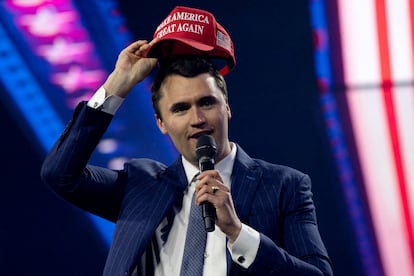

“Conservatives have failed to create an effective voice that breaks through the barriers imposed by centralized, progressive social media [...]. There has been a failure in narrative and storytelling.” Alex Bruesewitz wrote this in 2022 in his book Winning the Social Media War, which analyzed why conservatives struggled to succeed and outlined a series of recommendations for candidates and activists to improve their impact. Three years later, the situation has changed completely, and precisely thanks to figures like Bruesewitz.
This consultant, barely 27 years old, is an advisor to Donald Trump and was one of the architects of the podcast interview strategy that positioned the current president among young people under 30 during the 2024 election campaign. Between June and October, Trump gave 18 interviews on these platforms, while his rival, Kamala Harris, appeared in only four. This approach allowed a young, elusive audience to connect with the 79-year-old mogul, as he discussed mixed martial arts or his family’s experiences with alcoholism and drug addiction.
The prologue of Bruesewitz’s book is signed by Charlie Kirk, the activist and influencer who was murdered on September 10 in Utah. Kirk is another figure responsible for changing social sentiment in the U.S. digital conversation. In 2012, he founded Turning Point USA and organized digital activists who today help position conservative messages online. In his writing, he advised young people to become “happy digital warriors,” a term he used to challenge the perceived dominance of progressive “social culture warriors.”
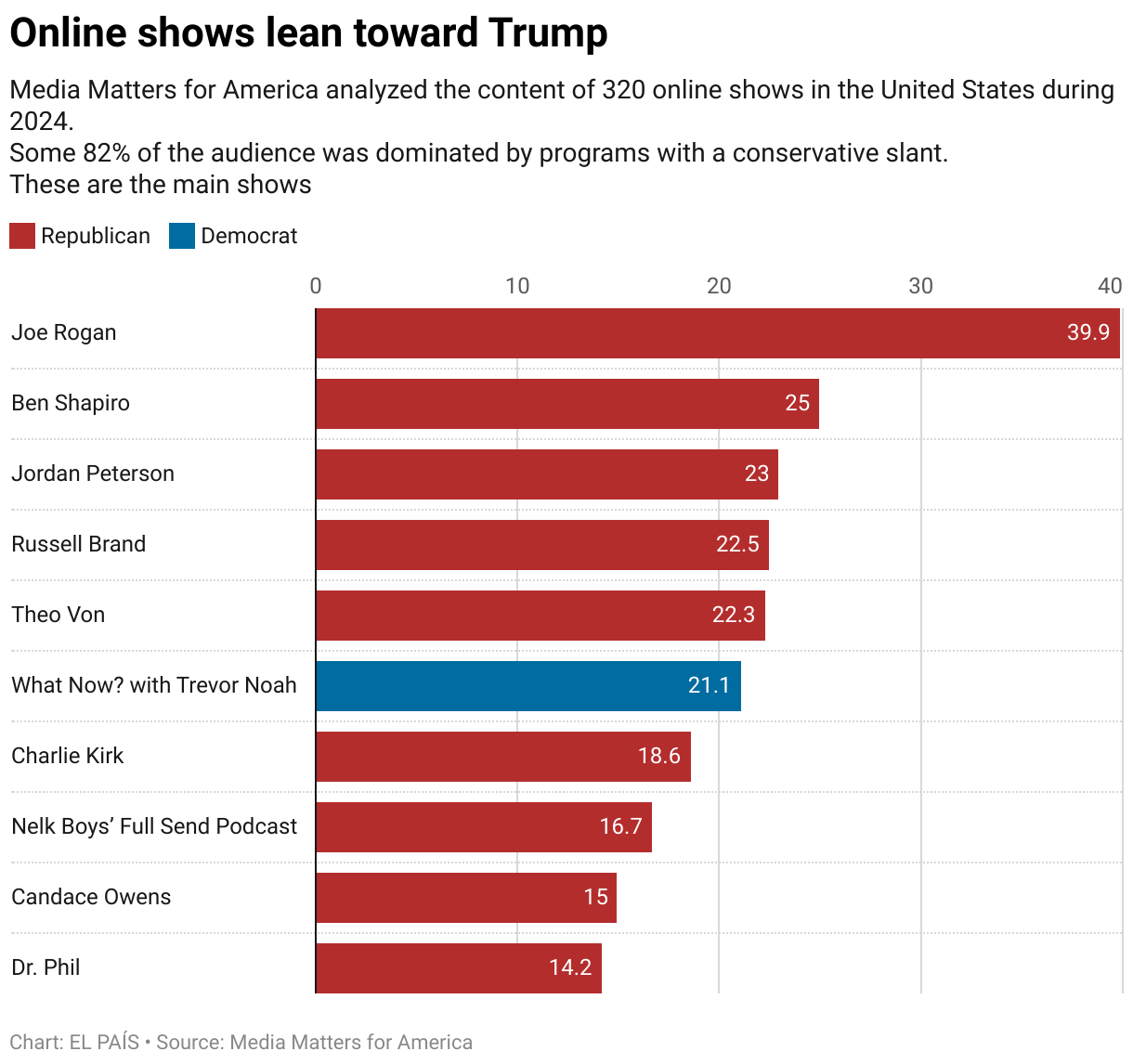
Kirk was one of Trump’s main apostles on social media. Just as the podcast strategy cemented the president’s popularity among young people, it was the steady drip of right-wing influencers that prepared the ground for this shift. These figures — diverse in origin, ideas, and tone — share one thing in common: they support the Trump narrative and have pushed digital conversations in his favor, directly impacting public opinion in a country where the new media ecosystem is weakening traditional outlets in favor of new channels and disintermediation.
Like Kirk, dozens of well-known figures have millions of followers. But the movement’s base is an army of thousands of micro-influencers and activists, organized and trained by groups such as PragerU or Turning Point USA, which has a network of over 500,000 donors and has received around $500 million in contributions.
Influencers have become the new opinion leaders worldwide, especially in connected societies. Their growing power is analyzed in detail in the latest publication from the Cátedra Ideograma-UPF: Influencers y comunicación política (Influencers and Political Communication). The White House is aware of this new reality. In recent months, it has begun holding official briefings with them and inaugurated a space called Podcast Row, allowing aligned podcasters to record content directly from the presidential residence. This chapter of the Trump Observatory examines this important topic and its impact.
The loudest MAGA voices
A Wired article published in August 2024 analyzed the influencers with the largest followings shaping social media debate during the election campaign. The advantage for Trumpism was overwhelming: nine MAGA apostles had over 5 million followers across platforms, while only two Democrats reached that level. Below is a brief profile of the three conservatives with the largest audiences.
Elon Musk
Although he’s no longer part of the administration and has had his share of disagreements with Trump, the world’s richest man continues to champion conservative agenda issues and maintains close ties with Vice President J.D. Vance. His main influence is on X, his social media platform, where he has 226.3 million followers. During the campaign, it’s estimated he accounted for more than half of all political content views on X.
Jake and Logan Paul
The Paul brothers have separate social media profiles, but together they have more than 100 million followers across all their channels. In addition to being actors, one is a boxer and the other a mixed martial artist, so they helped Trump reach the gym bros. Logan interviewed Trump, when he was a candidate, in June 2024. The video has more than 7 million views.
Tucker Carlson
The former Fox News host, who broke with the channel after a fake news scandal, has more than 29 million social media followers, which he now uses to post interviews. He focuses not only on the U.S. but also seeks to promote right-wing leaders internationally. He interviewed Javier Milei before Milei won the presidential election in Argentina, and has met with Spain’s Santiago Abascal and Russian President Vladimir Putin.
Control over social networks
Social media algorithms are essential for growing and retaining influencer audiences. They recommend content based on users’ tastes and connect them with these figures. Controlling the algorithms is therefore crucial to shaping the digital conversation. The best example is Twitter, which, since being bought by Elon Musk and rebranded as X, has become a space favorable to conservative topics. But it is not the only one. The potential new owners of TikTok in the U.S., Larry Ellison and Marc Andreessen, are also close to Trump, while Mark Zuckerberg has aligned himself with Trump over the past year and has had connections with him since 2016, as detailed in a recent book by former Facebook executive Sarah Wynn-Williams.
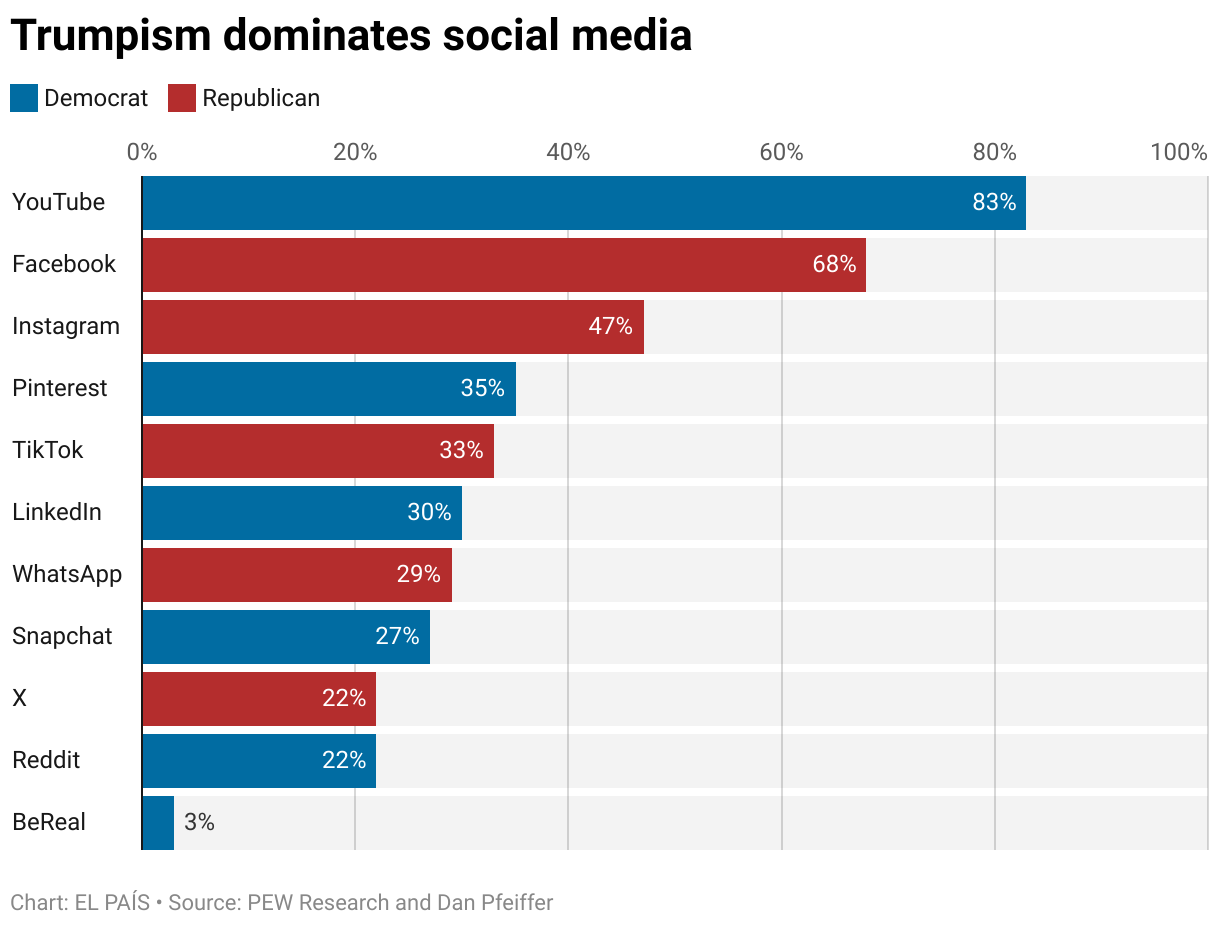
Setting the pace of digital conversation
Various studies warn that, even though they produce less than 10% of posts, influencers generate 40% of total social media interactions. Consequently, they play a central role in determining which topics gain traction and how.
In this landscape, generalist creators — who usually avoid political topics — can be especially influential when they choose to take a stance, amplifying interest in certain issues. In 2024, Trumpism was highly successful in these spaces, but since taking office, its advantage has begun to wane. Progressive creators have gained ground, and some prominent influencers, such as Joe Rogan, have expressed some criticism of Trump. Despite this, the right still maintains a significant impact.
Impact on popular culture
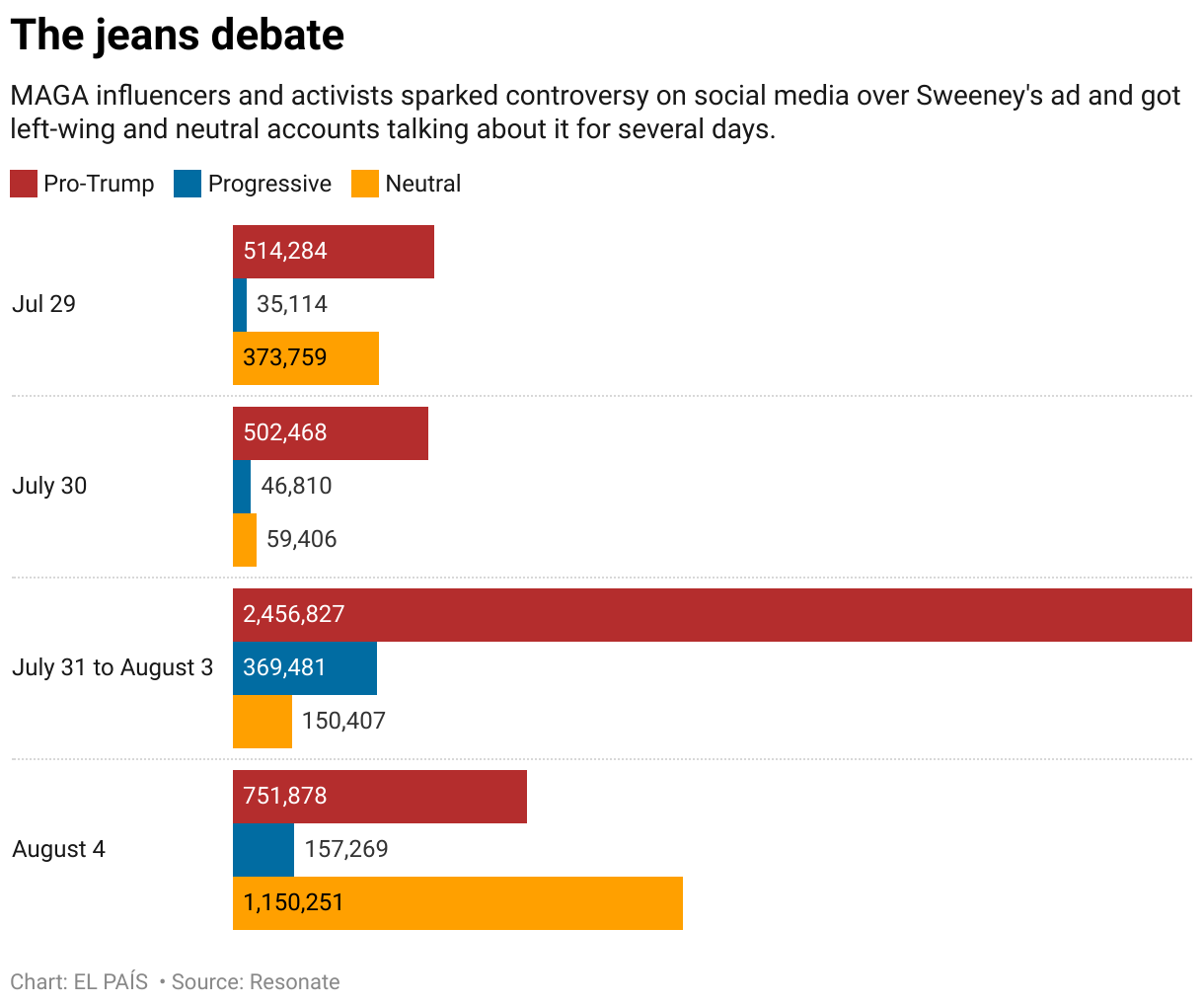
The new MAGA dominance of social media, thanks to its army of influencers, allows them to repeatedly push topics that fuel the culture war and direct confrontation with the left. In July, they spread the idea that the left had labeled actress Sydney Sweeney a Nazi over a jeans commercial. In August, debate raged for more than a week over the change in the Cracker Barrel restaurant logo, framed as a “woke” move. In September, a video of a murder on a bus sparked discussions about out-of-control crime, even though data show that overall insecurity has actually decreased. This strategy keeps society permanently polarized around issues that serve Trump’s narrative.
News influencers
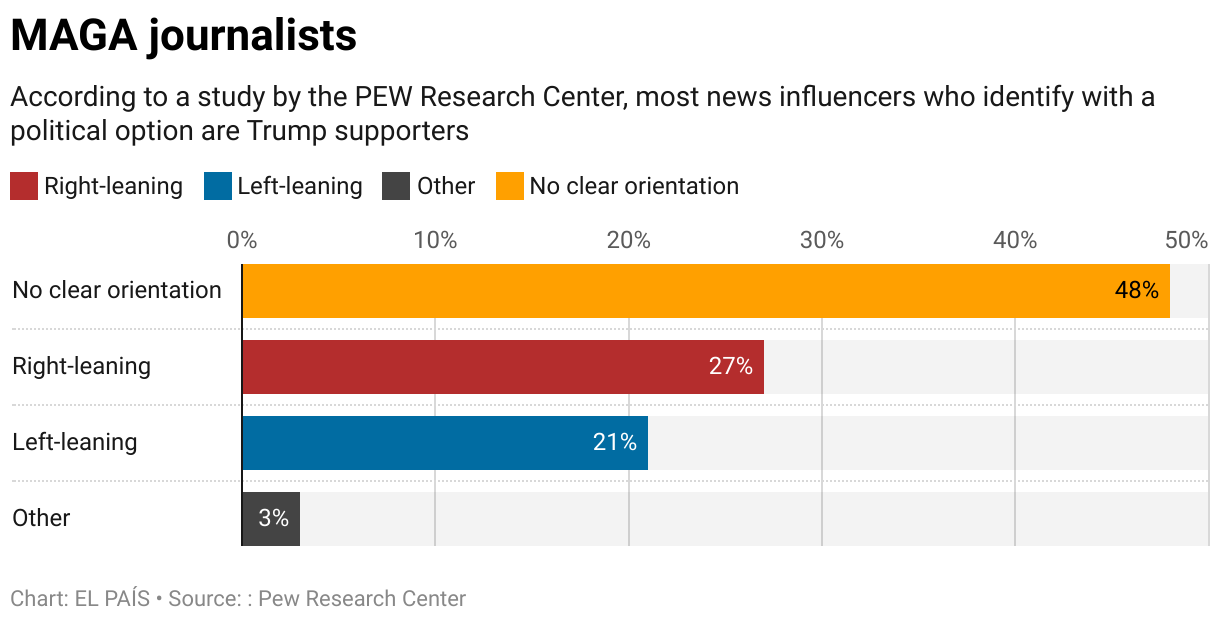
In addition to creators focused on generalist and entertainment content, a new type of influencer has emerged in recent years, specialized in informing their audiences. Many are not affiliated with any traditional media outlet, nor are they journalists. They follow their own criteria, which allows them to maintain clearly defined ideological commitments to certain parties. These actors are increasingly important in a new media ecosystem where more people get their news from social networks. It’s no surprise, then, that Trump won among voters who get their news from social media, while he lost among those who turned to traditional media.
Special influence on young people
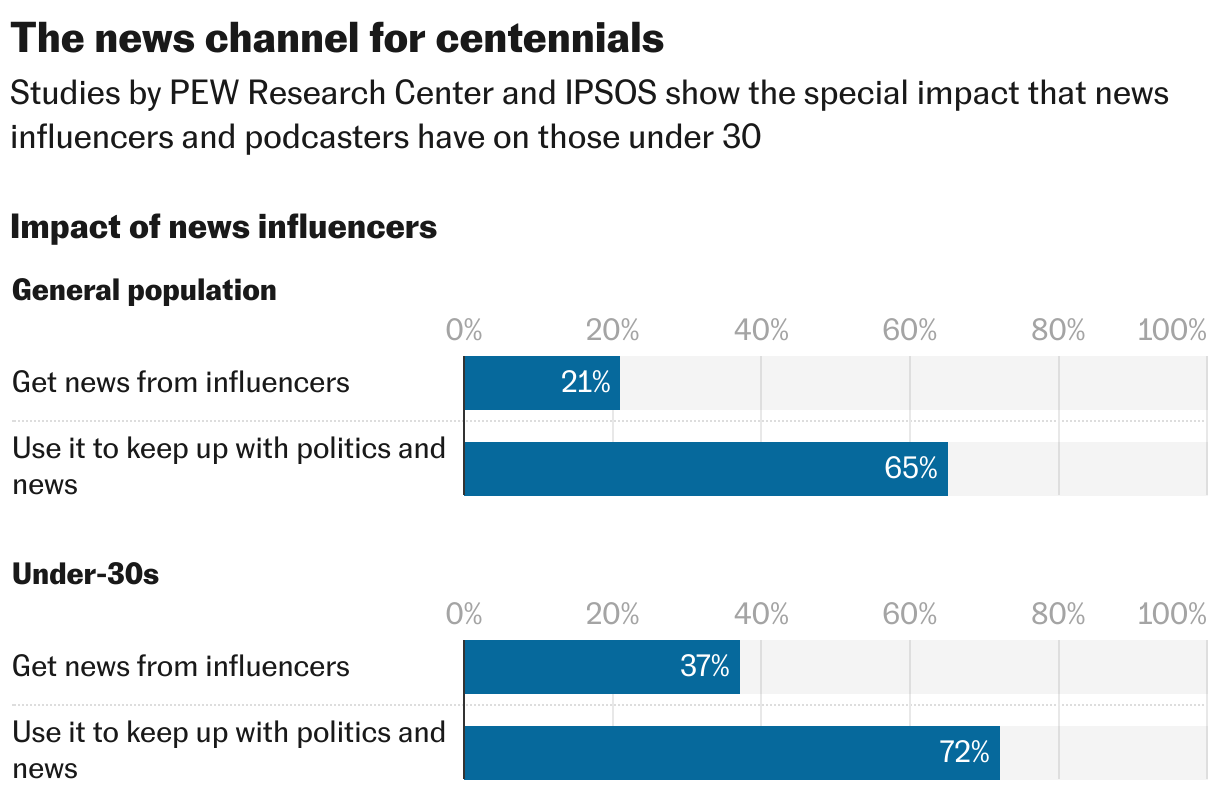
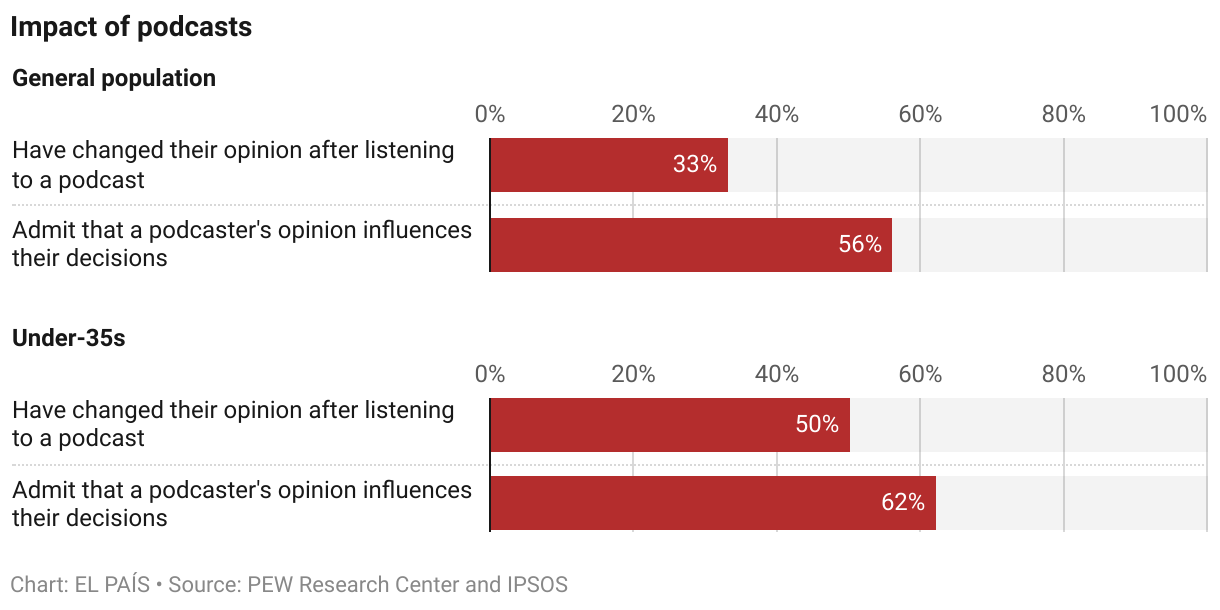
Although the new media ecosystem affects the entire population, its power is especially strong among those under 30. Various studies conducted in the United States agree that this audience follows the most influencers, consumes their content the most, and is more likely to change opinions after engaging with them.
To delve deeper into the topic
Books:
- Various authors from Ideograma: Influencers and political communication
- Alex Bruesewitz: Winning the Social Media War: How Conservatives Can Fight Back, Reclaim the Narrative, and Turn the Tides Against the Left
- Ole Nymoen and Wolfgang M. Schmitt: Influencers: The Ideology of Advertising Bodies
- Sarah Wynn-Williams: The Irresponsible: A True Story of Power, Greed, and False Idealism
Articles:
- Robert Draper: How Charlie Kirk Became the Youth Whisperer of the American Right
- Rob Faherty: The Sydney Sweeney Saga Shows Why Republicans Keep Winning
- Bloomberg: The second Trump presidency, brought to you by youtubers
- Xavier Peytibi: Donald Trump and his battle for postmemory
- Zachary Basu and Sara Fischer: Media’s MAGA makeover
- Christian Paz: How Trump lost the podcast bros
- Brian O’Grady: Inside PragerU’s Digital Playbook to Change Culture
Videos and podcasts:
- Offline with Jon Favreau: Trump and the right are using Charlie Kirk’s death to silence institutions
- Today, explained: Trump’s chief culture warrior
Studies:
- PEW Research Center: America’s News Influencers
- Media Matters for America: The right dominates the online media ecosystem, seeing into sports, comedy, and other supposedly nonpolitical spaces









































