
Chapter 7: The distraction machine
The Trump administration has built a political narrative and poured all its energy into promoting it. That’s why smokescreens have become indispensable
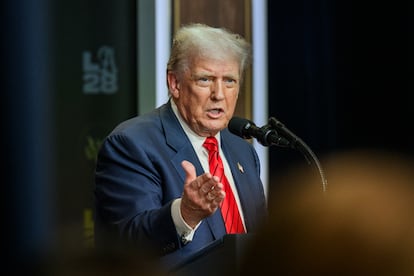

On July 12 of this year, Donald Trump’s second presidency experienced one of its weakest moments. At a summit of conservative college students, Charlie Kirk and Steve Bannon, two of the most popular influencers in the MAGA movement, asked attendees to raise their hand if the Jeffrey Epstein case mattered to them. The audience immediately responded, some raising both hands. The moment was captured in a YouTube video that went viral.
Five days earlier, Attorney General Pam Bondi had announced that internal investigations concluded Epstein had indeed killed himself after being accused of pedophilia and sex trafficking, and that there was no evidence of a list of his clients. This undermined one of the most popular conspiracy theories among Trump supporters — which he himself had fueled — that the Deep State was hiding information to protect implicated politicians and celebrities. The announcement sparked outrage among the MAGA base, who felt betrayed.
Social media erupted in response. By the end of July, the topic had generated an estimated average of 9 million interactions. The president’s first reaction was to post a message on his platform Truth Social, urging followers to ignore the issue — a rare move for an administration skilled at diverting attention and controlling the narrative. When the focus did not shift, subsequent actions followed their usual playbook with greater success. They began to quell the issue among their base and forced Democrats to redouble efforts to keep Epstein in the news.
These distraction techniques are precisely what the seventh chapter of the Trump Observatory examines. The White House always seeks to capture attention. When other topics beyond its control compete for the spotlight, it acts to regain focus.
This demonstrates a carefully planned strategy of permanent campaigning, defined by Sidney Blumenthal as the continuous promotion of a candidate or their ideas beyond election periods, using the government as a platform. They craft a political narrative and pour all their energy into communicating it. In this context, smokescreens become essential whenever the narrative is at risk.
Conspiracy theories
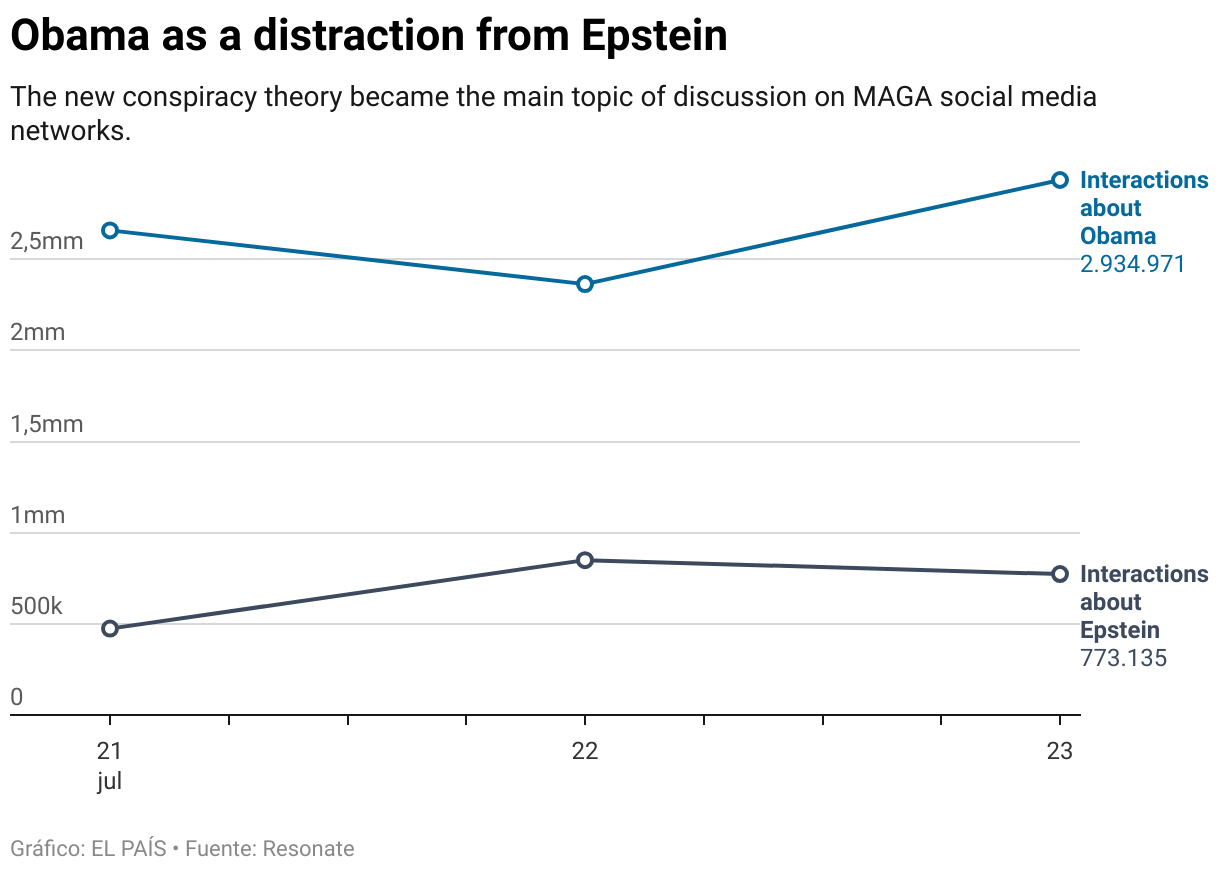
What do you do when your own government’s actions have put an end to a conspiracy theory? The Trump administration’s answer: feed another one. On July 19, Tulsi Gabbard, head of the Secret Service, claimed to have information that former president Barack Obama, along with Hillary Clinton, led a conspiracy to prevent Trump’s victory, allegedly fabricating claims of Russian manipulation and cyberattacks. While this topic hasn’t completely erased the conversation about Epstein within the MAGA social media world, it has overshadowed it.
Generating controversy on social media
A typical Trump smokescreen is posting controversial content online to get people talking about him or the topic he is posting about. While trying to distract from the Epstein case, he repeatedly posted messages about Obama to draw greater attention to that issue among his followers and traditional media. He also relied on artificial intelligence to create deepfake videos and fake images. Between July 19 and August 1, Trump shared 15 posts on Truth Social about Obama — more than one per day on average.
Turning to pop culture politics
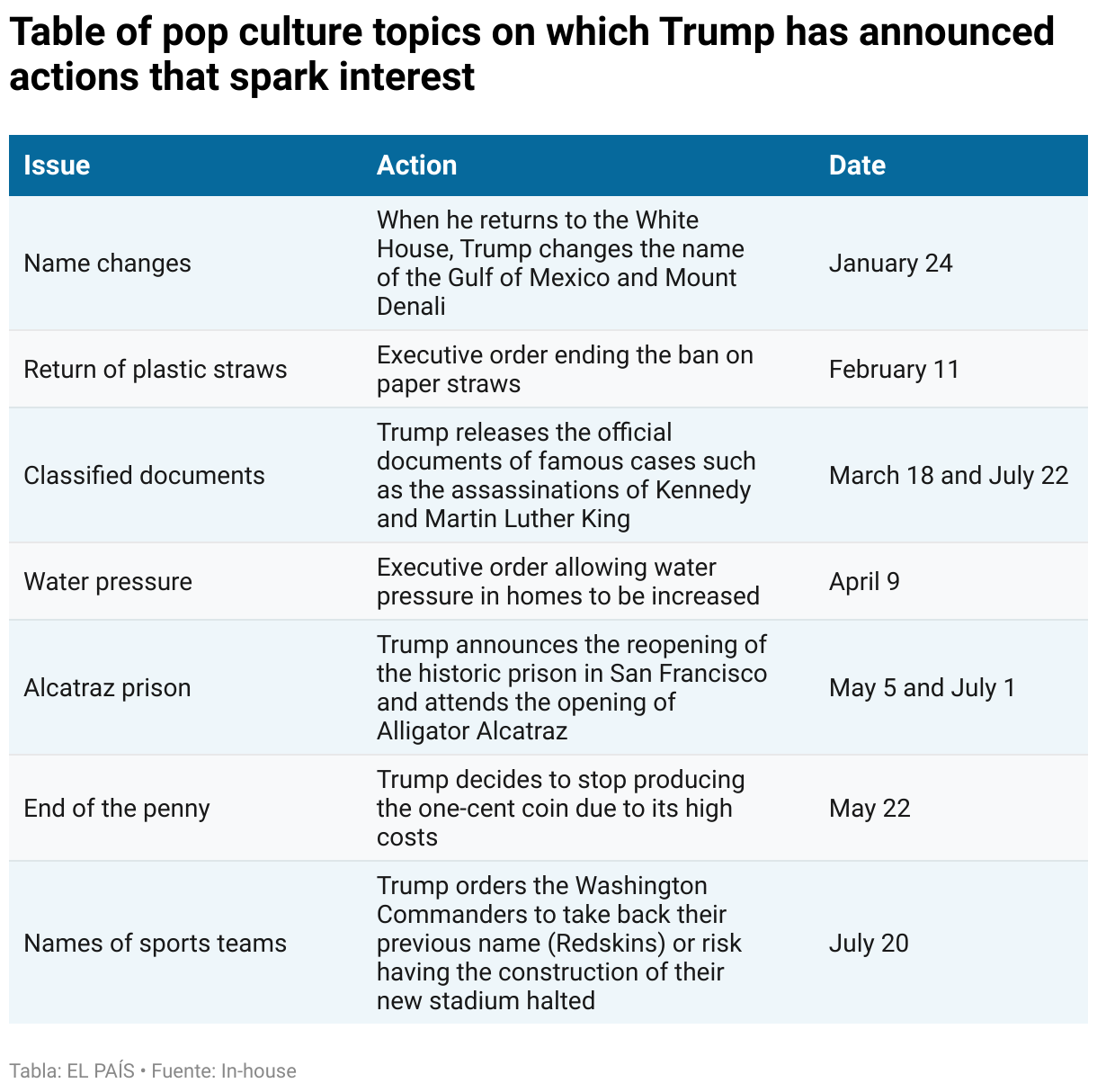
The White House knows its audiences well and understands which issues can grab their attention and spark a positive conversation. On July 16, while the Epstein story was still making headlines, Trump announced on Truth Social that he had convinced Coca-Cola to add a new flavor to its lineup: soda sweetened with real cane sugar. This is the Mexican recipe, and for years thousands of Americans have claimed it tastes better. In addition, Health Secretary Robert F. Kennedy Jr. and his Make America Healthy Again movement argue that it is healthier. Below are other examples of pop culture topics that Trump has jumped on.
Highlighting achievements
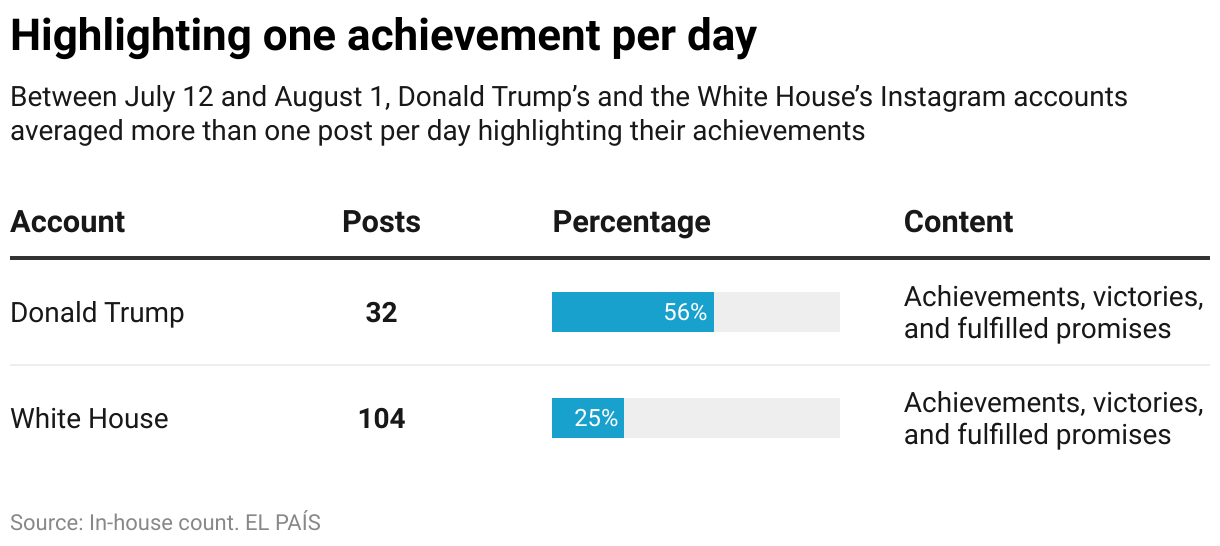
On July 12, when Trump wrote to his followers on Truth Social asking them to stop paying attention to the Epstein case, one of his arguments was that they should focus on all the achievements of his administration: “We are about to achieve more in six months than any other Administration has achieved in over 100 years, and we have so much more to do.”
This is another technique used by the White House as a smokescreen. If an issue calls their effectiveness or credibility into question, they double down by communicating accomplishments and fulfilled promises — especially on matters they consider most popular. For example, on July 25, the president posted again about lifting the ban on plastic straws, even though the decision had been made back in February.
Bread and circuses
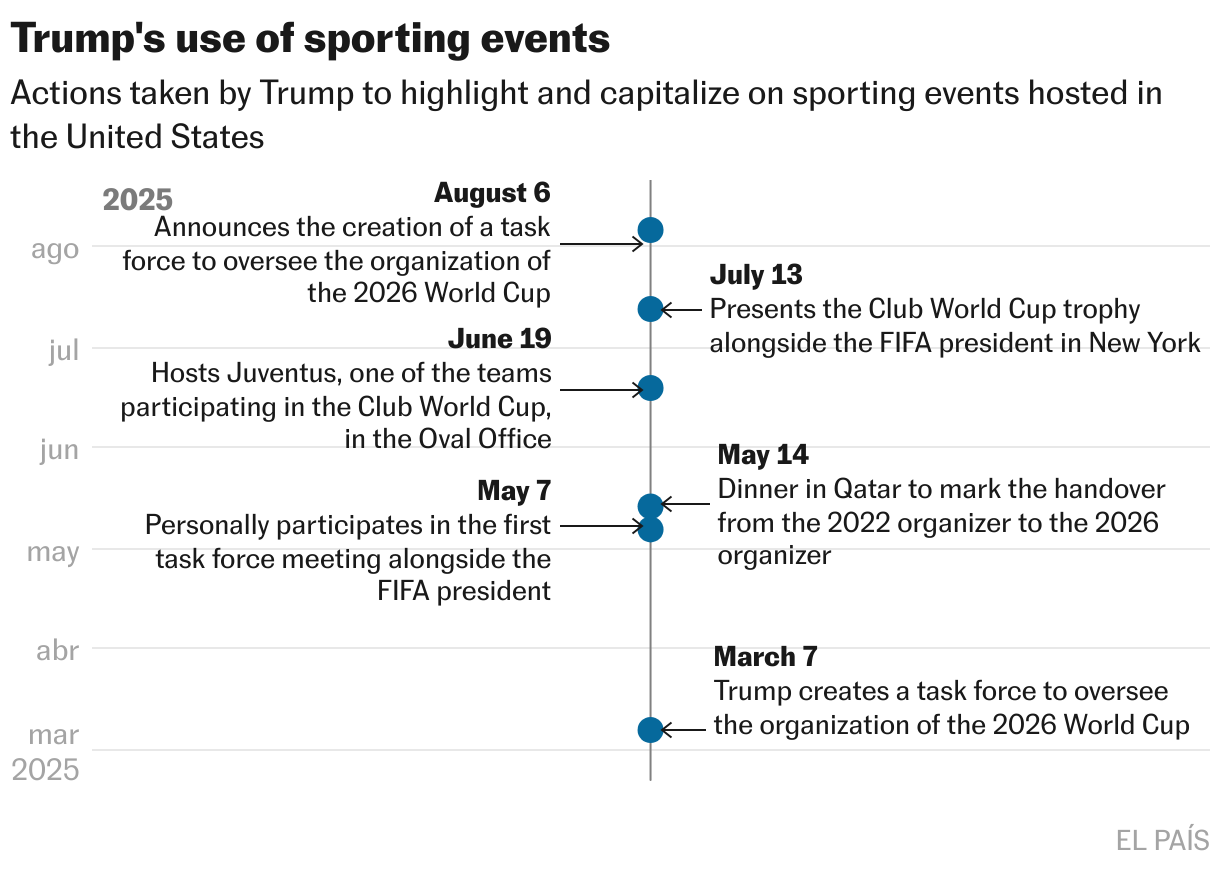
In line with his goal of showcasing the country’s progress under his leadership, Trump takes advantage of every opportunity at hand, including major international sporting events hosted by the United States. The country recently organized the FIFA Club World Cup, will host the World Cup next year, and the 2028 Los Angeles Olympics.
The White House has planned media moments to take partial credit for the success of these events and to present them as symbols of the nation’s resurgence. On July 13, in the midst of the Epstein case, for example, Trump attended the Club World Cup final and created a viral moment when he stood alongside Chelsea’s players until they lifted the trophy.
To learn more about the subject:
Books:
- Sidney Blumenthal: The Permanent Campaign: Inside the World of Elite Political Operatives
- Rafa Laza: La campaña permanente
- Sergei Guriev and Daniel Treisman: Los nuevos dictadores
- Edward Bernays: Propaganda
Articles:
- Neal Rothschild: Trump comes for American lore with pop agenda
- Antoni Gutiérrez-Rubí: Cortinas de humo
- Hugo Balta: Don’t get distracted, stupid!
- Adam Scharpf: Dictatorships use sporting events as a smokescreen for political repression
Podcast and videos:
- Charlie Kirk: Steve Bannon lanza una diatriba épica y ultra MAGA sobre Epstein y el Estado profundo
- CNN: This is how Trump distracts you
- Vox.com: The mother of all conspiracies
Films:
- Wag the Dog: starring Robert De Niro and Dustin Hoffman:
- Vice: movie about the vice presidency of Dick Cheney









































