
US breaks record with 209 deportation flights in June after first major increase of Trump era
Independently compiled data shows a dramatic increase since mid-May to 209. With the larger immigration budget approved in the mega-tax law, this number is expected to rise
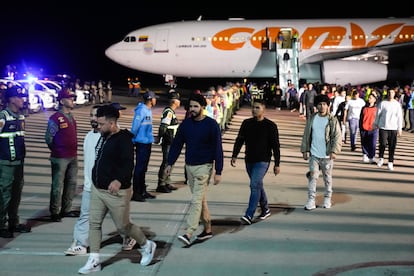

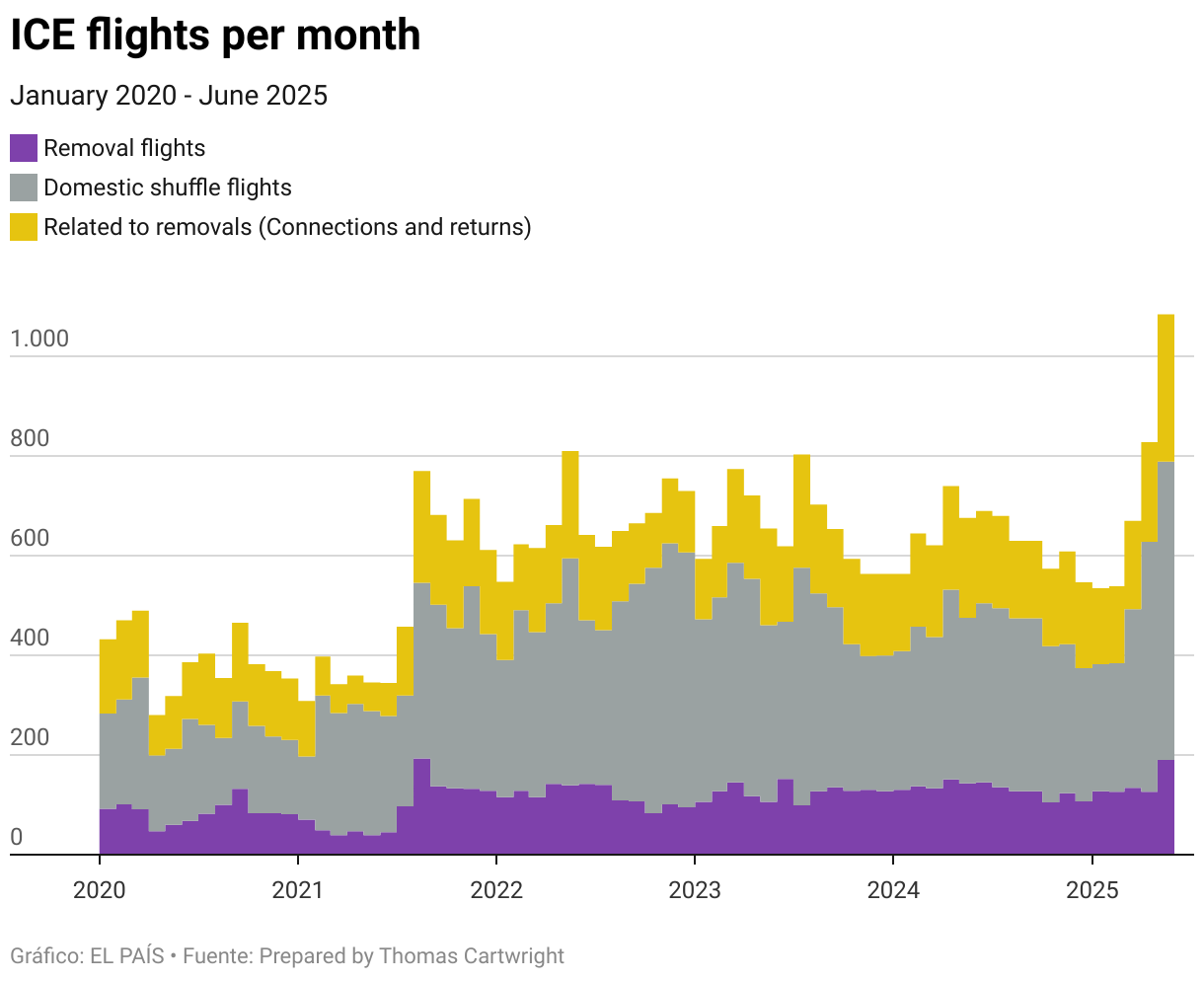
Since mid-May, the United States has stepped up the pace of deportations. According to data independently compiled by Thomas Cartwright, a member of the immigration advocacy group Witness at the Border, 209 expulsion flights took place in June, the highest number since 2020, when Cartwright began independently tracking and compiling this information, which U.S. authorities do not openly share. Last month’s figure represents a 54% increase compared to the average for the previous six months. This is the first time the Donald Trump administration has managed to substantially increase the number of deportations and implement the final step in its anti-immigrant crusade.
The previous monthly records dated back to September 2021, with 193 flights during an operation to repatriate Haitian immigrants, and 153 in August 2023. But in the first four months of the administration, despite the rhetoric, certain high-profile cases — such as when the president of Colombia, Gustavo Petro, refused to receive flights with handcuffed Colombian citizens, or when two flights carried over 200 Venezuelans accused of being gang members to El Salvador — and the increase in arrests of undocumented immigrants, the Republican administration had not been able to send significantly more deportation flights than usual. The average between February and May was 4.9 flights per day. In June 2024, still under Joe Biden’s administration, it had been 4.8. By contrast, this past June it rose to seven flights per day.
“It’s from mid-May onward that the escalation really begins,” Cartwright, a former J.P. Morgan executive turned migrant rights volunteer and activist, who in recent months has established himself as the only reliable source of U.S. deportation data, tells EL PAÍS by phone. This change in trend coincides with a series of meetings in which, according to various reports, Stephen Miller, the White House Deputy Chief of Staff for Policy and ideologue and architect of Trump’s immigration policy, demanded an acceleration in the pace of migrant detentions and deportations.
It was after this that Immigration and Customs Enforcement (ICE) agents began indiscriminately raiding workplaces and parking lots where many undocumented immigrants find informal jobs. Also, as has now been confirmed, more deportation flights began to be sent out.
Cartwright expects flights to increase even further in the coming months, now that Trump’s mega-tax bill has been passed by Congress. The legislation increases ICE’s allocated budget from $8 billion to more than $100 billion, according to some estimates. Of that, about $14 billion will be allocated to deportation operations, according to the Brennan Center, an independent law and public policy institute in New York. In contrast, the FBI, for example, has a projected budget for fiscal year 2026 of about $10.1 billion. The DEA’s is less than $3 billion.
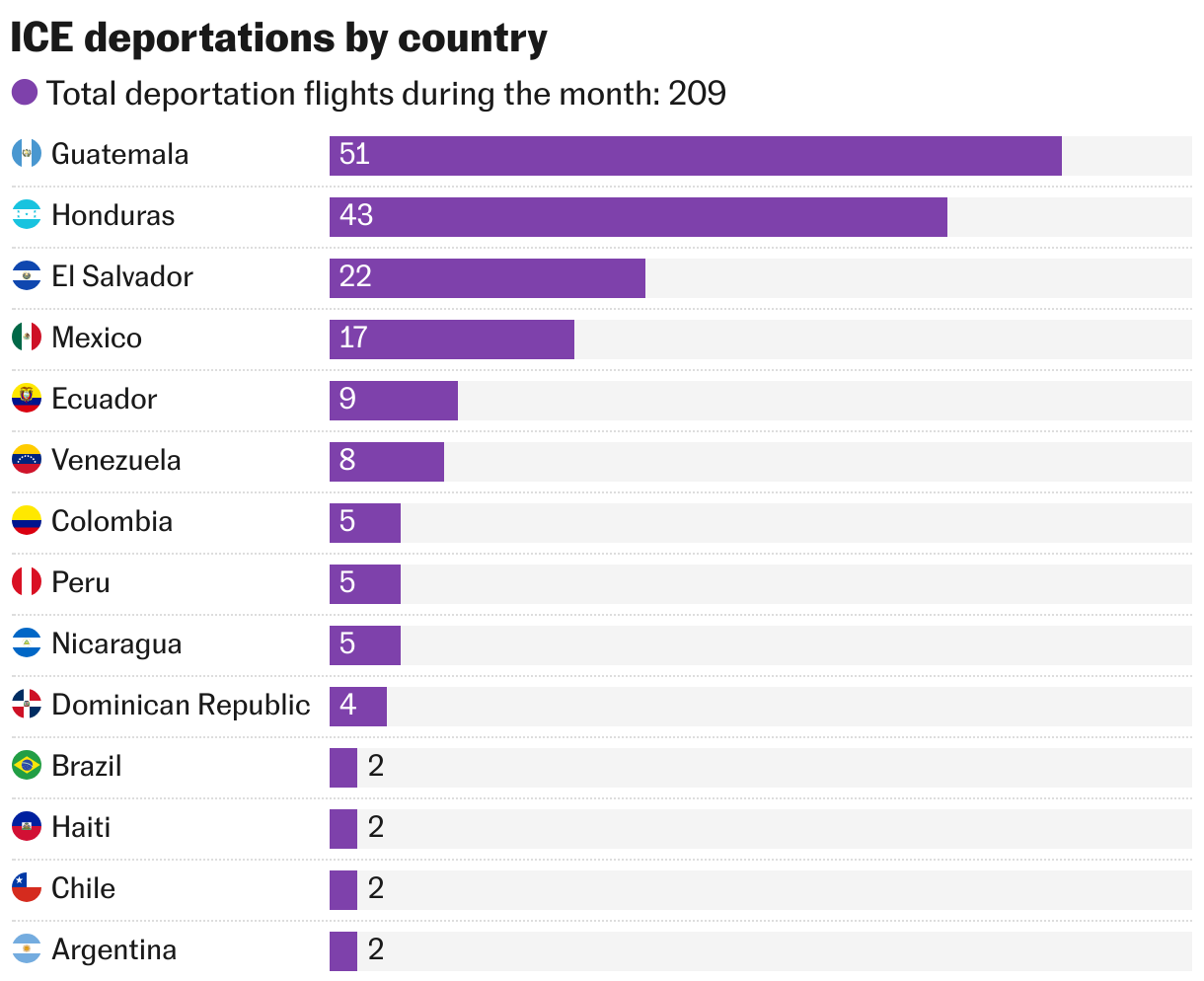
According to figures compiled by Cartwright using open flight tracking websites, the increase in flights was due to an expansion in the number of countries that typically receive deportees. More countries began accepting planes carrying expelled citizens, and some that used to receive only a few began taking in more. Still, Guatemala (with 51 flights), Honduras (43), and El Salvador (22) together received more than half of all the planes. Flights to Mexico, on the other hand, dropped substantially — from 30 in May to 17 in June. South American countries received a total of 29 flights, while only 12 went to Africa. The rest of the world accounted for 35 flights in total.
But in addition to an increase in international deportation flights, Cartwright also noted a significant increase in domestic flights by ICE Air, the government’s deportation airline. These are routes used to transfer immigrants from one detention center to another or to pick up people with deportation orders from various locations for the same destination. Domestic transfers increased by 65% compared to the average of the previous six months, reaching a total of 697. This highlights the complexity of detaining more than 100,000 immigrants across ICE’s detention network, which, despite expanding, is operating at full capacity.
Cartwright’s 50-page monthly report highlights several details within the broader trend. For example, the increase in the use of military planes for deportations on June 27, when seven out of the month’s ten deportation flights on military aircraft took place. These flights are significantly more expensive to operate and carry fewer people; while a standard charter flight typically carries about 130 deportees, a military flight can only accommodate around 80. The report also confirms that transfers to and deportations from Guantánamo continue at a steady pace. According to Cartwright’s calculations, 78 people were transferred to Guantánamo, while 83 were deported from the U.S. military base on the island of Cuba.
Regarding the deportation flights to Mexico that decreased significantly from the previous month, Cartwright points out that land expulsions increased during the same period, likely to compensate. He has been able to verify this by observing the rise in occupancy at Mexican federal shelters, which were nearly empty before. Additionally, Cartwright notes that the pace is likely to pick up again now that the Supreme Court has allowed the Trump administration to resume deportations to third countries, meaning Central American citizens could soon start being transferred to Mexico. This will also happen after Mexico moves federal shelters from Monterrey and Nuevo Laredo to Tapachula and Villahermosa — thus meeting the U.S. goal of sending deportees as far from the border as possible.
Cartwright’s work has become indispensable to activists and journalists in recent months, although he began collecting ICE flight data at the end of Trump’s first term. The U.S. immigration enforcement system is notoriously opaque; unlike the criminal justice system, ICE does not typically make public the names of the individuals it detains. And while it does occasionally release information about its flight operations in press statements, it does so selectively. However, the charter planes used by ICE have tail numbers that appear on public flight tracking websites, which Cartwright uses to follow them in real time.
“I think that these people deserve the dignity of at least someone paying attention to what’s happening to them,” he told The Atlantic in February. Thanks to him, many more people now know.
Sign up for our weekly newsletter to get more English-language news coverage from EL PAÍS USA Edition









































