
Trump White House adviser acted ‘above the law’ in defying Jan. 6 Committee, prosecutors say
Peter Navarro was charged with two counts of contempt of Congress when he refused to cooperate with a congressional investigation in the attack on the Capitol
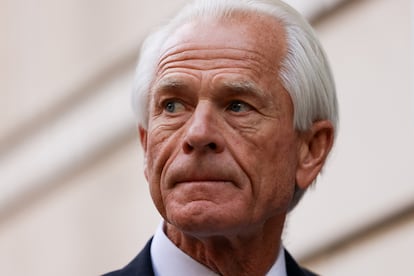
A White House adviser to President Donald Trump acted as if he were “above the law” when he refused to cooperate with a congressional investigation into the Jan. 6, 2021, attack on the U.S. Capitol, prosecutors argued at his trial Wednesday.
Peter Navarro was charged with two counts of contempt of Congress, but his lawyer argued he didn’t ignore the House Jan. 6 Committee. Instead, Navarro told members to contact Trump about what might be protected by executive privilege, the attorney said. A judge has found the privilege argument alone isn’t a defense against the charges, finding Navarro couldn’t show evidence that the former Republican president had invoked it.
Both sides rested after committee staffers testified about sending the subpoena and Navarro’s response. Closing arguments and jury deliberations are expected Thursday.
Navarro, a senior trade adviser, was subpoenaed in February 2022 by the House panel investigating how and why a mob of Trump supporters stormed the U.S. Capitol and interrupted the certification of the presidential vote for Joe Biden, a Democrat. Navarro had promoted Trump’s baseless claims of mass voter fraud, and the committee thought he might have more information about any connection those claims had to the attack, prosecutor John Crabb said.
But Navarro didn’t hand over any emails, reports or notes. When the date came for him to testify before the committee, he didn’t show up, Crabb said. Even if the president had invoked executive privilege, Navarro should have come before the committee, answered what questions he could and cited privilege when he couldn’t answer, he said.
“It wasn’t voluntary. It wasn’t an invitation. A subpoena is a legal requirement,” Crabb said. “We are a nation of laws and our system doesn’t work if people believe they are above the law.”
Defense attorney Stanley Woodward told the jury that Navarro did get in touch with committee staffers, but asked them to talk to Trump to see what information the president intended to be protected by executive privilege. That never happened, he said.
“The evidence in this case will not show that Dr. Navarro was willful in his failure to comply,” Woodward said. He pushed back on efforts to link Navarro closely with the Jan. 6 attack and said the prosecution’s opening arguments were like a movie trailer that promises more than the show delivers: “It’s like one of those movies where you get nothing after the preview,” he said.
Navarro, a former economics professor, faces up to a year behind bars if convicted. He is the second Trump aide to face criminal charges after refusing to cooperate with the House committee. White House adviser Steve Bannon also made an executive privilege argument but was convicted of two counts of contempt of Congress and sentenced to four months behind bars. He has been free while he appeals the verdict.
The House Jan. 6 Committee completed its work in January, saying Trump criminally engaged in a “multi-part conspiracy” to overturn the lawful results of the 2020 election and failed to act to stop his supporters from attacking the Capitol.
Trump now faces a federal indictment in Washington, D.C., and a state indictment in Georgia over his efforts to overturn his 2020 election loss. He has denied wrongdoing and has said he was acting within the law.
Sign up for our weekly newsletter to get more English-language news coverage from EL PAÍS USA Edition









































